According to the Buddhist tradition, it seems the spiritual path is a two-way street. This doesn’t mean that either you are going one way in the right direction or another way in the wrong direction (though that can often be the case). This has to do with perspective, or view.
There is absolute truth and relative truth. First of all, as with all Buddhadharma we are dealing with experienced realities so ‘truth’ here doesn’t refer to some theoretical ‘objective’ truth. From the Buddhist point of view there is no such thing for such a notion can only be cooked up in the kitchen of conceptual mind. We imagine a self-existing objective world out there but have no way of verifying if it exists outside our subjective perception of it or any data we might evaluate about it. With that in mind:
Absolute truth, often described as ‘the basic nature of mind,’ is nondual. Relative truth, which is the way we usually experience mind, is dual. Dual here means a view which perceives a fundamental separation – and thus a duality – between self and other, one person and another, one place and another, one moment and another, one wave on the ocean and another.
In the Trikaya ocean analogy, the absolute truth is how the entire thing is essentially one in that each ripple, wave or sparkle is a part of and not apart from that all-containing ocean. Similarly, in meditator’s terms, our thoughts are not apart from underlying, primordial mind even though each thought has various particular and unique characteristics and is seemingly taking place at a unique, particular time.
So nondual perception is aware that there is no fundamental difference between thought and underlying mind, or being, whereas duality mode sees no end of mental, emotional and physical experiences as unique, independent, continuous, irreducible and so on.
The reason it is called ‘absolute’ truth is because there is no beginning or end to it. No matter what thoughts arise on the surface of the mind, the underlying ocean of its primordial nature remains unchanged. It was there before any such occurrence, is unaffected by its presence and remains afterwards unaffected by its absence. Whether stormy or placid on the surface, with huge waves or none at all, the vast and fathomless ocean beneath is entirely unaffected, remaining essentially the same. The waves on the surface have a beginning, a middle and and end like all life forms such as ourselves,but our underlying nature – beingness as it were – remains unchanged. We can learn to experience this in meditation and daily life by simply becoming aware of what is always aware, some sort of sense of consciousness, of primordial wakefulness.
Whether we are happy or sad, calm or upset, distracted or paying attention – seeing, hearing, smelling, tasting, touching or thinking – our underlying aliveness, which has fundamental qualities of being awake and aware, remains unchanged, always there. Furthermore, if you learn to tune into it, you can feel directly for yourself that it has no dimension or duration and therefore no beginning or end. Because there is no dimension in space or duration in time therefore it is called ‘absolute’ and it is called ‘truth’ (or ‘dharma’) because it just is so and we can experience it thusly, we can know it directly.
The two-way street notion: some approaches begin with the perspective of absolute truth whilst others start from the point of view of relative truth which tends to regard absolute truth as a philosophical abstraction or fantasy. (Meanwhile, from the point of view of absolute truth, relative truth is a confused perspective that needs to be seen through.) So some approaches begin by deconstructing relative truth and others begin with absolute truth experience – often called ‘the nature of mind’ – thereby orienting the practitioner to tune into that as much as possible whilst navigating through the world of relative truth which we all, having been born into it, share even though its nature isn’t actually as solid and permanent as we think.
In a comment following the Buddhism 101 #3 Karma post, I expressed distrust of institutions. This holds for national governments and multinational corporations generally speaking but also more specifically regarding spiritual institutions. This post’s subject matter, the Two Truths, is a main part of the reason why.
To function efficiently over time institutions must invest heavily in relative truth operations. Properties, rented or purchased, have to be managed along with complex interpersonal and institutional dynamics of the ever-changing populations involved. Good relations have to be maintained with local communities and related institutions including where necessary various regional and national governments. A great deal of money and influencing may be in the mix. Most major religions, for example, end up with vast property holdings and no end of fingers in no end of governmental, royal, military and cultural pies not to mention enjoying significant regular presence on the local community, or parish, level including in the school systems.
All of this has little to do with either deconstructing the seeming solidity of relative truth or tuning into transcendentally primordial absolute truth meaning that the priorities and agendas of any given institution, including a spiritual one like a Buddhist Sangha, are at odds with the spiritual path it is purportedly there to promulgate.
This does not mean that no such institutions, or Sanghas, should ever exist but it does imply that such endeavours are no easy things and they can often go wrong. Sometimes this unfolds in obvious ways – if they devolve into little better than brainwashing cults or collapse from lack of funds or congregants for example – but often although they may seem to be flourishing in relative truth frames of reference meanwhile any spiritual heart inside has been broken though members and leadership are unaware of this or in denial.
Future posts can tackle traditional Buddhadharma material like suffering and samsara by examining them from the perspectives of both relative and absolute truth. Doing so in this way will make it easier to place them in personal context, i.e. why they are important and what issues they are discussing that relate to everyday experience.
Here follow all three-as-one Voices of Madness: self, other & the gods.
(pdf without images at the end of this post.)
VOICES OF MADNESS
dedicated to Axel Neumann a leading European clinical psychiatrist who became a structured psychotic (one who can transmit that state to another) and died of the drugs they gave him after each increasingly frequent episode and which he knew would eventually kill him
Voices of madness I: Self
(a series of related quasi haiku)
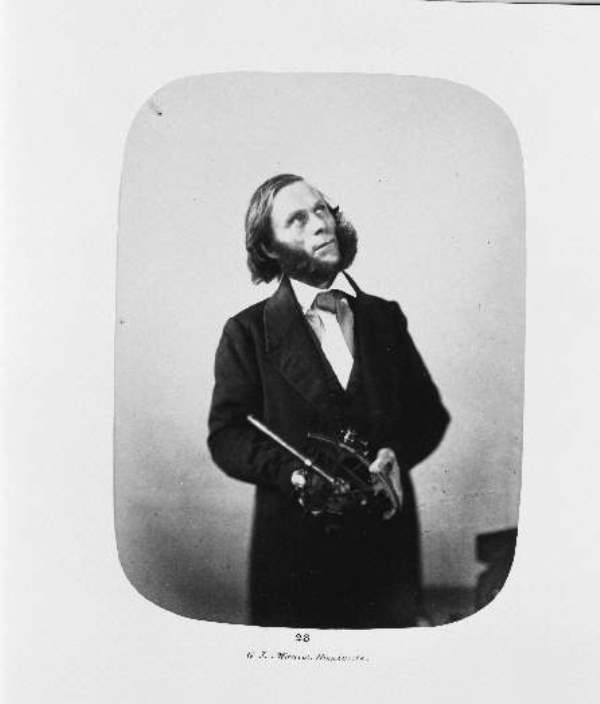
Esther Hannah 1858 Chronic mania with delusions
when the chattering mouth inside engollops the whole world now so many tongues screaming back at you!
The union of all and everything with Mighty Me and Mini Me
the wastrel candy wrapper scudding across the ocean of bedraggled pavement talks in sign language only I can understand and so we are friends
gazing into my dog’s soft eyes drowning in kindness we long for the oblivion of everlasting life
suffering so extreme I am King of the charnel ground I survey in ostracized isolation
Woe is me! Alone at last! Alone again! Alone forever! Alone alas!
I have dug deep into hell where you can’t see flowers sunlight fresh air green fields
now worship my many manias which you good people with your many conventional insanities have driven me screaming into!
once I jumped off the mountain peak and started gliding far above and you all down there far below there was no turning back so here we are alone together again!
Captain George Johnson 1848, homicidal maniac
I screamed… and the other person in here with me jumped almost out of their skin and into mine!
you people are all so dumb and sanctimonious about it you’ve driven me out of my wits and into the arms of demons
I know a little devil she’s right here do you want to see her… now?
don’t ask me how but I know for certain this nightmare will never end
I could cry all the tears for all the girls and it would never be enough to slake the thirst of this anger
Harriet Jordan 1858, acute mania
teeth and nails are my claws my gaze lightning my speech a bloody knife my body a writhing sex crazed she devil!
when I see you I feel the urge to squash that banana!
how many years ago was I a happy child? that life has left me…
the apples are falling falling, falling I will soon drown in that well
if only you could touch me you might see me if only you might see me you could touch me
I am the veritable Queen of Ireland but you FOOLS have put me in a straightjacket though one not nearly as restricting as the ones you wear yourselves over your taut middle class heads
I yearned so much to fly that after I leapt I simply refused to come back down to earth
on the ride home after our time together after reading Kafka’s trial together the train kept telling me, telling me, telling me, telling me you’re mad, you’re mad, you’re mad, you’re mad you’ll die, you’ll die, you’ll die, you’ll die, you know it don’t you, you know it don’t you, you know it don’t you, you know it don’t you you’ve always been mad and you’ll never get better you’ve always been mad and you’ll never get better you’ve always been mad and you’ll never get better you’ve always been mad and you’ll never get better then tears flowed down uncontrollably but somehow I made it home through the mist of sadness and madness and slept for a day and a night and woke up blessed and clean.
Voices of Madness II: other
(to be read with urgency)
housewife clutching her handbag banker grasping his hat cyclist grabbing the lamp post sixteen wheeler squealing his brakes bridge groaning and cracking under the load wind whistling Dixie blowing away souls….
pistol-whipped deputy terrorized step daughter Mumbai street beggar Sri Lankan leper Madagascar pirates East End slave traders Wall Street raiders DC rapists City of London warmongers Zurich mass murderers crestfallen gang bait heart absent crack zombies genetically suicided farmers thumbless hitchhikers selfish greedy meditators rotten teethed politicians
mouldy constitutions historical documents wormwooded powder fleas in the palace sheets ticks on royal arses donkeys braying in the storm genders flotsam and jetsam masts upended and shredded in coral below frogmen marching geese straying clouds mustering storms gathering whales bemoaning rats scampering…
who’s last to leave this stinking ship? who’s last in line for the universal basic dole out? who’s giving vegetables to the soup kitchen? who even cares? where does the Pygmy get his next meal? who’s killing the next sheep in Himalchal Pradesh? who’s next in line to the throne in Bhutan?
Do we even keep track of collective sanity? Do parliaments legislate it wisely or not? Do Judges have it hidden in their undergarments? Do gurus transmit it by tapping our head? Do wives give it nightly to husbands in bed? Do bakers transform it as soft daily bread? Do young lovers dance it to being when they wed? Do priests now invoke it when prayers are well said? Do street chiefs impose it once they’ve earned street cred? Do sheriffs arrest it with stopping power of lead? Do scriptures impart it when ever they’re read? Do blue, green and yellow surrender it to red?
world spinning into oblivion axis tilting out of control wave patterns cloud forms and gaseous eruptions sending all animals into conniptions humans abandoning human emotions demons despairing of being fought against bravely abandon the currency of mutual respect and wallow in wanton lower realm scorn spinning the wheel of samsara as idle indulgence grown fat and happy with complacency’s sinecure a cushy job nowadays dime a dozen no resistance people are sheeple, people don’t care herded and huddled, by fear in the air demons in airwaves in food in the water demons in herds being led to the slaughter demons in cartoons with twisted cold laughter demons in front of us, demons in back demons defending, demons attack demons inside of us, demons all around demons in music, in all kinds of sound airplanes in airports and rockets in space chemical deodorants makeup on face cancer run rampant tumors to spare pathogens raging we’ve trillions to share shoe leather waning, testosterone dim down to mansplaining, denegrating him she is no longer the one who bears child she is no longer so kind and who smiles she is a he is an it is a him and if we don’t sink then we better all swim swim now together swim in the pool swim in the ocean, let swimming be cool swim in the court room, swim in the yard swim into sanity, swim upstream hard swim like the salmon come in from the sea swim past the billions of you’s and of me’s swim ’til were tired and beaten and broken swim ’til the last line the ending is spoken.
Voices of Madness III: the gods
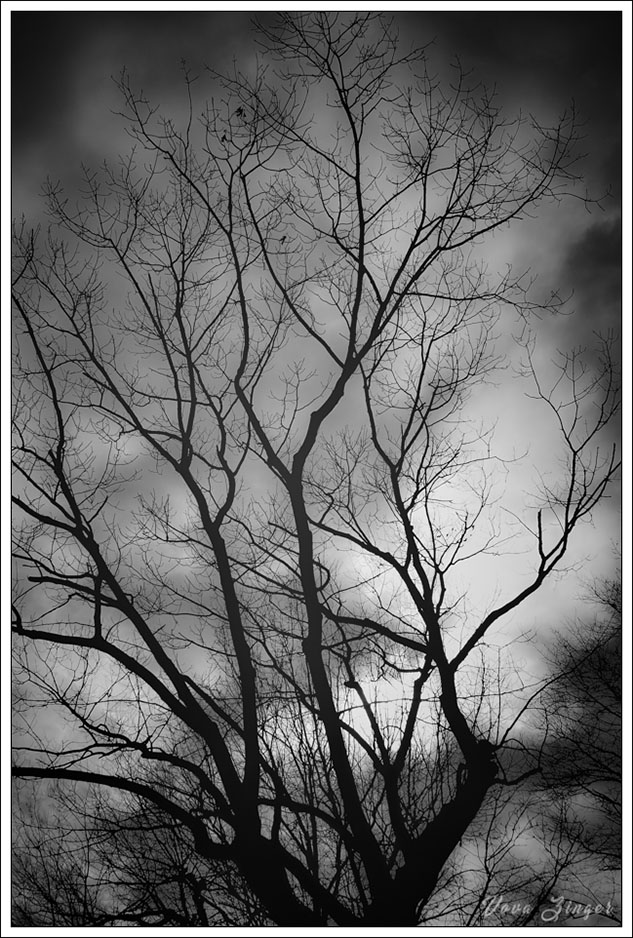
A broad river of cream changing colours slowly and slowly flowing forward, inexorable thick, heavy, primordial, meaningful deepening glory, deepening content then suddenly! black sticks shoot up in all directions like angry stiff fingers harmony and wisdom broken in shards… the dreamer awakes into the everyday world of this and that and bric a brac.
Clouds know from whence they come and where they go Do you know from whence you come and where you go? ‘Do you see my cloud dragons?’ asks a sky god ‘Do you see my coat of many colours?’ asks Jacob ‘Do you remember your past lives?’ asks the psychic
Zeus wields his thunderbolt, its searing flash piercing the veil twixt knowing and unknowing;
Thor’s kaleidoscopic crash of thunder echoes throughout the three times into the deep beyond thought
Mercury’s mercurial messengering mumbles unmistaken murmers of muttered moonshine magnificence
Kali minds her manners trampling on second thoughts oblivionizing them nonchalantly as she grinds the pestle and mortar of birth and death
Yama spits out the bones of every corpse he’s ever ground between his molars of destiny his subliminal indifference
Persephone, queen of the night, consort of Dark glides from his loins, seductress of stimulation sad beyond any measure of joy or sorrow
Ekajati, the one-eyed red one with one breast breathes her majesty of mayhem into the twisted bones of all her shattered enemies
HRIH! cries the Red Lady the original dakini born of the unborn nourished in Ur and Swat and now sojourning in international climes where the modern world takes up her chant of ‘form is emptiness and emptiness is form form is not different from emptiness; emptiness not different than form. That which appears as emptiness is form – and that which appears as form is emptiness. The psychology of duality, sensation, sense connections, thought and consciousness – these are also emptiness and form. So Shariputra’ she continues ‘you can only characterize form in terms of emptiness and emptiness in terms of form.’
Exit Vajrayogini Stage Right. Exit Vajrayogini Stage Left. Lions to the right of us Tigers to the left Dragons in the sky above Nagas in the lakes below Demons in the rocks Gods in the clouds The taste of the sea in the mouth The taste of the sea, the smell of clean the remembrance of all knowing held in the palm of the god’s hand a drop of liquid glory known as water small cells struggling small appendages waving and wriggling small microbial galaxies teeming into proliferate being beyond counting, self birthing, self mothering, self engendering the world of form a continuous kaleidoscope of extraordinary imagination shot through with light leavened with fantasy the unbearable light-ness of Reality a piercing sword a fathomless mirror a heart rending lament in a world where hearts now wander lonely as clouds between being and knowing and forgetting between curses and blessings between this and that between feeling and destroying between loving and hating between agony and ecstasy between enlightenment and confusion between primitive and hopelessly civilized between this and that between self and other between this and that between self and other
each moment the Red One’s empty full-hearted challenge to arise like fish leaping from water like bird leaving imprint in the sky like letters written on the lake like the horns on a rabbit to arise and remember
that we are all of the same elements all of the same form all of the same emptiness.
A broad river of cream changing colours slowly and slowly flowing forward, inexorable thick, heavy, primordial, meaningful deepening glory, deepening content then suddenly! black sticks shoot up in all directions like angry stiff fingers harmony and wisdom broken in shards… the dreamer awakes into the everyday world of this and that and bric a brac.
Clouds know from whence they come and where they go Do you know from whence you come and where you go? ‘Do you see my cloud dragons?’ asks a sky god ‘Do you see my coat of many colours?’ asks Jacob ‘Do you remember your past lives?’ asks the psychic
Zeus wields his thunderbolt, its searing flash piercing the veil twixt knowing and unknowing;
Thor’s kaleidoscopic crash of thunder echoes throughout the three times into the deep beyond thought
Mercury’s mercurial messengering mumbles unmistaken murmers of muttered moonshine magnificence
Kali minds her manners trampling on second thoughts oblivionizing them nonchalantly as she grinds the pestle and mortar of birth and death
Yama spits out the bones of every corpse he’s ever ground between his molars of destiny his subliminal indifference
Persephone, queen of the night, consort of Dark glides from his loins, seductress of stimulation sad beyond any measure of joy or sorrow
Ekajati, the one-eyed red one with one breast breathes her majesty of mayhem into the twisted bones of all her shattered enemies
HRIH! cries the Red Lady the original dakini born of the unborn nourished in Ur and Swat and now sojourning in international climes where the modern world takes up her chant of ‘form is emptiness and emptiness is form form is not different from emptiness; emptiness not different than form. That which appears as emptiness is form – and that which appears as form is emptiness. The psychology of duality, sensation, sense connections, thought and consciousness – these are also emptiness and form. So Shariputra’ she continues ‘you can only characterize form in terms of emptiness and emptiness in terms of form.’
Exit Vajrayogini Stage Right. Exit Vajrayogini Stage Left. Lions to the right of us Tigers to the left Dragons in the sky above Nagas in the lakes below Demons in the rocks Gods in the clouds The taste of the sea in the mouth The taste of the sea, the smell of clean the remembrance of all knowing held in the palm of the god’s hand a drop of liquid glory known as water small cells struggling small appendages waving and wriggling small microbial galaxies teeming into proliferate being beyond counting, self birthing, self mothering, self engendering the world of form a continuous kaleidoscope of extraordinary imagination shot through with light leavened with fantasy the unbearable light-ness of Reality a piercing sword a fathomless mirror a heart rending lament in a world where hearts now wander lonely as clouds between being and knowing and forgetting between curses and blessings between this and that between feeling and destroying between loving and hating between agony and ecstasy between enlightenment and confusion between primitive and hopelessly civilized between this and that between self and other between this and that between self and other
each moment the Red One’s empty full-hearted challenge to arise like fish leaping from water like bird leaving imprint in the sky like letters written on the lake like the horns on a rabbit to arise and remember
that we are all of the same elements all of the same form all of the same emptiness.
From an (understandably) unpublished play written in 2001. This speech in Act One Scene I has some nifty passages spoken by Naked Woman, the lead character in a surreal drama written in somewhat Shakespearean style. The play ends up in a trial presided over by Judge Bottombulger with Mozart and Van Gogh as witnesses for the defense. Naked Woman’s partner is called Misfit.
Naked Woman
[ Misfit grabs jacket and exits. After he leaves, Naked Woman muses, still naked on pedestal facing the audience.]
NW Here I am On top of the world Beloved of he whom I most adore A gentle soul who, Though lost inside like each of us who finds ourselves in Oceanic vastness, with its Random, powerful seethings, And he a pilot often too incompetent, or so it seems, to Guide himself steady into safe harbour of dependability; Yet he inspires deep love in me for him For him as him and no one other.
And yet, I often wonder whether He loves me, as me, as simply me, Not queen, not deity, not forever-young pinup, Not saint, – and no great sinner either, it’s true – Or even sacred temple of being – or whatever such – Such notions which take wing and soar high above our Kitchen Sink day-to-day goodness, our oatmeal goodness, Our world where ordinary traffic with trucks, and taxis Vans, pollution, merchants, bills, crooks and all the rest of it – Is all the time passing by, the flickering cinema of our little victories and defeats.
And also I myself, right now so young and lovely – yes, I can confess to that – But even now, as the sun of youth shines bright On my no less dazzling and radiant loveliness So also its journey across the landscape of my outer features Casts lengthening shadows, which Projecting out the revealed profiles of increasingly minute and yet more obvious mounds and folds of worry and circumspection Thus naturally reveal the living landscape and history of my Defeats, failures, sorrow All telling their tales in my unfolding form, Which becomes increasingly a form of many folds And bulges, and over them all an ever finer network of Interlinking wrinkles, a living raku coated in cracks all over the surface of my inner character as well as outer beauty In ways unwelcome wherein well-worn trails of hope and fear Are etched as livid, visible wrinkles that, in the Timeless language of Mother Nature Tell their own too literal a tale, Chiselling first letters, then longer words, sentences, paragraphs – no, entire biographies – into this my living skin, This outer billboard of my inner womanhood My femininity, softness, and fecundity, Thereby adding chapters to my living tale, One wrinkling, parchment page at a time, as Time, with his twin consorts of Age and Rapidly Approaching Death, Manifests minutely in the very Cells and hormonal synergies of my being.
So how can I meld my character to my current beauty Saying: “I am beautiful” or “I am a woman?” Because it all so soon passes and will be no more! For such is progress, in reality. The child grows forward each day, waxing stronger But we adults go forward in time becoming weaker. And as we add to our experience and wisdom So does our skin reflect this greater accumulation In the form of such unwelcome, though inevitable hieroglyphs Which no amount of cream can smooth away And no amount of other tricks eliminate or, truth be told, Even do a halfway decent job at hiding. Like all such simple truths, this one as true as it is simple; And thus my beauty, like all seeming fancies, No more than that, a passing phase A day, a month, a season, a fantastic summer holiday That climaxes and wanes, along with the myriad, mellowing falls of autumn, followed in the end by the inevitable Chill winter of stiff-fingered, frozen-boned death.
So the simple truth is that this splendid, life-giving and Literally life-inspiring warm force of the Very brightness which now dazzles you, This my tender beauty and grace, this same light now illumining and delighting us all will, like any flaming candle at any summer banquet, soon burn down until at last, flickering, finally disappear forever until Only dark night remains.
Thus my current youth and beauty are simply virgin parchment on which Old Man Time is even now scratching out his wrinkled, tortuous tales. And all the more glaring they shall be Because they have been carved on one like me. And knowing this, in heart as well as head, And knowing this, even as I am worshipped As archetype, if you will, on this my pedestal, I find myself in truth not full equipped To serve as goddess to a blundering mortal Rather as partner, groping in darkness for the same portal Leading to peace and plain fresh air Where we can lay down our burdens, relax our cares And worries and simply be that font of all true contentment, Namely he with she, and she with he, As ordinary folks, Who are born, live for a while, do their best, Share a laugh or two, and then, More wrinkled on the outside But hopefully smoothed on the inside By their many rough and ready lifetime passages They retire and fade away And then like stars at dawn, Are no more visible on this plane.
Thus my beauty, which now shines upon you bright as any sun
Is also shone upon in turn, and as this sun of passing time burns its wrinkles into me It tells the tale of passing youth and glory Until the passage of time, and care, and natural changes that have nothing to do necessarily with stress worry, or wickedness
– though they too can find themselves writ large Even billboarded on face and other parts – Until that passage is literally written into me in the form of wrinkles So that my skin, Now a soft treasure-trove of succulent feasts for touching, and tasting and smelling, for dancing with and caressing and so on, This self-same multi-purpose canvas of celebration and so on Becomes an increasingly more self-contained, Specialist, dry form Of wrinkled and wrinkling prose For all to read in passing On my no longer fascinating visage and womanly presence.
So look at me now, Good ladies, and good gentlemen. Look in wonder. For you see a miracle of living life, and breath, and body A natural marvel of this wonderful world of ours Grown from we know not really what combination Of science and art and karma and intention Whether genetic or psychic, biological or essentially purely spiritual. We know not. But we see, we hear, we feel, we touch, we taste And I am here for all of that, I and my many sisters, we are here right now. But just as I can turn here for your pleasure [ turns ] And show little apparent momentary change, So is the seeming solidity of my being Constantly turning and evolving and meanwhile in fact Passing and dissolving bit by bit; And soon I will be young no more And will have faded along with so many others, Including all of us who are here right now together In this place and time.
As such, I am a living dream. Only as such am I a living woman. As such I am real, and also As such I am living fantasy. Am I real and solid Or truly no more real than imagination Emotion, mental and psychophysical Flashes in the dark Of moments of joy and sadness? Is this all I am, A fleeting moment? Is my beauty me, or am I simply beautiful?
And so again: am I fantasy or reality? This is not for any man or woman to say, Only that I must learn to be both, And if I pick sides, I will not be true to myself, Or others. This is our living riddle, No more or less profound and fathomless Then the process by which My wrinkles are being drawn on me Even as I stand here speaking, and you sit there gawking!!
In such spirit of suspended imagination That lingers vividly between asleep and awake Between so-called imagination or fantasy And so-called reality or physical solidity, Even so I beg you to remain for the duration Or at least, if that is asking too much, For the duration of this play, This whimsical, fanciful fiction, Yet played before you by people As alive as any others, or any who have ever been And witnessed by the same, yourselves.
Please, let us all relax into the simple and simplistic sanity Of enjoying that, for now at least, we are all just living dreams. We are in a place and time, peopled by all of us real folk, And yet, without either date or place, or any real people, As such transcending all local limitations. With this in mind, and some of the other more daily stuff out of mind In short, let’s see how life goes on; for it always does, and thus: Play On!
housewife clutching her handbag banker grasping his hat cyclist grabbing the lamp post sixteen wheeler squealing his brakes bridge groaning and cracking under the load wind whistling Dixie blowing away souls….
pistol-whipped deputy terrorized step daughter Mumbai street beggar Sri Lankan leper Madagascar pirates East End slave traders Wall Street raiders DC rapists City of London warmongers Zurich mass murderers crestfallen gang bait heart absent crack zombies genetically suicided farmers thumbless hitchhikers selfish greedy meditators rotten teethed politicians
mouldy constitutions historical documents wormwooded powder fleas in the palace sheets ticks on royal arses donkeys braying in the storm genders flotsam and jetsam masts upended and shredded in coral below frogmen marching geese straying clouds mustering storms gathering whales bemoaning rats scampering…
who’s last to leave this stinking ship? who’s last in line for the universal basic dole out? who’s giving vegetables to the soup kitchen? who even cares? where does the Pygmy get his next meal? who’s killing the next sheep in Himalchal Pradesh? who’s next in line to the throne in Bhutan?
Do we even keep track of collective sanity? Do parliaments legislate it wisely or not? Do Judges have it hidden in their undergarments? Do gurus transmit it by tapping our head? Do wives give it nightly to husbands in bed? Do bakers transform it as soft daily bread? Do young lovers dance it to being when they wed? Do priests now invoke it when prayers are well said? Do street chiefs impose it once they’ve earned street cred? Do sheriffs arrest it with stopping power of lead? Do scriptures impart it when ever they’re read? Do blue, green and yellow surrender it to red?
world spinning into oblivion axis tilting out of control wave patterns cloud forms and gaseous eruptions sending all animals into conniptions humans abandoning human emotions demons despairing of being fought against bravely abandon the currency of mutual respect and wallow in wanton lower realm scorn spinning the wheel of samsara as idle indulgence grown fat and happy with complacency’s sinecure a cushy job nowadays dime a dozen no resistance people are sheeple, people don’t care herded and huddled by fear in the air demons in airwaves in food in the water demons in herds being led to the slaughter demons in cartoons with twisted cold laughter demons in front of us, demons in back demons defending, demons attack demons inside of us, demons all around demons in music, in all kinds of sound airplanes in airports and rockets in space chemical deodorants makeup on face cancer run rampant tumors to spare pathogens raging we’ve trillions to share shoe leather waning, testosterone dim down to mansplaining, denegrating him she is no longer the one who bears child she is no longer so kind and who smiles she is a he is an it is a him and if we don’t sink then we better all swim swim now together swim in the pool swim in the ocean, let swimming be cool swim in the court room, swim in the yard swim into sanity, swim upstream hard swim like the salmon come in from the sea swim past the billions of you’s and of me’s swim ’til were tired and beaten and broken swim ’til the last line the ending is spoken.
Voices of madness, a spontaneously composed series of quasi haiku voices in bedlam dedicated to Axel Neumann a leading European clinical psychiatrist who became a structured psychotic (one who can transmit that state to another) who later died of the drugs they gave him after each increasingly frequent episode and which he knew would eventually kill him
Prompted by Gabriel Rosenstock encouraging the author to enter an international poetry competition around the theme of ‘madness’ organized by a university in Katmandu, Nepal (linked below).
Esther Hannah 1858 Chronic mania with delusions
Voices of Madness I: self
when the chattering mouth inside engollops the whole world now so many tongues screaming back at you!
The union of all and everything with Mighty Me and Mini Me
the wastrel candy wrapper scudding across the ocean of bedraggled pavement talks in sign language only I can understand and so we are friends
gazing into my dog’s soft eyes drowning in kindness we long for the oblivion of everlasting life
suffering so extreme I am King of the charnel ground I survey in ostracized isolation
Woe is me! Alone at last! Alone again! Alone forever! Alone alas!
I have dug deep into hell where you can’t see flowers sunlight fresh air green fields
now worship my many manias which you good people with your many conventional insanities have driven me screaming into!
once I jumped off the mountain peak and started gliding far above and you all down there far below there was no turning back so here we are alone together again!
Captain George Johnson 1848, homicidal maniac
I screamed… and the other person in here with me jumped almost out of their skin and into mine!
you people are all so dumb and sanctimonious about it you’ve driven me out of my wits and into the arms of demons
I know a little devil she’s right here do you want to see her… now?
don’t ask me how but I know for certain this nightmare will never end
I could cry all the tears for all the girls and it would never be enough to slake the thirst of this anger
Harriet Jordan 1858, acute mania
teeth and nails are my claws my gaze lightning my speech a bloody knife my body a writhing sex crazed she devil!
when I see you I feel the urge to squash a banana!
how many years ago was I a happy child? that life has left me…
the apples are falling falling, falling I will soon drown in that well
if only you could touch me you might see me if only you might see me you could touch me
I am the veritable Queen of Ireland but you FOOLS have put me in a straightjacket though one not nearly as restricting as the ones you wear yourselves over your taut middle class heads
I yearned so much to fly that after I leapt I simply refused to come back down to earth
on the ride home after our time together after reading Kafka’s trial together the train tracks kept telling me, telling me, telling me, telling me you’re mad, you’re mad, you’re mad, you’re mad you’ll die, you’ll die, you’ll die, you’ll die, you know it don’t you, you know it don’t you, you know it don’t you, you know it don’t you you’ve always been mad and you’ll never get better you’ve always been mad and you’ll never get better you’ve always been mad and you’ll never get better you’ve always been mad and you’ll never get better then tears flowed down uncontrollably but somehow I made it home through the mist of sadness and madness and slept for a day and a night and woke up blessed and clean.
The Trikaya gives us a simple working model of how experiential reality functions. We don’t actually need to go to war with materialism in order to start incorporating this model into our base view of who, what and where we are in life, leaving the materialists to their own devices – literally.
So: onward!
First, it is worth pointing out the obvious, that this model posits our reality as fundamentally experiential. None of us has any direct knowledge of anything that exists outside the realm of sentient experience. We can imagine an objective world out there but we cannot know for sure if it exists on its own terms as such beyond our own physical and cognitive interface. Is the table we see the same as the table the housefly sees and the same as the table itself not seen by either? We can never really know but what we do know is that the world we know comes via experience of it and ourselves (via this fundamentally awake knowingness embodied as the ocean of Dharmakaya). A scientist may insist that he is studying objective data gathered by reliable machines, but he is still evaluating the data with his living, and thus also very subjective, mind.
Second, it posits a fundamental reality before any obfuscations. Which brings us to confusion. Even though the Three Kayas are inseparable but different aspects of the same overall reality, confusion creates duality in that we come to believe that the various particulars on the Nirmanakaya level are each distinct from the other and moreover not part of the same overall continuum. In other words, there is no One, there is only Many. Each object we see – spoon, fork, chair, table, building, sentient being and most especially our self – is seen as unique, individual and separate from any larger whole. In the Buddhist scriptures this is described as nama-rupa, or ‘name and form’ and it is one of twelve links (nidanas) in a process called ‘dependent origination’ each of which helps create our world described as a perpetually spinning wheel (samsara) of unending birth, death and rebirth moment after moment, life after life. These twelve nidanas are too complicated for this blog but suffice to say they describe how we get to creating a seemingly solid world made of seemingly solid and separate parts with seemingly solid and separate entities such as ‘you’ and ‘I.’
So essentially we now have two principal types of mandala, namely mandalas of confusion and mandalas of wisdom. The confused mandalas are out of touch with the Trikaya unified field theory whereas the wisdom mandalas are at one with it. This is why traditionally the Buddhist teachings involve three main Yanas, or vehicles, which correspond with the three main stages of spiritual development (essentially the same in all genuine traditions) namely: a) working with confusion to tame and pacify it b) working out of confusion into realization c) working with realization to stabilize and complete it
Put more simply: confusion, in between confusion and realization, and realization. Each phase features both teachings and methods which can be briefly summarized as follows:
a) working with confusion: the teachings help deconstruct primitive beliefs about reality, principally the illusion that we are solid, separate entities trapped in bodies and various existential predicaments causing endless ups and downs from birth until death which experiences often leave us floundering in an ocean of turbulent emotions being driven from one extreme state of distress or exhilaration to another to the point of exhaustion and bewilderment. The methods involve learning to slow down through meditation practice so that we can pacify this turmoil and begin to live in a more simple way without roiling the waters of intense emotion. b) on the way out of confusion and into realization: working on the assumption that we do actually possess the Buddha Nature inherent in dharmakaya we study and emulate the positive qualities of those who are more fully integrated with their own enlightened natures; the methods involve training in developing those qualities principally by further meditation practice including those which enhance tranquility and insight as positive radiant qualities in body and mind as well as serving others by habitually putting them before ourselves essentially replacing samsaric, ego-centered habits with more enlightened ‘bodhisattvic’ ones. c) working with realization: as we progress on the path we begin to encounter our own true nature. This so-called ‘realization’ of the nature of mind at first comes in glimpses, most often by spending time with someone who is realized but then gradually having our own personal experiences until finally this becomes a 24/7 state of being, which at that point is called ‘enlightenment.’ Interestingly, the Tibetan word for meditation translates as ‘becoming familiar’ because really all that is going on is simply becoming familiar with our own true nature which is there all the time but which we kept ignoring because of samsarically dualistic habits of perceiving and thus being. Enlightenment is simply the absence of confused states of being. This is why the highest form of vajrayana meditation is called formless meditation or more bluntly ‘non-meditation.’ There is nothing to develop or produce, there is no goal to achieve or prize to be won. We have been home all along.
Because they are dealing with different stages of reality perception or states of being, the methods and vocabulary differ from one yana to the next. So to finish this post, lets look at how the bedrock meditation technique of mindfulness is worked with at each of these three main levels which traditionally are termed Hinayana, Mahayana and Vajrayana.
Hinayana Mindfulness: the student is an ordinary sentient being fully enmeshed in the samsaric behaviours believing in an existential separation between self and other, mind and body, wisdom and confusion. The mind and body are perceived as essentially problematic, untamed, following one habitual impulse after another. So mindfulness practice is about learning how to slow things down so that one can avoid endless explosions in the minefield of experience. First one walks slowly, one step at a time. If necessary one goes to one side or another to avoid a direct confrontation with an explosive result and then returns to the original path until one makes it across. It’s about learning to navigate through hostile territory burdened by a body and mind that are themselves not fully familiar, not under control, not tamed. So the Hinayana version of mindfulness at first has to do with basic taming of self and external situations so that one can calm down enough to actually hold the mind steady. The traditional analogy is that of a steady candle flame versus one that is flickering. If you put your attention on something it can stay there steadily without wandering. This sort of skill – which is common to all creatures including most animals – can take anywhere from a few weeks to many decades to develop. In terms of meditation practice one learns how to apply antidotes to any disruptive obstacles so that one can place the mind on an object and keep the attention there without straying or lapsing into dullness or agitation. The object of attention might be the moving second hand of a watch, a stick, stone or painting, or most often people simply use the breath which is a naturally occurring phenomenon happening both inside the body as well as out in the world – plus it’s always there and always slightly changing. You can also place the mind on a sound, like birdsong or a babbling mountain stream, or waves breaking on a beach, or the hum of a refrigerator or air conditioner for that matter. In all cases the idea is to place the mind on something and train it not to wander but stay relaxed, awake and attentive. This skill is needed very much at the end as you will soon see.
Mahayana Mindfulness: Hina means narrow or straight. Maha means great or expansive. The Mahayana is about leaving the confines of the narrow self-centred approach and merging the inner and outer worlds, so it is about dissolving the ramparts of ego to become one with all others. Mindfulness here is about focusing on various positive qualities that bodhisattvas (literally awake beings) manifest, principally wisdom, compassion and vitality. We can learn to imagine ourselves possessing such qualities in various meditation practices such as sending and taking (used in the Lyme Liturgy for example), but also our sitting meditation mindfulness at this level has to do with maintaining an open heart connected with bodhichitta (awake heart-mind) which is making a direct connection with the dharmakaya aspect of ourselves common to all other living creatures. The more we can establish a direct connection with this bodhichitta the more we find ourselves experiencing naturally spontaneous compassion and wisdom. In meditation practice following the breath as before in Hinayana this is now experienced as a significantly expanded sense of spaciousness and warmth. Again, if we are fortunate enough to encounter someone fully developed in this way we get a direct transmission of how this feels by being with them and this accelerates the familiarity process. In any case, the ability to place the mind and keep it somewhere attentively but without strain is now used to develop the heart-mind wakefulness of bodhichitta. This can be likened to the stage in the journey of a river where it opens up shortly before merging with the ocean. So Hinayana is like learning to navigate minefields to the point where one can avoid them altogether, and Mahayana is like learning how to open up far beyond what we earlier thought conceivable let alone possible and begin to manifest as fully realized bodhisattvas possessing – and thus also sharing – wisdom and compassion with all other beings.
Vajrayana Mindfulness: Vajrayana is the path of realization. Vajra is a mythical substance akin to diamond which is known for being extremely hard. However vajra is beyond hard: it is indestructible and it is so because it cannot be divided. This is the idea encountered when deconstructing moments of time at the beginning of the Liturgy. Any given moment of time (just as any given dimension of space when measuring an object) is infinitely divisible. One second can be cut in half and so on ad infinitum just as any given distance between Point A and Point B can be halved and so on. The point here being that since it is infinitely divisible in fact it is not divisible at all because such divisions are fictive constructs. Any given moment in time, for example, has no duration and therefore cannot be subdivided, i.e. is indestructible. That’s a conceptual definition of vajra indestructibility. On a more experiential level it is more like the following: in terms of time we can say that we find ourselves dwelling in the present moment, we can feel this as something which is always there meaning it never begins or ends and therefore transcends birth, death or any measurable dimension. In terms of place, when we are in a state of nowness the space is alive, awake, present and endlessly so, there are no boundaries between self and other, here and there, it is all one, hence indivisibly indestructible and this is something we now experience directly. So mindfulness in Vajrayana involves resting the mind in its own nature, its own vajra nature without anything which arises distracting or separating us from that awareness presence. In early stages we go in and out, sometimes resting in a seemingly deep, luminous state of mind and other times being again distracted by habitual interruptions and distractions, be they imaginary discursive events on the meditation cushion or in daily life. So the mindfulness practice at the level of working with initial realization experiences involves maintaining a state of presence of vajra being, of resting in that perpetual nowness without effort or contrivance. As thoughts and feelings arise they do so from within this spacious presence and we learn to stop identifying with them as part of a ‘me’ which is separate from that spacious presence. Things keep coming up in the ever-playful dance of Sambhogakaya which is ceaseless and infinite in variegation, like waves on the ocean, but we never isolate the dance from the background, the dance is always part of the background. Mindfulness is resting in spacious awareness whilst enjoying any given dance displayed in the inner and outer worlds.
So if mindfulness in Hinayana involves taming and pacifying wild, hostile inner and outer terrains, and mindfulness in Mahayana involves attuning oneself to the more selfless qualities of an altruistic bodhisattva manifesting wisdom and compassion, then mindfulness in Vajrayana can simply be likened to that of actually being a Buddha or Bodhisattva, actually doing it in the here and now rather than striving to do it or be it at some point in the future. At some point the student – if the path and the practitioner are both worthy – becomes a master.
If you tell a beginning student to rest in the nature of mind when every time they sit down to meditate they are jumpy, sleepy, horny, excited or altogether discombobulated, it won’t work. Gradually, gradually the student settles into becoming more tamed and open until gradually, gradually they begin to experience their own ground nature, the always-there bedrock nature of dharmakaya which is at the core of their own being as well as that of all other creatures. This is an actual experience, not theory, and at some point one begins to know the primordial knowing, which is called wisdom. Wisdom is not about knowing all data, rather about knowing the nature of primordial self-existing knowing. When this happens there is a deep sense of relaxation because the endless existential struggle of samsara has been let go. Enlightenment ultimately is about letting go of unenlightened habits of body and mind. A release – or rather what’s there after release. A profound simplicity. You cannot tell someone to do that at the beginning. So at least in terms of the mindfulness aspect, first you tame and pacify unruly mind; then you open it to wider possibilities and view and maintaining that naturally; then it involves learning to rest in spaciousness without following or identifying with old habits born of lifetimes of recreating samsaric patterns of dualistic fixation and grasping. Indeed, such habits can be popped like bubbles as they arise. But that’s another story for another time…
In sum:
The Hinayana level involves hard work to tame and pacify.
The Mahayana level involves developing limitless bodhisattva altruism whilst bringing all confusion to the path of awakening.
Here follow some general ruminations following on from the Trikaya notion introduced in a recent post.
First off, there are five kayas in some systems, not three. The fourth was mentioned in the last post namely that the first three are inseparable but different aspects of the same overall dynamic. In immediate human terms this is like how we have both body and mind all the time and although each is discernibly different one cannot define where one stops and the other starts, there is no definitive dividing line between the two. Similarly, the ocean, its ever-expressive qualities and the arising physical forms such as waves, currents, spray and so forth are three aspects of the same overall ocean. The name of the fourth one in Sanskrit is ‘svabhavavikaya.’ The fifth one will be discussed later but essentially it’s a state continuously aware of all four kayas.
The traditional translation for the Trikaya is ‘The Three Bodies of the Buddha.’ This is partly because in some presentations the three kayas are explained as being the three aspects of an enlightened being. A common formal translation of Dharmakaya is ‘Body of Truth’ because what is being described is the nature of reality, how things are, namely that all living creatures comprise these three kayas and thus are connected with a universal continuum, or substratum, which is primordially awake and spacious, manifested – and hence a kaya – in no end of different particular forms. They are called bodies of Buddha because a Buddha is someone who is fully cognizant, or awake, to the nature of reality; which implies an interesting twist: those same bodies that a Buddha has we have too since we are of the same nature.
This begs the question: what is the difference between a Buddha and an ordinary sentient being? The difference is that the latter is confused about the nature of reality and the former clearly sees the nature of that confusion and in so doing ‘self-liberates’ it, popping its bubble. The liberation of enlightenment is simply no longer functioning in a state of existential confusion. And what is the nature of confusion again? Not seeing, and therefore not being at one with, the nature of mind.
In a way you could say that we are so fascinated with what is happening on the surface that we come to believe that each wave is apart from instead a part of the vast ocean of Dharmakaya primordial wakefulness. We begin to believe that each particular wave has its own independent existence just as we feel that we ourselves are independent entities disconnected from the larger continuum. And then we find that all experience confirms this bias. We walk where we choose to walk, we say what we choose to say, we are in one chair and our companion is in a different chair, we only eat what is on our plate not from the plate across the table, we grow up as a particular person, lead our lives as such and then finally die on our own without anyone around us doing so at the same time. Clearly we are unique individuals.
All of that is true; and yet it’s not the whole truth because, just like any wave for example, although we do have unique particular characteristics and experiences nevertheless we are never separate from the larger universal whole. Never. And the base foundation of that larger whole in this Trikaya model is a primordially awake knowingness. Technically speaking there is also a space in which all these bodies arise, the Sanskrit term for which is dhatu, but here we are discussing the forms or bodies in space and, interestingly, the Dharmakaya aspect of form, or body, is primordial wakefulness which is a little like walking into a vast chamber in a splendid palace and realizing that everything and everybody in that chamber is totally awake and knowing, the chairs, the floor, the walls, the ceiling, even the sky showing past the windows, it is all fully awake and knowing. So this wakeful, knowing quality is the form aspect in Dharmakaya, one manifest in every particular form you see; for all reflect some knowing quality, some blending of purpose, terrain, function and spirit – be it a spoon on a table, a discarded candy wrapper scudding across the pavement, every leaf on every tree, every living creature quivering, running, jumping or flying, and so on.
This brings us to the horns of an ongoing dilemma playing out in our world today with potentially catastrophic consequences, namely the inability of those with different world views to understand each other. Indeed, it’s worse than that: in most cases these days they don’t even want to try because increasingly one side feels that the other is not only beneath contempt but actually evil deserving only of being ignored, ‘cancelled’ or destroyed. I might be talking about left and right in the US political arena but mainly am referring to the great divide that separates – seemingly – materialists and spiritualists. First off, neither side would necessarily call themselves such so some definition is in order and since this issue has popped up elsewhere on this blog (link) we can be brief. Basically most modern people and especially scientists believe that the world is made of physical matter (hence the term ‘materialism’) and the mind is an emergent property of brain cells which produce images and thoughts which essentially create a homuncular internal fantasy, a cognitive proxy world. So mind is actually a whole lot of electrical and nervous sparks and impulses and the images and sensations we experience personally are simply cognitive-perceptive constructs caused by chemical interactions. Underneath those cognitive hallucinations lies a reality that is essentially and only physical matter. So from this point of view a radio is the box and circuitry whereas the music it is playing is a non-existent fiction. You cannot say exactly where the music is since it is not physical. Yes, it comes from an instrument which is physical, then relayed by electrical impulses through a physical speaker diaphragm which in turn causes our physical ear drums to vibrate which is then cognitively interpreted as what we call music. The pleasure or pain we get from such music is a cognitive fiction that has no scientific, aka material, reality. In other words, to the true materialist the world of mind, of feeling, of intuition, of imagination, of beauty, of sensitivity, of love, of wisdom none of that has any substance to it and therefore is not, scientifically speaking, real.
In this context a ‘spiritualist’ is simply someone who does not believe that reality is primarily and only made of mindless matter but rather the universe includes sentient awareness somehow. Again, the Genesis story is one such model wherein ‘in the beginning was the Word’ which in turn is also God who in turn made the outer physical world and all bodies living therein from his intention that it be so. Or another similar model is the Trikaya which posits that the underlying basis of our body-mind beings is the dharmakaya whose prime quality is primordial knowing, some sort of perpetual wakefulness beyond beginning or end, birth or death – i.e. it is always there no matter what is going on at the surface level where things are coming and going all the time, be they movements, noises, sights, creatures coming and going or being born, living for a while and dying. So the Trikaya model is similar to Genesis positing some sort of primordially extant mind principle beyond matter alone.
This brings us back to the difference between Buddhas and sentient beings, namely that the latter are confused about the nature of reality and the former are not. From the point of view of the Trikaya model, scientific (and other) materialists are confused. And this is why the issue is one that goes beyond abstract philosophical niceties: materialists essentially believe that the universe is made of mindless matter making us no more than biological machines.
And herein lies a great danger: ultimately those who believe that our universe and all beings within it are no more than mechanical essentially don’t value life and if put in power over the lives of billions might well end up sacrificing them all on the altar of some Great Idea or other which they have convinced themselves is the better way to go. These are the Sarumans and Saurons of today and they are now mustering their forces and about to unleash a war to impose a soulless Reality on all of us. Of course they cannot ultimately succeed for their view is based on a deep confusion which ignores the true nature of reality, but confusion can create no end of suffering and go on for a very long time. The Buddhist terms for this is samsara, which will be the subject of another post.
NOTES:
Materialist vs spiritualist
Purpose of meditation – stillness, silence, open spaciousness, bliss – training to remembering
The power of habit creates our world. Even if you don’t believe that, have to concede that scientists cannot measure what’s out there objectively without at some point evaluating the data with minds. There is no known universe without cognitive interface.
Note: Inner Sambho includes emotions – cults come from shared vocabulary and sharing heightened emotional mandalas together.
The Buddhist equivalent of the Trinity is what is known as the Three Kayas, sometimes translated as the ‘three bodies of the Buddha.’ Before describing what they are, it might be helpful to point out an assumption that might not be immediately apparent to the typical modern person reading this. That assumption is that we live in a fundamentally spiritual world in that reality is comprised principally of spirit from which matter emerges. Today this seems somewhat outlandish or fantastical, but in fact it has been how most humans have thought throughout history. Take the Genesis story for example: here it quite simply posits that God created the world and then created Man in that world – and all in only seven days. God is not defined exactly but He is some sort of intelligent being who essentially used Mind to create Matter and in the beginning was ‘Word’ or ‘Logos.’
Many pagan deities dwell in realms above this material plane from where they lord it over us. Such notions as Thor God of Thunder and Zeus God of all Gods may seem quaint and rather silly today but quite likely they are more vivid in the context in which they were originally treated, namely family or tribal stories around the fire in which the attention of children as well as adults needed to be held. Be that as it may, they clearly involved deeply powerful ideas and energetic qualities.
In any case, an assumption being made in the Three Kaya postulate is that we live in a spiritual world, a world where mind trumps matter not the other way around as most modern people now believe. Moreover a spiritual world is one experienced during the course of our actual lives not an abstraction suitable only for philosophers to discuss in classrooms, libraries and conferences.
So what are the Three Kayas? The word kaya means body and the three bodies under discussion are the three bodies we encounter throughout all our experienced reality. The Sanskrit terms are: Dharmakaya Sambhogakaya Nirmanakaya. Dharmakaya means ‘body of dharma’ which latter in this case means truth or reality; more experientially we could say ‘isness’ or ‘beingness.’ Sambhogakaya means ‘body of perfect enjoyment’ which in this case means various qualitative aspects that come up in relation to the other two. There is no end to the variety of energetic display making our reality fundamentally creative and playful – not to mention marvelous and beautiful. Nirmanakaya means ‘body of manifest form’ which in this case includes organisms, objects and so on – our physically manifest phenomenal world.
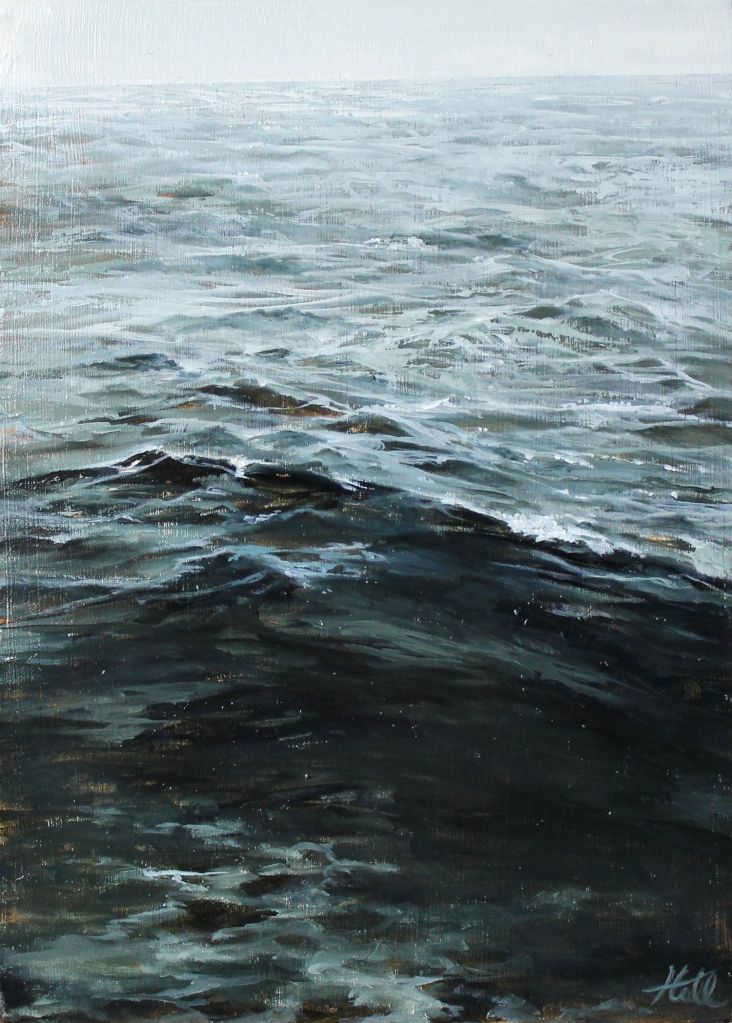
All three can be explained with a simple ocean analogy. Dharmakaya is the ocean itself in its entirety. The millions of different particularities on the surface such as ripples, waves, spray and so forth – infinite in number and with each particularity entirely unique and never to be repeated – all of this is Nirmanakaya. The energetic qualities of those particulars is the Sambhogakaya – some waves are huge, some tiny ripples, some rushing, some placid, some breaking apart, some massing together, some playful, some life threatening, some blue, some green and so forth. In other words, the physical forms are expressive, communicative, dynamic or what can be called qualitative. These qualities are neither the ocean or the form per se, rather something intermediate in the middle created by both.
These three kayas, though distinct, are inseparable; no single one happens without the other two being present so basically they are just three aspects of one overall reality. And again, reality is not some dead thing outside in a non-living world; reality is an experiential realm whose fundamental property is that of being awake and knowing, one technical term for which is ‘Buddha.’ That’s why these are often referred to as ‘the three bodies of Buddha’ for they are the three aspects of what we call Reality, so Buddha here is not so much the historical person who first presented all this rather the self-existing wakeful quality that permeates all levels of our existence and which he both discovered and managed to communicate as something all others could also experience. They are also the three bodies which comprise each of us as beings living in this realm, so they are descriptions of our own fundamental Buddha nature which all living beings possess naturally.
Primordial wakefulness is the main quality of the Ocean and one which pervades all the other kayas, i.e. all and everything. It is beyond birth and death because it dwells forever and only in the present and thus is primordial, beyond time. Put more simply: it’s always there no matter what, just like the ocean is always there no matter what is happening on its surface, moreover the surface is not separate from the ocean even though it has many more particular displays – waves, ripples, currents, foam etc.
The main quality of all waves is that they are the many particularities within the domain of the ocean’s One. We live in a world of limitless particulars each of which in its own particular place. If you look around you can probably see thousands of different particulars. Out of my windows as I type, for example, I can see thousands of different leaves, millions of blades of grass, occasionally dozens of birds feeding on fallen oranges, whilst many more are cackling or singing in the trees all around; there is blue sky, sun shining on some things, others being in shade, a squirrel or two come leaping by, no end of things in the garden like trees, bushes, flowers, walls, tools, a shed, a path, bricks lining the path. If I look inside on the table there are dozens of particulars in various compartments, shelves, drawers. On my hand there are wrinkles, lines, spots, areas of light and shade, different fingers, movements of fingers and so on. It is endless. This is the world of the surface, the world of endless waves and movement and particularities, of Nirmanakaya. Every spot in our world is filled with this infinite array of particulars – the many or what the Dao Te Ching calls ‘the ten thousand things.’
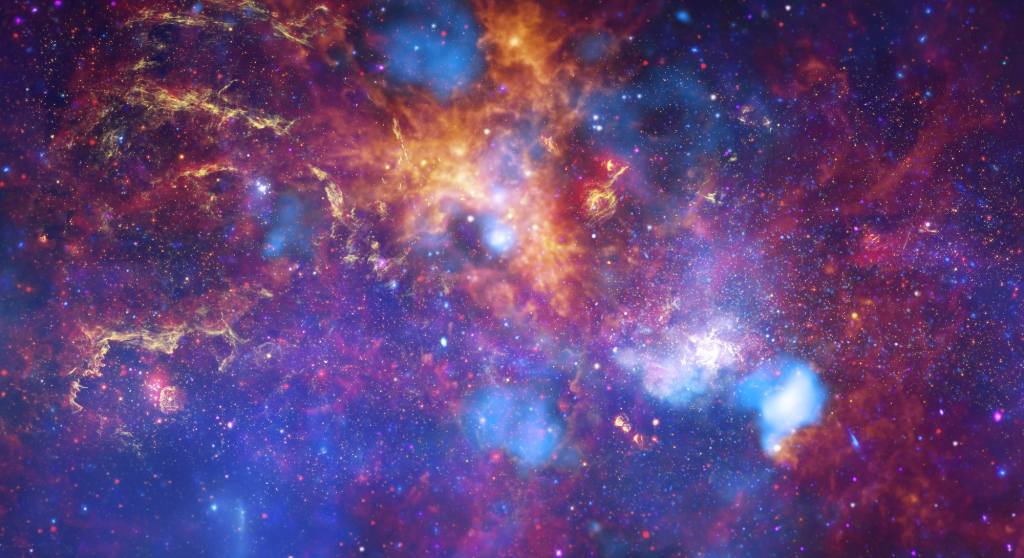
Again Sambhogakaya is the energetic interplay of the fathomless ocean of primordially awake knowing and that from which it is inseparable, namely each and every particular event and phenomena all of which are in some sort of constant dance or play, arising and then dwelling for a while doing whatever dance any particular wave does, and then dissolving back into the oceanic continuum from whence they came and from which they never truly separated but in the meantime got to express some sort of drama, some sort of beauty, some sort of dynamic, some sort of display, some sort of life, some sort of something. (Hopefully the picture at the beginning of this article now makes more sense.)
So that is what is going on each and every minute of each and every day with each and every being in each and every place anywhere and everywhere. And this, if you will, is the traditional Buddhist view of Reality, these are the ‘Three Bodies of Buddha,’ the Three Kayas,or what I think of as the inseparability of One and Many.
Hopefully now after reading this Article’s everyday language you can penetrate into what is being discussed in typically opaque specialist vocabulary. It’s not that the explanations are wrong or poorly worded but too often any simple experiential meaning gets lost under the huge pile of verbiage.
All beings in this self-dreaming universe present aspects of Body, Mind and Speech. Flowers in their flowering communicate the lovely enlightened language of Flowering Being With manifold qualities of form, texture, colour, temperature, scent, beauty, sensitivity. All forms embody living languages of meaningful qualities – which some call ‘gods’ – Continuously broadcast and received throughout this dreamlike continuum.
Body Speech and Mind are shorthand terms for the Three Kayas. The text emphasizes the speech aspect in order to highlight how all the forms about to be listed include an intelligence aspect, that the qualities they express are built into the form in the first place, which is why a flower ‘communicates … flowering being…… all such forms together weaving karmic spells of interdependent being, living languages of meaningful qualities.’
Here is the full text from the Long Daily Liturgy:
All beings in this alive and awake self-dreaming universe present aspects of: Body – some sort of shape or form manifest in location and terrain Mind – some sort of consciousness, awareness or intention Speech – some sort of communicative expression of meaningful information singing a Living symphony of ever forming and reforming clouds and waves of Primordial Intelligence A marvellous holographic self-mothering Song making itself up as it goes along Saturated in interconnected living presence pervading all and everything Manifesting no end of self-organizing life forms, living creatures imagined into sentient being With all their co-emergent elemental and inanimate phenomena Comprising luminous intelligence inseparably part of the universal background field continuum Containing, including and pervading all and everything, micro and macro.
Flowers in their flowering communicate the lovely enlightened language of flowering being With manifold qualities of form, texture, colour, temperature, scent, beauty, sensitivity; As with flowers so with all, from microscopic universes to macrocosmic spiralling galaxies Multifarious microbes permeating soil and all life forms, primordially awake plants Majestic trees, incredible insects, fabulous fishes, beautiful birds, marvellous Animals, minerals, metals, crystals, silver, gold, jewels Rainbows, sky, stars, ocean, wind, clouds, rain, sunlight, moonlight, thunder, lightning Mountains, valleys, jungles, deserts, farms, steppes, rural, urban, stormy, placid Earth, water, fire, air, red, green, blue, yellow, purple, indigo Visibles, touchables, smellables, tastables, audibles, edibles Perfumes, spices, herbs, meats, fats, oils, vegetables, fruits, sweets, sours, fermented Wools, cottons, furs, silks, costumes, uniforms, males, females, dressed, naked: All such forms together weaving karmic spells of interdependent being Living languages of meaningful qualities – which some call ‘gods’ Continuously broadcast and received throughout this dreamlike experiential continuum All basically empty, basically luminous, basically workable, basically good.
Hopefully these lines now make more sense in the light of the Three Kayas description and vice versa.
As part of the limitless cornucopia of particularities in the phenomenal world we are born into and help create as we go moment by moment we also have inner feelings, our emotions, reactions and so forth, which in turn have languages of their own which manifest, for example, as different tribal and national cultures and languages. Moreover all creatures express no end of feeling and emotion albeit in different ways in accordance with their various makeups. This is why the Long Form text continues next with:
When we pay close attention and relax into any unfolding inner feeling like Courage, love, wonder, joy, disgust, fear, anger, sadness, grief, peace
– fetid cesspool, putrid sewer, whispered moan of pain or pleasure
– chronic fatigue, exhaustion, ache or anguish, a simple touch, taste, sound or smell
– blue jungle butterfly fluttering aslant golden sunbeam
– white daisies of detail in willowing green meadow of awareness Through the portal of any such particular we plunge into an ocean of experiential infinity Where one is many, all are one, where we are all each others’ undying and unborn ancestors All we think, say and do echoing throughout eternity, an ever-present lineage of Mothers, fathers, brothers, sisters, lovers, teachers, allies, enemies, leaders, followers Friends, rivals, predator, prey, masters, slaves, warriors, cowards, saints and sinners So many shapes and colours, large and small, coarse and fine, fangs, teeth, claws and fingernails All inseparable from innate wisdom, all fellow poet dreamers.
(forgive formatting problems – there are some things very hard to control in the WordPress editorial interface)
Basically, we live in a universe filled with feeling and communication that features the multifarious many on the surface all of which reflect the underlying knowing presence of the ocean beneath of which they are an inseparable part no matter how much materialist scientists and cultural influencers attempt to persuade us otherwise!
The topic of spirituality versus materialism in the light of this Three Kaya world view will be the subject of a forthcoming article….
Turning away from complexities of this and that of me and mine of where and what and why and when turning toward simplicity like a bird tucking head ‘neath wing to sleep on bough like cloud slowly passing in blue above like my dog chasing her toy with the little bell inside like Bach harpsichord pieces sounding with early morning green tea like one breath at a time like plants in the early morning waiting for later sunshine standing still, present, fresh, simple, awake like dew on dawn grass like millions of leaves waiting in quivering stillness for wind like paint staying faithfully on a wall like old wrappers scudding across pavement expanse like you and me gazing into each others’ eyes and finding the smile of old love ready to crack another joke like bacon smell in the morning like steam rising from the coffee cup like a clean house with all in order like our dog running and jumping in the woods out of sheer joy of being like listening to naturally beautiful birdsong
like letting thoughts loose without addictively grasping them like letting feelings go, all returning to original gracefulness like following the path because the crunch of gravel is so satisfying like another simple sip of green tea like sitting quietly enjoying the primordial nature of mind like letting go like letting be like loving you like you loving me like we are all one and none.
Note: This song of simplicity relates to the ‘Effortless Resting’ section of the Lyme Liturgy:
The imagined situation vanishes like mist over a lake in the morning sun, Leaving body, speech and mind at one with the birdsong: Simple, present, fresh, ordinary, naked, awake.















 baronbrasdor.art