Here follow two Readings, the first about whether or not Trump will be President #47, and the second about whether or not the U.S. Elites are deliberately trying to collapse the United States. They are both attached below as viewable and/or downloadable pdf’s.
The first one has no changing lines and is a relatively straightforward Reading except for one remarkable coincidence, something Yi afficionados get used to, namely:
June 7th 2023 Cast: Will Trump be a viable candidate in 2024?
Aug 3rd 2023 Cast: Will Trump’s trial result in Mass Riots?
September 16th Cast: Will Trump be US President #47?
All three have one glaring thing in common: The Nuclear is #43, Breakthrough. #43 looks like this:
䷪
As you can see, it has one broken/yin line at the very top. Using William Horden’s binary counting method this Hexagram’s mathematical value is 1.* Also interestingly, this Hexagram’s traditional King Wen version commentary describes the situation thusly, first by Legge, then by Wilhelm:
Legge: Recognizing the risks involved in criminal prosecution, justice demands a resolute proof of the culprit’s guilt in the royal court. One informs one’s own city that armed force is not necessary. In this way progress is assured.
Wilhelm/Baynes: Break-through. One must resolutely make the matter known at the court of the king. It must be announced truthfully. Danger. It is necessary to notify one’s own city. It does not further to resort to arms. It furthers one to undertake something.
The top line makes the upper trigram Lake instead of Heaven. The lower trigram is Heaven. The Lake trigram is associated with beauty, pleasure and ease, but also Speech since the opening at the top resembles a mouth. The Speech in this #43 trigram expresses the Truth of Heaven within from the lower trigram (and also the second and third moving up one line at a time as one does when determining the Nuclear trigram which is also #1). So there is mucho Heaven in this Binary #1 Hexagram and the commentary intimates that one must resolutely make the matter known at the court of the King, which is the highest court in the land in any monarchy. In the U.S. situation today, that means SCOTUS, the Supreme Court of the United States.
The United States are often called ‘The Union’ in American parlance, and in this most recent Trump Query the Past Influence (using Horden’s I Ching Mathematics method) is #8 Union which instead of the Nuclear’s one yin line in the top place, features one yang line in the fifth place of Leader and indeed this Hexagram #8 has to do with strong leadership bringing a nation together leading nicely into #34 which is sometimes translated as Great Leadership. There is no Derived Hexagram created by changing lines, so here one takes the next Hexagram in the Sequence, which here is #35 following #34. #35 is one of the most positive Hexagrams in the Yi: it depicts the Sun (Fire) rising above the horizon (Earth). Interestingly, the commentary says:
“The powerful prince is honored with horses in large numbers. In a single day, he is granted audience three times’.
Considering the Nuclear #43 involves going to the highest Court, which is usually the third one in the process after beginning at the lowest Court, then going next to a Federal District Appeals Court, and finally appealing at the Supreme Court, this #35 being ‘granted audience three times’ seems remarkably apropos, not to mention this being the third Query about Trump in a row with Nuclear #43 indicating that Trump must make the truth known to the Supreme Court where this is probably all headed. The notion in most #43 commentaries is that one must be resolute in speaking truth to the highest power in the land and then all will be well rather than resorting to arms. In the case of this Query, the #35 indicates that if #34 Hexagram unchanging fulfills its essential destiny, then naturally all will turn out quite well for the ‘powerful prince’.
Meanwhile, the Query about the US Elites depicts a very different, and decidedly unfavorable, dynamic. I won’t go into it too much here, since the document speaks for itself, except to point out that basically it depicts a ‘bloody mess’ both literally and figuratively. In any case, broadly speaking it seems that according to this ancient, oriental oracle combining mathematics, symbology and chance (not to mention any confusions and prejudices of your humble host!) that Trump’s prospects are much better than the US Elites’ – whoever they are….
As always: time will tell.
* Going down from top: Line 6 = 1pt; Line 5 = 2 pts; Line 4 = 4 pts; Line 3 = 8 pts; Line 2 = 16 pts; Line 1 = 32 pts. If you add up all six lines it comes to 63 points. And all six lines yang adds up to 0 points. So there are 64 points available to be counted. A very ancient binary counting system, if you will as explained in William Horden’s I Ching Mathematics.
About “A Prophecy of Evil: Tolkein, Lewis and Technocratic Nihilism”
by N.S. Lyons
First, this is an admirable and delightful essay. I believe I understand notions like Chest, courage, transhumanism and totalitarianist Orcs, however on first read-through, especially during the initial parts, I had a problem with some of the terminology. This is a vocabulary quibble essentially, but since it involves one of the root terms of the piece, the Tao, I thought the author and other readers might find it of interest to explore a little. First, some excerpts:
This “something else” that exists as a reality independent from and prior to the subjective is what Lewis – drawing deliberately on a non-Christian tradition to point to its universality – labels as the Tao (or “the Way”). The Tao represents an independent reality of values just as concrete as the independent reality of objects.
For while the value systems of human societies – or at least, those inherited from before our modern age – might have many outward differences, “what is common to them all is… the doctrine of objective value, the belief that certain attitudes are really true, and others really false, to the kind of thing the universe is, and the kind of things we are.”
And:
This thing which I have called for convenience the Tao, and which others may call Natural Law or Traditional Morality or the First Principles of Practical Reason or the First Platitudes, is not one among a series of possible systems of value. It is the sole source of all value judgements. If it is rejected, all value is rejected. If any value is retained, it is retained. The effort to refute it and raise a new system of value in its place is self-contradictory. There has never been, and never will be, a radically new judgment of value in the history of the world.
Rather:
What purport to be new systems or (as they now call them) ‘ideologies’, all consist of fragments from the Tao itself, arbitrarily wrenched from their context in the whole and then swollen to madness in their isolation, yet still owing to the Tao and to it alone such validity as they possess… The rebellion of new ideologies against the Tao is a rebellion of the branches against the tree: if the rebels could succeed they would find that they had destroyed themselves. The human mind has no more power of inventing a new value than of imagining a new primary colour…
“White!” he [Gandalf] sneered. “It serves as a beginning. White cloth may be dyed. The white page can be overwritten; and the white light can be broken.”
“In which case it is no longer white,” said I. “And he that breaks a thing to find out what it is has left the path of wisdom.”
…that which is good must conform to this Tao, and so that which is good must by definition first be that which is true. To pervert or obscure the truth of words, or anything which is true, is to attack the Truth writ large, i.e. the Tao, and thus to begin to melt away all solid ground from which any stand at all can be mounted against the encroach of total meaninglessness and total disorder. In the end, no conception of human value – or any fixed truth – can then withstand this assault, and so we abolish ourselves along with our perception of reality, inhumanity triumphs over man, and the void devours.
“A dogmatic belief in objective value is necessary to the very idea of a rule which is not tyranny or an obedience which is not slavery.”
He pointed out that it should be obvious to any serious reader that, to paraphrase Solzhenitsyn, the line between good and evil runs through every hobbit’s heart. And yet it was true that this didn’t mean that black and white were up for subjective interpretation: “‘How shall a man judge what to do in such times?’ asks someone in Volume II. ‘As he ever has judged’, comes the reply. ‘Good and ill have not changed…nor are they one thing among Elves and Dwarfs and another among Men.’ This is the basis of the whole Tolkienian world.”
Despair of objective truth had been increasingly insinuated into the scientists; indifference to it, and a concentration upon mere power, had been the result… Dreams of the far future destiny of man were dragging up from its shallow and unquiet grave the old dream of Man as God. … And now all this had reached the stage at which its dark contrivers thought they could safely begin to bend it back so that it would meet that other and earlier kind of power. Indeed, they were choosing the first moment at which this could have been done. You could not have done it with nineteenth-century scientists. Their firm objective materialism would have excluded it from their minds; and even if they could have been made to believe, their inherited morality would have kept them from touching dirt… It was different now…
The vocabulary quibble involves the difference between on the one hand objective reality or ‘objective materialism’ and on the other hand what the author describes as the Tao’s ‘objective values’ or ‘objective truth’. The use of the word ‘objective’ was throwing me off because it is often found on the battlefield in the conflict between reductionist materialists and idealists, and I have been skirmishing all over this issue in recent posts both in challenging the reductionist materialism view of what they often call ‘objective reality’ whilst also lamenting its widespread, deleterious effects on Man and Society. (I should also note that have not been taking up the mantle of idealism, per se, merely raising concerns about scientific materialism.)
Reductionist materialism, which posits that only that which is made of physical matter is real, posits a self-existing ‘objective’ external reality different from our own subjective reality experienced via mind and senses. The red flags raised by this view are its viewing the biological world as essentially a machine. Evolution, for example, is described as a mindless process involving ‘random genetic mutations’ some of which survive and others of which fall by the wayside. This view inevitably leads into nihilism because a world based on mindless mechanical mutations lacks meaning and purpose except perhaps simply to exist for the sake of existing. Living in a body in a world without meaningfulness, purpose, higher callings, development of virtue or any reason to struggle, to exercise nobility or manifest courage in the face of evil, this is a meaningless life and world devoid of human dignity or agency nor of any value.
Such a world can only end in totalitarian dystopia, for the machine mind loves order, demands that all parts do only that which is demanded of them and no more, and will do all it can to eliminate chaos which is anathema to the well-ordered workings expected of any machine. This is why totalitarian leadership obsesses over control such as censoring speech or actually culling the herd of undesirables. Any sort of totalitarian regime will naturally be run by a relatively small leadership class able to exercise control to which everybody beneath is subject. Such structure easily evolves into as ruthless and inhuman a tyrant as any corrupt autocratic monarchy and by its very nature undermines core principles of sovereignty and unalienable rights by blurring any difference between self-governing citizen and sworn subject in a Kingdom.
Also, ‘objective reality’ regards subjectivity as illusory and thus irrelevant. Whereas if we look at a term like the Tao, its customary usage in contemplative traditions assumes experience as a bedrock element. We can conceptualize a ‘real’ world existing outside the frame of reference of experience, but that is no more than a cognitive construct. We cannot see, touch or measure such a world since ‘external reality’ is always and only processed via our living, ‘subjective’ senses and mind. The notion of ‘objective reality’ is, therefore, a matter of faith, a belief which can never ‘objectively’ be proven. Scientists who insist they only deal with truth and facts in objective reality are philosophically confused, if not outright disingenuous.
Here is the Wikipedia entry on the Tao:
In all its uses, the Tao is considered to have ineffable qualities that prevent it from being defined or expressed in words. It can, however, be known or experienced, and its principles (which can be discerned by observing nature) can be followed or practiced. Much of East Asian philosophical writing focuses on the value of adhering to the principles of the Tao and the various consequences of failing to do so.
In most parlance, that which is ‘known or experienced’ by definition is not ‘objective’, hence my initial confusion when reading this Article.
Lyons discusses the Tao as ‘objective values’. Now that I know what he means, I can relax, but I suggest he consider changing his terms a little. Let ‘objective reality’ be where ‘objective’ hangs its hat and let’s keep objective away from experiencing as much as possible.
For the Tao how about: ‘bedrock values’ or ‘primordial values’.
For truth how about: ‘absolute truth’ or ‘primordial truth’.
In any case, the Tao is something experiential not objective; that’s the nub of it for me, though others might disagree with this use of the word ‘objective’. I won’t paste it in here, but the word has many definitions and usages which is possibly why I was a little kerfuffled at first. And I think it does because it is a battleground word in this materialist age.
I think this important because evil, which this essay examines, is for sure in the realm of subjective experience, moreover is a Way of Being, in this case by Lying, so it is a corrupted Tao but still a Tao of sorts. Similarly, virtue is something actively promulgated, nurtured, developed, chosen – and experienced; it doesn’t just exist somewhere out there on its own, which again the word ‘objective’ connotes.
There is a whole set of teachings in the Buddhist tradition about what is translated as ‘absolute’ and ‘relative’ truth. Maybe I’ll review them in a subsequent post. But for now, we can evidence this ourself in basic meditation experience or by exercising logic, contemplative tradition style. Here from a work in progress, Daniel Hessey’s version of the King Wen I Ching translated from the perspective of the Shambhala School of Buddhism; this section introduces the principles behind the Trigrams, but interestingly, starts with a definition of emptiness from Buddhist Mahayana:
“How should the characteristics of emptiness be understood? The absence of dualistic entities, the apprehended and apprehender, and the entity that is the absence of such entities—this is what characterizes emptiness.” 94
An example of non-duality is nowness. Nowness does not depend on the past, which no longer exists, nor on the future, which has not yet come into being. Nowness itself has no duration and can thus be thought of as “empty.” It can be defined as “that which is not past or future,” which is another way of saying “that which is not duality.” Yet nowness, lacking any substance or characteristics in itself, is not void. The space of nowness is full of energy and intelligence. It accommodates the immediate Brilliance of what we perceive as relative experience, which can only take place in the present. Thus, nowness itself possesses tremendous power and potency and is genuine, not imagined. This is the energy of yang, the firm line. It is termed “firm” because it is beyond duality, causes, and conditions.
94. Khenpo Shenga and Ju Mipham, Middle Beyond Extremes: Maitreya’s Madhyantavibhanga with Commentaries, trans. Dharmachakra Translation Committee (Ithaca: Snow Lion Publications, 2006), loc. 287 of 2053.
I like to describe this another way as well: if we contemplate the nature of time, specifically a moment in time, we can easily deduce that there is no such thing. For a moment to exist it must have a duration featuring a beginning, middle and end like any other arising relative phenomenon. Yet no matter how brief you make that moment, you can always divide it in half. This results in what is called an ‘asymptote’, and indeed Hessey translates the Yi elsewhere in his text as ‘The Great Asymptote’.
But consider further: if the present does not comprise moments with duration, therefore it has no beginning or end. It always is … eternally arising. Our mind jumps around from one relative place to another creating seeming shapes and differences with cognitive functions that can conjure up notions like ‘past’ and ‘future’, but just as with ‘objective reality’ such things can never be actually experienced, only conceived using language. As such, they are only ideas, not things at all. It may not be false exactly to create labels like past and future, but it is not true to call them ‘real’ or scientifically factual. In this sense, the eternal present, or nowness, though empty of duration, shape or substance, is nevertheless some sort of Truth, an Absolute or Primordial Truth. And note here again that this Truth is something experienced by us as living beings, not a self-existing outer objective phenomenon. Indeed, Truth only exists in the realm of the experienced subjective, never in any non-experienced objective sense. And in that experiential realm, we can directly experience Absolute Reality, indeed the eternal, for nowness is eternal given it exists but is unborn and undying. Food for thought…
Iain McGilchrest explores Truth and Value length, regarding them as essential elements of reality, not merely human adornment. I suspect N.S. Lyons, if he is not familiar with McGilchrist’s ‘The Matter with Things’, would very much enjoy it despite the daunting over thirteen hundred pages length.
Again, this was just a niggle. The essay itself raises deep, serious, heartfelt questions about the nature of our societies and the Evil therein. The older I get, the more I appreciate Tolkein’s universe wherein he depicts reality in that fictional realm far better than just about any Western journalist paid to do so every day. It is reassuring to have his vision to inform us but a tad disturbing that the Truth and Values revealed therein are so generally absent in our culture today. Because we do live in a time when Evil is being given too much latitude; increasing totalitarian control is on the rise; the armies of Sauron are indeed already marching among us….
An exploration of Yin-Yang Dynamicsin Geopolitical and other Contexts
I have combined Articles 60 to 75 into a single pdf available for download below and also on the Liturgies page which will be renamed ‘Downloads’ when I figure out how to do that!
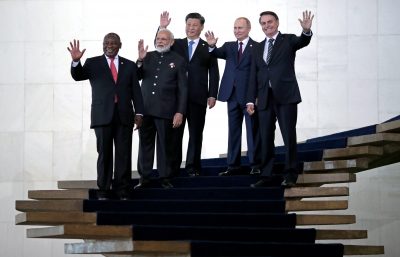
Since mid-July this blog has been offering up Articles that have been swirling around two general issues, one involving Good and Evil ruminations and the other involving reductionist materialism and its personal and societal ramifications. In a recent piece, we looked at some of the language in statements from the BRICS XIV 2022 Declaration (the day after which a more recent 2023 Declaration was published saying more of the same) to examine it for signs of the sort of cognitive blindness that the reductionist materialism evidences. (Simply put, an over-emphasis on the left brain approach, as discovered and defined by Iain McGilchrest an accomplished neurologist, clinical psychiatrist, philosopher and author.)
Then, in looking at the two BRICS Declarations along with a few pundit commentaries, we reflected on the narrative strenuously promulgated by Presidents Putin and XI, namely that the US-NATO axis is an unprincipled, self-serving globalist tyrant imposing its ‘Rules-Based Order’ on other nations in ways that always and only benefit its own interests, whilst on the other hand the ‘Global South’ or ‘Rest of the World ‘(‘RoW’) is finally pushing back against this Hegemon determined to build a better, fairer world based on mutual cooperation not hegemonic plunder, violence and exploitation which has been the Way of the West for several centuries now and counting.
In the recent BRICS conference in Johannesburg from which came the latest XV 2023 Declaration, ten nations asked to join with another thirty or so already lined up, the main thrust being that of resisting US-led Hegemony which dominates and exploits them without contributing to their own development, indeed hampering it with crushing IMF debt. Six were granted entry with more no doubt to be accepted in coming years. There is a feeling from this latest conference that a paradigm shift is underway, that Old World Order is now giving way to Multipolar New World Order which is no longer maybe happening some time in the future but is already here and with epoch-making potential. At the same time we noticed in their language that any executive functions implied in many of their published Articles involve existing United Nations or other prominent NGO’s like the World Health Organization (WHO), all funded by public-private partnership, in other words both governments and private foundations sponsored by international oligarchs like Bill Gates.
So: the over-arching narrative is that the RoW is creating a geopolitical alternative to the existing post-war world order dominated by the US-NATO ‘Western’ axis, especially since the 1991 demise of the communist USSR. For sure, there is some truth to this narrative.
But what if it is yet another Big Lie? This too is possible. After all, the IMF, WTO, WHO and so on are all funded by the same occluded Big Finance forces that are behind the UN and dominate all Western governments. In the US, everyone now has heard the term ‘Deep State’ though few can define it. To some it is a perpetual Civil Service that has more clout and less public accountability than elected officials, including Presidents or Prime Ministers. To others it’s a more shadowy network of old Banking Houses who own the City of London and the Federal Reserve and who also control senior branches of national Intelligence which together seem to steer national and international policy, trumping whatever lesser influence elected representatives may bring to the table for a few years here and there. Some say that huge investment houses like Vanguard and BlackRock really run the West, being the visible tip of the iceberg of such hidden Deep State power networks. No matter what they are and who leads them, there does seem to be some truth in the notion that they not only control most Western polities but also the international bodies they created like the UN, WHO, WEF etc. And now here come recent BRICS Declarations openly stating that they are aligned with recent UN accords and initiatives. So it seems that BRICS and the UN and the WEF and the Deep-State-run Western Hegemon and the RoW are all following the same play book. If so, then surely the meta-narrative of The Hegemon versus Rest of the World is false? Is there any other conclusion to draw?
And if so, does that mean that all the positive, mutually cooperative rhetoric coming out of the Multipolarity Movement is a lie and the Hegemon is indeed as benign and generous as it proclaims to its own populations? Probably not, since again there is some truth to the ‘Hegemon versus RoW’ narrative. But that doesn’t make the emerging Multipolar Narrative necessarily true either. Which is where the thrust of this blog comes in, namely exploring various traditional contemplative issues in the light of everyday occurrence, in this case the inter-relationship, indeed possibly interpenetration, of so-called Good and so-called Evil which was being explored before the latest flurry of geopolitical Articles arose.
This rumination theme returned in a recent email to an old friend, Roger Tucker, who runs the geopolitical aggregator site www.sitrepworld.info.
“Well, I’m not fully on board with the dissidents. [Those claiming Multipolarity movement is a Deception.]
Something have been exploring with my articles of late is the inseparability / coemergence of light and dark, good and evil. I think some of the things going on are mixes of both good and evil rather than either good or evil.
The [Multipolarist] cooperation and emphasis on win-win development seems real, indeed admirable.
As does the observation that overly exploitative IMF policies have deliberately suppressed development in poorer nations for far too long. This cannot continue. That seems true as well.
But also China’s rise has been largely due to their allowing top-level Western corporatism and finance into their nation in return for access to Western markets which in turn, quite predictably, hollowed out Western manufacturing greatly harming millions of peoples’ lives about which ‘Globocap’ types couldn’t care less. The point being that China didn’t do this on her own and still isn’t. Western elites are part of China’s rise.
Does that make the BRIC bloc’s desire to do things differently a hoax? I doubt it.
But are they as independent and purely motivated as they portray? I doubt it.
Same with Putin and Russia. Which makes the seeming birfurcation and conflict true on some levels but not on others; there is smoke and mirrors in the mix. Probably like most times in history the aristocracy who frequently consult with each other as fellow peers even as their populations on the ground are slaughtering each other in the trenches as enemies. As I like to say there are always layers within layers and levels upon levels; endlessly so.
Exhibit 1: the entirely unnecessary Ukraine war which has cost the lives of several hundred thousand young men for absolutely no good reason. But at the same time allowing all these geopolitical changes to move forward more rapidly and as far as concerns the West, the elites are not seen to be driving such changes rather responding to the other side which is painted as evil, authoritarian, stubborn etc. – ‘the Enemy’. Indeed both sides can excuse what is happening by blaming the Enemy.”
Then yesterday in a well established alternative media publication called the Off-Guardian, I came across an article about Russia well worth reading; here is their closing argument:
“So, we think the real question is – in this stark new post-2020 reality what does “pro-Russian” (or pro-American, or pro-any state anywhere) even mean any more?
What big moral questions divide them? What real options are we offered?
– Being coerced into getting poisoned by SputnikV rather than Astra Zeneca?
– Being locked up and lied to by Biden as opposed to Putin?
– Getting Agenda 2030 served up via Moscow as opposed to DC or London?
– Having your CBDC in programable dollars as opposed to programable rubles?
Currently to be “pro-Russia” is to be pro-Globalism, pro-Agenda 2030, pro-phony pandemic legislation and pro-clot shots.
We absolutely are not pro any of those options.
Are you?
So are you NATO shills now?
Yes. Yes, we are.
Even though we have literally never endorsed a single action NATO has taken. Ever. Even though we have only ever pointed out NATO is, and always has been, a force for chaos and evil in this world…
we are now “NATO shills”.
That’s the great function of the fake binary – it turns intelligent people into human on/off switches, blinded to nuance or free thought.
If you don’t side with Team A, then you must be siding with Team B. You have to pick a side even if the only difference between them seems to be the color of their jerseys. And if you refuse to pick a team someone will pick one for you and insist you are in it.
What we want to say to these people is this –
If you strip off your pre-2020 preconceptions, turn down the feel-good, psychologically manipulative speeches from beloved leaders – what government anywhere is currently working for a better world, or any world beyond the Great Reset, carbon-monitored Agenda 2030 New Normal hellscape?
I think the answer to that, dear binary-hugger, is – none of them.
This is where we are right now and why we are no longer saying things that can be defined as “pro-Russian”.
Our values haven’t changed. The situation has changed. The reality on the ground has changed.
But wait, I hear some of you cry, ok Putin may be shilling for covid and ok, he might be promoting the same globalist nightmare as every other major world leader..
but you can’t deny he’s fighting Nazis in Ukraine!
Surely this gives Russia back some small amount of moral ascendancy?
Well, in so far as Russia – or anyone – is genuinely fighting Nazis they will continue to have our support, which is why we were quick to point out last year the hypocrisy and deception of the Western media version of events in Ukraine.
But let’s not be hopelessly naive…
I mean that’s Propaganda 101 after all – if you want to quell dissent, divert attention from unpopular policies and rally faltering support – start a war.
Sorry, I mean a “special military operation”.
Do we agree Russia is suddenly absolved and suddenly a righteous cause again just because it moves some troops into Ukraine – while at the same time continuing the same anti-human agenda of lies and fear porn?
Well, surprisingly, no, we don’t. Any more than we think this is about Putin “defending humanity” against Schwab, Gates and the globalist hordes.
But we’ll be talking more about this curious, contradictory and puzzling “not-war” – and its stenographers and apologists amongst the alt media – very soon… “
For those interested, the first critical article I read was BRICS – a key instrument for establishing the New World Order. Yourie Roshka’s style is overly forthright perhaps, but he makes good points, cites the Declarations frequently, and also links to the next piece about good and evil coexisting which is really the topic of this Article.
This last piece is from author Iain Davis, a staunch critic of the Multipolarity agenda though no fan of NATO Hegemony.
“The notion that a political leader, or anyone for that matter, is entirely bad or good, is puerile. The same consideration can be given to nation-states, political systems or even models of world order. The character of a human being, a nation or a system of global governance is better judged by their or its totality of actions.
Whatever we consider to be the source of “good” and “evil,” it exists in all of us at either ends of a spectrum. Some people exhibit extreme levels of psychopathy, which can lead them to commit acts that are judged to be “evil.” But even Hitler, for example, showed physical courage, devotion, compassion for some, and other qualities we might consider “good.”
Nation-states and global governance structures, though immensely complex, are formed and led by people. They are influenced by a multitude of forces. Given the added complications of chance and unforeseen events, it is unrealistic to expect any form of “order” to be either entirely good or entirely bad.”
The text is both italicized and emboldened because it presents what this Article is about which is NOT whether or not the Multipolar Agenda is another Big Lie; determining that is something for each individual to decide for him or her self. Rather, it’s about the fundamental ambiguity of reality in relation to so-called Good and Evil, and many other similarly related yin-yang polarities. Good and evil are always present each and every moment in life because every moment we choose whether manifest virtue or not. Which means also that in our participation in the world, both our limited personal world and the larger societal world which we read about from afar but are also a part of and whose machinations effect our lives on the local level, we can choose a virtuous manner or not. As is rightly said: ‘manners maketh man’.
So my attitude is that insofar as some of the stated aspirations of the BRICS and Multipolarity bloc are positive and reasonable, we support them and wish them well. Maybe there are nefarious agendas hidden in the mix, including outright lies; these am not party to. And also not all people in the exploitative Hegemonic bloc are wicked so we can wish them well too and pray that we within such captured polities nevertheless can follow the better angels of our nature. We can hope that the US can restore its representative republic. There are people in the electoral process who are pledging to do so, namely Trump, RFK Jr and Ramaswamy. We can wish them all well and need not allow long established cynicism about Western decline to undermine such positive aspirations. Meanwhile of course we each have our lives to lead on immediate and local levels whilst not getting distracted by overly heady, abstract realms. But even when dealing with distant and abstract matters – such as this BRICS business – we can choose to maintain some sort of virtuous, positive, sane, basically good attitude about it rather than falling into some sort of cognitively dissonant, or mentally discursive, stupor.
This ties in with the materialism issue: by positing some sort of external ‘objective reality’ divorced from mind or any other intelligence, a ‘matter-only-is-real’ model, we conveniently absolve ourselves of any agency because reality is seen as something autonomous that happens on its own which we therefore have nothing to do with. Indeed, to the typical materialist atheist, the notion of valuing virtue is anathema, quaint, even absurd. Religious faith, basically, is for people with mental problems, people comfortable dwelling in delusion. That such a criticism can validly be lain at their door never occurs to them, and if one were to do so they would be unable to grasp it.
When contemplating social issues, like ongoing elections, geopolitical developments or the conflict in Ukraine, we tend to revert to materialist default mode, regarding these things as part of an external, objective reality. The instant we do so, we divorce ourselves from such phenomena erroneously believing we are disconnected from them.
Leaving aside any argument as to whether or not our attitude does or does not effect people and events far away, the fact is that our contemplation of far away events and people effects us. And at that point we do have agency, and again we have the choice whether to regard such things with sanity or confusion, with virtue or non-virtue, with compassion or disaffection. In this way, at least, we are very much connected to such things and thus also they with us. So how we regard them, how we feel about them, how we respond to them, is something active from within ourselves, not passive from external ‘objective reality’.
The point being that goodness is something done and felt, it doesn’t exist on its own in an (imagined) external objective realm. The materialist view tends to ignore this fundamental truth of human experience, that ignorance being essentially the same as the visual blind spots in the Gorilla and yellow spot experiments from recent Articles. This profound ignorance has far-reaching effects in that it becomes part of ways in which we both individually and collectively absolve ourselves of responsibility for engendering Good, or virtue, in self and others.
That’s one side of it. The other being that good and evil coexist within each of us, always. This perhaps is symbolized by the famous Tai Chi symbol. We like to think we can align with all-good, but it simply doesn’t work that way. So am comfortable regarding both The Hegemon and the Multipolarity movement as having both good and evil elements, as is the case with myself. Otherwise, there is a tendency to insist that my side is right and the other side is wrong at which point neither side can ever meet the other. This is the same as one’s own inner good side being unable to meet and greet one’s own inner bad side. No, the good side sees and accommodates the evil within, as well as the evil without. Both are always in play.
The following was a post in the MoA forum about the XIVth BRICS Summit Beijing Declaration of 2022, introduced by the erudite poster karlof1 who is all over the multipolarity initiative and often writes about Russia and China. He kicked the discussion off with the above Declaration link and his own comment:
“Elsewhere, it appears that many were self-deluded into believing BRICS never had an ideology within its makeup, as Fyodor Lukanov revealed today in an RT op/ed. The BRICS Declaration made at the end of its 2022 Summit in Beijing as well as those issued before all contain ideology and the values that undergird BRICS; so, I have no idea where supposedly intelligent people got the idea that BRICS had no ideology or ideological goals/standards. As evidence, here’s point #2 from the 2022 Declaration:
“We recall that in the past 16 years, upholding the BRICS spirit featuring mutual respect and understanding, equality, solidarity, openness, inclusiveness, and consensus, BRICS countries have strengthened mutual trust, deepened intra-BRICS mutually beneficial cooperation, and closer people-to-people exchanges, which has led to a series of significant outcomes. We reiterate the importance of further enhancing BRICS solidarity and cooperation based on our common interests and key priorities, to further strengthen our strategic partnership.”
I didn’t bother emphasizing anything because IMO those values/ideologies are self-evident, and because I doubt Mr. Lukyanov will read this comment.”
Am going to post in quite a few items (redacted with …) to show the range of issues covered in the BRICS Declaration so those not interested in reading through the whole document (actually not all that long) can grok a quick overview.
12. We reaffirm our commitment to maintaining a strong and effective Global Financial Safety Net with a quota-based and adequately resourced IMF at its center. …We welcome progress on voluntary channeling of Special Drawing Rights (SDRs) from countries with strong external positions to support countries most in need, as well as the IMF’s decision to establish the Resilience and Sustainability Trust (RST).
13. We note that the COVID-19 pandemic has caused serious shock and hardship to humanity…This is posing huge challenges to the implementation of the 2030 Agenda for Sustainable Development…
14. …We support the leading role of the WHO in combating the pandemic, as well as acknowledge initiatives such as the COVAX and the ACT-A. We recognize the importance of the discussions in the WTO on relevant IP waiver proposals…We stress the need to continue to strengthen the cooperation on …recognition of national document of vaccination against COVID-19 and respective testing, especially for purpose of international travel.
15. We reaffirm our commitment to multilateralism and continue to support World Health Organization (WHO) to play the leading role in the global health governance, while supporting other UN relevant agencies’ activities….
17. We stress that BRICS countries should be better prepared for COVID-19 and future public health emergencies… We welcome the virtual launch of the BRICS Vaccine Research and Development Center and commend the “Initiative on Strengthening Vaccine Cooperation and Jointly Building a Defensive Line against Pandemic”. …
18. We support continuing to hold the BRICS TB Research Network Meetings, which will contribute to achieving the WHO goal of ending TB by 2030. We support the …holding of a BRICS Seminar of Officials and Experts in Population Development in the second half of 2022.
21. We commit to respect the sovereignty and territorial integrity of all States, stress our commitment to the peaceful resolution of differences and disputes between countries through dialogue and consultation, support all efforts conducive to the peaceful settlement of crises.
Expediting Implementation of the 2030 Agenda for Sustainable Development
52. We note with concern that the COVID-19 pandemic has disrupted efforts to achieve the 2030 Agenda for Sustainable Development and reversed years of progress on poverty, hunger, health care, education, climate change, access to clean water, and environmental protection. We reaffirm our commitment to the implementation of the 2030 Agenda in all its three dimensions – economic, social and environmental – in a balanced and integrated manner.
53. We commemorate the 30th anniversary of the United Nations Framework Convention on Climate Change (UNFCCC) and call on all parties to adhere to the principle of common but differentiated responsibilities and respective capabilities… We recall relevant provisions of the Paris Agreement, emphasizing that the Paris Agreement aims to strengthen global response to the threat of climate change in the context of sustainable development and efforts to eradicate poverty, and that peaking of Green House Gas (GHG) emissions will take longer for developing countries. We underline that the developed countries have historical responsibilities for global climate change, and should take the lead in scaling up mitigation actions and scale up indispensable support to developing countries on finance, technology and capacity-building.
57. We take note that the breakthroughs in the applications of digital technologies, such as Big Data and Artificial Intelligence (AI) may play an important role towards sustainable development. We take note of the BRICS Forum on Big Data for Sustainable Development. We support information exchanges and technical cooperation on AI technology. We recall the declaration of the 7th BRICS Communications Ministers meeting recognizing the rapid developments and huge potential of Artificial Intelligence technologies and its value to economic growth.
59. We commend the proposal to organize the BRICS High-level Forum on Sustainable Development. Taking it as an opportunity, we look forward to deepening cooperation on, inter alia, the fight against COVID-19, digital transformation, resilience and stability of industrial and supply chains and low-carbon development.
[The post continues:]
Thank you for engaging on this issue.
First, re: ‘ideology’:
Have been critical of Multipolarity because never heard organizational or procedural specifics. But regarding this XIV BRICS Summit Beijing Declaration as a Multipolar Order template, then one glaring thing missing – always my main concern – is conflict resolution mechanisms. Also, it lacks operational means for handling this plethora of issues. That said, it is seemingly proposing BRICS as the ultimate UN driver, perhaps after the wicked witch of the West has been shunted aside or finally Reset itself to join in.
Authority involves final decision-making power. This vision assumes a Round Table without any such ultimate authority. Unless again existing UN Committees are the assumed vehicle for such decision-making. Even so, the UN by design is not a true Executive Body; perhaps they plan to remedy that shortcoming.
Along with many feel-good ideal approaches for global growth, harmony and happiness this Declaration sounds like a whole lotta of Centralizing Globalism not just organic globalization; and the frequent references to 2030 Agenda, WTO, IMF, national documents of vaccination, Population Development etc. are alarming.
Am fully on board with dislodging the hegemonic banking cartels [the Eminence Grise behind the West’s Industrial Revolution and much of the Modern World globally]. But creating a WHO-IMF-WTO run New World Order sounds ghastly unless you believe the utopian promises in ideologies like communism and socialism crafted by intellectuals hired by the same banking cartels whose harms they now promise to eradicate via the many 3-letter Globalista, and thus cartel-funded, organizations featured so prominently in this Declaration.
Sorry, but color me cynical!
Additional Commentary:
This is the first I’ve heard of people complaining about BRICS’s lack of shared ideology and in retrospect I might have asked Karlof1 what he/they exactly meant by that, about which more below.1 I didn’t see all that much ideology in his excerpt, more like shared values or an agreed-upon way of working with each other. Which sounded excellent. Basically everyone doing everything they can to cooperate with no one member state or group of states taking advantage of any other.
But then after that brief overview of how pleased they are with such cooperation along the lines described, the rest of the Declaration involves specific initiatives involving a long list of different issues, though as I pointed out in my response, there is no statement about how such things are to be implemented unless it is by influencing the existing global institutions frequently referenced such as the UN, WHO, WTO, WHO and so on, because those organizations do have implementation capability, albeit limited out of respect for nation state sovereignty.
I could say more. But my response basically left things with open-ended questions, even doubt. Much is said in the Declaration but even more is left unsaid. That is the problem I have with the entire Multipolarity business. One side is cooperating nicely and being virtuous; they are up against the other side (the wicked West) which is generally quite evil, and, after concerted efforts over many decades via media and the school system, increasing numbers of Westerners feel the same about their own societies and race, that they are evil and so are not reproducing at replacement rates, a type of slow, polite self-genocide.
So we are presented with a very positive, go-forward dynamic on one side filled with good will and mutual cooperation and on the other side a hegemonic Demon, led by rapacious Elites presiding over an irredeemably wicked population. (This is a little exaggerated to make the point.) Which I find interesting because it hearkens back to the contemplations I was offering up here before getting into this latest few Articles about multipolarity, such as Articles 61 and 62 about Good and Evil and meeting the Devil, or Dark Side after which I veered off into the blindness, both literal and metaphorical, created by an over-reliance on the left brain which then segued into considering the importance of values over left brain style mapping, or abstraction. And to my mind this is where red flags should be raised wherever any sort of ideology enters the matrix.
Value-based principles are the sine qua non of a good life or good society. But ideology which sounds like but isn’t actually based in values are wolves in sheep’s clothing for evil, especially in societal or political form, nearly always presents itself as ‘doing what’s best for the people’. Those promoting it are by and large sincere, at least those following the doctrine if not those promulgating it from the leadership levels.
In any case, I think we all need to consider very carefully what is being proposed. Both how evil the West is and how virtuous the Multipolarists are. There is definitely – at least IMO – some validity to this characterization but as some sort of absolute given, I cannot go that far. As the recent ‘viral’ popularity of the two songs ‘Rich Men from Richmond’ and ‘I wanna go Home’ vividly attest, there is a yearning, a hunger, for a return to ordinary decency and fairness in the West. If it is true that the Western elites, primus inter pares being the infamous banking / credit cartels, are incorrigibly evil, it follows that they have to a certain extent been exploiting their own populations as much as those overseas. I say ‘to a certain extent’ because clearly Western populations have enjoyed a higher standard of living than those in undeveloped nations and part of the BRICS credo is to end the overly exploitative Hegemonic practices which prevent development on the part of those they are exploiting, something which sounds entirely worthy to me. And yet.
And yet it seems that the past few decades that improvement in living standards has stalled and indeed the quality of life – family life, spiritual life, civic life – has been steadily deteriorating and much of this is due to deliberate engineering on the part of those paid by and given status within society to lead its nature and progress – teachers, administrators, scientists, government officials on all levels and so forth – the so-called managerial and leadership classes.
And since the message from those classes is that the people in the West are undeserving somehow, and since the message from the Multipolarists is somewhat similar, this gives me pause. Are the two sides working together? Or am I jumping to conclusions? Do the multipolarists want nothing more than for We the People in the West to rise up and cast out their wicked Saruman-like elites? I cannot answer all that, though I do think it good to raise the question or in the immortal words of Gollum, the quasi-demon who saved the world for the rest of us in Middle Earth:
“We wonders, aye, we wonders Precious!”
Well, later on I offered two other (shorter) comments in a related thread:
Posted by: Scorpion | Sep 1 2023 3:50 utc | 146
Thxs for kind words.
Well I most certainly do not have all the answers either (obviously!) but I do raise questions, and actually believe that more of us should do so more often. Propaganda unquestioned soon becomes established truth.
I think it almost impossible to define what works and what doesn’t except in very profound philosophical-poetical terms that only the most realized among us can express; such utterances become classics over time. Meanwhile, the world changes rapidly so recognizing elements from those classics unfolding within the chaotically arising unfamiliar present is no easy thing, even rarer to find any who can communicate it.
That said, there is a difference between good and evil, even though one of the principal characteristics of evil is that it is deceptively seductive and nearly always dressed up as the good – at least at first. For people not to buy into its seductive makeup they have to be well grounded in actually following the Good as Path, so to speak, rather than observing it judgmentally as external random happenstance.
So here we are. The rhetoric coming from the multipolarist anti-hegemonic BRICS is unrelentingly positive, reasonable, uplifting, inspiring. It seems clearly in contrast to the increasingly revealed evil of the West peopled by a race grown fat and entitled from the proceeds of wicked plunder and ugly racism. For that is the narrative the good side is telling, no? Is it really that simple and Manichean? We shall soon learn…
Posted by: Scorpion | Sep 1 2023 4:11 utc | 147
Well, we shall see. The world is changing. A new one is emerging. The older I get the better the Lord of the Rings story becomes. Tolkein was a master of old European lore, material reaching back beyond pagan or Christian, though he was a dedicated Christian himself like most of the finest of his generation, many of whom were sacrificed in French mud.
It seems that every time contains the beginning, middle and end of his tale. Every time contains evil deep within going back to the Elder days from a Darkness beyond telling. every time contains lineage and potential of blessed sacredness, some of which dwells among us always, hidden like Lothlorien Elves. Lineages of kings and queens walk among us, recognized or not. That too which is twisted and broken, evil tribes, uncouth cultures, lost souls, original natures distorted by ambition, envy, bitterness or mistreatment. It’s all there; it always is.
And too there is a good way forward – always; and bad ways forward too – always. The way to Victory of the Good always involves finding ordinary, humble good-heartedness, like that of two small hobbits, wandering in the wild, bearing a precious burden, the burden of the destiny of us all, though presently hemmed in by darkness and despair. And it is always a close-run thing, always on a knife-edge!
May we individually and collectively be worthy of such a burden, which each of us always carries. There are no guaranteed outcomes.
An ideology is a set of beliefs or philosophies attributed to a person or group of persons, especially those held for reasons that are not purely epistemic, in which “practical elements are as prominent as theoretical ones.” Formerly applied primarily to economic, political, or religious theories and policies, in a tradition going back to Karl Marx and Friedrich Engels, more recent use treats the term as mainly condemnatory.
I personally have a slightly different definition of ideology, namely that it is belief based on abstract concept versus bedrock values. As discussed earlier, values are active in that they are something personally put into practice from intent, training and habit. Ideological beliefs can motivate all one’s actions but can also end up tending towards fanaticism in the face of inevitable obstacles, with the believer blaming Other for the problem and then feeling obliged to overcome such Other, never questioning the Ideologically-driven Belief itself which often feels compelled to strive for some Idealized (usually utopian) goal, which unrelenting earnestnes often ends up creating Hell in order to achieve the desired Heavenly end. Whereas actions rooted in virtuous bedrock values do not go astray that way; obstacles lead to self-reflection, course correction, softening, deepening, more determination, courage, generosity and humbleness. Subtle differences at the starting gate, perhaps, but with broad ramifications as the race is run over time.
To kick things off, let us consider the following from Iain McGilchrist’s The Matter with Things, Chapter 26 Value:
“Not a few readers for example, may be surprised by my including value alongside time, space, motion, consciousness and matter as a constitutive element of reality. Yet I believe it is as foundational as consciousness. …“
Next, let us read a few more excerpts from the same author and Chapter:
“I see value as intrinsic to the universe; and the possibility of appreciating and responding to value – therefore fulfilling its potential – as one reason for the cosmos having evolved life.Indeed, life could be seen as the very process of the cosmic consciousness continually both discovering and furthering its beauty, truth, and goodness; both contemplating and (not separately but in the same indivisible act) bringing them further into being: a process.
This is not surprising if awareness is foundational to the universe, rather than arising from it late in the day. … As Theise and Kafatos put it, ‘the universe is non-material, self-organizing throughout, comprised of a holarchy 1 of complementary, process-driven, recursive phenomena. The universe is both its own first observer and subject.’ …
What are values? ‘There is something in common between truth, beauty, and goodness’, writes Andrew Steane, Professor of Physics at Oxford: ‘they each make demands on us, and also fulfil us, and also leave us thirsty for more.’ Values evoke a response in us and call us to some end. They are what give meaning to life: such things as beauty, goodness, truth – and purpose. Science can tell us what their brain correlates may be, but cannot help us understand their nature. It can, though, help us misunderstand them. ….
… when science turns its gaze directly on values, it immediately begins to account for them in terms of something else assumed to be more fundamental. But for ultimate values there can be no such thing, much as there can be no such thing in the case of consciousness. In an age when it is widely thought that science alone can answer our questions, values may therefore become overlooked – and even devalued. Not a few readers for example, may be surprised by my including value alongside time, space, motion, consciousness and matter as a constitutive element of reality. Yet I believe it is as foundational as consciousness. …
Truth carries within it the whole purpose of science, and gives meaning to its activities. However, science will not admit anything that is not empirically verifiable – yet the value of truth, like all value, is incapable of empirical proof. …
Not all values are fundamental in this way. In particular utilitarian values are not: they are derived from the value of pleasure. But some, like beauty and goodness – and indeed meaning and purpose, as I shall later suggest – are not derivable in this way. Even if they led to suffering we would be right to hold them as non-negotiable, and indeed to hold them in reverence. To value such values.”
In Article 72, we read the following excerpt from one of President Xi Jinping’s recent speeches at the BRICS+ Conference in South Africa wherein several speakers proclaimed that the Age of the Hegemon was over and the New Age of Multipolarity has begun. Or maybe they implied, not said it at the Conference. For someone who openly proclaimed it a few months ago, read ‘The West must prepare for a long overdue Reckoning’. In any case, I also proclaimed it yesterday in Article 72 as Point 1: “The New World Order is already here: …”
Here is the excerpt again, which is delivered as a third party report via the CPC:
“At the CPC in Dialogue with World Political Parties High-level Meeting held on March 15, 2023, President Xi Jinping delivered a keynote speech titled “Join Hands on the Path Toward Modernization.” In it he proposed the Global Civilizations Initiative (GCI), which calls for in-depth inter-civilization exchanges and dialogue through political parties as well as the advancement of human civilizations based on inclusiveness and mutual learning. This represents another effort by China to contribute its wisdom and solutions to promoting greater international cooperation.
Shared human values are the basis of inter-civilization exchanges and development
Human civilizations have different development trajectories, but they have the same core values, which are the spiritual bonds that connect civilizations, countries, and nations, as well as the underlying force behind the progress of humankind.President Xi called for the promotion of shared human values of peace, development, fairness, justice, democracy, and freedom in 2015. They are the consensus of various civilizations and reflect universally recognized values, and they provide the impetus for building a global community of shared future.
While championing these common values, we also need to appreciate their connotations for other civilizations and respect the approaches that other countries and peoples adopt to realize them. With this in mind, we should seek common ground while putting aside differences, oppose uniting only with like-minded people while alienating those with different views, and refrain from imposing our own values and models on others and from ideological aggression. These points embody the meaning and the fundamental requirements of our shared human values. Only by upholding openness, inclusiveness, and mutual respect can these values be truly upheld and an even closer global community of shared future be built.“
First, obviously McGilchrist’s core values of ‘beauty, goodness, truth’ vary somewhat from Xi’s ‘peace, development, fairness, justice, democracy and freedom.’ To be fair to Xi, he is discussing civilization State related core values as a national leader whereas McGilchrist is discussing fundamental human being values as a philosopher.
Second, are they both saying the same thing in different ways or if not what are any significant differences? On Xi’s list beauty is definitely missing, whilst goodness is found in every value, and a truth quotient can easily be said to dwell in justice and fairness, and probably also democracy because the expressed will of the people is a form of societal truth.
So although not the same, though with the important exception of beauty, the two lists are not all that far apart. Though I do have a stylistic niggle. Let us look again at the following paragraph from McGilchrist:
“…when science turns its gaze directly on values, it immediately begins to account for them in terms of something else assumed to be more fundamental. But for ultimate values there can be no such thing, much as there can be no such thing in the case of consciousness. In an age when it is widely thought that science alone can answer our questions, values may therefore become overlooked – and even devalued. Not a few readers for example, may be surprised by my including value alongside time, space, motion, consciousness and matter as a constitutive element of reality. Yet I believe it is as foundational as consciousness. …”
And now look again at Xi’s list of values:
“President Xi called for the promotion of shared human values of peace, development, fairness, justice, democracy, and freedom in 2015. They are the consensus of various civilizations and reflect universally recognized values, and they provide the impetus for building a global community of shared future.”
Is it just me, or does not Xi’s language – though admittedly delivered via a bureaucratic third party voice (designed, perhaps, to add the weight of objectivity) – seem a tad dripping with dispassionate, quasi-scientific objectivity? Even though this is the sort of neomarxist ‘objective’ style expected of a great national leader, so much so that most of us don’t even notice it as anything out of the ordinary.
But just as the scientific perspective deliberately divorces itself from any feeling for the subject being examined under its dispassionate, reductionist gaze, is it not possible that modern leaders like Xi are similarly afflicted with this philosophically fashionable form of contemporary left brain dominant myopia?
We wonders, aye, we wonders Precious!!
I do not think it mere coincidence that the only one of McGilchrist’s ‘beauty, goodness and truth’ values, which he posits alongside ‘space motion consciousness and matter as constitutive elements of reality’, – namely beauty – is missing from Xi’s list. It is the softest, most feminine, most intuitive, most subjective, least utilitarian, least practical and hardest to define Value of the three. I do mean to be attacking Xi or China, however I am raising a warning flag in questioning if the values presented are not overly colored by modern-day reductionist materialism which nearly all of us cleave to, whether we are aware of it or not.
The twist here is to see how the perspective from Science, or Scientism, insists on separating itself from its object of enquiry, which is the universe itself. It posits an external, self-existing so-called ‘objective’ reality which exists absent any experience, or therefore experiencer, of that reality. By so distancing oneself from the object of Truth one also therefore distancing oneself from the experience of connecting with truth as a personally felt value.
As McGilchrist points out elsewhere in Chapter 26, the root of the word ‘truth’ is the same as ‘troth’ which comes down to faith, as in keeping faith, something chosen. The word ‘dao’ as many Daoists use it, means Way or Path as well as referring to the ultimate truth of the way things are, ontologically speaking. It is a deliberately chosen way of living, a Way or Dao to which one makes a commitment to fashion one’s life and perspective, one’s actions, feelings and goals, all in accordance with this Way. Seeing and feeling Truth is a conscious choice, not something that just happens on its own; moreover, it is not to something objective and external to which one can make such a commitment for the commitment itself is the Way. How one behaves with one’s family, friends and fellow citizens is the result of personally held principles and practices, one’s Dao. Viewed, or rather experienced, this way, clearly Truth is not a quality which can be measured by the reductionist Scientific Method rather something that is actively cultivated.
So that Dao or Way is the result of holding to Values such as Beauty, Goodness and Truth. First to see them – which takes care and effort over time – and then to cherish them, and then to manifest and promote them in this our shared World. With this in mind, let us again attend:
“I see value as intrinsic to the universe; and the possibility of appreciating and responding to value – therefore fulfilling its potential – as one reason for the cosmos having evolved life. Indeed, life could be seen as the very process of the cosmic consciousness continually both discovering and furthering its beauty, truth, and goodness; both contemplating and (not separately but in the same indivisible act) bringing them further into being: a process.
This is not surprising if awareness is foundational to the universe, rather than arising from it late in the day. … As Theise and Kafatos put it, ‘the universe is non-material, self-organizing throughout, comprised of a holarchy of complementary, process-driven, recursive phenomena. The universe is both its own first observer and subject.’ …“
It would do the world a great service if, working with philosophers, artists and whomever world wide, the leading Multipolarists pushing for a New World Order these days were to put together a list of Core Civilizational Values for all member nations as guidelines so that, along with retaining their unique character and traditions, they can also see resonance between all other civilizations which value ‘beauty, goodness and truth’, which I would suggest should definitely make it onto that list!
Supplemental Section:
President Xi was right to emphasize shared Values as essential in putting together a better geopolitical Way. Indeed, according to this article, a Chinese gentleman helped craft the original United Nations Declaration of Human Rights in 1947 along value-centric lines. Here are some paragraphs from a speech given from Oriental Health Watch, July 31, 2023: Zhang Wei, Dean of the Chinese Institute of Fudan University, Professor.
“In promoting human rights, the Chinese philosophy, practice, and wisdom have all broken through the long-term Western dominant concept of human rights. This makes me think of Mr. Zhang Pengchun, a Chinese outstanding scholar and diplomat who made outstanding contributions to this in the 1940s. Zhang Pengchun was born in Tianjin in 1892, graduated from Nankai Middle School, and later stayed in the United States. He received a doctorate from Columbia University in 1923. After returning home, he served as the dean of Tsinghua School and a professor at Nankai University. He is an educator and drama activist who has studied in the Chinese and Western languages. After the outbreak of the anti-war in 1937, Zhang Pengchun was called by the government to promote the anti-war overseas and fight for foreign aid. He was later transferred to the Ministry of Foreign Affairs as an envoy abroad and once served as the Chinese ambassador to Chile. In 1946, Zhang Pengchun attended the first United Nations General Assembly held in London, England, and later served as China’s representative to the UN Security Council. In early 1947, the UN Economic and Social Council decided to establish a Human Rights Commission to draft the Universal Declaration of Human Rights. Zhang Pengchun was elected as the sole vice chairman of this committee.
Zhang Pengchun, the vice chairman of the Human Rights Commission at the time
In the process of drafting the document, Zhang Pengchun contributed a lot of unique Chinese wisdom. First, he advocated that the Universal Declaration of Human Rights should integrate the wisdom of different civilizations. He proposed that the concept of Confucianism “Ren” should be regarded as a basic trait of mankind in conjunction with the concept of “rationality”. He translated the words “Ren” into “ the perception between people ” and “ the empathy for the situation of others ”. His proposal was finally adopted. The first article of the Universal Declaration of Human Rights adopted in 1948 was worded as follows: “ Everyone is born free and equal in dignity and rights. They are endowed with reason and conscience, and should be treated in the spirit of brotherhood ”. The word “conscience” here is conscience in English, which is the English expression of the concept of “Ren”.
Secondly, in the process of drafting the Universal Declaration of Human Right, many countries from the Christian tradition proposed similar human beings created by “ Creator ”, “ God ” human rights, etc. Concepts, and Zhang Pengchun clearly objected, pointing out that the purpose of the Universal Declaration of Human Rights is to be universally accepted by countries of different faith, so it cannot be limited to a certain culture or religious tradition.
In addition, he emphasized that social and economic rights are also an important part of human rights. At that time, Western countries such as the United States and Britain emphasized civil and political rights, and believed that the economic, social and cultural rights advocated by the Soviet Union, such as the right to work, education, and the right to social assistance, were not enforceable and should not be counted as human rights. Zhang Pengchun expressed his views on Chinese culture as an example. He said that long before those concepts became modern concepts, the Chinese’s discussion on economic and social justice had a history of at least 2,500 years. He quoted the 《 Avenue trip in the 》 note “, and the world is public… People do not kiss themselves, they do not have their own children, they end their old age, they are useful for their strength, they are young, widowed, widowed, lonely, lonely, and waste-affected people are all common. Zhang Pengchun’s claim was supported by the Soviet camp countries and Latin American countries at the time. Eventually, Universal Declaration of Human Rights placed social and economic rights as equally important.
Finally, he insisted that “obligation” is as important as “right”. Zhang Pengchun repeatedly emphasized that in Chinese culture, rights and obligations are linked. A person can only progress his moral level if he realizes his obligations, and the purpose of the United Nations should be to increase people’s moral heights, not to promote extreme selfish individualism. His claim is finally reflected in Article 29, paragraph 1, of the Universal Declaration of Human Rights, that is, everyone is obliged to society, because only his personality in society is possible Free and full development”.
Looking back at the Chinese wisdom provided by Mr. Zhang Pengchun for the Universal Declaration of Human Rights, especially the balance of reason and conscience he emphasized, the balance of rights and obligations, the balance of economic and social rights and civil political rights, today No evaluation is enough. In the more than seventy years after the adoption of the Universal Declaration of Human Rights, how many killings, tragedies, and disasters have our human society experienced, and the reasons for their investigations are not the destruction of these balances?Here, we admire not only the vision, knowledge and wisdom of a Chinese outstanding scholar and diplomat, but also the profound wisdom of Chinese civilization and its high modernity.”
The speech above makes a distinction between Rights and Obligations. The latter is similar in principle to appreciating Values as having an active aspect as well as passive. (Hence ‘value adding’ in the Title.) Values are things that are valued which is something that happens both spontaneously and also as a result of care and disciplined cultivation over time, as with a well loved garden or family member. Rights sounds a little like something which exists apart from the person possessing them, another seemingly external, objective thing, so maybe another way in which the reductionist mindset compromised dealing head-on with the notion of Values. In any case, the question raised here is whether or not modern world leaders like Xi Jinping are paying attention to, i.e. actively valuing, core values or rather watered-down reductionist equivalents. Given he often brings ‘modernization’ and ‘development’ into any consideration of values, this remain an open question worth keeping in mind, and as such – an open question – is where we will leave it in this Article.
Ongoing Issues of Concern in the New Multipolar World Order
This Article continues from yesterday’s ‘Article 71 – New World: A Different Take on Diversity.’ It will also take the form of a numbered list and attempt to keep things simple. I don’t believe yesterday’s Article quite succeeded on that front, but these are somewhat complex topics which the author is not entirely familiar with to start with, on top which we are all dealing with emerging and not yet fully terraformed, geopolitical landscapes.
First, I highly recommend Matthew Ehret’s: “BRICS+: Cure for Intellectual Toxicity of Cultural Relativism.” He claims that we are entering a new period of cross-cultural ferment which will engender a global, civilizational Renaissance, and goes back in history to show how this sort of dynamic has unfolded in the past. It’s shorter and more clear than most of his pieces; highly recommended.
Second, I also recommend karlof1’s: “Xi and China at the BRICS Summit.” It provides both analysis, overview and many good excerpts from recent speeches.
1. The New World Order is already here:
Yes, we have a long way to go, but since that is the rest of History, we might as well say that we have already passed the starting line. From now on, any future Articles about geopolitics will take this as a given. Consider: the current state of Geopolitical Multipolarity features an emerging BRICs+ bloc and the Western ‘Hegemonic’ bloc. As such it is already Multipolar in that there are at least two poles. More realistically, we could say there are many poles, such as: The Hegemonic Bloc, Brazil, South Africa+, Iran+, Russia+, India and China. (Perhaps later we shall see Latin America, Africa, Malaysia-Indonesia, and even later if the West joins in, then Australia-New Zealand, Canada, US and UK, each as separate, sovereign nations or blocs.)
2. Meanwhile, the Old Hegemonic Order isn’t dead yet:
There is not yet one unified Multipolar Order, but rather a global, multipolar struggle to establish what sort of New Order, if any, there will be. Quite possibly the Hegemon will succeed in ensuring there isn’t a single, agreed-upon Way; in which case we will simply have a bifurcated Order which will still, whether the Hegemon admits or not, indeed be Multipolar. (So Point 1 holds!)
3. Shared Values not Concept-based Ideologies:
My Article yesterday floated the notion that the Multipolar World needs some sort of Unity principle so that all members feel parts of the same Whole. This is how reality works on an ontological level so any new Order should reflect that else find itself unbalanced by ideology, which have written about long ago on this blog. However, the Article’s suggestion to use traditional China’s fusion of Daoism, Confucianism and Buddhism as a unifying Value System naturally would not appeal to individuals and nations with strong alternative traditions, such as Christianity and Islam; so clearly that suggestion falls short, though the reason behind making it has merit.
Shared human values are the basis of inter-civilization exchanges and development
Human civilizations have different development trajectories, but they have the same core values, which are the spiritual bonds that connect civilizations, countries, and nations, as well as the underlying force behind the progress of humankind. President Xi called for the promotion of shared human values of peace, development, fairness, justice, democracy, and freedom in 2015. They are the consensus of various civilizations and reflect universally recognized values, and they provide the impetus for building a global community of shared future.
While championing these common values, we also need to appreciate their connotations for other civilizations and respect the approaches that other countries and peoples adopt to realize them. With this in mind, we should seek common ground while putting aside differences, oppose uniting only with like-minded people while alienating those with different views, and refrain from imposing our own values and models on others and from ideological aggression. These points embody the meaning and the fundamental requirements of our shared human values. Only by upholding openness, inclusiveness, and mutual respect can these values be truly upheld and an even closer global community of shared future be built.
These are good points and well made. And yet – at least to me – they have an amorphous quality, like trying to hold water in a sieve. More on that later.
5. The need for a Multipolar Fourth Estate:
in a comment in response to karlof1’s substack linked above:
It occurred to me as I got to the end of your piece whilst reflecting yet again on my reluctance to jump on board enthusiastically, that what is missing is the Fourth Branch principle, namely high quality critique. I only see Xi’s version of China and Chinese political philosophy; it is extremely one-sided; I never read informed criticism. I don’t know if this is because it is discouraged in China or because I simply don’t know where to look, but so it is. All individuals and nations have a Dark Side. We may wish to present only the virtuous aspects of our character to others but we all, without exception, have dark sides within. The wise have come to terms with them, not by denial or suppression, but by holding to deeper wisdom which includes, but does not indulge, such tendencies and perspectives. China has a dark side; XI Jinping Thought has a dark side. Naturally, he is not going to reveal what it is, but that doesn’t mean it isn’t there. That is the job of a Fourth Estate which I am not so sure will exist in our new Multipolar World Order. I am not saying everything should be the same as in the West, but along with some truly terrible elements, the Western way is still the fundamental model of development being followed in many regards because it is not all bad. (Chinese police uniforms, for example, look the same as pretty much all others world wide. Modern dress in China comes from the Western style of last century – pants, shirts, suits, ties etc., not mandarin-style robes which are far more elegant and comfortable.) China has taken the Western ball and is running with it, arguably doing a better job (we could never run countries with over a billion people in them!!), but that doesn’t mean that they are getting everything right. The lack of well-informed critique is, I think, a shortcoming. It allows problems to be seen and dealt with rather than being hidden or allowed to fester for long periods of time before emerging as Stage Four illnesses bringing down the entire State.
6. Shared Values, Yin and Yang:
That which is shared perhaps should remain unspoken, somewhat formless except in vague, finger-painted ways such as Xi expresses. Values are not material substances. We can use words to point towards them but never entirely contain them either. Furthermore, values are always transmitted and experienced through the medium of culture which varies from civilization to civilization, nation to nation, even family to family; as such they are highly subjective and thus invisible to the materialist perspective. They are seminal skeins in the essential but non-material tartan of the living tapestry of our individual and collective life journeys.
If Yang comprises the outer visible forms of any given society, such as its human being members, governance systems, architecture, agriculture, financial systems and so forth, perhaps the Yin is the Value systems animating all that from within, but which is essentially formless in the same way that although for us as individuals the outer world appears as solid, real and self-existing but the inner world of thoughts, feelings and perceptions lacks any materiality such as that measured by definable place or shape since our experience, such as it is, lacks both even though it has no end of particularities, textures, layers, levels, subtlety, artistry and so forth.
So maybe my desire to see a shared Value System, expressed as a Suggestion in Article 71, is begging for ideological corruption and should be discarded. Let them be formless!
7. Material progress alone falls short as a unifying principle or Value:
This is the theme of late animating this series of Articles. If coming from a materialist mindset, the drive for ‘modernization’ as an end in itself, though worthy in many obvious regards, yet could be another systemic corruption trap, especially once relative prosperity has been achieved, like in the West once the traumas of the Great War from 1913 – 1948 was processed. Yes, Western nations exploited the Rest of the World in selfish, ‘colonialist’ ways, and yes in so doing they started immoral, cruel wars, but within Europe and the US itself, peace and plenty abounded and almost all citizens were lifted out of poverty and ended up living in considerable comfort.
But look where we are today: blighted with systemic corruption from a leadership class an overly dumbed-down, complacent population has allowed to take parasitical root in its midst and now threatens to turn all that prosperity – most of which of course earned by the labour of their own working classes who are now being thrown to the wolves – into some sort of ghastly, and perhaps unavoidable, totalitarian dystopia.
If I am right that much of this is due to an over-reliance on the soul-deadening mentality that is reductionist materialism, that secular view of ‘objective reality’ which reduces all life to soulless mechanical meaninglessness, then we must do what we can to guard against this bright new Multipolar World Order falling into the same political and ontological abyss.
Later addition: have pasted in a pdf file of an article about some of the Value principles China is pushing. It shows, among other things, how Confucian precepts were used in the composition of the UN Declaration of Human Rights.
At a recent BRICS+ conference last week, Xi gave a keynote address. It is well worth reading the whole speech, but the following section is what provoked today’s Article:
“Ladies and Gentlemen, Friends,
China stays committed to an independent foreign policy of peace and the building of a community with a shared future for mankind. As a developing country and a member of the Global South, China breathes the same breath with other developing countries and pursues a shared future with them. China has resolutely upheld the common interests of developing countries and worked to increase the representation and voice of EMDCs in global affairs. Hegemonism is not in China’s DNA; nor does China have any motivation to engage in major-power competition. China stands firmly on the right side of history, and believes that a just cause should be pursued for the common good.
At present, we Chinese, under the leadership of the Communist Party of China, are advancing the great rejuvenation of the Chinese nation on all fronts by pursuing Chinese modernization. Chinese modernization aims to achieve common prosperity, material and cultural-ethical advancement, harmony between humanity and nature, and peaceful development for a huge population. Chinese modernization has created a new form of human advancement and presented a new future of modernization. We hope that other developing countries can draw on the outstanding achievements of human civilization and find their own paths to modernization in keeping with their national conditions.
Achieving high-quality development is a top priority in China’s goal of fully building itself into a modernized country. We are committed to applying a new development philosophy and creating a new development paradigm. In the past decade, China has contributed more than 30 percent of annual global growth. This year, the Chinese economy has maintained the momentum of recovery and growth. China enjoys several distinct advantages: a socialist market economy in systemic terms, a supersize market in terms of demand, a full-fledged industrial system in terms of supply, and abundant, high-caliber labor force and entrepreneurs in terms of human resources. The Chinese economy has strong resilience, tremendous potential and great vitality. The fundamentals sustaining China’s long-term growth will remain unchanged. The giant ship of the Chinese economy will continue to cleave waves and sail ahead.“
In those three paragraphs, the word modernization was used five times and development four times. The 2022 Special Military Operation involving Russia, Ukraine and NATO (aka ‘the West’) has flushed out a dynamic long hidden in the brush but now in the open for all to see, namely the replacement of a ‘Hegemonic’ World Order with a ‘Multipolar’ World Order. Now, we cannot precisely know how the New World Order will look since we are still mainly in the Old one, but we can say that the days of the Hegemon are numbered and it remains to be seen what our world will look like once it has been dethroned. Xi’s speech gives an outline of the vision animating this New Order.
This Article is a rumination raising a few questions and tentatively offering an outline of a suggestion. Each point is presented in simple fashion to avoid an overly complex presentation.
1. Modernization:
China came late to the Industrial Revolution, waiting until the 1970’s to get going whereas Japan’s Meiji Restoration had begun in 1868, a century earlier. The Industrial Revolution itself was a natural development emerging from the overthrow of old Monarchic, Feudal and Theocratic polities ushering in what we think of as ‘the Modern Era’ which is idealistically regarded as pragmatic, rational and secular, raising all citizens out of poverty, unfair class systems and widespread injustice – very much along the lines outlined in President Xi’s speech. One of the principle features of modernization is significant material progress resulting in improved living conditions with more efficient infrastructure, electricity, plumbing, communications, manufacturing, transportation and more, the core thrust being to take people out of premodern undeveloped into modernized developed conditions.
Two related issues with Modernization:
A. Quality: Not all modernization is equal. Bad practices damage the immediate environment by spreading toxins which compromise health and longevity. Some countries address this better than others.
B. Values: Especially where Quality issues have not been resolved, it is an open question whether or not shifting people from undeveloped tribal or agrarian communities into modernized urban situations constitutes genuine progress. Yes, they are now in apartments with electricity and can take buses or trains to work and earn a weekly wage, but is this truly substantive improvement? What is the purpose in life and what therein do we find meaningful? Material improvements alone may not provide all the answers.
2. Materialism: This topic has been covered regularly on this blog, especially of late, so will not say much more here except to point out that it is an important consideration. Put simply: if modernization is pursued primarily as a materialist endeavour then it often does more harm than good.
3. Progress-Modernization: In both China and India about half the population lives in pre-developed conditions with little or no electricity and minimalist plumbing. This means that roughly 1.5 billion people in these large leading and still-modernizing nations live in pre-modern conditions demonstrating that a modern State does not necessarily mean that everyone therein lives in modern conditions. This begs the question: is it always a necessary, let alone good, thing to insist that all should enjoy up to date modernized conditions, and if so at what point does it stop? By the time one has finished modernizing one is out of date only a few decades later, which is why Tokyo and now Shanghai eclipse previously developed cities London, Paris, New York and Rome. Should these latter now tear everything down in order to be cutting edge modern again forever re-modernizing for the rest of time? When is development enough? Or is it never enough? And is development always mainly about physical infrastructure ‘modernization’?
4. Diversity, a different definition: How about a new way of considering diversity? Let us agree that, as is so often stated, ‘diversity is strength’. But diversity according to what criteria? Ethnic? Religious? Racial? Geographic? Cuisine? Language? Let us just say that ideally we can find an optimal mix of differences and commonalities. Which brings us to the central question which prompted this Article: is not a diverse spectrum of development a good thing in itself? For example, probably the main thing I love about Mexico is its diverse range of living standards and related rural, small town and urban cultures. A fifteen minute drive from where I now live are villages of only a few hundred people wherein many live without electricity or automobiles – though admittedly that is steadily changing at this point; many live off raising sheep, cattle and basic agriculture; their tortillas are superior, and in demand in local markets, because they use traditional, not modernized, strains and make them by hand.
5. Unity: If we are considering a New ‘Multipolar’ World Order, then just as within each individual nation, so also must there be Unity as well as Diversity world wide. To me this is the same as the philosophical principle animating our entire Reality, namely One-and-Many. All particulars, along with being unique, are part of an overall Whole just as any Whole comprises many particular parts. It’s some sort of axiomatic Truth about the nature of the situation we all share as living beings which I call an ‘Experiential Continuum’, Experiential being the particular and living – or Part – aspects and Continuum being the universal – or Whole – aspects. So along with the diversity of having no end of individual particulars, there must also be things held in common. Millions live in Mexico leading uniquely different lives but all share a sense of being in one overall realm called Mexico which, like all other nations, is like no other on Earth. Within each nation there is limitless Diversity along with overall Unity or Wholeness. Which begs the question: what are the most valuable principles to foster in order to develop and maintain the best sort of Unity?
I won’t try to answer such a deep topic in depth, only suggest that the materialist mindset alone will fall far short in providing all the elements needed for a vibrant, thriving society enjoying both Diversity and Unity.
6. Values Again: Which brings us back to values again, some sort of shared spiritual sense of Values which involves how we derive meaningfulness in our life journey, individually and together. Xi mentions it in his speech above:”Chinese modernization aims to achieve common prosperity, material and cultural-ethical advancement, harmony between humanity and nature, and peaceful development for a huge population.” Note how he combines material and cultural advancement in the same phrase. I don’t mean to be bashing China here, but it seems the overall emphasis is on material development founded on materialist criteria. Now, China has enjoyed continuous existence as an advanced civilization for over two thousand years, with roots going back deep into antiquity, so considerable value-system skeins are embedded within their bedrock culture and generally transmitted through the family; so even if the leadership is mainly concerned with material progress, this doesn’t mean that other values, including spiritual, are not held and transmitted in the hearts of most modern Chinese. But still: how a society thinks and talks about itself does have an influence over time and if the materialist view dominates official expression for generations, less materialist attitudes and customs almost certainly decrease over time.
Which raises another question I again won’t answer: is primarily material progress truly the best progress for human beings?
7. Hegemonics: What has the Hegemonic approach been doing that is so bad? Hasn’t it been attempting to create Unity on a global level, a natural development of the industrial revolution whose progress shrank the world thanks to extraordinary developments in transportation and communication? Doubtless in the minds of many this hegemonic progress was indeed regarded as fundamentally benevolent, a way of providing prosperity for All. However, perhaps because it is based on an over-reliance on materialism which by definition emphasizes the secular over the sacred, the material over the non-material (including things such as Imagination, Feeling, Fun, Beauty and so forth), it has ended up in increasingly narrow cul-de-sacs. There are two main fronts on which such hegemony is pushed:
A. Cultural: For example of late the secular, liberal West has been pushing homosexual marriages, adolescent hormone blockers and life-changing ‘gender reassignment’ surgeries. Not every culture in the world feels comfortable with such mores.
B. Financial: And yet the Hegemon wishes to enforce them on various nations, predicating crucial national infrastructure development loans on whether or not such things are taught in the schools, not to mention also anti-racist and anti-patriarchy teachings which do not always align well with the local culture. Many of these cultural mores are recent societal fashions, but all share the underlying thrust emanating from an essentially materialist, secular worldview which insists that other more traditional religious, spiritual or tribal worldviews must be sacrificed on the alter of ‘Modernization’, ‘Development’ and ‘Progress.’
8. Suggestion: Even if we tried, we couldn’t turn back the clock to recreate ancient Chinese, Egyptian or Byzantine civilizations, each of which lasted over a thousand years in relative stability and glory. Many of the old ways of structuring societies have gone by the wayside: monarchical, tribal, militaristic, theocratic, though most countries today still retain various elements. One of the over-arching characteristics of the Modern Era is the push towards secularization, no doubt because it goes hand in glove with scientific materialism. Leaving aside what I believe is the valid criticism that it constitutes a new type of religious fundamentalism, as expressed by the term ‘scientism’, in any new World Order we will need to share the same fundamental values, so even if not formulated in specific religious doctrine, there has to be something we all hold in common, moreover not only or merely based in the materialist mindset.
So my suggestion is that the Oriental polities now assuming a leading role in this next phase of world development consider taking their cultural synthesis of Daoist, Confucian and Buddhist mores as a foundation for modern societies to foster experience of sacred reverence for life and Nature free from sectarianism so that spiritual meaningfulness and related cultural forms (in the Arts, architecture and so forth) can flourish along with material development. Daoism fosters relaxation, physical health and adaptability; Confucianism transmits stable family structures and societal morality; and Buddhism provides excellent mindfulness and awareness meditation methods which can easily be presented and learned with minimal religious dogma.
Of course many cultures will want to maintain their traditional religions, but if they can do so along with this bedrock Oriental approach then they can enjoy their own particular flavors whilst also feeling a part of, and not too much apart from, the same wider World Order. Maybe such an approach is impractical – and why the Chinese government is so anti-religious; but one way or another we have to come up with something that isn’t so heavily weighted towards the reductionist materialist mindset which simply doesn’t do Unity or Wholes very well, and rather tends to fragment things into parts, often divisively so. (Yet another left-brain/right-brain dynamic.)
Somehow this has to happen, otherwise the New World Order will only involve reshuffling of the main players, and once every village has electricity and every individual a computer screen, we will end up not having made very much true civilizational progress, which will become clear over time on the Values front and most likely manifest with, yet again, a whole load of Kleptocrats at the top controlling everything, except now instead of having to do so one separate nation at a time, they can lord it over the entire world.
I don’t know how attuned to an American election is the Spirit believed to be answering the Yi – similar to how a spirit is said to move the pointer around on a Ouija Board – but this is a very clear answer. In response to the Query ‘Is Vivek Ramaswamy emerging from the field?’ the Yi responded with Hexagram #2 which is Earth below, Earth above. Two of the most classic associations with the Earth trigram are Fields and Society (large groups of people together indicated by the six broken lines making twelve parts in all, the most of all 64 Hexagrams). In political terms, the ‘field’ a leader would emerge from would of course be the general population. You couldn’t find a better Hexagram than #2 to express the notion of a political field from which a leader might be emerging. (So the Spirit seems fully on board with US Election prognostication!)
And the changing lines create Hexagram #20 which is described in the traditional commentary as a King on top of a Tower surveying his people who in turn are gazing at him. So the answer is quite clear.
The Changing lines indicate both a strong leader (#5) and also a power struggle at the highest, spiritual level.
We shall see how it all unfolds….
Meanwhile, and for sure, Vivek is indeed ’emerging from the field’ onto the national stage.
Note: I didn’t use the math method showing Past and Future Influence because in this case they would both be the same Hexagram, namely #34 Great Power, which in the Toltec sequence is entitled ‘Radiating Intent’. This is a very strong hexagram with Heaven below and Thunder Above. Heaven below denotes strong leadership as the foundation or impetus with Thunder above denoting go-forward change grounded in that strong leadership. This indicates that Vivek has a clear, compelling vision.
The Query was made a day or two before a debate on the 23rd August; the following morning (today) Trump congratulated him – and only him – on his performance. In any case, it will be interesting to see how much traction he gets from now or, even if his candidacy doesn’t create as large a movement as he hopes, how much his presence and dynamic ideas will influence his Party’s – or indeed Party Leader Trump’s – positions.
Recently I published a one-minute left-brain right-brain attention exercise to feel the different hemisphere attention styles, then two visual demonstrations, the gorilla video and the more simple and effective yellow dot .gif, both of which show how our brains can shut off incoming visual signals even those clearly there and clearly right in front of us.
Though the exercises were both in the visual field, the same dynamics – including cognitive myopia – happen with all the senses including the thinking mind. One can first focus intently on a mental image or word and then also become aware of the space around that object of focus. Same with a note played by an instrument, or a guitar chord; or you can listen to a complex symphony, first zooming in to focus intently on the raw sounds, then stepping back, whilst also maintaining the focus, to include the atmosphere around those sounds and thus also the feeling space, or inner landscape, the composition depicts. The particularity is mainly left brain function and the context is mainly right brain function.
In truth, am not personally all that interested in whether or not the brain is involved with this any more than I want to know what each part is doing in my car or computer since whether or not I know what those parts are doing the experience of driving or watching the screen is unaffected. However, the focus-field dynamic IS interesting: just as every yin involves a corresponding yang, so all forms exist in space, so all particulars exist within a larger whole. Sometimes with our minds we tune out the context and get caught up in particular thoughts, or caught up in an especially intense emotion, at which point we forget where we are and drive off the side of the road into a drainage ditch. More importantly, by ignoring the space, or context, around the emotion – which in this case is inner, not physical, space – we become trapped in a dungeon of our own making, feeling there is no way out, that there is not even an outside at all; whereas in fact we have made our own prison simply by blanking out the larger context in which such thoughts or feelings are playing out, just as we blanked out the gorilla or the yellow dots. And of course this individual dynamic can play out in wider society: an entire population can develop blind areas trapping itself in a societal prison of its own collective making.
These blind spots inherent in left brain dominant approaches are dangerous in society-wide dynamics especially since the very nature of such blindness means that most of us remain unaware of these dangers, again just as we blanked out that gorilla pounding its chest right in front of us. Perhaps this explains why societies on the brink of collapse rarely seem aware of how critical things have become until it is too late; witness France in the late 1780’s or Russia shortly before 1917.
This whole business boils down to attention, in this case attending through the lens of reductionist materialism embedded in the modern world view and especially promulgated by our expert and ruling classes. This way of attending has profoundly imbalanced modern societies and threatens to lead them all into dark ends wherein similarly blinded followers will willingly consent to remain forever tethered without expecting or demanding eventual freedom. Many would argue we are already in such bad places; maybe, but we can still say: a) things could still get far worse and b) it’s not too late to change course. Just as intense left-brain visual focus can make us miss gorillas pounding their chests right in front of us, so also left-brain dominant mindsets can make us miss core aspects of our individual and collective makeups such that we are no longer able to lead sane, fulfilling human lives. It’s that simple.
And if you like me are still not comfortable talking about all this in terms of left and right brain function, just think of it this way: if we get stuck in overly narrow and usually habitual ways of thinking, feeling and experiencing, we become numb, or blind, to many other textures and dynamics of experience. So we need to become both focused and open, not only focused or habitually staying in the same behavioral lanes. I will continue using the left brain – right brain language because it’s as good an analog as any viz this focus-and-field dynamic which I believe is that of Creation itself – an ever-ongoing process – and why even extremely primitive creatures present with two-hemisphere brain systems. That brain structure reflects a form-in-space reality which in turn we process as such in brains fashioned by and further creating that primordial twin-but-not-two existential paradigm.
So: what are those missing gorillas? Well, before answering this, let us further explore the left-brain tendency to abstract things, because in order to appreciate the other side, as it were, we must first recognize how it is that we blank it out. (If you like shorter Articles, you can now skip to the last few paragraphs beginning with ‘So once again, what are those missing gorillas?’.)
To build a house you need a plan; to drive to the dentist you need a map. Both things are helpful; however, what happens in life over time is that do the same things regularly so each time we are following a now familiar plan or map. After a while we start to think of the process in terms of the plan or map and it is no longer a vivid, lived experience – even whilst we do it. The mental abstraction becomes the journey. Or put another way: when we think of doing X or Y we imagine in terms of our memory according to the representation in our left-brain ‘map-mind’, the idea being that the right brain feels the whole situation and its presence, whereas the left brain tends to conceptualize it as an abstract cognitive construct.
(By the way, this is very different from the hemispheric theories of only a few decades ago, wherein the left brain was regarded as logic and reason, and the right brain as mainly emotional. Research has come a long ways since then in this neurological field although the general public is largely unaware, just as the general public is also largely unaware of how the reductionist materialist paradigm has been definitively disproven after decades of quantum physics theory and experimental demonstration.)
This is essentially the same as how our minds see a tree and then fit it into our conceptual and language processing modalities by naming it ‘tree.’ The first time we see a tree this is a wide-open, fresh experience but the second and subsequent times we see any tree of any type in any location, we instantly label it ‘tree’ without paying much attention to it, fitting it into our map / scheme / idea of whatever it is we are doing and pass on by. We don’t really look at or feel the presence of the tree. It’s just a tree like all other trees; we ignore it, we don’t really see it because we have identified it and now pass on by to the next labelled thing we are going to ignore as well.
There is nothing inherently bad about this process, far from it. If we paid attention to every tree and person we pass on a busy city street, for example, we would have a nervous breakdown. (A certain amount of autism is a necessary thing! Perhaps this is why we humans have the highest percentage of filtering and negating processes in our brains.) However, if only mapping becomes the dominant mode of journeying through life, it is problematic because we end up missing out on too much that is getting blocked out by our over-reliance on abstract re-presentation versus being present and aware. It becomes an habitual, collective way of absenting versus presenting.
If we extend this process into personal relationships, family dynamics, workplaces and society in general, we find ourselves most of the time moving from one overly abstracted preconception to another because we immediately translate no matter what happens into previously learned representations, mainly via language reciting endless internal discursive commentary and tape loops. We may say ‘Good Morning!’ to our spouse, mother, brother, friend as we see them for the first time that day, but we don’t really see or feel them, so caught up are we in our internal monologue which, once we have them placed into, passes them by as taken care of and no longer of interest.
This dynamic manifests in no end of ways, for example in the field of Science which, bizarrely, last century we elevated to define reality for us, making it the contemporary equivalent of both Monarch and Church. There have been substantive arguments for about a century now following discoveries in physics, which is the study of matter and energy, specifically quantum physics, which drills down to the smallest of smallest of particles initially in the materialist belief that by so doing we could find the fundamental building blocks of reality. First an aside:
This sort of approach, by the way, was analyzed by both Buddhist and Hindu meditator-philosophers, aka ‘sages’, before 500 BC; they called it ‘atomism’ and debunked it by pointing out that every particle, no matter how small, still has six directions around it: above, below, front, back, left and right. In other words, the particle does not exist in a void, there is space around it. You cannot anywhere find a particle without such space since otherwise it would stretch out forever in which case it would not be a part but the Whole Enchilada. Last century, thanks to new technology, quantum physicists went further exploring the micro world on the physical level than humans had previously been able to do; and what they found, to their surprise, was that their own minds influence the properties of the space in which are found the particles within such space, so much so that experiments to see if particles can go from one place to another instantaneously found they can indeed do so once the situation was set up to track such behavior. Put simply, they proved that particles and space are symbiots in that one always exists with the other which is why one cannot claim that the universe is made only of physical matter starting with the building blocks of particles or ‘atoms’. It’s an arcane subject too dense for this blog and its author, but basically they found that particles exist in space and space cannot be separated from the human mind. As it turns out, this is what the old meditator manuals in several traditions have maintained for millennia. Quantum physics has used advanced physical technology and examination to verify what was already known, and thoroughly argued, back in 500 BC.
So let’s look at this from another angle: one of the assumed tenets of the reductionist ‘only physical matter is real’ view is that it posits an external, self-existing ‘objective reality’ separate from our own being and mind. The physical components of reality exist on an assumed physical plane, the only plane regarded as ‘real’ making any mental or other ‘experiential’ plane no more than illusory tricks conjured up by brain chemistry and synaptic flashes. It means that trees, which exhibit sensitivity, resilience, creativity, generosity, beauty and life force, are merely collections of mindless subatomic particles mechanically following genetically programmed scripts – at least scientifically speaking.
‘Mind’ here doesn’t only mean our internal ‘monkey mind’ or general human mind, rather any sort of awareness including that of plants which clearly exhibit some sort of feeling and response to stimuli and surroundings. All living creatures clearly also exhibit some sort of intelligence and awareness – they are aware of their surroundings through which they navigate, find sources of food, manage their domestic arrangements, defend against predators and so forth. In other words, that which we identify as ‘sentient’ or ‘living’ – or again ‘experiencing’ as I prefer to call it – has some sort of mind or awareness function in the mix.
Be that as it may, here we are with scientists and most philosophers stuck now for decades dealing with ‘the hard problem’ of mind or consciousness. What is hard about it? Determining whether or not something which cannot be physically measured even exists let alone, since it cannot be measured, whether or not it can even be subject to analysis using the scientific method. They have actually been arguing about this; interminably; for about a century. Why? Because the reductionist premise is deeply flawed but they refuse to jettison it because belief in it is virtually hard-wired in most scientist’s bones at this point. Such thorny issues notwithstanding it’s all very, very simple and staring us all in the face all along, just like the gorilla: we have all sorts of mental, sensory and emotional experiences none of which can be physically measured including therefore our minds, which we all experience every second of every day. So whether or not it lends itself to scientific measurement, nevertheless we experience it. So although it is not physical per se, yet it is there, it exists, we experience it. It’s that simple, but for some reason reductionists want to blank it out. (Though simple as it is, it is a Big Deal with Enormous Repercussions throughout our Modern World!)
Aside: personally speaking, have come to the conclusion that we can go one step further than simply saying that we live in an awareness field experienced and created by all living creatures (indeed, I suspect that one of the primary functions of all of our brains is both to transmit as well as receive awareness, or creation, fields). Rather, what we describe and label as the ‘space’ around all living creatures IS itself the awareness field. It isn’t one belonging to an individual with particular location and shape, such as you or I or a squirrel, mosquito, flower or tree; rather the entire space in which anything and everything arises is a type of living, breathing, continuous awareness (though lung-less breathing!). The whole universe is a vividly present cathedral of wakefulness, without fixed structure, in which various living forms and beings arise, strut their stuff for a while, and then shuffle off.
Meanwhile any notion of ‘objective reality’ is something we have inferred or imagined using our conceptual facility, mainly with language. We cannot actually experience it, we know nobody who ever has or ever can, and therefore it is forever and only an article of faith among materialist scientists who insist that they and only they are studying and determining ‘truth’ or ‘fact’. What is being insisted upon is that the same space which has been proven to be inseparable from Mind by quantum science simply doesn’t exist, so form exists only in a dead void, a blank. Which essentially makes all life forms, all beings, essentially dead and blank too: we are all machines, soulless, mindless, unaware, unsentient machines. This is neither a healthy nor a realistic mindset; we can and must do better.
So we are confronting a veritable gorilla of an hypocrisy here because Science’s very notion of ‘objective reality’, being entirely unverifiable, is of course no more than a belief, an article of faith. It’s a reasonable belief, to be sure, one most of us have little problem going along with it; but then so is the belief in God reasonable, the One Mind creating and embracing the All. There is some dynamic over-arching presence permeating all reality, past present and future, just as the sky presides above all that happens below, just as there is an overall Whole in which and of which we are individual and distinctive parts. That Whole can be called God or many other names. Different cultures describe this in different ways but that there is something greater than our individual selves is something everyone instinctively and knowingly feels. In a way, ‘objective reality’ is another such term, but since it is so abstract and devoid of any living characteristics, it falls far short of doing our collective reality justice. In any case, we must all realize that ‘objective reality’ as a self-existing phenomenon is as much an article of faith as the notion of God, making Science’s insistence that it and it alone knows the nature of Reality a clear and present fallacy, one we should stop buying into.
So one important point here is that much of what materialist scientists say about the nature of reality is based on a concept-derived fallacy that discounts no end of dynamic processes they fail to treat as relevant because they don’t fit into their ‘only the physical is real and the physical has no mind’ fallacy. Put another way: there seems to be a huge divide between Science’s ‘objective reality’ and our lived experience, or what we could also call ‘actual reality’. Put in the context of the left-brain right-brain analog: the notion of objective reality is a left-brain construct. That doesn’t make it entirely wrong or entirely unhelpful but it does make it both inaccurate and incomplete, moreover way too narrow to encompass all of ‘reality’. Yes, we can study the physical in depth and learn no end of truly marvellous things, but the world we live in is not only the physical, especially the physical divorced of its many expressive, imaginative, creative, mysterious even transcendental aspects. We simply have to stop excising them from our worldviews. The movie Titanic is more than just pixels of light on a screen; it simply is; but not to Science. To Science, the story does not exist because it has no physical dimension to be measured. To Science a tree or flower have no beauty; they are just various cells following genetic programming.
Simply put: science can be extremely helpful, but it is not a proper vehicle for determining the nature of Reality nor, therefore, how to lead our individual or collective lives.
So once again, what are those missing gorillas?:
This divide between objective and experienced reality pervades nearly every aspect of society these days which is why it is such an important, though generally overlooked, topic. Because just as left-brain dominant focus misses the gorilla, so also does our reliance on a left-brain dominant materialist view makes us devalue – or miss altogether – a huge swathe of human experience; and by constraining our political and social theory to fit within this artificially narrow bandwidth we are creating unhealthy and increasingly dysfunctional societies with increasingly less ability to perceive, let alone remedy, any mistakes being made, thus allowing them to fester as they compound each and every day. We cannot fix what we cannot see.
According to McGilchrist, about 90% of our experience is outside the purview of left brain attention which focuses on particulars, whereas the right brain sees wholes and overall contexts. So by emphasizing only left brain mapping perspectives, we are ignoring that 90% which is where comprehension and meaning is found. No doubt this will be explored further in future Articles, but let me end this one with a short list of the sort of things this materialist myopia misses whilst worshiping the false god of ‘objective reality’.
Feelings, relationships, family, love Morality, developing Virtue, courage, nobility Worshipping the Divine, spirituality, meditation, prayer, aspiration, faith, souls, Dreams, symbol, metaphor, meaning Sensuality, beauty, grace, manners Childhood, aging and dying, healing Making and listening to beautiful music, Dance Building elegant buildings, high culture, Smelling the flowers, cooking, wine Imagination, stories, the unseen, the undiscovered Our One and Many Experiential Universe
Outside the confines of objective reality
The above are regarded as unimportant, even somewhat silly, by the high priests of the ‘objective reality’ mindset, especially those given elevated status in our leadership and managerial classes. They give us scientific, objective-sounding things like social studies, hard sciences, communism, capitalism, fascism, socialism, liberalism – no end of -isms -, economics, finance, banking systems, weapons manufacturing, chemical fertilizers, commercial law, high-rise buildings, automobiles, air-conditioning, factory farms, industrial pollution, cancer-causing foods and medicines, corrupt political Parties mouthing vapid, insincere slogans and so on ad infinitum, all without ever acknowledging the harm such mindsets cause, all the while insisting that they are the only ones in touch with ‘reality’ and know what is best for all of us.
The pull to discuss Reality in pseudo scientific ways, speaking in terms of forms, structures, physical objects and dimension instead of poetic, cultural, imaginative and qualitative is insidious and deep-rooted. Indeed, because of that pull I have spent the bulk of this perhaps overly long Article still tethered to that which am debunking.
Am working on another Article but it came out wrong yesterday so have to back to the drawing board. Basically am getting sucked into – or tethered using the word in a recent article – scientistic materialism view whilst trying to blow the whistle on scientism/materialism. We have all been so indoctrinated with this idea that ‘reality’ is ‘objective reality’ and we cannot get out of that paradigm, self included. So I want to make sure that the Article – which is about the implications derived from this left-brain occlusion principle (making the gorilla invisible even though it is right in front of us and definitely in the visual field) – doesn’t confine itself to only sensory and thus physical occlusion but also psychological, emotional and societal.
And part of the problem is that reading through McGilchrest’s material is mentally tiring – though pleasant – so it might take a while for this author to be able to both absorb that material and be able to compose something original related to it. It will take a month or so to make it through the 1300 page magnum opus. This first 400 page section is about brain science, which I personally find laborious, but I want to read the scientific homework he did over many years which serves as a materialist-approved foundation for the non-materialist conclusions he comes to later on.
The first thrust is to show that we exist in a left-brain dominant society and that the left brain is subject to blind spots of many types and that right brain has more to offer in terms of right judgment and comprehension of context versus detail, also is less subject to jumping to false conclusions and more open to correcting previously erroneous views. So this first section involves the results of neurological experiments with brain damaged or psychiatrically challenged patients and is a bit of a hard slog. About one week more and I’ll be through it, though! That said, it’s mainly deals with physical issues since it is summarizing conventional scientific ‘neurological’ brain studies so naturally conducted by scientists fully on board with the materialist-mechanistic mindset. (It’s getting to me!)
Meanwhile, the above image is another visual left-right brain demonstration mentioned in McGilchrist’s The Matter with Things. This one takes only 30 seconds but is more definitive than the gorilla video which only 50% of people viewing it get a clear result, i.e. they don’t see the gorilla, meaning that for the 50% who do see the gorilla it’s a meaningless exercise. This one is said to work on everybody. You look at the blinking dot and the fixed yellow points arranged nearby in a triangle blink on an off. This is the left brain turning off the right brain in order to limit the ingress of what it regards as inappropriate data showing once again how left brain dominance can create distorted perception.
This is a visual test. The same occlusion mechanics, I believe, can happen in other experiential and less overtly physical contexts including beliefs, politics, science, conversation, family life, working life and so forth. Below is a link to the wikipedia page where is found the above .gif file.
With the image at the top of this page, simply focus on the blinking cyan dot and watch the yellow fixed dots around come in and out of view. Takes a little while (though never very long) but it will happen.
I have begun slowly making my way through Iain McGilchrist’s ‘The Matter with Things’, subtitled ‘Our Brains, Our Delusions, and the Unmaking of the World’.
First, a sidebar point. I have noticed – to my surprise and delight – that McGilchrist uses punctuation the way I used to, I guess it’s English versus American. For example, if a phrase is in ‘inverted commas as this is’, rather than put the comma marking the end of that phrase inside/within them, it goes outside, and the same for the full stop ‘at the end of the sentence as in this case’. In the American way which have been using for years but I NEVER feel comfortable with, the full stop or comma is placed inside the inverted commas, ‘as in this case.’ (Come to think of it, for years have been thinking this confusion was a symptom of Lyme Disease memory distortion – which happens – and didn’t realize that there are different conventions in such matters varying from English-speaking country to country. Silly me!)
He also – as evidenced in the subtitle – capitalizes generously as I am wont to do. I am not sure what the rules are, if any, but I find them arising sometimes though, again, in recent years have suppressed the impulse, generally editing out most such capitalizations. I think I like to use them when the word in question is of special importance, or involves a Key Principle. In any case, not even 70 pages in and already this book has changed my life!!
Yesterday I was searching for a quote about the importance of attention by William James. I didn’t find the one I was looking for, but I found another on a page which also has what I gather is a well-known video demonstrating something interesting; that if one is closely paying attention to one thing one can miss others. It’s a very short video and I won’t spoil your experience of it if this is your first time by saying any more. That will be for a subsequent post.
Embedded in that page is a YouTube which I strongly recommend watching. Doing so – and also doing the Dot Exercise from the previous post – will set you up nicely for understanding the next article which will, using the experience from the video, to explain – yet again – why the pervasive over-reliance on reductionist materialism is such a pernicious driver of modern society, and moreover how the modern world’s pervasive left-brain dominance is so dangerously blind to its own shortcomings making it almost impossible to inform those so afflicted that there are other modes we could, and indeed should, be open to exploring before we destroy each other in an ignorant maelstrom of myopic violence. (!)
Small serendipity: I found that William James page and video yesterday after my reading period was over in which I finished both the Introduction and the first Chapter entitled ‘Some Preliminaries’. This morning I returned to reading and, lo and behold!, that very same video was recommended as a great example of the subject matter in the second Chapter which is entitled ‘Attention’.
Two quotes from the page linked above:
“One of the most extraordinary facts about our life is that, although we are besieged at every moment by impressions from our whole sensory surface, we notice so very small a part of them. […] Yet the physical impressions which do not count are there as much as those that do, and affect our sense-organs just as energetically. Why they fail to pierce the mind is a mystery…” (William James : Writings 1878-1899)
“…whether the attention come by grace of genius or dint of will, the longer one does attend to a topic the more mastery of it one has. And the faculty of voluntarily bringing back a wandering attention over and over again is the very root of judgment, character, and will. […] And education which should improve this faculty would be the education par excellence.” (William James : Writings 1878-1899)
In response to a Youtube entitled An Exercise to Balance the Brain’s Two Hemispheres on the Iain McGilchrest channel I offered a comment whose edited and slightly expanded version now follows. (The comment is addressed to Iain McGilchrest.)
In dzogchen awareness one can exercise attention without intention or object resting in the nature of mind itself. Or so they say! Of course one has to develop the intention to rest the mind that way which takes training and time. In traditional Buddhist doctrine there are said to be ‘two wings of enlightenment’ which are shamatha/mindfulness and vipashyana/awareness. Mindfulness involves placing attention on a particular and learning to rest there; and awareness is about becoming aware of the space-atmosphere-mind around mindfulness until on finds the ‘object’ of attention becoming in fact the nature of mind itself. So it seems that in this tradition a two-brain approach is in play.
I have been thinking about this as I slowly go through your videos and the Matter with Things (on the desk but not yet read except for the last chapter) and it seems to me that the reason we have this two-brain approach involves an existential prerogative for creatures coming out of the realm of Idea or Mind, as it were, and into Embodied Form as living creatures who in turn create fields in which other seemingly solid phenomena like planets and rocks etc. also form and coalesce. In our dimension, and as individual beings, we experience place/location, meaning there is a particular ‘here’ and an ‘everywhere else.’ This is the spatial equivalent of the One (everywhere) and Many (particulars). Once we have a realm with particulars, including dimensions in which particular locations can be experienced, we have two zones, the particularity place and everywhere else all around that place. Given this binary existential setup as a sine qua non for any type of individualized experience (which is what each living organism is) I find it hard to believe that the left brain (particularity) and right brain (context-space) dynamic is random happenstance, rather it reflects something fundamental about the nature of embodied reality and moreover the dimensions in which it is experienced. In other words, the twin brain is a symptom or result of the underlying situation not the cause. Because of course the brain does not create mind or space, rather it is the other way around.
In practical terms: no doubt the left brain can be trained to pay attention to particulars versus leaching off into habitual conceptual-discursive-abstract ‘monkey mind’ false pistes. Forming concept is a type of particularity in that it brings all of mind to one point; this is a helpful form of mental magic but is not without pitfalls. The notion of a tree is very helpful, for example, but it is not the tree itself rather an abstract re-presentation of a tree; the problem is that once generated we tend to regard this concept of ‘tree’ as equivalent to the tree itself and rarely even see actual trees any more even when directly looking at them. In your terms, I believe we could say that we are seeing the tree only with the left brain and not also the right brain. Moreover we usually think of trees (or whatever) in combination with other similar abstractions in complex thought constructions, akin to or actually part of stories. Once catalogued as ‘tree’ (or any other such concept) they get somehow ignored as no longer living processes but fixed corpses.
That said, there can be valid, helpful left brain attention such as the old-school Anapanasati sutra style mindfulness, equivalents of which exists in other traditions of course. Once the mind’s attention is placed (left brain) then the right brain spacious awareness can open. Something like that. **A teaching called ‘the nine ways of resting the mind in shamatha’ goes through nine levels of doing this….
[And now more for this Article:]
Also: this particular place versus overall space dynamic is essentially the same as the self-other dynamic, self being me and other being everything outside me. Now there is an added layer of complexity for us humans in that there are other living humans as compared to other living things (like trees) or dynamic living presences (like rocks, sky, rain and suchlike). In terms of our awareness, and thus presumably also brain function, we therefore have an inner as well as an outer experience. Always. Our experience always has this binary aspect. There is me experiencing and there is not me outside I am witnessing, though it is also part of my inner experience. We can never fully separate inner and outer even though clearly there is some sort of difference between self and other. Again, this seems an unavoidable sine qua non in our ‘experiential continuum’ and thus it is hardly surprising that our brain has two main parts.
Now I’m not saying that one part of the brain relates to inner and the other to outer. I wouldn’t know. I will never become an expert in brain studies. But structurally, organizationally speaking, just as there is particularity of place versus overall general space, so also there is particularity of the self as part of an independent, particular being (aka ‘me’) versus all the other beings and everything outside which is still part of what is being experienced but it appears to be distinguishable from ‘me’ (who of course has a particular body shape and thus also location.)
It might look like I’m trying to make a hard argument in some way and perhaps I am, namely that the twin-brain structure, not unlike the Two Body King paradigm, is a reflection and function of the fundamental nature of reality rather than being the prime cause of that reality. In order for a living organism and consciousness such as ourselves to have the experience of being individual and different from the space around we need an experiential dimension in which space can be perceived as having particular locations, one of which is that of our own body-mind matrix. So there is a ‘here’ which is different from ‘there’ giving reality a fundamentally binary nature.
Who’d have thunk it? Yin-Yang all over again! No getting away from it!
For example: confusion is focusing the mind so intently on the individuated mindstream that one entirely loses awareness of overall reality whereas wisdom is seeing clearly the nature of confusion which only happens when one steps out of the overly self-centered process and sees the bigger picture in which that particular process is occurring, at which point its nature is perceived. Clearly seeing that nature IS wisdom.
In shamatha and vipashyana first one stills the mind, usually by resting its focus on a particular. This is likened to allowing the surface of the pond to become still at which point clear reflections can be seen. Once movement occurs the surface can no longer provide such clear reflections. And awareness is like paying deep attention to those clear reflections provided by the still, tranquil mind. And not just reflections: once the surface is still, we can now see down to the bottom of the pool whereas before we couldn’t, so now we can see the full extent and feel the nature of the entire pool down into its depths and bottom, not just the agitated, fragmented shimmerings on a moving surface.
So here shamatha is likened to stilling the left brain functions so that they are still there but steady, not like little dogs compulsively following whatever next scent arises in their path and swerving off accordingly. And vipashyana is exploring the depths of the pool now revealed by shamatha’s tranquility by using the right brain function. Once we understand this dynamic, we really don’t need to talk about left and right brains anymore. They are abstractions. We cannot see or witness our brains; but we can experience the simultaneous nature of focused stillness and general awareness.
For example the exercise McGilchrist mentions but does not demonstrate in this 4 minute video as a way to train both brains, namely ‘to focus intently on a particular whilst at the same time being aware of the wider space.’ In other words, use both. What he is recommending, therefore, is to develop the two wings of enlightenment. Both are needed though one cannot develop steady vipashyana without first establishing shamatha; that said one can develop shamatha without necessarily mastering vipashyana. This is similar, funnily enough, to how the right brain can be aware of the space within which the left brain is functioning (well or poorly) whereas generally the left brain mentality can never perceive the right brain’s wider perspective because it is too busy focusing or narrowing.
So I look forward to slowly working through McGilchrist’s left-right brain material because it is thorough and well presented – he used to teach the romantic poets at Oxford before moving into clinical psychiatry and neurology. But at the same time, we already have all we need in that all of us have a simultaneous sense of here and everywhere else as well as the sense of self and other. That direct experience is our personal immediate contact with the twin brain phenomenon which is always there, moment by moment, in this our collective experiential continuum.
Exercise:
McGilchrest didn’t demonstrate it but here is a simple suggestion.
1. For 10-15 seconds focus only on the black dot below. Put 100% of your attention on it. (Read #2 first)
2. For the next 10-15 seconds keep that attention on the black dot but also now include awareness of the space around, both inner mental awareness and outer physical space.
By doing this you can quickly grasp how to do both at once, though doing the first (mindfulness) opens the way to doing the second (awareness). If you lose track, you start again with first the focus, then opening out.
** Some of the results from searching for ‘The Nine Ways of Shamatha.’
Article on Shamatha by B. Allan Wallace whose book ‘Attention Revolution’ book is terrific and deserves a review on this blog: https://tricycle.org/magazine/within-you-without-you/ He doesn’t go into the nine ways but he does go into shamatha/attention quite thoroughly and why it is such an important skill to develop.
Born in 1955 I missed most of the sixties despite growing up in swinging London. The Beatles broke up in 1970 when I was fifteen. When the Band gave their ‘Last Waltz’ closing concert in 1976 I was entirely unaware. Although I must have heard it many times before, the first time their classic hit ‘the Weight’ hit me was when watching 1983’s The Big Chill which tells the story of a bunch of people who grew up in the era of Dylan and The Band but are now heading into their late thirties early forties a decade later spending a slightly awkward weekend together after one of their group had committed suicide. A ‘hippies to yuppies’ story some say. So just like their final concert, that song in the movie both recalls and marks the passing of an era.
I spent a few hours yesterday listening to their music and watching both the Last Waltz concert film and the Once Were Brothers documentary and learned how important other musicians of the era regarded their sound, their skill and their togetherness.
A few months ago I spent a day or so going through some reaction videos on Youtube, watching young people today reacting to music from my era, including songs I found stirring at the time, especially Genesis, Yes and various other songs (like Whiter Shade of Pale) and bands (like Jethro Tull, Traffic, the Beatles), though the artist who looms by far the largest from that era over all others is – for me at least – Bob Dylan, as much poet as musician. Like any true master of poesis1, he created not just his own songs, but in so doing the spirit of the era in which they arose. First he interlaced folk music with the magic spells of inspired poetry (and marijuana from the black community who had been taking it since the days of Louis Armstrong). The song Tangerine Man is a masterpiece of this genre; its authentic purity of artistic expression cuts far deeper than any surface psychedelic influences. But later Dylan wanted to move into the more gutsy, electric, urban and restlessly provocative realm of rock. He ended up touring America and Europe with The Band, then known as The Hawks, doing split sets: the first half featured only the solo troubadour’s standard guitar, harpsichord and voice but the second electric amplified set featured less familiar songs played at high volume with The Band. For months on end everywhere they went they were booed during those second sets, but Dylan insisted they keep going. Enduring this universal rejection, indeed hatred, the Band formed an unusually tight bond that kept them together making quintessentially American rock music until Robbie broke away in 1976, though I gather the remaining band members continued playing together as The Band thereafter. The ostensible reason for the break according to Robbie, the leader and composer, is that since the mid-60’s he had a wife and children whereas none of the other guys did and he simply couldn’t hack the sybaritic partying ‘on the road’ lifestyle any more. He had been more or less on the road since the late 50’s, a long time. Unfortunately, despite their deep mutual friendship, after the Last Waltz concert there was bitterness involving money and credits which is a pity, but that is not the subject of this Article.
What I found interesting reviewing his life and their work was revisiting that era which I belatedly and so only somewhat lived through myself. When they broke up I was only twenty one and had just moved to America a year or so earlier, ending up by chance in Syracuse, a junior league college in upstate New York, where I felt completely out of place both academically and culturally, then dropping out almost choicelessly in confusion, spending a few lost months in a Hindu ashram recommended by a friendly faculty member who saw I couldn’t hack it there, albeit finally a only few months later in early 1976 ending up at a brand new Buddhist and Liberal Arts College called Naropa Institute in Boulder Colorado. Presumably I heard the Band on the radio many times during all this, but they never figured in my mind like many other bands or artists; they must have blended in with so much other music I heard all over all the time, though mainly all I remember from that mid to late 70’s period is Kool and the Gang and other funk music which I liked best of all for both driving and dancing, which I loved to do. The white-man stuff always felt weaker and more cerebral to me. I am listening now to the 1985 concert linked above and it feels that way.
Listening to the songs and watching the documentaries yesterday I tried to recall my experience of that era and also understand why the music felt so seminal, so powerful, so rich, so dangerous, so quintessential. I know it to be so, I felt it at the time, we all did, but now I cannot for the life of me bring it back – it just doesn’t come. Indeed, when I listen to some of the songs, for example the progressive rock (‘prog rock’) of Genesis and Yes which I listened to before moving to America around 1971 to 1974 it sounds both brilliantly original and also infantile, silly and structurally disjointed; in contrast, the Band’s compositions are more gritty, less airy-fairy – but also more kitchen sink ordinary in a good down to earth way despite their being highly innovative and different at the time. Combining country, blues and rock in way with such depth and bite was a creatively generous cultural expression, plus since the Band spent a year or more with Dylan in Woodstock recovering from their long ordeal on the road, Robbie ended up learning from the Master how to summon lyrics reaching deep into the personal and national psyche resulting in iconic masterpieces – not as many as Dylan perhaps, but still: no small thing.
And they are indeed masterpieces not so much because of how well the lyrics and music were blended together in creative new ways, but because of how they both fit and shaped their generation’s culture. The iconic performance of The Weight during the 1976 concert with guest black singers the Staples is a marvellous snapshot of America at that time, with black people being both decidedly different and also part of a joyful, forward-moving adventure into the collective unknown, yet rooted in shared past skeins coming through in various chords, twangs and rhythms grounded in bedrock rural and urban American culture. The song is a veritable feast.
What the documentaries made clear is that these young men spent thousands of hours honing their talent as ensemble musicians, hard work which comes through in their music. Listening to a seventy-something Robbie Robertson reminisce about those times and reflect on various lessons learned and suchlike it is clear that he had a rich, full life and developed substantive wisdom. But still: nothing really grabs me; and I briefly listened to some of his recent compositions: the same.
Perhaps the times indeed have ‘a-changed’ and you have to be in them in the moment to feel them. In which case we are talking about a cultural gestalt, aka ‘realm’ or ‘mandala.’ The songs provide a medium for people sharing a sense of time and being, encapsulating whilst transmitting that feeling, that time, that sharing. Songs create community, just as they have done since time out of mind long before the civilizations we now dwell within mushroomed forth.
Naropa Institute Summer 1974
When I arrived in Boulder Colorado in early January 1976 to undertake studies in improvisational theater at Naropa Institute it was around 9 o’clock at night with a few inches of snow on the pavements. Not only was I entirely unprepared for the snow, I also didn’t have a plan for where to sleep that night, having just made a transatlantic flight from a family get-together near Killarney, Ireland. I was attired as an artsy-hippy type with a top hat, a tie-dyed shirt, baggy pants and Indian sandals without socks. I had a backpack and a beat-up guitar which I didn’t know how to play, but I looked the part – or so I guess I thought. Anyway, there I was out of the airport bus in the middle of a strange town in a strange new State with no notion of where next to go – and with naked toes rapidly freezing. Reality was starting to bite – hard.
Out of the harsh alternating darkness and glare of passing traffic on an unfamiliar hilltop crossroads, a small car swerved over, its lights washing over me soon followed by a friendly young woman’s welcoming smile through a rolled-down window. With few words, we quickly determined that I was lost with nowhere to go so she invited me to her home. Turned out she lived in Denver from where I’d just come so back we went to her place and soon thereafter slept together – though I was still extremely inexperienced. We didn’t talk much; we didn’t need to. She saw my outfit and decided I was a brother-of-the-times or some such (though she was dressed like an ordinary citizen, no doubt because she had to work for a living) and so spontaneously pulled over to invite me home. In those times in America and Europe, two young people together of a certain age slept together as a matter of course if they were of the youth culture tribe – or whatever it was. I believe she would have felt uncomfortable if she hadn’t offered me her bed and body just as I would have felt uncomfortable refusing them, though the thought had never crossed my still English public schoolboy mind that in her bed is where we would end up.
The next morning, she helped me find another bus to Boulder where I found the school whose receptionist told me where to find my rented room. Soon thereafter I stopped pretending to learn how to play the guitar, cut my hair and left the hippy costume days behind – for I was never one really, just dressed in a psychedelic style for a few months after someone had given me LSD in Florence one time. But I did get to live in 1970’s America and so was immersed, for a while, in the music of those times.
But now when I listen, I do not hear it as powerful and iconic; and the same goes for the Beatles or any other songs from those times – except early Dylan. I can listen, even enjoy, but I find the compositional structures lightweight and most of the lyrics frivolous. Or something. Frankly, I prefer the Brandenburg Concertos. Right now, after the Band concert from 1985 finished, and on the recommendation of Iain McGilchrist, am enjoying a little Tallis.
So is it me? Or was it the times back then which are no more?
Maybe some questions are best left unanswered…
1 In continental philosophy and semiotics, poiesis (/pɔɪˈiːsɪs/; from Ancient Greek: ποίησις) is the process of emergence of something that did not previously exist.
Recently in a discussion about democracy in America these days, a participant in an online Moon of Alabama discussion contributed a quote from an article about the messy US pull-out from Afghanistan. The article is entitled “Farewell to Bourgeois Kings“ and the quote goes like this:
In the age of monarchy, kings justified their right to rule through some form of the argument that they were simply born to do so. A king was not just an ordinary human, but in some sense a vessel for a divine principle of sorts. As such, there exists cases in medieval jurisprudence where the legal issue at stake was whether the king in his human form or his metaphysical form had signed a particular contract. If it was the former, the contract could very well be legally void by such circumstances as the king being a legal minor. But the situation would be different if it was the capital K King – the virtual, platonic essence of the realm who was located in, but not bound by, the king’s physical (and in this case, underage!) body – whose hand had signed the document, as the King in this sense was not a minor and in fact could neither age nor die (there is a good book on this subject by Ernst Kantorowicz, called The King’s Two Bodies, for those interested in reading further).
I found the above notion about The King’s Two Bodies fascinating, having never encountered it before. It both relates to Buddhist notions of the Trikaya, covered on this blog a year or so ago, and also to my pet peeve these days about the materialistic tendency to narrow our perceptual and intellectual spectrum in that to the materialist mindset the notion of a King (‘how silly!’) having two bodies (‘ridiculous!’) is beyond imagination. Nobody today could come up with such a notion and yet I found, having downloaded a digital copy of the The King’s Two Bodies and spending a few hours yesterday ploughing through its dense, arcane prose, that the topic had been seriously discussed for many hundreds of years going back to before the time of Christ, but especially between around 600 to 1670 AD (the historical span of the book) it was a hot topic. As a notion it contrasts materialist and non-materialist views. Now of course not all materialist thinking is the same, nor all non-materialist, but generally speaking all materialists stay within a relatively narrow band united by the belief in a continuous, extant, external ‘objective reality,’ aka ‘the real world,’ regarding scientists as the only ones in modern society qualified to tell us what ‘the truth’ or ‘reality’ is.
For example, there is a ‘real world’ on the one hand and then there is imagination, fantasy, delusion – our subjective notions about it – on the other hand; the ‘it’ is what is real and ‘my’ or ‘our’ feelings or thoughts about it are therefore not. The main problem is not so much that this is a wrong view (though it is) but that it tunes out too much experiential bandwidth. It’s as if we had an FM radio with a mechanism only letting us tune into two out of the twenty available local stations; the two stations it receives might be excellent, but generally it would be better if we could have access to them all since the two on offer only play rock and roll whilst the other eighteen have classical, country, folk, ethnic, Talk and so on.
But now I’ve made that point, let’s take a little time to examine this non-materialist notion of the ‘Twin-Body King.’
There is the normal person with a body, with passions, strengths and weaknesses who progresses through childhood to maturity and at some point dies – the ordinary mortal body-mind being like you and I. But then that same mortal individual’s body is consecrated and anointed with sacred oil and with Speech takes sacred vows and thereby becomes also a new being, a King or Queen. And this new ‘King’s Body’ is not born, does not age, cannot become infirm and never dies.
Interestingly, this is like present awareness in meditation, often refered to as ‘nowness.’ We often describe time as a sequence of moments involving past, present and future. And yet if we try to determine what exactly a moment is we find that no matter how short the duration we can always divide it in half. We can never come up with an indivisible moment. We find that nowness has no measurable duration and therefore cannot accommodate a past or future. But even though nowness is empty of duration or substance, the experience is vivid, brilliant, powerful making the experiential space of nowness luminous with intelligence and vital energy, just as a monarch’s majesty is brilliant and vivid, just as our garden is vividly present and alive.
[Sunday Aug 13th addition after receiving permission from the author:]
Here is a piece from a soon to be published book about the Yijing written by an old friend from Dharma salad days, Daniel Hessey.
“Firm lines represent Heaven’s nature, which is non-dual and unconditional. In this context, non-duality is the counterpart of duality, understood as the absence of dualistic entities. In that narrow sense, it functions as an entity. How should the characteristics of emptiness be understood? The absence of dualistic entities, the apprehended and apprehender, and the entity that is the absence of such entities—this is what characterizes emptiness.
An example of non-duality is nowness. Nowness does not depend on the past, which no longer exists, nor on the future, which has not yet come into being. Nowness itself has no duration and can thus be thought of as “empty.” It can be defined as “that which is not past or future,” which is another way of saying “that which is not duality.” Yet nowness, lacking any substance or characteristics in itself, is not void. The space of nowness is full of energy and intelligence. It accommodates the immediate Brilliance of what we perceive as relative experience, which can only take place in the present. Thus, nowness itself possesses tremendous power and potency and is genuine, not imagined. ….
Although duality does not exist, the false imagination is not something absolutely nonexistent either because the experience of duality exists. Thus a yin line expresses the energy of dualistic perception and relationship and is, at its core, the Brilliance of emptiness. The emptiness of the yang line is the true nature of dualistic knowing:
Form is emptiness, emptiness itself is form; Form is no other than emptiness, emptiness is no other than form. — The Heart Sutra ”
Now that is quite deep and complex but I emboldened the section most involved with the nowness aspect which dovetails so neatly with the experiential brilliance of Majesty, or Kingship. Generally, if we look directly at our own experience we can see that a two-sided yin-yang real-imagined aspect is always present. There is the individual with a body playing the part (say of a King), and there is the part being played which is neither alive nor not alive, both real and imaginary.
This sort of thing drives materialist nuts, but on the experiential level we deal with it every day, albeit usually without noticing. We have notions flying around in our everyday minds of who we were, who we are, who we might be, how others see us as we negotiate a price for a service or purchase, how our children see us versus how our parents see us and so on. In other words, we deal with multiple identities, realities, possibilities, actualities, aspirations, projections and so forth all the time, many of them simultaneously. Both individually and collectively we inhabit multi-faceted constantly changing realities each and every day whether or not we choose to recognize them as such. So actually it’s not such a stretch to understand that a King does indeed have two bodies: his ordinary mortal body and that of The King which is both real and imagined.
For that matter our notions of country, such as England or America, are both real and imagined; or perhaps we can say they encompass a reality not bounded by only the physical, so that although there are indeed physical, territorial parameters to what we call the United States, the polity also exists on an imaginary, and thus non-material, realm for it is an Idea, a vision, a multi-faceted cultural existens similar to a corporation, which is another type of fictive existing in Law, not only a physical territory. So we are all twin-bodied.
This of course has ramifications as to how we might view our life journeys and society in general. For example, here is an (edited) comment I wrote in response to the End of Bourgeois Kings quote above.
This notion of the metaphysical King only works in a realm (a shared societal experience) wherein the metaphysical is as valued as the physical, indeed the latter is seen as existing within a metaphysical context. In this sort of worldview, the belief in a physical universe existing separate from and even without the agency of mind-consciousness is unimaginable, indeed I suspect for most of human history there are many societies in which such a notion never arose. That said, given we live in a time when the metaphysical is relegated to dusty archives wherein we store relics of by-gone days, the notion of including anything non-physical in the pantheon of mechanical corpses we call reality these days is beyond the pale.
It’s all very silly. Democracy is an idea and an ideal, not an actual thing. The same for all the isms. They are all ideas and therefore all ‘metaphysical.’ The difference is that in the old days before we felt obliged to remain constrained within materialist straitjackets, there were also metaphysical beings captured and transmitted within cultural forms – such as living monarchs in the description above or fictional ones as in Shakespeare’s plays. Hamlet exists in the minds of every member of the audience and lives on within them long after the play is over, as do other Kings in other plays, making every subject in the Kingdom in which such plays were performed – often with the monarch of the actual Realm in attendance no doubt studying how best to be one (or not) – a living lineage holder of the tradition which belonged to each and every one of them, not the monarch’s person alone as we tend to project these days. The dismantling of Royalty depicted in the heart-breaking Richard II was so potent a display for contemporary onlookers that it was forbidden to be published in written form until after Queen Elizabeth’s death. (There is an entire chapter on this play in the Two Bodies book which is well worth reading.) It is an extraordinary play which examines, step by step, what it takes to dismantle a Monarch who has been anointed and consecrated, how such a thing is both unnatural and wretched and yet occurred. I cannot imagine what it must have been like to witness a performance of this play with her Majesty in attendance.
Indeed, in such a ‘metaphysics-first’ Realm, everyday life becomes a play within a play, something the monarch principle empowers more vividly than a concept-driven system like democracy or socialism, just like witnessing a King or Queen and her subjects watching a play about a King or Queen and their subjects, an experiential gestalt continuing long after the formal performance is over.
This play within a play dynamic echoes in daily life around the family dinner table with Father and Mother playing their parts, in school or work with Teachers and Bosses and so on. Our lives are unfolding performances lived out in public, as it were, making society the domain in which such performances are continuously unfolding. The word ‘person’ comes from persuonare meaning ‘(speech) sounding through a mask,’ making our person, our sense of ‘me,’ part of a performance for others to view and the society wherein we perform it a type of play, making the ‘reality’ within which this play unfolds a type of game, an ongoing ever-improvised Dance of Creation in which each and every one of us are co-creators.
It is from this type of metaphysics-first cultural space that high cultures arise, including attention to manners, for manners are the way we each consciously play our parts in the unfolding drama of life from cradle to grave within an overall cultural container, or Realm, which is more metaphysical than physical, more a product of collective imagination than objective reality per se as we are nowadays trained to perceive it. Indeed, this living sense of shared culture as an ongoing collective improvisatory Creation, is what we have lost thanks to the narrow bandwidth effect of the materialist mindset. And it is this sort of vivid, wakefully imagined mutually created Realm that Kings preside over quite naturally and inevitably but since we have lost those cultures we have erased Kings from our own today. Pity!
Monarchies of yore, whether as oppressive tyranny (as some no doubt were and as current democracy in the US now seemingly is becoming) or as Golden Age utopias (as some no doubt were though perhaps never spotlessly) were always a mutual creation generated by the population’s vivid sense of living, breathing – but also metaphysical – presence, thus always informed by the human faculty of Imagination, one of our most quintessentially human faculties.
Even today, notwithstanding our left-brain materialist bent, we can acknowledge that the idea of America is indeed such a metaphysical ‘realm’ notion. Of course one can argue about what it is as many do – ‘it was evil from the get-go, slaves, plunder, violence, deceit’ etc. – but whether objectively truthful or not, the Idea of America persists because fundamentally all human beings want to live in that type of State – and of course most people feel the same about their own countries in that there is the actual state as it is versus the ideal as it could or should be. Back to the twin bodies idea in other words. If we could cast off the shackles of worshipping the false Idol of Objective Scientific Truth, we would all have a better shot at realizing such states – if you imagine it, it can be so. More importantly perhaps than whether or not such utopian ideas can be realized is whether or not we can strive, individually and collectively, to live up to such ideals and in so doing find we are on a Path, a Dao, that leads to a lifetime of continuously learning how to be a better person, husband, wife, colleague – or King. What parts we play, though partly fictive, are vitally important both for ourselves and the world they help create as they are performed.
For example, the main concern which personally gives me pause about both Putin and Xi, who are clearly way better than average leaders and certainly any in the West these days, is that each in his own way bows down to objective reality. Putin often specifically references the latter in his speeches, especially when discussing historical matters even though nearly always this involves one side attempting to impose its version of reality over an other’s, making neither ‘objective’. Meanwhile Xi harps on about ‘modernization’ which clearly regards material improvement as the principal yardstick of social progress, and thus of the current Chinese Realm over which he presides.
This doesn’t make either wrong or bad, but it does make their cultural ceiling, or Heaven principle, somewhat low, engendering a tendency to cast the collective gaze more towards Earth than Heaven. Over time, this could be problematic because it will tend to stifle the imaginative (metaphysical, invisible and eternal) elements without which a good human society cannot flourish, let alone endure.




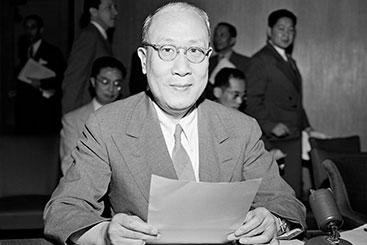





 baronbrasdor.art