This Article is a slight variation of the quotation above; we could paraphrase it thusly: ‘there is joining together into one and separating apart into many.’
We are living through a period where news events effect our lives more than usual but at the same time – and as most polls attest – it is hard to know what is really going on. It is relatively easy to know what the Authorities want us to do though they seem to change their minds fairly often emphasizing different priorities or data points as they bumble along mismanaging pretty much everything most of the time – and for decades now. In other words, although the facts and data might be fuzzy nevertheless it’s clear that something Big is going down – and on a world wide scale.
Without straying too far into conspiracy theory perhaps it might be helpful to step back a little to try out a few different ‘bigger picture’ perspectives, so in that spirit:
No matter what the ins and outs of the infamous covid19 pandemic, it seems clear that this global event has triggered widespread and significant political change in western nations which until recently have been leading cultural and economic influences in the world. So the Big Picture notion on offer here is that we may now be part of what can be considered a civilisational sea-change.
Oswald Spengler came up with some nifty theories about civilisational uber-cycles a century or so ago, but basically the whole thing is simple: like everything else there is a beginning, a middle and an end, which is just another good way of paraphrasing the Buddha’s statement above. The insight – or niggle – this Article proposes is the following:
Any civilisational development is usually the result of population increase over time engendering ever more sophisticated cultures including food production, language, architecture, governance, arts, education and spiritual traditions. This process can be likened to many different streams gradually merging into one, or perhaps you might prefer to imagine it as many different country lanes leading to small town squares and in turn to larger towns and, ultimately, to capital cities such as Beijing, Tokyo, Rome, Cairo, Istanbul, Rome, Paris, London, New York, Rio de Janeiro, Mexico City and so forth. This is the phase of things coming together. Some sort of distinct civilisation emerges in profuse and usually resplendent glory, some more elegant or wise or noble or degraded than others, but all with emergent power and efficacy with distinct languages, cuisines, dress and mores in the mix – what we generalize with the word ‘culture.’
And then at some point whatever has been holding that civilisation together (usually some sort of culturally positive momentum) starts to fall apart (aka ‘decadence’). This might be a gradual or sudden affair, or any number of combinations of the two in fits and starts. Generally speaking, things come together civilisationally in one broad river and then split apart into various streams through natural creativity – as people go off madly in all directions- or corrupt power struggles – which break and tear apart too many of the complex network of skeins in the body, speech and mind aspects of society which hold them altogether as an experienced whole.
Cities and nations also have the same sort of dynamic as do families or individual life journeys but the emphasis here is on entire civilisations. Generally speaking we can now recognise that there were great civilisations in Central America, Egypt, Persia, Asia – comprising mainly China, Japan, Korea, Vietnam, Siam etc. – and Western Christian Europe which some might insist bifurcated into the Byzantine and Holy Roman civilisations.
What we have been in of late seems to be a more globalized post-industrial offshoot of the Europe-based civilisation emphasizing infrastructure and commerce over any Christian elements, a new secular civilisation. This seems to have developed at first under the auspices of the Great British Empire – thanks to which billions of the world’s citizenry speak or regularly listen to the English language – and later under its offspring the United States and which now involves pretty much all the ‘developed’ world.
And with the political changes being implemented world wide but especially in western ‘democracies’ whose Common Law based Constitutions are being trampled on using a medical emergency as justification it seems that perhaps a new civilisation is now forming which no longer honours such Constitutions. Also, many streams from both East and West are merging into a larger whole so for the first time we might form a truly global system; we already have one in the realm of Commerce but we don’t yet in terms of political and judicial jurisdictions. Perhaps just as a virus knows no man-made borders, nor will this new civilisation. Certainly the US Southern border seems to be getting a head-start on this new borderless nation notion.
Ironically, this process of so many disparate nations coming together into one larger whole seems to require individual nations breaking apart into increasingly disparate populations as our governments and social institutions slide into chronic dysfunction, a perversely effective ‘ring out the old, ring in the new’ dynamic.
If history is any guide, usually such very Big Things involve displacing, starving, murdering or somehow sweeping away millions and millions. Let us hope that does not transpire with what is now unfolding…
(Well, maybe not ‘enemies’ but it’s a catchy heading…)
Soaking in the thermal waters of El Carrizel, Veracruz, my wife and I indulged in idle conversation, as is our wont, wherein the following musing arose like curling wisps of vapour from the surprisingly potent healing waters by a bend of a fast-flowing river in the middle of nowhere.
I can’t remember how it came up, but we started to discuss an old topic namely how much of our modern outlook is fundamentally materialist and overly fundamentalist as such. Materialism can mean many things, so to define it in this context it means simply the belief – for that is what it is – that the only thing that is real is physical matter, meaning that anything that is not physical matter is not real and thus doesn’t matter.
From etymonline.com for the word ‘real’ we find:
Early 14c., “actually existing, having physical existence (not imaginary);” mid-15c., “relating to things” (especially property), from Old French reel “real, actual,” from Late Latin realis “actual,” in Medieval Latin “belonging to the thing itself,” from Latin res “property, goods, matter, thing, affair,” which de Vaan traces to a PIE *Hreh-i- “wealth, goods,” source also of Sanskrit rayim, rayah “property, goods,” Avestan raii-i- “wealth.”
Interesting how our materialist outlook blends the word for what is real, with what is physical, with wealth and property. No wonder ‘money makes the world go round!’
Earlier articles have pointed out how there are always two sides or aspects. Some articles have further discussed the notion of avoiding extremes which can be defined as being too one-sided. But if one side here is physical materialism then what might its complementary side be? For the sake of simplicity let us posit it as the world of spirit which we could just as easily term mind or presence or space or intelligence or the Buddhist term bodhichitta* (about which more later too perhaps because there really isn’t an English equivalent and it’s a fun notion).
So the subject of this piece is what further came up in the conversation, namely the observation that not only do many materialist scientists – who in some sense are the high priests of our modern religion of physical materialism – outright deny the existence of mind because (and this is true ) it cannot be measured or perceived on the physical plane and therefore cannot be said to exist in any scientific sense, but also many people today including those same scientists believe that mind is some sort of illusion born of chemical interactions in the brain pretty much like a movie is actually only pixels of light on a screen which our cognitive faculties – all physical – can then interpret as objects and knit together continuous, meaningful narratives therefrom, albeit those feelings, narratives and cultural infrastructures developed around them are all fictive hallucinations.
To people who believe that mind is an illusory by-product of physically grounded chemical interactions, the worlds of the shaman, the dream worlds, the worlds of visions, intuitions, weather magic, foresight into the future and past, all such worlds, or mandalas, are entirely suspect, clearly no more than fevered imaginings of those who are, essentially, no more than mentally ill.
More importantly – and here is the core point – such a materialist infested mind is actually incapable of appreciating the bruho’s shaman mind just as, truth be told, many deep forest shamans or native peoples are unable to fathom the modern materialist mind. They are worlds, or mandalas, apart – mutually invisible.
This is relevant to our increasingly polarized times because we are finding in so many different ways how our world is divided by clusters of those who share certain styles of perception which are incompatible, indeed invisible, to those who enjoy different perceptions. Some of these differences can be described in terms of belief systems, political system, cultural streams and so on, but the words really don’t matter nearly as much as appreciating that unless we can all develop a little more flexibility, making our personal and collective mandalas more pliable, plastic, porous and playful, the materialists might end up winning – at least for a while – crushing us all under the weight of their ponderously fanatic dedication to the physical, so much so that our entire reality is crushed into non-existence which, ironically, might create an opening for the non-materialists to have a go!
Right now it seems like in many ways we are headed towards ‘hell in a hand basket’ – whatever that means! Some people feel that a hidden globalist cabal is waging some sort of asymmetric war against the established political and social order with the intention to impose some sort of Great Reset which will presumably work far better than the current one, a process expressed by the World Economic Forum’s slogan: ‘Build Back Better.’ Whether or not such a power matrix exists, and whether or not what’s going on is globally coordinated, let’s face it: most current nation states leave much to be desired with excesses and deficiencies of all sorts moreover with most leading nation governments deeply mired in endemic corruption.
All that Darkness notwithstanding, possibly this potentially huge civilization-ending sea-change in world affairs will result in some positive outcomes, so here goes a first stab at envisaging some of them:
Most world wars tend to last at least a few years, so let’s fast forward to 2025 assuming that the dust is finally beginning to settle around then. Let’s also assume that
a) there was a big push attempting to impose a new totalitarian ‘techno-feudal’ trans-nation-state world order and
b) this push failed, because the masses found a way to reject this imposition and
c) this is a brief sketch meant to provoke the reader’s own contemplation, not provide a complete blueprint.
So now let’s examine this post asymmetric war landscape, generally imagining what might remain and what might be no more.
What remains:
Heaven and Earth
Families
Young adults falling in love with each other
Parents loving their children
Trees and flowers
Birds, fishes, elephants, field mice, bees, bears, honey and so forth
Wilderness
Clean air and water
Cities and rural areas
Good, naturally grown food using enhanced organic fertilization etc.
Clothes
Nation states with their own cultures and languages
Singing, dancing, music, movies, sports, religious worship
What Is No More:
Global banking cartels – The City, Federal Reserve, BIS in Zurich etc
About 1,000 military bases world wide run by United States military
Multi-party politics in most countries who adopt one party ‘mandarin’ model
Bottom-dredging trawlers
GM agriculture with their pesticides and fertilizers
Hysteria about oil-based energy including for cars and electricity
In the US and other countries eliminated or greatly reduced:
Depts. of Education, Health, Intelligence, IRS, HUD, Chamber of Commerce etc.
In US, Washington DC no longer the capital
In US: country reformed into five distinct regions with different styles and priorities
In Europe: EU central government disbanded; simple free trade zone in its place
In Europe: full integration with Russia and China creating the foundations for the emerging Eurasian Civilisation finally blending East and West continuing what Genghis Khan first attempted.
In US: reconfiguration of higher education making it more variegated (science or arts or government or legal or medical or trades or commerce etc.) and merit-based (no more race-based admissions or grading policies).
What’s New:
Widespread adoption of mandarin-system style one-party governance featuring officials who get positions based on merit, examinations, training and peer evaluations. Far more efficient both in terms of skill levels and cost because of far lower numbers relative to population size.
National credit systems, no more private cartels fulfilling roles of central banks; inflation-free economies.
Widespread adoption of cutting edge organic farming techniques pioneered in Asia the past thirty years in Korea, Japan and India. Yields are higher, no chemical pollution; such method increase soil health which improves steadily year by year.
New laws against industrial and agricultural sector pollution so that soil, water and air are kept clean and vibrant
New ocean reserve areas (one in each major ocean) comprising one fifth of total ocean area to maintain natural stocks and biodiversity of oceans.
New land reserves in major zones in the world (tropics, arctic, temperate etc.) to maintain natural stocks and biodiversity.
Clean technologies which reduce pollution in manufacturing, use and disposal (which means no battery-powered cars)
Water-based hydrogen power gradually replaces oil especially for big items such as space rockets, tankers, trucks etc.
Countries world wide develop more green pedestrian infrastructure in both urban and rural environments
Having children is valued and more women can return to full-time home-keeping
Widespread use of cheap, effective medical practices including acupuncture, herbals, long-established generics
Dance, exercise, taichi, gyms and meditation studios abound!
Article 32 Finding the (quiet) Middle (edited after initial publication)
Partly due to an onslaught of recreational excursions – either to nearby beach or thermal waters – and partly due to existential ‘Plandemic’-induced angst, and no doubt also partly due to Factor X, have recently hit a brick wall of writer’s block. Which is also due to this chapter’s topic which arose as one during the composition of the previous two articles about sacred perception and mandala and yet arose in a form which involves contemplating the sad state of current affairs which in these troubled times involve issues which I would prefer to avoid not because they are not interesting or important but because we no longer live in a culture that can handle such discussions with any sort of equanimity.
For it seems that no matter where you are on the spectrum, you have an extreme view. For example, if we take the ‘vaccine’ debate:
Pro: everyone should take it as soon as possible, even children who have less risk of dying from COVID than dying in a car crash.
Anti: if you take it you might die within three years as micro blood clots gradually build throughout the body including the major organs and/or you might later be subject to monitoring via implanted nanotech and emerging 5G.
Middle: What is the middle? Given the great amount of contrary information from informed medical experts, including those who helped develop the new mRNA methods (which do not fit the dictionary definition of ‘vaccines’ by the way), how can one know what the reasonable middle is? Perhaps it is reasonable that most people default to trusting the main interlocutors from government agencies like the CDC in America as presented by Dr. Fauci – who isn’t a medical practitioner BTW, but since he is pushing products for which he holds patents via huge for-profit ‘Big Pharma’ companies like Pfizer who have often lost huge lawsuits because of their often toxic products or fraudulent practices, how can such pronouncements be regarded as a ‘reasonable middle?’
And we are in a similar pickle jar – marinating in acid basically! – when it comes to various political and cultural issues like the 2020 US Election, or feminism, or gender-bending initiatives like having biological males competing with biological females in sports, or racial issues, or the notion of white privilege, or capitalism versus socialism and so forth. All of them are becoming increasingly extreme in content and tone such that it is very hard to navigate through such ideologically inflamed hell realms in our increasingly agitated – and censored – public squares, be they in real world or cyberspace.
First, a little backtrack to explore this notion of Middle. Recently, this series of short essays has veered into becoming a form of glossary, so one of the last such terms needing definition is the venerable Buddhist notion of Middle, often referred to in translation is Middle Way or Middle Path. The Sanskrit is Madhyamika and when asked what his approach was, the Buddha would not have described his body of teachings and recommendations as ‘Buddhism’ but rather ‘The Middle Way’ which, simply put, avoids any extremes. In conventional spiritual practice terms, for example, this can be described as avoiding the extreme of either asceticism or sybaritic hedonism, i.e. avoiding sensory pleasure or indulgence entirely or exploring it without limits rejecting all bourgeois or conventionally-minded limits. No, the true spiritual path is what I have called the ‘reasonable middle’. And by reasonable I don’t necessarily mean derived from reason and logic, just that it’s ordinary, practical, earthy, simple – aka ‘reasonable.’ Note that this reasonable middle may not necessarily be what is widely viewed as ‘normal.’ Society gets into all sorts of passing phases and what is normal to one generation – like well-intentioned banter and flirting – becomes anathema to another that can get you disgraced or even imprisoned.
But although the Buddha discussed the Middle Way principally as it concerned his recommended approach to spiritual development, it can well be applied to all circumstances in any life or society in terms of finding the sane way forward, the one which avoids falling into various traps of extremism, for if you look at things which have gone wrong, you can nearly always trace them back to one form of extremism or another.
In earlier articles I harped on about ideologies and the Ideologues who worship and promulgate them. Essentially, that is the same sort of point, albeit there the emphasis was on the nature of concept versus reality, that holding onto Big Ideas often means losing touch with ordinary, kitchen sink reality, not to mention getting caught up in various Conceptual Realms in the Head instead of the universally Royal Kingdom of the Heart.
In meditation lingo this is traditionally described as taming the mind which should be done in the same way as one tunes a string instrument, namely ‘not too tight or too loose.’ Actually, this is perhaps a better way of describing the extremes rather than saying left or right as we do in the political sphere, because it acknowledges that there are truly different approaches at play. We can regard asceticism as extremely tight, and hedonism as extremely loose for example. In the political sphere there are usually two broad approaches which may or may not veer into extreme modalities, namely what can be termed, broadly speaking, as ‘traditionalist’ and ‘reformist.’
The traditionalists appreciate what has been passed down to them by their ancestors, many of whom struggled mightily, even laying down their lives, to bequeath their descendants a better world, and many of them actually doing a decent job of it. The reformists perceive various areas in the current situation which are deficient in some way, for example being stuck in some outmoded way of doing things which impedes improvement. Both perspectives have merit but both can go astray into some form of extreme. Extreme traditionalists might insist that we must keep doing things in exactly the same way as our ancestors did them, regarding any sort of deviation as a type of sacrilege. Reformists can stray into regarding everything inherited from the past as essentially evil and from that extreme position proceed to embark on trajectories that seek to destroy everything from the past by replacing it with a New Reality (usually Big Idea driven given there is no current real world example).
So each side, so to speak, can be further divided into a too tight or too loose extreme just like Jonathan Swift’s oft-quoted:
“Great fleas have little fleas upon their backs to bite ‘em;
and little fleas have lesser fleas and so ad infinitum!”
So this is how the Middle Way suggestion become both interesting and profound. Because it’s not like either the traditionalist or reformist approach is necessarily wrong or extreme, rather that each approach can be pursued in ways that become too tight or too loose, too rigid or too wild, too narrow or too broad, too fanatic or too fanatic (!).
So finding the Middle, interestingly, is as much Art as Science. And the proper way to conduct oneself in Art is, not surprisingly, artfully, which implies a certain degree of graceful nimbleness, ideally with some generous dollops of good humour thrown in, not to mention good will as well. The Middle Way is both subtle and ordinary, like the quiet inner voice mentioned in an earlier article. And though it may sometimes be hard to discern, it is sturdy without necessarily being stolid or surly. Emotionally it is always even-keeled; logically it is always rational; scientifically it is always verifiable and practical; politically it is always beneficial and easy to implement giving instantly visible results; in conversation it encourages easy discussion conducted with mutual good will along with occasional spontaneous outbursts of good-humoured laughter, an ebb and flow universally recognized.
This Middle sounds like a place, like perhaps the number 5 on a dial going from 0 to 10 but it’s more like the middle of a river. A river is not only in continuous flux but also each part is different from every other; sometimes the middle is five yards from the shore and sometimes one mile; sometimes the middle is turbulent and fast-flowing, sometimes it is tranquil, barely moving at all. So the Middle can’t really be defined in absolute terms – except in the abstract – rather is a relative, situational thing which continually changing, adapting.
I hesitated to broach this topic because it originally arose in my mind in response to various increasingly heated debates of late about whether or not the new mRNA COVID shots should be force-injected into people without their consent, or whether or not it is constitutionally acceptable for private industry to insist that their employees take an experimental medical procedure or lose their positions and income (in which case they are not being forced to take it, just given a very extreme either-or scenario in which to decide whether or not to consent to the procedure).
This debate is exacerbated by the extreme situation most western societies have increasingly been finding themselves in, predating the onslaught of the ‘invisible enemy’ in early 2020 as manifest in America, for example, by the Rise and Fall of Donald J Trump as President, victim of Intelligence and the so-called ‘Deep State’ and unlikely election loss after receiving many millions more votes than the first time around, something which has never before happened in American history and with his opponents relying on huge numbers of poorly (or not even) verified mail-in ballots using procedures not permitted by Statute to submit and then process them and then refusing to conduct full audits afterwards by not allowing them to be adjudicated in a Court of Law, which is the usual way for resolving differences, including ones involving election outcomes. So here there is a vivid, ongoing example of a country bitterly divided (and this is just one current example of many such inflamed divides right now) with each side believing that the other side operates in bad faith and thus is essentially demonic. Talk about a good example of extreme.
Even worse, because both sides are extreme (it might not be in terms of logic but emotion or view about the opponent etc.), it is very hard to discern what may or may not be a reasonable middle. Indeed, where extremism is the norm, truth is rarely to be found, and in absence of truth it is hard not to fall into the trap of believing one’s own theories, and not knowing who is doing what, such theories tend towards projecting responsibility onto some sort of imaginary organisation, aka ‘them.’
So here is perhaps overly simplistic guideline for how to deal with this ongoing existential conundrum: rather than trying too hard to parse through tons of mutually hostile polemic about any given issue – like whether or not to take the vaccine for example – first you have to quieten down the shouting on either or both sides that you may be importing into your own head and heart. This does not mean that you have to go and sit down quietly and meditate – though meditation is always a fine thing to do (albeit better to do it for its own sake as a regular discipline, not as a specific therapeutic or antidote). Rather, it simply means to tone down any extremist aspects in one’s own configuration before trying to learn from external presentations. And in handling those, one naturally finds oneself developing the ability to discern any too-tight or too-loose aspects both in oneself and others. Tuning into the too tight or too loose dynamics allows one to better discern the underlying balance or its lack of any given point of view or dynamic. Further, once one can pick up on any given extreme one can intuit its opposite extreme and thus have a halfway decent shot at discerning the quiet, oft overlooked, Middle.
The linked video below provides a good example of a reasonable person with direct personal experience navigating through the complex issues around the pandemic. He has run a ‘COVID healthcare unit’ in “Oahu’s biggest skilled nursing facility” and so has considerable first-hand experience with patients. Some of his conclusions may or may not fit with other situations, but given his particular situation, clearly he is a sincere, intelligent and experienced person who is beset by all sorts of extreme positions and policies and, not surprisingly, having a difficult time navigating his way through it all whilst apparently still managing to maintain a relatively even keel, both emotionally and logically. Kudos to him.
Mexican cuisine mandala; note how the background is part of the foreground subject and how every element contributes to the larger whole.
Article 31 The Meaning of Mandala
“A circular figure representing the universe in Hindu and Buddhist symbolism.”
I imagine the above definition is pretty much what most people think of when the word ‘mandala’ is used. Allow me to take you behind the curtain to what is a most interesting and useful notion yet rarely explained – let alone understood. The circular mandalas in the definition above are stylized, two-dimensional representations of something which is actually more an experience than a thing, and so the word is closer categorically to things like ‘hunger’ or ‘courage’ than ‘painting’ or ‘food.’
What those mandala paintings usually – though not always – depict is the mandala of a deity used in visualisation practice; there is a central deity with whom the practitioner identifies or emulates and that deity usually has a retinue of subsidiary deities or attendants along with a locale such as a certain type of terrain or situation. All together – deity, retinue and terrain – makes the mandala. The Tibetan Buddhist scholars translated the original Sanskrit mandala into khyil-kor which simply means centre-fringe. As an object, our equivalent word in two dimensions is ‘circle’ and in three dimensions it is ‘sphere.’ (And in the context of our bodies we might also think of it as the combination of inside and outside.)
However, a mandala is not an object per se, albeit the notion of sphere isn’t a bad metaphor. Rather, a mandala is a whole setup that creates a particular something, be it a person, place or situation. Giving examples is easier than getting bogged down in complex definitions, so here are some:
kitchen mandala, body mandala, governmental mandala, garden mandala, bedroom mandala, relationship mandala, family mandala, sacred mandala, profane mandala, confusion mandala, wisdom mandala… and so forth. Perhaps now you have read these examples little more need be said except to point out a few additional aspects.
For example, although the center may be different in certain regards from the fringe – just as the central deity is different from his or her accoutrements, retinue and surroundings – nevertheless they are all part of the same overall situational dynamic which in short hand is called a mandala. So mandala is a collection of qualities, aspects or things which together are part of a larger whole making that whole the overall mandala in which all such elements are found.
For example, though millions of us live in different countries and time zones speaking no end of different languages wearing different clothes we are all part of this Earth’s same planetary mandala; and we are all part of a current Covid Pandemic mandala in that we are sharing various logistics and messages about an invisible enemy surrounding us and because of which our societies are being gradually restructured without the usual political checks and balances – perhaps a new kind of war without conventional armies and weapons; but this new international ‘Covid mandala’ is a dynamic in which we all share participation.
Practically speaking, the word can be helpful in tying together various seemingly disparate elements into one whole, thus providing insight into the nature both of those particular elements and the overall context in which they are playing a part.
More experientially speaking, we can think of it as a way to describe atmospheres, as in the example of kitchen vs bedroom mandala. Both in the same house yet when we walk into each room instantly we experience a different atmosphere: in the kitchen we have so many associations of cooking smells, maybe there is a kitchen table there we have sat around together so many times, all the spices in racks, the pots gleaming, the dish-washing area, the fridge area, the cutting board area, the light coming in from the window just so at different times of day. Each area is unique but also contributes to the overall kitchen mandala atmosphere which accumulates over time even over many generations, everything echoing in the present moment and contributing to the current atmosphere and how everything in this kitchen feels and looks. If there is a lot of mess and the parents always fight, the kitchen mandala will feel different from a household with a loving parental couple who keep a clean, much appreciated kitchen turning out great food which the family enjoys every day. So each kitchen mandala will feel quite different which means the same object will feel different in each different mandala since such atmospheric qualities perfume every mental and physical element therein. As such, there is no objective kitchen mandala per se, it is not a thing but rather something experienced.
And then you walk into the bedroom (or bathroom, or study, or garden, or basement or attic etc.) and in each case an entirely different matrix of objects, memories and atmospheres arises, which together comprise different mandalas. And all such different mandalas are part of the same overall house or family mandala, which are part of the neighbourhood mandala, or the town, country or civilisational mandala. There are mandalas within mandalas within mandalas.
So mandala is a very ordinary thing we experience all the time, but for some reason don’t have a word for in English; hence this Article!
Whilst driving through sub-par Mexican country roads on the way to a rather nice local thermal pool in Veracruz, I was asked ‘how do you make a space sacred?’ I was a little taken aback because I regard that as a rather huge topic about which volumes could be composed, but of course if it truly is such a topic, then it should be explainable in simple terms, indeed the simpler the better. After considering for a minute or so, I made the following reply, which I consider ‘not bad’ as a first stab…
First, we need to have some notion of what is meant by the word ‘sacred’ before discussing how to engender it. The perception of sacredness happens when we tune into a seemingly heightened state which at the same time involves appreciating what is primordially present all the time. There is some sense of luminosity in the awareness field along with a sense of timelessness. I think most of us experience this in wedding ceremonies – certainly the Roman Catholic Mass is a ritual designed to invoke this sense. Lovers often experience each other as sacred beings, almost like living gods. The moment of birth is also one where nearly all present feel some combination of heightened perception with a sense of timelessness and deep appreciation of the wonder of life for in the ‘heightened perception’ aspect there is almost always some sense of deep, profound beauty and goodness. Sort of like a perfect home or palace, a perfect garden, a perfect meal, a perfect day, a perfect moment.
Well, that’s not a very precise, let alone complete, definition, but let’s go with it. But first, why not consult the Oxford dictionary?
“Connected with God or a god or dedicated to a religious purpose and so deserving veneration.”
“Origin: Late Middle English past participle of archaic sacred ‘consecrate’, from Old French sacrer, from Latin sacrare, from sacer, sacr- ‘holy’.”
This is a tad abstract, as if viewing from afar objectively, whereas sacredness is always a subjective experience, which is why my initial description is so different. However, in the Origin section we get the notion of ‘consecrate’ which accords with the third part of the next section of my reply in which are posited three aspects to engendering the experience of sacred perception or making a space feel sacred. These three aspects are:
1 Purification.
2 Care
3 Invocation, seemingly from above.
1. Purification: the first step involves literally cleaning the space physically but of course as one does so one also purifies one’s inner psychological space. Cleaning involves removing surface dirt, or impurities, so that the essential object presents in a pure fashion. Everything is essentially pure just as it is, but sometimes we cover things over with our own confusion, bad habits, speed, ill will and so forth. That needs to be cleaned away. So if preparing a ritual, for example, the first thing is to both clean the space and all implements or furnishings therein, as well as cleaning oneself and wearing one’s best outfit for the occasion, which is not just a specific item – such as a ceremonial scarf or crown – but also clean underwear. Everything must be spotless and pure, both physically and psychologically. This is the Body aspect.
2. Care. This is a sense of reverence, kindness and heart and relates to the feelings of goodness mentioned earlier. Things – or situations and people – have their place and time. When they are cleaned and positioned just so, their presence comes forward. Appreciating things and people for what and who they are heightens our perception of them in that we are paying attention, and paying attention with respect, with kindness, with heart. So first we purify, and then we appreciate, which has some sense of connecting or communicating with the situation. This is the Speech aspect.
3. Invocation: the last step is simply invoking a sense of sacredness, ‘bringing it down’ as it were. In come cultures, rituals have been developed involving using rising smoke to create a link with the gods above such that they come down through the smoke which can then be fanned onto every object and person present who in turn become imbued with sacred presence. This is the Mind aspect.
Of course one doesn’t need the visual and olfactory aid of the smoke, rather just to deepen the sense of sharing space and time, to dive into this feeling and allow time to stop and the sense perceptions to expand, to blossom. Indeed, the original meaning of Buddha in Tibetan is ‘sang-ye’ which means lion in some sense but also blossoming in others. That which is already there flowers, blossoms. Sacred perception is like that: that which is already there is seen to be primordially spotless, primordially good, primordially present. This combination of purity, goodness and living presence is what in shorthand we can call ‘sacred.’
The reason for this article and a few others similar to it is that in order to write other articles of more general, or contemporary, interest, I will need to be able to avail myself of a few terms that are not widely used today – such as sacredness. Another such, for example, is the word ‘mandala,’ which is of great practical use when discussing certain topics but for which there is no English language equivalent. Earlier we had the notion of the various Realms (which will no doubt return in future articles), not to mention their being a type of mandala as well. And another one will be some notion of Middle Path, or Middle Way.
The intention here is not to promulgate or provide some sort of explanation of a spiritual path or Buddhism more particularly, rather to blend some of the perspectives gained from having trained in the latter with everyday issues and experiences. This way the reader can be invited to look at familiar situations with a perhaps slightly different twist. This is not to encourage anyone to change their religion or belief system but sometimes seeing things from a different or hitherto not considered point of view is both helpful and interesting – a form of mental travel perhaps.
Flock of birds demonstrating group mind synchronicity
Article 29 Help! My brain is like a TV set!!
If the underlying nature of mind is formless and body is form and speech is some sort of intermediary blending of the two, what is individual mind? We all seem to have one. Even an individual ant, though part of the Insect Kingdom’s Borg-like hive mind, has one, carrying out individual missions and making individual decisions all the time.
Simply put, the brain is like a TV set. On that TV, you can select various channels, each of which presents a different array of items – movies, news, sports and so forth. Does the TV set generate those signals? No. It has mechanisms whereby it selects which signals to interpret, and then displays them for the viewer on its screen but it does not create those signals.
Similarly, the brain selects what signals it will interpret for an individual’s mind and body experience. This includes processing data from the senses as well as cultural, interpersonal, physical, psychological, emotional data – no end of different experiential modalities or ‘channels’. But the brain does not invent the source of all those signals, rather arranges them into a type of display which we can then process or ‘experience.’ In this case, we are not talking about various broadcasts from afar, rather that mind itself is like a bottomless ocean or a vast awareness field far greater than any individual – akin to the hive mind in the Insect Kingdom perhaps; and then individual mind takes certain aspects from the Big Mind and restructures it into particular configurations that accord with the perspective and mission of that individual existence.
So the brain is more like a TV set processing signals from an outside source and displaying them on the viewer’s screen than it is the be all and end all of mind.
But there’s another twist: what if the brain sends as well as receives? What if it helps create the three dimensional reality we all navigate through? Again: on the quantum level we can see that so-called ‘solid’ physical reality isn’t solid at all. Everything is a living soup of streaming particles, rivers within rivers within clouds within clouds, all moving, swirling, folding, streaming, meeting, parting, blending, separating. So maybe the brain is also transmitting signals to all the other brains around, including any plant equivalents, and in this way we all tune into certain frequencies as it were, just like TVs tuning into certain channels, and by tuning into those frequencies we also knit together a shared reality in which we all perceive the outer physical forms in more or less the same way, so that birds, insects and humans see the tree in that particular place with those particular leaves and branches, or the street, the wall, the chair, the table – or me and you for that matter.
So maybe our brains send and receive various frequencies so that we all share the same three-dimensional channel together. Maybe our brains are nodes in a master network which the universe self-creates in order to perceive itself, experience itself, enjoy itself, process itself, invent itself, develop itself?
Ramana Maharishi, a famous yogi from a century ago, contemplating mind and body in dream and waking life…
Article 28 Mind, Space, Body and Ego
We have the visible world of form and the invisible, formless world, posited earlier as two sides of any given reality, which just so happens to be what’s behind basic yin-yang theory. In more immediate human terms we have body and mind, with speech being a third, intermediate principle.
So body is the aspect that has form, appears solid, dense, ‘real,’ quantifiable, measurable, visible, tangible and forth; and mind is the aspect that is formless, appears shapeless, weightless, measureless, invisible, intangible. So in physical terms we cannot say exactly where and how large mind is, but we do know it is something real. It is just both real and formless.
Being formless, mind lacks specific location. Sure, it seems to us that our minds exist somewhere inside our body. Most of us might point to our head if asked where it is, imagining it to be somewhere in the brain. Some cultures would point to their chest, since for them the mind is located in the heart. In traditional daoist medical theory, there are eighteen mind-chambers in the chest area and every major organ has different minds (or ‘spirits’/ ‘shens’) in them, plus different types of mind attached to various senses. In other words, they don’t really have a one-mind theory positing that there is one core place where the mind dwells, sort of like a Little Me homunculus inside the larger body Me. Of course one can argue about all this forever – as Asian contemplatives have for millennia BTW – but there is no getting away from the simple fact that you can slice and dice the physical body all you like, but you will never find a precise, definable physical location where mind is found, i.e. a place in the body where you can say ‘here it is’ or ‘here it isn’t.’
For example: put your hand out in front of you and point your index finger at something and then curl that finger, then keep pointing and curling the finger. Now consider: is mind in the finger? Or is mind not in the finger? If it is in the finger, is it in all the finger? Or just the part that is pointing and curling? Or is it in the whole body? Or is it just in the brain which is sending signals to the finger and the finger itself has no mind in it at all?
Honestly, we can’t really answer any of those questions in any precise, verifiable way. I think most of us would agree, though, that the mind is expressing itself via the finger and the separation between mind and body – if there is one at all – cannot be pinpointed in terms of location exactly. Mind and finger are one, but mind is the formless aspect of the finger, whereas the physical finger is the form aspect. (And the speech aspect is the qualities of expression involved, the way the finger is moving and pointing, what sort of feeling, intention or whatever it is expressing and communicating.)
So mind is not local per se but it seems like each of us has our own unique, individual mind. Maybe we can just accept this as yet another basic two-sided aspect of reality, a personal example of form and formlessness being simultaneous, symbiotic elements of our existence.
Speaking of mind’s location, I once spent the night with a Tibetan lama who had only recently moved to the United States. We were up in a cabin in the Rocky Mountains just chit-chatting before going to sleep. He was still learning English as he gradually eased his way into working in a translation committee bringing old texts into modern English. I asked him how he liked America and he said he was enjoying being in an entirely different culture. For example, he explained, ‘in order to learn English I started watching movies on television at Robin’s house in Boulder; not only did it help my English but a strange thing happened: after watching it for a few weeks for the first time in my life I experienced thoughts in my head! Amazing! For us Tibetans, we experience thoughts and feelings in our hearts, not our heads, and I never understood why so many Americans point to their heads when they explain what they are thinking, or believe that mind is in the brain; I just couldn’t understand it. But now that I’ve watched some TV, I can think in my head too and understand why you believe your minds are in your brains!”
This story shows that our almost universal assumption in the West that mind is found in the brain might not be as slam dunk a proposition as most of us assume. Indeed, although it seems an established fact, actually it is just something we imagine, not anything we can definitively prove.
That said, we are left with an interesting conundrum: if mind is non-local, formless, shapeless and so forth, how is it we seemingly have MY mind, which is seemingly attached to MY body?
Aye, there’s the rub! This sense of being ‘me’ with ‘my body’ and ‘my mind’ is called ‘ego’ in Buddhist jargon. Ego is not necessarily an enemy to be conquered (though holding onto it obsessively is the root of many evils) but it does need to be examined carefully especially given that, like the mind, we cannot precisely locate or measure it and therefore must acknowledge that it might be something as much imagined or deduced as physically extant.
So mind lacks definable location but it seems like I have my own mind, my ego. This raises some questions, like:
So what or where is ego anyway?
What is the difference between the yin-yang two-sides nature of reality and the self vs other duality experienced by an individual person’s mind convinced that he/she/it exists within the container known as ‘me?’
We imagine realms which in turn reflect back as actual places and situations – beautiful and ugly homes or streets, loving or dysfunctional families and so forth. According to some traditions, this sort of thing also determines what sort of situations we are born into including place, status and body qualities (attractive, ill-favoured etc.).
Although we would crack jokes about it from time to time, during all my years as a hard-core Buddhist in a dynamic community of fellow practitioners back in the 70’s and 80’s, I cannot recall any serious presentation or discussion about re-incarnation or rebirth. The main way the latter was discussed, if at all, was in the context of what continues from the previous moment into the future moment – if anything. And even that notion was rarely brought up.
And then for a while I had the job of acting as the Head Tutor of a real, live Tibetan ‘tulku,’ or re-incarnated lama, when he was eight to nine years old. So interacting every day with a living example of that tradition afforded me the opportunity to consider such matters far more than I otherwise would have. Now this article won’t attempt to go into all the ins and outs of reincarnation but I would like to share one notion which occurred to me back then and which still seems helpful. Here goes:
Imagine you have just been elected President of the United States; you have just given your Inaugural Address in front of a crowd larger than any you have seen in your entire life and have now returned back to the White House and, after various quick meetings and introductions to the Staff downstairs, for the very first time you finally sit behind the Resolute Desk in the Oval Office. Now let us imagine what happens…
Along with an incoming flood of unfamiliar sense perceptions – the awe-inspiring presence of the Resolute Desk itself, polish and other unidentified smells, the drapery, the furniture, the paintings, your familiar photograph collection on a nearby side table, the faint muffled sounds of a few aides in the office next door, you are overcome with the profundity of the moment. You are now sitting in the same place as a very select lineage of predecessor Presidents, a line of which you are the living embodiment and moreover now the living lineage holder representing all the people who have ever lived, worked, struggled, fought and died in your country going back to the earliest native Indians and settlers.
You feel this national ancestral lineage as some sort of cloud-like presence felt both in what you witness around you in the Oval Office, in the dignity and history of the chair you are sitting in and the desk on whose polished surface you rest your hands, but also in how you feel inside psychologically and spiritually. For the first time it begins to sink in: “I am the President” so much so that when your aide comes in a few minutes later and asks “Do you need anything, Mr. President?” at this point the title reflects who you are. In essence, you are now the latest incarnation of the President of the United States of America.
Now lest you think this is idle or misguided fantasy about a very deep topic, let me just point out that the above description accords with one of many types of ‘reincarnation.’ The most popularly conceived one is actually quite rare, namely that Person A dies in Body A and then is reborn into Body B being able to remember what Person A experienced. Although rare, there are many instances in history of children born with such recall, including today – though they nearly all tend to be born in India or Tibet. Perhaps such recall is some sort of unusual psychic power and they are not incarnations of Person A at all but that is not the concern of this Article.
Apart from this direct type of reincarnation, a more common type relates with its root meaning being ‘in flesh’ or ‘be made flesh.’ In the sacred Christian context it also means ‘embodiment of God in the person of Christ’ which has the notion of a living human as manifestation of the Divine. In some translations from the Tibetan Buddhist tradition, this is called a ‘blessed tulku.’ Tulku is Tibetan for ‘physical body emanation/incarnation;’ ‘blessed’ means that one receives an influence from something like a ‘Holy Spirit,’ some sort of atmospheric transference such as described in the New President story above.
The point here is not to get lost in the weeds about whether or not reincarnation is a valid concept, rather to reflect on how the realms we live in, including in this example the realm of being President of the United States which is an actual realm hundreds – if not millions – of people are involved in creating and maintaining every hour of every day, are both real and imaginary at the same time.
In other words, dear Reader, so-called ‘objective reality’ is a bit of a myth. Or to put it another way: even if such a thing exists, we cannot experience it as such since all experience we have is a blend of sensation, imagination, habitual patterning, projection, emotion and so forth. There is no getting away from this and moreover no reason why we should want to. Perhaps the only reason is contemporary confusions and superstitions about the nature of reality making many of us feel obliged to discount ‘subjective’ experience when we try to get at ‘the facts.’ Some facts are straightforward: either the apple ripened and fell to the ground or it didn’t; simple. But most cultural-zone facts are not facts at all but rather things we agree to agree on – ‘he won the election’ – or things we cannot find consensus on and rather have to tussle over, like dogs after the same bone.
Even so-called ‘scientific’ facts are not as cut and dried as many in the media like to insist. Put ten experts in a room examining exactly the same factual data and more than likely you will get ten different conclusions from those same ‘facts.’ This is because a fact only has meaning within what is, when all is said and done, a subjective process.
In any case, I like the New President story not only as an interesting twist on explaining how incarnation works – because that makes it a far more down-to-earth process that too often is overlooked in overly arcane descriptions you can find in poorly translated texts from days of yore – but also as an effective way of understanding the power of the imagination, both individual and collective, in how our perceived realities are shaped and experienced. This is actually important to be aware of, because otherwise we fail to appreciate both historical and contemporary cultures as living art forms, as mutual creations informed by what has come before whilst also being re-created and re-invented day by day in the present. Our countries, our societies, our businesses, our towns, our families are all ongoing living art forms, blending imagination into direct experience of external and internal realities moment by moment, day by day.
“So what does all this have to do with the key moments of heightened awareness and intensity, be they clutch plays in a championship game, or bardo moments of intense brilliance, let alone leaders and followers or ‘group dynamics in the context of focus?’ Stay tuned….” (from Focus in Space article)
Projections are qualities we perceive in or project onto others. We are walking down a dark alley late at night; the wind is forceful, tugging at our garments and eliciting moans which echo in mournful, discomfiting tones which heighten our sense of impending doom, either from a lurking cut throat or ill-intentioned ghosts haunting this zone of prior crimes including rapes and murders.
Is this entirely imagination? Or are we picking up ‘echoes in eternity’ from prior dark deeds, so-called ‘blood on the walls?’ One never knows; probably some combination of the two.
Similarly, we project all sorts of things onto leaders. Leaving aside that each person has a unique take on any given quality perceived – from plant, animal, person, room or landscape – there is always a blending of that which a leader is projecting out themselves – are they charismatic, retiring, confident, dithering, intelligent, scheming, well-groomed, shabby etc. – and how we in turn perceive them based on our own tendencies, priorities, prejudices (or brainwashing) and preconceptions.
Now our basic makeup is to face forward and focus on something. We don’t have one eye in front and one behind – that sort of 360 degree awareness is reserved for hearing, not seeing. And with sight we don’t just see generally but focus on one thing at a time. And with hearing we tend to focus as well on one particular sound at a time; even when hearing hundreds at once, especially in complex situations like a city street or well-attended cocktail party, we often find ourselves picking out particular highlights within the general hubbub.
When a large group are gathered together they will unite as one when their mind is focused on the same object. Be it a football in a stadium, a tennis ball on a championship court, or a speaker at a political rally or even one giving a live broadcast on television during a time of national crisis.
As mentioned earlier, our minds are local versions of the formless aspects of our two-sided natures, and the formless is not bound by time or space, by beginnings and endings or distances between here and there. So when we all focus on the game together in a stadium, all of our minds melt together becoming part of a greater whole. The same thing happens to nations in times of great stress or shock; the falling of the Twin Towers in Manhattan on 9/11 brought the entire country together. I remember walking in Manhattan a month or so later having flown in from Canada and being surprised at how clean the city felt, how soft and friendly were all the people. There were few tourists, it was nearly all locals who, uncharacteristically, were all warm and cosy, glad to be alive, glad to be together; it was like being part of a close-knit family. Their minds had merged from following the great crisis they had been going through together for weeks on end and so, at least for a while, they were attuned and enjoying some sort of kinship.
Whether it is a sports team, a small business, a crack special forces unit or a nation, enterprises involving two or more people need leadership. Decisions have to be made, plans have to be executed, projects have to be managed to fruition. No matter what the particular dynamic, moments come up regularly demanding reaction, decision, change or in other words, focus, and nearly always the group needs a leader to point out such a moment and provide direction for how to handle it, otherwise the various individuals in the group might each come up with a different approach and the result is a loss of common purpose or action.
This is a very ordinary thing, basically, and we have all experienced it constantly throughout our lives. The point of this Article is to highlight just one particular aspect of the leadership dynamic even though of course there are many, namely the aspect of projection.
Earlier, I mentioned how Tom Brady the NFL quarterback, for example, dwells in the minds of many fellow team mates and fans as a living icon, similar to a king or knight of old. Not only is this a source of inspiration and focus, but by taking on their projections of him as The Great One, so to speak, he can then channel their attention and lead it to where he wants it to go, which in his case – as he has often stated – is into their becoming the best team possible working together towards a common purpose which is to play up to their best potential and thus in the end emerge victorious. So he channels their focus on his leadership qualities into inspiring – and no doubt also cajoling – them to be the best that they can be, 24/7, seven days a week, not just for three hours once a week on the field.
Who knows if Tom really has the qualities his players and fans see in him, or whether they are imagined? Similarly, what does it matter if President Biden is actually the kind and wise uncle figure leading a nation through a time of turmoil caused in part by his predecessor and in part by a world wide flu outbreak? It’s very hard, and probably a waste of time, to try to pick through objective evidence (if there indeed is any such thing in this sort of terrain) to find out who the real Joe Biden is, what the real nature of the national situation was and now is and so forth. That’s all water under the bridge in some sense; what matters is any given ongoing dynamic now.
The function of propaganda is to channel the attention of the population away from Xes and into Y’s. One of the favorite Y’s is – at least in America – the President. We have many minor other leaders that engage us from time to time, principally so-called celebrities which include movie, television and sports stars, but in terms of national moments and national thrusts, the object of attention tends to be the President who embodies the desired messages which have already been delivered piecemeal through many different events, newscasts, text articles and so forth. When the President speaks, he speaks for us all in that moment and unites the country in focusing on that mutually experienced object of attention.
Of course the qualities we end up projecting onto that Leader are all highly subject to manipulation. If we are told and convinced that he or she is wise and noble, we will project wise and noble qualities onto that person when we see or hear them performing; conversely, if we are told and convinced that he or she is a despicable crook, then we will project all sorts of ignoble qualities onto them when we witness their performances.
Now of course in the case of leaders in modern democracies, they are usually there by virtue of elections wherein one political faction has bested another and so any given President is usually passionately supported by about half the population and only marginally supported, or outright detested, by the other half. This split in the projection vector of the population greatly diminishes the leader’s ability to unite the country, but that’s another issue perhaps for another time.
For now, let’s just leave it that leadership, which is a natural and needed function in human groups small and large, involves harnessing the projections of followers into desired group endeavours, be they wise or foolish, noble or wicked, uplifted or degraded, civilization-building or decadent. This only works because of the root projection, as it were, namely that this person IS their leader. Without that projection in place, they would lack any authority to inspire followership, kinship, respect, loyalty.
All leadership depends upon the projection of leadership qualities onto the leader by the followers, be such leaders in small tight-knit family circles or in large national situations.
What happens to a fish taken out of water? It soon dies and so is soon no longer a fish. Does the fish exist separate from the water it is born, lives and (usually) dies in? Similarly, do any forms exist outside the container of space? No. Now leaving aside any concerns about what exactly is meant by the word ‘space’ for it could be just a fancy label for ‘nothing at all,’ isn’t it interesting that, just like zillions of fish, we all – and by ‘we’ I mean all life forms – share the same ocean of space.
If we all swim in the same ocean, are we really – each and every one of us – truly independent, individual, separate entities?
Before answering that, let us also consider: every single form aspect we witness is unique and particular. You can have two chairs side by side made by the same carpenter but they are in different places; furthermore each spot on each chair is unique, particular, the light shining at a slightly different angle, the wood being ever so slightly different, the threads on the upholstery changing from one nano-location to the next. We don’t even need to get quantum on this. Every single thing in the realm of form is unique. With our own bodies, for example, every single spot on our body is different from every single other one, whether it is the obvious differences like nose versus elbow, or endless differences like one spot on the little finger’s fingertip versus the neighbouring spot. So in the realm of form we encounter literally infinite layers and levels of particularity. Put another way: nowhere in the realm of form is any single thing the same as any single other thing.
And yet in the realm of the formless, there are no particularities, no details, no beginning, no end, no this, no that, no up, no down, no in, no out, no place, no time – no nada nowhere no how!
So what’s the Big Switcheroo? Simply that nearly human beings, aka ‘we,’ operate under some sort of mass illusion or delusion, summed up beautifully by Descartes’s famous ‘I think, therefore I am.’ It makes sense in a simple fashion and probably most of us can go along with it easily. But just because you are thinking, does that really mean that you exist as a unique ‘you’ or ‘I’? Yes, every single aspect of reality in the form realm is unique and particular as stated above, but is the spot on the chair really separate from the rest of the chair? Is the I that is thinking separate from the world it is thinking in? Many of us imagine some sort of ‘Little Me’ somewhere in the middle of our heads, presumably in the brain, some sort of ‘President of the State of Me.’ Come to think of it, that’s how we imagine our Presidents, as a man or woman somewhere controlling everything that goes on everywhere in the entire nation.
This sense of being an independent entity is known in Buddhist jargon as ‘ego’ so that usage is not quite the same as in psychiatric practice perhaps. The idea is about how we believe there is an independent, permanent entity – known as ‘me’ – that exists somewhere even though we know that in fact we are all part of the same all-embracing larger universe contained in the same all-embracing space we all share.
I like to say that fishes are the eyes of the ocean. The ocean, if you like, is a great field of awareness but in order to see itself it grows organisms with eyes. There is an old Buddhist text written many centuries ago, by a yogic philosopher called Longchenpa, translated in one version as “You are the Eyes of the World.” That text features a first-person voice talking to the reader, and this first person voice is ‘pure and total presence’ or ‘I, Creative Intelligence.’ The idea is that we all live in the same ocean which is an all-accommodating space, which also is awake, alive, intelligent. In other words, our own innate intelligence comes from the underlying intelligence field in which all living forms live, just like fish living in the ocean. We think of the phenomenal world around us as being essentially dead matter out of which, through physical chemical reactions, some sort of life emerged, almost miraculously. Some scientists have even managed to recreate this apparently. However from the point of view of this old text, the source of life is the living intelligence field we all live in which exists, like all formlessness, before and after birth, before and after time, before and after form.
So although there are limitless particularities in the realm of experience, nevertheless the notion that we exist as fundamentally solid, permanent, separate entities is an illusion. That is the Great Switcheroo. Or perhaps we could say, more positively, that the Great Switcheroo is when you flash on how your notion of being an independent, solid Ego is empty, illusory.
Let us end this one with a quote from Longchenpa’s text, this one being part of three verses explaining how Body, Speech and Mind – the three spheres of experiential being – reflect and are reflected in this universal continuum. In this case I chose the Speech verse since I had an Article entitled ‘The Realm of Speech’ a couple of posts ago. The language is a little academic, but no matter:
Listen:
This teacher of teachers, the majestic creative intelligence,
Displays the integrated structure centered around the inner reality of communication.
Everything that exists and is designated
Displays itself as linguistic communication coming from the unborn field
And is gathered into this inexplicable inner reality of communication,
The supreme Ordinary Principle’s symphony.
Hopefully this text makes sense in the light of the last few Articles. Personally, I enjoy contemplating these things. Not in long-drawn out Big Think sessions, but just allowing them to lightly arise, butterfly-like, in various moments in daily life. I hadn’t read this in over thirty years but in the course of offering up this spontaneously arising collection of articles, remembered that I was sort of going where Longchenpa (1308 – 1363) had tread so many centuries ago.
This two-sides aspects – including masculine and feminine in the human realm experience – is especially fun to start picking up on. And indeed this article got caught up in one, namely that our universe comprises both limitless particularities in the form aspect contained within the formless aspect which features none. In a way, reality is the formless growing forms so that it can appreciate highlights of experience by creating a universe of limitless particularities featuring location (space) and movements of varying duration (time). It’s a gi-normous production, a collective dream in which we are all both dreamers and the dreamed.
As contemplated and systematized extensively in the Chinese yin-yang theory tradition, it seems we live in a world that always has two sides. In Buddhist philosophical jargon these are called ‘form’ and ‘formless.’ There are many other such pairs such as:
masculine and feminine inner and outer higher and lower forward and backward heaven and earth visible and invisible mind and body. Although there are always two sides, and although each is inseparable from its symbiotic mate, they always remain different, just like electricity’s positive and negative. So they are not two, but neither are they one.
Again, we in the land of the visible and living cannot see what is in the land of the invisible and not living. Now of course there are no end of stories of those who have crossed over or with deep insight have seen through the ‘illusory veil of the material plane’ and so on, but leaving that sort of thing aside, let us agree to keep things simple: for example, in terms of body there is inside and outside. You might then argue: ‘but if we cut open the body we can see inside, so where’s your separation gone to then?’ Well, what you are looking at is no longer inside, you have made it outside. Put another way: can you expose the inner experiences of sight and hearing by digging behind the eyes or ears? No. Either you will extinguish those faculties by damaging the organs or you will find nothing. You can examine brain matter and nerves all you like, but you will not find sight or hearing in any physical matter because such things dwell in the inner, experiential mind realm, not the outer body realm of matter.
In this way our experience is actually part of the invisible, the intangible, just like sight within or beyond the eyeball or mind within or beyond body. Mind, then, is the invisible part of the equation which affords us the ability to experience, and most likely is also that which is a sine qua non of being alive at all. But even though it is an indispensable part of life, that doesn’t make it a thing with particular location, substance or dimension. Whether you look at it from the perspective of how we experience things or in abstract deductive terms, we always have the two that are neither one nor not one.
So leaving aside legalistic quibbles, we can agree that generally speaking there are always two sides at play, such as visible and invisible, inner and outer, form and space. Now these latter seem like somewhat abstract philosophical principles but they are directly experienced in everyday life. With form and space, for example, all around we see forms: plants, animals, ourselves, rocks, buildings and so forth, all of which are in perpetual motion; if they are all in motion, then there must be something – let us call it space – that is accommodating all such phenomena, something they are moving through, as it were, and yet isn’t really there, much like fish moving through ocean except here the space is entirely intangible without properties like boundaries, particular location, distance or time, and never changes from moment to moment. In the philosophical jargon, it is described as ‘unborn and undying, limitless and without characteristics’ all of which are bundled into the shorthand term ‘formless.’
Now comes a third aspect, namely that each couple has unique particularities, energies, vectors, character, atmosphere and so forth which were described as qualities in the Realm of Speech article. Perhaps we can define such qualities as aspects of our inner experience of outer phenomena, our personal invisible realm aspect of the outer visible realm.
So two gives birth to three, the third being the many and varied qualities emanated by the first two. This is like a human couple: you have a man and a woman – the two – and then you have their relationship or manifestation together as a couple, a third element. This, I believe, is why the Chinese invented trigrams very early on because this third aspect is always there and so must be included in any language describing and interpreting reality, our experience albeit starting from a yin-yang binary postulate. Put another way: we have mind and body and the third aspect – which is the combination of the two – is our experience of them. So this third aspect is where the rubber meets the road, the spice in the sauce, the mojo.
And now all that has been laid out, we can later on explore various colourful aspects of experience without needing to reference so much philosophical-sounding verbiage. I especially find the masculine-feminine dynamic of interest because it is very close to human bedrock experience so less abstract and also quite fascinating when you take time to examine it, not necessarily in terms of current political controversies, though they are bound to come up in any discussion of the topic these days, but just as qualitative experiences and perspectives, how they work together, how they differ, blend, attract, repel, dance – or whatever. The photograph at the top naturally demonstrates many of the principles touched on in this article. We can see • male and female hands – in embrace • each enfolding and being enfolded by the other • the male palm facing down from above with the female palm facing up from below yet • with his thumb on the bottom and hers on the top • their seamless complementarity • the black background accommodating all, a formless void container of the form which is • the two hands in embrace featuring passion, colour, living tissue, connection, warmth, heart, life.
So there’s a lot going on in this simple photograph; just as there is a lot going on with all and everything all the time. This reminds me of two probably related poems, the first from Auguries of Innocence by Blake and the second by Alfred Lord Tennyson::
Flower in the Crannied Wall by Alfred Lord Tennyson
Flower in the crannied wall, I pluck you out of the crannies, I hold you here, root and all, in my hand, Little flower—but if I could understand What you are, root and all, and all in all, I should know what God and man is. https://kensanes.com/flower-in-crannied-wall-tennyson.html
(Which link has an interesting critique by a Zen master who makes some excellent points but in so doing misses the sense of wonder and appreciation in Tennyson’s simple, yet pithy, composition.)
This writer, like many I suspect, can get a little entangled in his own verbiage. Perhaps this is because I began to see common threads and themes in this series of articles and started to feel obliged to explain thematic linkage even though there is no intention, or need, to knit them together. Some sort of mosaic-like pattern might emerge, but there is no need to decode it. Let them all shimmer on their own, like sparkles dancing on ripples. That said, one idea leads to the next and, given they are all generated by the same individual, obviously there will be some overlap, repetition, what have you. In any case, this little conundrum has brought up the idea of offering up a short piece on the speech principle, so here goes:
From the “Liturgy for Learning from Lyme & Chronic Disease” text:**
Flowers in their flowering communicate the lovely enlightened language of Flowering Being
With manifold qualities of form, texture, colour, temperature, scent, beauty, sensitivity...
...All such forms together weaving karmic spells of interdependent being
Living languages of meaningful qualities - which some call 'gods'
Continuously broadcast and received throughout the dreamlike experiential continuum
The idea being explored today is the notion of ‘living languages… being broadcast and received’ which was introduced with: ‘flowers in their flowering communicate the lovely, enlightened language of Flowering Being with manifold qualities…’ Let us pause to reflect on the word ‘qualities.’
Flowers are rich in qualities
The shape of the petals says something.
The freshness of the colours on both petals and leaves says something.
The way the branches reach and the leaves form around them to catch light says something.
The way they move in the breeze says something.
Their scent says something.
Everything about them is speaking, talking, communicating. And “as with flowers so with all, from microscopic universes to macrocosmic spiralling galaxies.”
In human speech, vowels and consonants create various audible forms which we learn to distinguish and decypher into concepts which we find meaningful both as practical information, narrative structure or emotional transference.
Flowers do not use our language of vowels and consonants either via a voice box or as words on a page, but that does not mean that they are not speaking. They are communicating ‘Flowering Being’ every second of every minute of every hour of every day. All of them, everywhere. As are all living and non-living forms.
Take a rock. Well, for that matter take a mountain! A mountain has a large, looming presence. Sometimes it even seems alive. Always it effects the atmosphere of whatever is nearby. But take a rock, a pebble in the hand. It too has patterns expressing various qualities in the weight, substance, texture, colour; each rock is replete with its own menu of qualities which, together, make each rock unique.
In any case, this realm of qualities is experienced by us via our mind and senses, but our appreciation of the various qualities we are encountering continuously in our experience as living beings constitutes a form of language, some sort of exchange of message between one form and another. The flowers are indeed talking to us in their own Flowering Being language, a language we understand very well in our own way, though no doubt bees experience different messages from the same forms based on their own ways of broadcasting and receiving messages in the form of various qualities.
Wearing clothes at all is a form of speech. Are you wearing a suit and tie – or feminine equivalent – or Tshirt and jeans? Are your jeans ragged and ripped and dirty, or clean with a fresh colour and good cut? Are your shoes polished or scuffed? Is your posture upright and uplifted or stooped and beaten down? All such qualities are continuously broadcasting and receiving no end of information.
Many civilisational cultures engender a heightened sense of atmospheric qualities, indeed such shared culture is elevated to a living art form such as Japanese tea ceremony or sacred religious ritual or pageants or formal theatre or dressing up for a coronation – for a wedding for that matter.
Indeed, this realm of Speech involving all-pervasive sending and recieving of qualitative messenging is one of our greatest treasures as living beings. Indeed, it might be hard to say if that is not the prime reality, so to speak, rather than the physical base. Since all forms communicate qualities, maybe the qualities come first and the forms second?
Food for thought….
** The longer section from which the few lines at the top were extracted:
All beings in this self-dreaming universe present aspects of:
Body – some sort of shape or form
Mind – some sort of consciousness, awareness or intention
Speech – some sort of communicative expression of meaningful information singing a
Living symphony of ever forming and reforming clouds and waves of Primordial Intelligence
A marvellous holographic self-mothering Song making itself up as it goes along
Saturated in interconnected living presence pervading all and everything
Manifesting no end of self-organizing life forms
Living creatures imagined into sentient being
With all their coemergent elemental and inanimate phenomena.
Flowers in their flowering communicate the lovely enlightened language of Flowering Being
With manifold qualities of form, texture, colour, temperature, scent, beauty, sensitivity.
As with flowers so with all, from microscopic universes to macrocosmic spiralling galaxies
Multifarious microbes permeating soil and all life forms, primordially awake plants,
In the previous set of articles, have been hovering around a cluster of ideas like a butterfly, lightly touching on one before flitting to the next. But they are all very much related being different flowers, if you will, on the same plant.
Some of the elements:
heightened moments: how the top tennis players use key moments of challenge to raise their game. Recently I saw an interview with Tom Brady in which he specifically discusses this, explaining how many great games come down to a few key moments and how some players raise their game in such moments and make the plays whereas others falter.
Finding wisdom in such heightened, and thus emotional, moments.
Intensity: going into the light in any given bardo experience, be it during a shift-phase in daily life, or the Big Kahuna after physical death.
Group focus boosts the awareness field.
Leaders and followers
So some sort of combination of focus, general awareness and meeting or embracing emotional intensity.
This piece is about group dynamics in the context of focus, but first a little interlude from a part of a nice dream I had last night.
I was sitting on the front porch of a cabin we lived in seemingly in a rural area, a clean but second world village type situation, abundant with trees, flowers, butterflies and birdsong. I was meditating in a seated posture with feet on the ground below the deck. I was very relaxed. A ways away but still in my field of vision a local woman was doing some gardening work; we did not look at each other but each was aware of the other’s presence. As I meditated I realized that my mind should be transparent, it shouldn’t be filled with the project and process of meditating so that if she cared to look up and examine my state, she wouldn’t think: ‘oh, look at him, he’s meditating!’ So I settled in more letting the mind become more and more clear and ordinary. At some point I adjusted my hands to be folded together in my lap in a natural way. At that point I could hear my wife approaching down the gravel path to my left, still out of view and again I reflected that when she came into view and saw me, she too should not be able to tell that I was ‘meditating’ per se, rather that I was just sitting there simply, awake and present.
There are two aspects here of interest, namely the clearing of the mind into a natural, ordinary state, and the wakeful quality similar to having a sense of focus, though focusing on what exactly is always an open question. Some meditation techniques have the practitioner focusing on the breath, others on body sensations, others on a visualization – a deity or abstract visual pattern – and others on a drawing or physical object. The great American philosopher William James recommended that people focus on the tip of a pencil for a minute or so at a time in order to increase their powers of mindfulness, for example. It’s a good technique. I used to like to watch a second hand move through an entire minute without wavering.
But in natural or ordinary style meditation, the object of focus is the mind itself, the mind underneath or before concept, before chatter, before any notion of meditating. In a text I wrote to help get through a period of intense illness, the final meditation part – which is, like in the dream and ordinary meditation without content, known in Buddhist jargon as ‘formless meditation’ – it says:
“The imagined situation dissolves like mist over a lake in the morning sun Leaving body and surroundings free of any past or future, project or progress Effort or ease, holding or letting go, sad or happy, sick or well Not following any internal story lines, clean-hearted, playful, a carefree child of Nature At one with the birdsong: fresh, simple, relaxed, present, awake, naked.
The shorter text version goes:
“The imagined situation vanishes like mist over a lake in the morning sun, Leaving body speech and mind at one with the birdsong: Present, fresh, ordinary, naked, awake.“
The Short daily liturgy of vajra being
We might say that the birdsong is the object. Except it isn’t, rather it is heard clearly without distortion because the meditator is not otherwise preoccupied with discursive internal chatter.
This reminds me of a scene in Lord of the Rings: Gandalf and Frodo have been discussing the history and significance of The Ring when Gandalf notices that the ongoing background sound of sheers clipping this and that has stopped and there is now silence. That silence is like the mind without agenda. (Of course this is because Sam became fascinated with stories of Rings of Power and Elves and Dragons and, in true hobbit fashion, forgot to keep clipping away and so got caught eavesdropping. For that momentary lapse in concentration he ended up being almost burned into a cinder on Mount Doom – but that’s another tale for another time.)
Now here’s a little twist: in a way, we could say that everyone is always ‘meditating’ all the time in the sense that our minds are dwelling on something or other. It might be sex, money, rock and roll, politics, personal status, items in a shop window, juicy gossip shared with a friend or neighbour – whatever. In all cases we have ‘placed our mind on an object.’ So the issue is on what object is the mind placed? If one meditates endlessly on stealing, one will end up a thief. Anything we put our minds on or into in turn shapes who we are, what we do and what happens to us.
Formal Buddhist-style meditation is no different in principle but the object is not sex or money or success or even becoming a good meditator or enlightened; rather the object of meditation is the underlying nature of the experience of living itself, the purpose therefore being to touch into basic ordinary reality. That is what is meant by being present. Being present doesn’t mean that one is screaming to oneself about paying attention, nor is it being glommed onto the pencil tip or the sweeping clock hand second by second. Such things might be good for training purposes, but at some point you have to get real, and getting real means being ordinary, simple, direct, straightforward.
So what does all this have to do with the key moments of heightened awareness and intensity, be they clutch plays in a championship game, or bardo moments of intense brilliance, let alone leaders and followers or ‘group dynamics in the context of focus?’
When two or more face hardship together, they bond in fellow kinship. When a couple share passionate intensity, their intercourse produces new life, new kin. Life is born out of struggle. As an inner voice proclaimed to the actor Jon Voight in a moment of intense personal hardship when he prayed asking why everything had to be so hard: ‘it’s supposed to be!”
This may or may not hint at another proof of life after death in that the climax ending of one process always leads to something else afterwards, but that is not the subject of this piece. Rather, the idea is to just touch on the notion of shared intensity, of how going into a ‘bright light’ situation together, results in fellowship.
After the 2021 Superbowl, the US sports world – or at least those who still follow the NFL which has allowed partisan politics to enter their arenas too much of late and driven many life long fans away, at least for now – has been all ago about the legendary veteran quarterback Tom Brady, who went from a dynasty he helped create in New England, playing for the Patriots, to an historically under-performing team in Florida, the Tampa Bay Buccaneers – or now Tompa Bay Bucs as some call them. They had no training camp or pre-season because of COVID – indeed they were not even allowed to meet individually during the spring months – and yet he went down there, helped push for a few key additions to an already talented team, persevered through a difficult early and middle season and ended up with an eight game winning streak culminating in holding aloft the Lombardi Cup in his new home stadium at Tampa Bay, the first time a team whose city was hosting the Superbowl had done so. Quite a feat.
Numerous videos have been made, some by established outfits, many by amateur You tubers combing through pre-existing materials. There seem to be two main themes emerging. One is that the long-established myth that New England had some special system thanks to their coaches, especially Head Coach Bill Belichek, no longer really holds up, meaning that Tom Brady had more to do with their success than his many critics for many years had insisted was not the case. In current rankings he still comes third (or lower) behind Patrick Mahomes and Aaron Rogers, both of whom are widely acknowledged to be far more ‘talented’ quarterbacks. Famously, Tom Brady was the 199th pick of his draft year out of 259 total; interestingly, none of the six other quarterbacks drafted before him have names that anyone – except hard core fans – would recognize. In other words, the criteria the experts use to evaluate ‘talent’ seem to be lacking in certain areas, something they often dub ‘intangibles.’
So what are those intangibles? In a word: leadership. Football is a tough, complicated and extremely confrontational sport involving two teams, one on offense, one on defense, in combat with each other. Each franchise team is itself comprised of two teams, its own offensive team and its own defensive team. These two teams are never on the field at the same time; the defense plays against the opposing side’s offense; the offense plays against the opposing side’s defense. In contrast to tennis, which pits one individual against another, NFL football is a team sport par excellence.
(That said, if you listen to the post-championship speeches by the leading tennis professionals, they always thank their own ‘team’ for all the hard work that went into this latest victory, and often congratulate their opponent’s team for everything they did too. Turns out there is a team dynamic in tennis too, even though each team only fronts one individual champion in actual combat against the other team’s champion.)
In terms of the team aspect in the Tompa Bay Buccaneers story, numerous videos have been published recently going over this. The talking heads in sports are obsessed with whether or not Tom is the GOAT (Greatest of All Time) and debate it endlessly, every such debate being fatuous and boring – at least as far as I can be bothered to watch any of them. However, when Tom is asked about such things, he always points out that football is a team sport. When he gives speeches after matches, he always congratulates the entire team, which includes the coaching staff (about 50 people in Tampa Bay apparently). He maintains relationships with all the players, though last year’s COVID restrictions curtailed that somewhat, especially in terms of his getting to know players in the defense; and if you listen to many of the interviews by the defense – with whom Tom never plays and never will – they too were highly inspired by his presence on the overall team.
This is because Tom is a winner. He has won 7 Superbowl rings and been at three other Superbowls on the losing team. But just getting to the Superbowl is something that only a small percentage of all the NFL professional players achieve, let alone many times. No other quarterback now playing, for example, has won more than one Superbowl ring. Tom has seven and is a favorite to win again next year given the entire team who won last year is coming back and this year they have time to practice together. Such a winning record makes him a living icon in the minds of his team mates especially, but also most young players (and fans) in the NFL realm. In their minds, he is a type of bright light, radiating a sort of aura in the mind which all great leaders inspire. Whether the aura exists or is imagined matters not at all: functionally speaking it is there. That aura lifted up the entire Tampa Bay organization as their coaches have explained many times. When they won the NFC Conference Championship against the extremely gifted Green Bay Packers led by Aaron Rogers, widely regarded as one of the most talented quarterbacks in the game’s history (and yet who has only won one Superbowl), the Head Coach Bruce Arians said that the victory was all due to ‘one man,’ Brady, because he knows how to win and he inspired the entire team to believe that they could win too. Many of his fellow team mates say the same thing. Turns out that Brady’s leadership intangibles, just like courage some say, are contagious.
In some sense, winning is over-rated. But the desire to win and the effort it takes to do so consistently involves a huge amount of discipline, otherwise known as ‘hard work,’ day after day, not to mention playing through injuries – which it was revealed a few days ago that Tom did the last few games, injuries much more painful than previously reported. What is of most value, perhaps, is not the winning per se, but rather the path, the journey, the process. Indeed, as Tom was walking through the underpass into the wide open Superbowl arena a few yards ahead, he turned to the team mate beside him and said: ‘what a journey, eh?’ As the old Buddhist saying rightly points out: ‘the journey is the goal.’
Leadership involves inspiring a group of men – at least in the case of football and most military combat – to head into ongoing difficulty and find a way to prevail. All such groups need leaders in order to come together as a winning team, a group that prevails, a group whose story is one of victory not defeat, glory not degradation. Their sense of camaraderie is what fuels the passion that drives the hard work that inspires the courage even in the face of death. The bright aura around any great leader inspires his followers to enter the arena together, to face whatever challenges arising therein, to give it their all, sacrificing even their lives if necessary, on the field of battle.
In this way, for example, racism is clearly transcended, whether on the field of football or life-and-death military combat. Men who face great hardship or death together become a veritable Band of Brothers. There is no black or white race among those sharing a foxhole being bombarded by enemy mortar fire, each man perhaps about to be blown to bits any moment. They are brothers.
Facing hardship, entering intense bright light zones of ‘men in the arena’ creates kinship, fellowship – or again as in the case of a couple embracing the intensity of love and passion: new life, a new family.


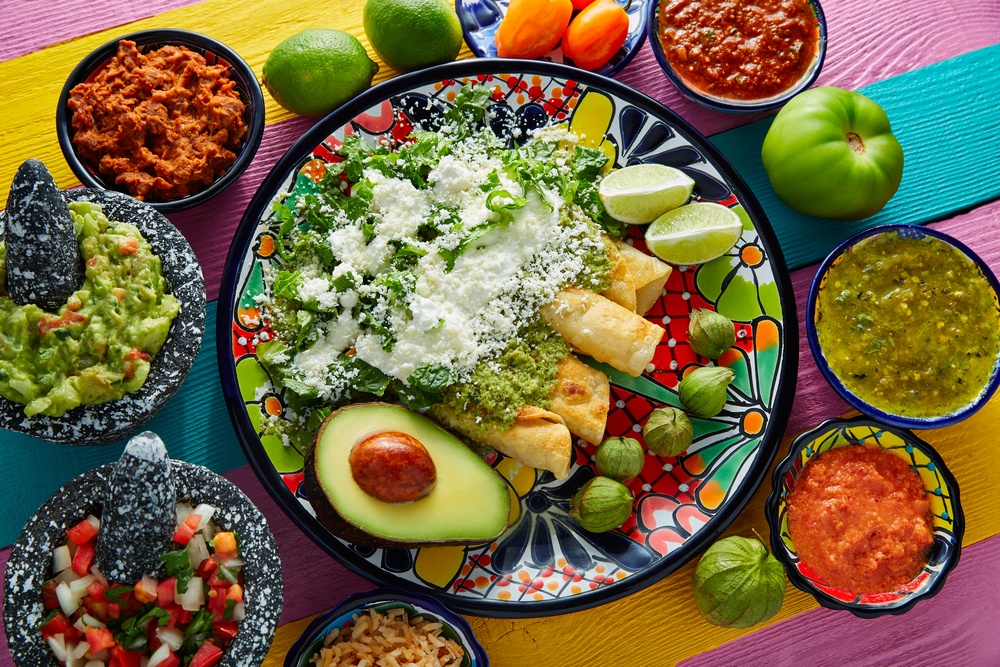

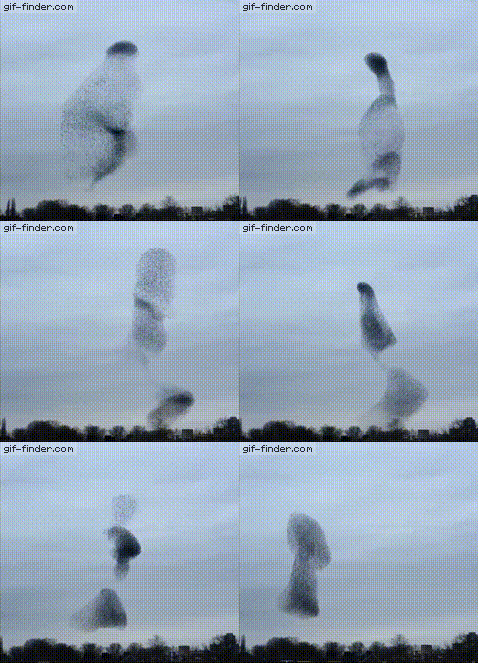
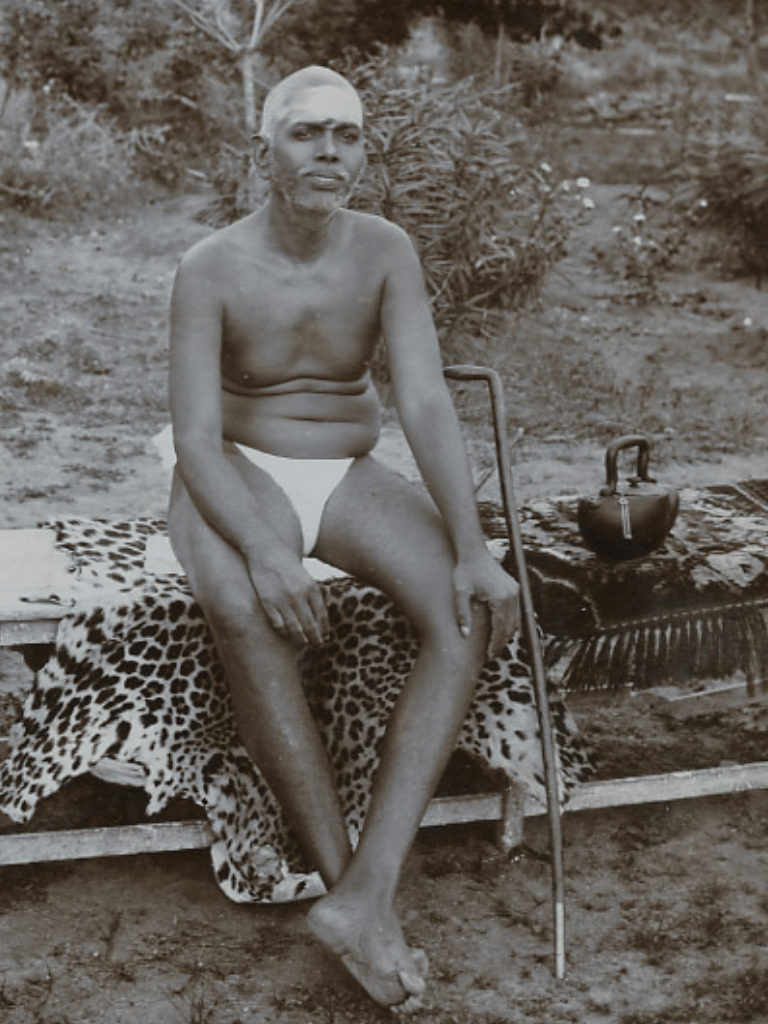




 baronbrasdor.art