I wrote an Article in November 2021 about Seed Syllables, a concept from the yogic traditions, and as is my wont playfully tried to apply it to one NFL football team, the Buffalo Bills. This is what I wrote:
Buffalo Bills. A seed syllable sketch.
Buffalo is the NY State city with most amount of snow in US. The buffalo is a powerful old breed animal with thick coat keeping it warm in winter. It has legs which are a tad short and stumpy for so powerful a body. They are fierce when cornered and almost unstoppable when charging as a herd.
Buffalo Bills Logo
Buffalo is the NY State city with most amount of snow in US. The buffalo is a powerful old breed animal with thick coat keeping it warm in winter. It has legs which are a tad short and stumpy for so powerful a body. They are firerce when cornered and almost unstoppable when charging as a herd.
How the Buffalo Bills team should be when aligned with it’s core character or ‘seed syllable:’ They should have the best Offensive and Defensive lines in the league able to mass together and charge their opponents and trample them down. That should be the core. They should be a running team on offense with powerful backs, some of whom are short. They should not be overly fancy with complicated schemes rather simply running down the other side.
How close do they have it? It seems they are over-emphasizing the passing game because of their dynamic, well-built quarterback Josh Allen. He suits an ideal Buffalo Bills team but is not running one because of the emphasis on the pass. Their defense is ranked #18 out of 32. So they don’t have strong offense and defense lines and thus are not playing true to seed syllable character. They are a very good team but will not go all the way this year until they get that right.
Viz: “They should be a running team on offense with powerful backs, some of whom are short. They should not be overly fancy with complicated schemes rather simply running down the other side.”
This year the Bills have James Cook ranked #6 and Josh Allen the QB at #7 in Rushing (running yards on offense). Meanwhile KC ha Isiah Pacheco Ranked #4. This means that the Bills have about double the KC chiefs with rushing stars, but Idon’t have the stats for the whole team (I don’t know what I’m doing with sports statistics!). But with their high offense ranking and strong rushing performance this looks pretty good to me. I don’t know how their offensive line ranks either but given their high overall offensive ranking it should be good. The key with the Buffalo Bills, seed syllable-wise, is that they are HERD ANIMAL so their lines must be strong and they must be able to charge forward and trample their opponent. Josh does this on his own, but the whole team has to do this on both sides of the ball. If they can, they will beat the Chiefs and then have a good shot at beating the Ravens, who are a formidable opponent favoured to win the Prize this year.
Kansas City Chiefs Seed Syllable Analysis:
Kansas City Chiefs Logo
Kansas City is in the middle of America’s ‘Fly-over’ country, where a lot of early Westward expansion took place with painful interfaces with the native population. This history is represented in the flint arrow head. Then there are the two letters denoting the name of their city, which is a conceptual overlay on top of the indigenous past, moreover one letter (K) is above the second letter (C) indicating the dominance theme, also the conquest of Concept (Rational West) of the Wild Indigenous. The gestalt involves both conflict and materialism (concept over nature). The arrow points forward; it is a weapon, so this team should lead with offense, especially throwing long ball downfield to the tip of the arrow.
Along with a highly regarded Offensive Coach, Andy Reid, they also have arguably one of the most talented Quarterbacks in recent memory. He is intelligent, effective on his feet, with a slippery, rubbery way of moving making him surprisingly hard for defensive backs – he wriggles through somehow and often makes a first down when he cannot find any open receivers. So he is a Wily Coyote type quarterback able to find ways to win. He has been to three Superbowls already and won two of them. His loss was at the hands of the iconic Tom Brady but they had no effective offensive line that game due to prior injuries which the Tampa Bay Buccaneers took advantage of to win the game. Patrick made many extraordinary throws but to do so he had to run around for a record 500 yards before launching the ball, proving how athletic a runner he can be, but also how without an effective offensive line it can be impossible to win.
This year their Defense is ranked high but their offense, still above average at #9 (out of 32) not so much, but not shabby either. Plus they have a team with mainly new players and probably next year they will be much, much better.
Still, despite Patrick’s undeniable talent, because they have Defense outranking Offense, I would say they are not playing true to their ‘seed syllable’ character as shown in the logo and, even if they beat the Buffalo Bills today in what promises to be an exciting match in Buffalo, they will not get past the Baltimore Ravens, about whom may do an analysis later.
YIJING Cast on the upcoming Game:
Preamble:
Am reading this Cast from the POV of the Bills since the game is taking place there.
Since their seed syllable is that of a charging herd, am taking the lower trigram as their Offense and the upper trigram as their opponents defense – what they have to move through.
Since the Derived Hexagram #11 is very positive, am interpreting this from the POV of what the Bills need to do to win.
#41: Decrease:
The Symbol of Lessening, Loss, Diminishing, Reduction, Diminution of Excesses, Decline, Bringing into Balance, Dynamic Balance, Sacrifice
This may well be a low scoring game
The Bills may lose, or lose players – which has been happening to them of late. If Josh Allen is injured, for example, it’s over for them. Or their main receiver.
Changing Lines:
3rd line is the interface between self and other, here is the Offensive Line which is initially soft but changes to hard (☱ > ☰). This is a key zone to watch in the upcoming game.
6th line has to do with the spiritual level, in this case Team Spirit. This is hard changing to soft. But also it changes the upper trigram Mountain – which is a blocking action you would expect from the Chiefs high-ranking defense, to Earth featuring three soft, yielding lines. The top firm line is what makes the upper trigram a Mountain ☶, which blocks. So breaking that top line, the spirit of their Defense, will allow their Offense to overcome a now more yielding Chiefs Defense ☷. So the Bills offense (lower trigram in #41) changes from soft Lake (Pleasure, Joy ☱) to Heaven (Leadership, War, strength ☰). These lines indicate that if the Bills can win at the Line, which is a place of very large strong men fighting it out like gladiators, they will be able to run over their opposition by breaking their spirit since the Chiefs this year know they depend more on their Defense than Offense – something they are neither used to nor designed for (nor goes with the seed syllable character shown in their Logo). That said, this is a tall order, since the Chiefs have a formidable defense this year.
Derived Hexagram: #11 Peace:
The Symbol of Successfulness, Prospering, Pervading, Greatness, Tranquility, Prosperity, Conjunction, Major Synthesis, Hieros Gamos, Holy Marriage.
This hexagram has a sense of a strong, united Offense (below) charging through a broken, weaker Defense (above).
Nuclear Hexagram #24: Return:
the Turning Point, Returning, Revival, Recovery, To Repeat, Renewal, Restore, Return to the Way, New Cycle
The recent history between these teams is that the Chiefs keep beating the Bills in the playoffs at Arrow Head stadium in Kansas. Maybe this time will be different.
Caveat: This interpretation emphasizes the Bills Offense and doesn’t look at the Defense. But perhaps it could be the same: if the Bills Defensive Line turns firm, it will prevail, breaking the spirit of the Chiefs Offense. The result is the same.
Conclusion: The Bills are going to have to prevail at the Offensive Line (L3) to ensure they can dominate the Chiefs Defense and break their team spirit (L6) at which point they will be able to charge forward successfully (#11). However, this might involve significant sacrifices (#41) causing them to limp into the next round.
Afterthoughts:
Well, the Bills lost in a close game. If their kicker hadn’t missed a field goal with 2 minutes to go, they would have gone into overtime. However, the Bills were unable to break the Chiefs Defensive line or their spirit whereas the Chiefs made many throws over 20 yards – more than any other playoff game this year – whereas the Bills made zero. Nobody on the Bills side, especially including Josh Allen the QB, made terrible mistakes, although one excellent throw was dropped a yard from the end zone, and two kicks were missed. But the fact is that the Chiefs, who have struggled all year but have been steadily improving, felt like a much more solid team.
So the Cast: 41 Decrease > 11 Peace < 24 Return. The Bills lost (41) and now the situation is settled with two teams in two different situations (11) as shown by the three solid lines in the lower trigram and the three broken lines in the upper trigram. 24 Return seems to mean that the same thing is happening again and again: each time the Bills meet the Chiefs in the playoffs they lose. Personally I think the Bills is not led well enough since this keeps happening and they should exchange the current excellent Defensive coach for an Offensive coach. They also need to listen to my seed syllable advice (!) and emphasize herd mentality. If they had a super-strong offensive line with Josh, almost a giant himself behind them, they could simply dominate all teams at the line of scrimmage and power through. Then you need a few good receivers to keep the defense guessing and away you go. On defense they need to dominate at the line to intimidate the opposing QB, ideally sacking and pressuring him frequently. Spirit-wise, such domination would cause their opponents to scatter and run, breaking their spirit in the face of such massed strength.
Another geopolitical Yi, this one using date and time – midnight on January 1st 2024 as the basis to derive the hexagrams. A brief and somewhat imaginative interpretation without extensive notes and textual references.
The Background Hexagram #6 Conflict: inner turbulence from flowing Water beneath Heaven’s Authority, those below in turmoil, those above too rigid. Something wrong with the dynamic. Also, that the problems stem from internal domestic issues rather than external.
The Primary Hexagram #30 Double Fire: given the context of the other five, this one suggests inflammation, flickering; also the identical bottom and top hexagram, with two firm lines in the middle and single firm lines at top and bottom, suggest polarity, be it bipolar confusion or multipolar world order.
Changing Line #4:Abruptly coming and going, flash in the pan: When there is only one changing line, some interpreters make this the most prominent jumping off point for the entire Reading. Here we see from one text that it is “the most vicious of the 384 judgments of the lines in the Yi Jing.” This colours the entire dynamic making the Primary #30, Double Fire, more dangerous, aggressive, destructive, all-consuming as only fire can be. At the same time, the Line Four itself sociopolitically refers to the Managerial-Ministerial level versus that of the Supreme Authority in Line 5 or Spiritual Realization in Line 6. So we have general instability or even ‘hell’ arising from the background of internal conflict involving especially the Managerial level. Many nowadays say that we no longer have Kings and Emperors, rather systems, and the world is increasingly run by such systems or what is sometimes called ‘the Managerial Class’. This Cast is suggesting there is a problem with that especially since:
Future Influence #9 Managerial Leadership: This Hexagram is ruled by the broken yin line in the fourth place with all other lines being yang. This accentuates the message from the changing line in the fourth place of the Primary #30. So what does all this problematic Managerial Class Inflammation from #30 and internal Conflict from #6 lead to?
The Derived Hexagram #22 Kayfabe: This is a somewhat playful interpretation of the Hexagram. Let us peer inside it a little: The lowest trigram is Fire, which of course is the dominant energy in #30 Double Fire. Fire denotes warmth, insight and clarity but we know we are in a more turbulent, flickering type situation here from the other hexagrams. Above the Fire trigram is Water – and indeed if the top and fifth line changed places, it would result in #63 which is Completion or Fruition, full integration which is Fire-Water-Fire-Water. Instead though, we have Thunder immediately above Water which denotes movement, change, impetus and above that ‘sealing the deal’ is Mountain with its sense of stopping or being blocked, stagnation so any change or momentum from the Thunder leads into the dead end of Mountain which blocks further passage. So we have Fire leading to Water above, which fights it, might even be putting it out and which provides a muddy or slippery platform for shock or change leading to stasis making the whole Hexagram somewhat useless – indeed Confucius said of this Hexagram that you ‘cannot decide serious matters in this way’. The traditional Image interpretation of this Hexagram is that of Flames at the foot of a mountain making all the bushes, trees and plants on its surface cast large, dancing shadows. One sees on the surface, therefore, in an inaccurate way, which also means one doesn’t see into the heart, the essence of the Mountain presiding over all which has some sense of stability and majesty, of ancestral wisdom and lineage. Fire itself is a little like this because it represents light of the Sun, which is that which is visible, so sometimes it also denotes staying on the surface and not seeing what is invisible within, which is more the case with Water. So this Hexagram is sometimes called Grace, Elegance but can also be called Makeup or Cosmetics. I chose Kayfabe which is a popular expression denoting that much of what happens in the public domain concerning politics and geopolitics is performative, deliberately misleading kabuki.
The Nuclear #28 Excess of Excess: Within the Primary #30’s process is #28 which is also symmetrical like #30 but with a different thrust. Here we have four dynamic yang lines bunched together in the middle sandwiched between single weak broken lines above and below – they cannot contain such energy and will give way. The traditional Image is that of a thick, heavy beam whose two ends cannot support the weight in the middle and so will crack and the entire edifice come crashing down. It could also denote a sense of explosion, that the energy within contains far too much pressure for the relatively thin container to hold within, so it gives way. In both cases there is a sense of a situation which cannot remain this way for much longer and this is the internal dynamic of the entire Reading.
Which is summed up succinctly in the Judgement as:
JUDGMENT
Background: blockage caused by inner turmoil, shifting sands
Predicament: Double Fire, multi or bi polar?
Changing Line: “So abruptly it comes, like burning, dying, being abandoned.”
Leadership: a managerial class on surface seemingly but
Actually all is a show, the world not as it seems whilst
Fundamentally: at Breaking Point, things cannot remain this way.
As always, time will tell. The Wood Dragon Year using the traditional lunar calendar does not begin until February 9-10th. Dragons are the most powerful of all creatures in that symbology and Wood fuels Fire so denotes rising Yang which accords somewhat with this Double Fire #30 Primary. There could be many conflagrations and things being burned away in grand fashion, including War.
Traditionally I do two types of Lunar Calendar New Year readings: the first is based on Time and Date which can be calculated at any time as with this Reading, and the second is a cast of the coins which I prefer to do live on the day itself. So don’t be surprised if a do a Time-and-Date based Lunar New Year reading some time before February 9th.
Addendum: I went ahead and did the calculation for the Lunar New Year in my time zone which is also Central Time for the US. And guess what? The Same Primary Hexagram but a different changing line, #5 instead of #4 which has a more fortunate outlook, albeit with tears and wailing, and leads to #13 Fellowship or Union of Powers rather than #22 Kayfabe. I regard the Lunar Calendar as much more significant, but the fact that both the January 1st and February 9th at 16:59 Readings have the same Primary #30 is the sort of auspicious coincidence that Yi Readers such as myself always enjoy encountering.
NAME AND STRUCTURE Wilhelm translates Zhun as Difficulty at the Beginning. Blofeld translates it as Difficulty. In this book it is called Beginning. The character for the name of the gua has two meanings and is pronounced in two different ways. In most cases it is pronounced tun, carrying the meaning of gathering, assembling, and filling up with abundance. In ancient China, a warehouse was called tun. In the I Ching, and only in the I Ching, this character bears the meaning of beginning. In this case, it is pronounced zhun.
The ancient Chinese pictograph of this character is a picture of Zhun, which might be the word’s original meaning. The pictograph of Zhun looks like a tiny blade of newly sprouted grass with a root that deeply penetrates the ground. The horizontal line lying across the upper third of the pictograph represents the surface of the ground. Above the ground a tiny sprout is just coming up, and underneath a root penetrates the soil. This picture symbolizes new life. The structure of the gua presents another picture. The lower gua is Thunder. Two yielding lines mount a firm line. The yang element is stuck under the two yin elements. The upper gua is Water. A firm line lies between two yielding lines. The yang element is bogged down between two yin elements. This picture suggests a rough situation for a newly born being. Nevertheless, the newly born being possesses a strong and healthy root, gathering an abundance of life force for its growth. Most people think of sprouts growing only in spring, but the ancient Chinese realized that there was a life force latent in seed form the whole winter. In addition, the ancients perceived the difficulties of a plant emerging from the ground. The little plant must overcome the pressure of the soil. There must be a wholehearted willingness to grow. Thus, this gua is bestowed with the four outstanding qualities of yuan, heng, li, and zhen, as are Qian and Kun, the first and second gua. Only six gua in The I Ching possess these four qualities. [Huang The Complete I Ching]
A review of a previous Cast made in June 2020 whose Changing Line warned that without sufficient support Trump would face humiliation. That seems to have proven a pretty good call. The attached Document includes a brief Article about the original Cast written in July 2020 and also a re-reading of that same Cast in the light of subsequent events and also using the Horden Mathematical method which learned this summer and which adds a Past Influence and Future Influence Hexagram to the usual Primary (main Hexagram Cast), Derived (the resultant Hexagram once Changing Lines are included) and Nuclear (the Hexagram within the Primary formed by making a new Hexagram from its Lines 2,3,4 and 3,4,5, basically ignoring the first and last lines, revealing the essential underlying dynamic). Although the original reading was quite prescient in warning Trump not to continue without sufficient support, and a later Cast this year repeated that warning (“Arrogant Dragon will have cause to repent”), I gave a positive Judgement to the Cast simply based on the progression of Difficult Beginnings leading to Completion #63 via Treading the Tail of the Tiger #10. It IS possible for Trump to prevail, but only if great things happen and he remains impeccable in navigating through highly charged situations. Odds are that the changing lines will prove prescient once again.
I noticed on this blog that as soon as I mentioned Trump my readership numbers collapsed instantly. Clearly he is part of an extremely controlled and/or divisive dynamic in the US Body Politic. I personally have no attachment or revulsion to the man any more than all major politicians in the West, none of whom has interested me much in decades. Trump seems different somehow. Whether this is true or manufactured by largely controlled media I have no way of knowing. But personally I don’t have strong feelings about him pro or con even though I have been made to accept, rightly or wrongly, that this is not the case for so many others. I find him interesting as a political phenomenon mainly because of the extreme nature of the dynamics around him, what is said and done. The man himself seems like most public figures to me: someone who says things on computer and television screens, none of which I find all that interesting. But apparently this is not how millions of others perceive him. I can accept this, but I remain a little suspicious about the whole phenomenon. Hmm…. maybe will do a Cast about this dynamic……
A slightly unusual Cast not about a particular person, place or thing, rather a general theme in modern society which arose from a comment on the Moon of Alabama geopolitical blog about Gramsci, a foundational communist thinker and activist. I found the insight about feminism pretty cool – if I say so myself as the author (Scorpion). Have felt for years that although most of the problems and solutions voiced by hard core feminists are too simplistic, there are valid reasons behind the complaint. Any time a woman complains there is a good underlying reason for it, even if that reason has little or nothing to do with the reasons being given. It is the job of Men, it seems, to figure out what that underlying problem is and fix it so that instead of complaining, our women laugh and sing. Because making women happy is clearly one the greatest duties and pleasures of human existence…..
I’ll take a quick look at that, though I suspect what I would most benefit from is a good medium-length article which cites him [Gramsci] a lot whilst also unpacking his main thought.
Reading some of the last chapter of the Williams book: part of what I dislike about this style of thinking is that its perspective is apart from rather than a part of its subject matter. Everyone in ‘traditional’ societies felt themselves within the same overall Realm (Reality) inseparable from Heaven or God, thus under the same Authority.
When you step outside something to observe it ‘objectively’ you describe it from without not within, like a scientist studying life by cutting up a corpse. The concepts used in such dissections may engender new insights but they ever remain agents of separation and objectification.
Perhaps the impulse behind feminism is natural female resentment at being objectified, not so much as ‘objects of desire’ as from the way we all objectify each other as parts of a grand machine, each distinct and apart. Such apartness offends the naturally warm and open feminine spirit encouraging union, a dissolving of self and other separation engendering new life, a process transcending the solipsism of individuated identity, ultimately more a mental construct than actual ontological condition.
Oh well….perhaps am just nostalgic for a world that never existed, for an imagined ‘Jerusalem in England’s green and pleasant Land‘ never matched by harsh, crude and oh-so-real ‘objective reality’.
The document is longer than usual so I’ll refrain from further commentary on this page.
NAME AND STRUCTURE Tai is one of the most auspicious words in the Chinese language. Originally it meant “more than” or “most.” It generally indicates a condition of being more than great. Tai also means peace, safety, security, good health; or it suggests progression, proceeding, advancing. Both Wilhelm and Blofeld translate Tai as Peace. In this book, the word Advance is adopted. The ideograph of Tai consists of two parts. The upper portion represents greatness. The ancient Chinese believed that Heaven and Earth were great, and that human beings were also great. Thus, the ideograph looks like a person standing with arms and legs wide open. Underneath the two legs, there is the ideograph of water, sui. It looks exactly like the primary gua Kan , or Water, standing upright. This ideograph presents the picture of running water proceeding forward smoothly with great ease. This is the primary meaning of Tai in the I Ching. [Alfred Huang The Complete I Ching]
Decision Advance. The little is departing, The great is arriving. Good fortune. Prosperous and smooth. Commentary on the Decision Advance. The little is departing; The great is arriving. Good fortune. Prosperous and smooth. Heaven and Earth unite ; All beings come into union . The upper and the lower link ; Their wills are the same . The inner is the yang; the outer is the yin . The inner is the strong; the outer is the gentle . The inner is the superior; the outer is the inferior . Thus , The way of the superior is expanding ; The way of the inferior is shrinking . Commentary on the Symbol Heaven and Earth are moving together. An image of Advance. In correspondence with this, The ruler gives full play to his ability and wisdom To complete the Tao of Heaven and Earth, And assists their suitable arrangement, to influence people.
Another topical Yi Cast, this one wondering out loud about whether or not 2024 is going to be an unusually turbulent year in the US. It certainly looks that way: the economy is very questionable, the border porous with reports of thousands of young, single military age males from China and Iran coming up from the Darion Gap in Panama all expenses paid, many hundreds of food facilities burned down with minimal press coverage, political surrealism quotient on both sides off the scale, unjustified wars in Ukraine and Israel and so forth. Will 2024 be a year in which chaos comes to a head and boils over?
Well, in the Past we have Exhaustion, a sense of good karma running out, flowing away. The Present and main Hexagram #11 Tai, Peace-Advance – is very fortuitous however there are three changing lines which indicate significant instability and which change into #50 Cauldron, which has a sense of things indeed coming to a boil and in so doing effecting change, especially since in the Future on the way to #50 we have #51 Shock! Doubled, indicated great change, great shifts, something shocking. Underlying all, the Nuclear Hexagram is #54, traditionally quite negative, indicating inappropriate liasons, relationships. Given the context of #11 which is Heaven below Earth above which in a large societal context can be said to relate to the People and the Leadership, it seems the Leadership from below (Heaven) is corrupt from the get-go (1st-lowest line changing) and the entire basis of the current order will soon be changing into Wood in the lower trigram of #50 which feeds its upper trigram Fire. This blazing and intense change process can effect positive results but they will involve profoundly challenging change. The inappropriate relations between leaders and followers must be resolved somehow and it seems from this Reading that yes indeed this will involve some shocks and ‘boiling over’.
NAME AND STRUCTURE Kan is a pit. It can also be interpreted as falling. Wilhelm translates Kan as Abysmal and Blofeld as Abyss. In this book the word Darkness is used. The ancient ideograph selected for this gua is a very old and beautiful form. The left half of the ideograph is a symbol for Earth. The right half is made up of two parts. The upper portion depicts a person standing on one foot with the other foot off the ground, which indicates that the person is falling. Directly underneath one foot, there is a vertical line symbolizing a falling movement. The lower portion of the ideograph looks like a pit. We have here the image of someone falling into a pit. The meaning of Kan is twofold, either a pit or falling. In the later version of the ideograph, it should be noted, the picture of the pit was left out.
The central theme of this gua is: falling but not drowned; in danger but not lost. Maintain your confidence: soothe your mind. With assurance and faith, caution and trust, you can pass through any difficult situation. Both Abysmal and Abyss carry the sense of being bottomless. Kan is a pit, but it is not bottomless. There is hope.
Kan is made up of two primary gua, Water above and Water below. In ancient times, the Chinese lived inland; they were not a seafaring people. For this reason, Water was associated with difficulty or danger. According to the system of the five elements, the color of Water is blue-black. There is no light in a pit. Thus, the meaning of Kan can also be interpreted as falling into darkness. In the I Ching, yin lines of a gua alternating to yang lines, or vice versa, are called inverse. The inverted form of this gua is Li, meaning “attaching to brightness.” According to Fu Xi’s arrangement of the eight primary gua, Qian stands for Heaven, Kun for earth, Li for sun, and Kan for moon. Besides Heaven and Earth, sun and moon were the two most important symbols to the ancient Chinese. The sun and moon up in the sky were the first two natural objects they noticed to display the principle of yin and yang. The ancients recognized that the sun was the source of heat and light. They named the sun tai yang, which means the most yang or the hottest, the brightest. They also perceived that the moon itself had neither heat nor light; its light was merely the reflection of the sun. They named the moon tai yin, which means the most yin or the coldest, the darkest. From the waxing and waning of the moon derived the principle of change and also that of the continuity of change—the two principles that are the basis of the I Ching. Heaven and earth, sun and moon were the four deities that the ancient Chinese revered the most. Heaven and earth, respectively, represent the pure yang and the pure yin. Sun and moon represent yin within yang and yang within yin, respectively.
The ancients named these four gua as the symbols of the four cardinal directions—Qian for south, Kun for north, Li for east, and Kan for west. Qian, Kun, Li, and Kan were the most significant gua in the I Ching; therefore, Qian and Kun were placed at the beginningof the Upper Canon and Kan and Li at the end. [Alfred Huang The Complete I Ching]
I hope to review a few Readings during this end of year period and see how they sit a year or more after the fact, and what improvements could be made to them with the benefit of hindsight. Might be interesting. Here is another one based on current events: news reports say that about 70% of North Gaza infrastructure is unusable, all the hospitals and schools have been bombed, and about 75% of the population is now displaced. They are being herded into South Gaza which is now being bombed. At the same time, Israeli troops are reported to have retreated from many areas in North Gaza because of stiff tunnel-sourced resistance by Hamas fighters, who pop up, hit a tank with a hand-held missile launcher, and disappear back down. The purported mission is described as an attempt to eradicate Hamas from the Gazan civilian population, though the actual mission seems to be to force Palestinians, most of whom are the descendants of displaced refugees from campaigns in the 1940’s and 1970’s, to move out of Gaza, perhaps to new refugee camps in tents in the Sinai Desert or to other nations in the world who are now accustomed to accepting millions of displaced persons from all over the world but especially those displaced by Middle East turmoil, most of which has been stirred up by Israel’s expansionist bent backed by American diplomatic, economic and military might.
So here we are. The question is: will the Palestinians be forced to leave Gaza?
The reading in the document below, as is so often the case, is interesting in how text written several thousand years ago can apply to current events. Several clear messages seem to emerge from this arcane language of solid and broken lines arranged into bundles of six. Past Influence is the same Hexagram #53 Gradual Progress as in a recent throw entitled ‘2023-10-13 Achieving Peace in Israel-Palestine 53-5 > 52 < 64’. I call it ‘Temple on the Mount’ though because the Hexagram comprises Mountain below and Wood above. Wood sometimes represents a tree, sometimes a boat, but it could also here represent the Arc or the Temple, something high up on a mountain top visible to all, influencing all. Wind-Wood has to do with spreading, growing and influencing. So this is the background context of the struggle, something religious, on the idea-level. This is clearly the case. Also, the coincidence of this one having #53 in the Past whereas the previous one had the same hexagram as the Primary gives one the sense that we are onto something here, there is some sort of auspicious coincidence in the mix.
Similarly clear is the current situation, namely Hexagram #29, both lower and upper trigrams unbalanced, depicting an Abyss, a trap, a pit – perhaps the most challenging hexagram of all sixty four, though also one of Hessey’s Ruling Hexagrams. Well, all that is fitting for the beleaguered in Gaza, often called the world’s largest open-air prison, a little like Manhattan in the Escape from New York movie starring Kurt Russell back in the 1980’s. This is a clear statement.
Next, ‘Future Influence’ is #18 often translated on ‘Work on what has been Spoiled’. One old image for this is a covered bowl containing five of the most poisonous creatures fighting it out; the one who wins has the strongest poison of all which, like all deadly poisons, can be used as medicine or, in order to counteract such poison, effective medicine must be found and administered. Another way of putting this is that every obstacle provides a path to its solution; similarly, the current terrible circumstances in Palestine demand being remedied. As of now, the current regional and geopolitical configuration has prevented any such remedy being found for about a century now and counting; perhaps the extreme nature of the current campaign against a crowded civilian population will spur developments such that, finally, a remedy can be found. Also of note: with Past Influence being #53 The Temple on the Mount and Future Influence being #18 Rectifying, there is a sense that the over-arching Biblical/eschatological fundamentalist context of this entire debacle is the source of the #29 Darkness and #18 Toxicity; a way must be found to abandon what is creating this disaster. Interestingly, if the top two Heaven lines of Past Influence’s #53 are swapped with the bottom two Earth lines, this creates #11 Peace, with Heaven below and Earth above. This is another indication that the leadership in the situation needs to change, that the time of Israel and the West calling the shots in the Middle East region should be over and the roles reversed. Israel is a guest in the Region, not the colonial Master. This also is a clear statement fitting the situation well.
And the next clear statement hinting perhaps at the conclusion of this dynamic is #11 Peace, with trigram Heaven below and trigram Earth above. Masculine-Yang is forceful and rises and Feminine-Ying yields and descends, making the two dynamics meet together (rather then going their different ways in Hexagram #12, Stagnation). So there is a positive sense of interpenetration bound to happen; sometimes this hexagram denotes intercourse, a positive mingling of self and other, male and female, us and them. It is one of the more positive hexagrams even though its own Nuclear, formed by the two trigrams which can be pulled from the inner four lines (2,3,4 & 3,4,5) is #54 which involves inappropriate relations between male and female, superior and inferior etc.
The last clear sign comes from this Cast’s Nuclear trigram #27, often translated as Mouth or Nourishment, but also denoting cultivation of character, which is knowing what to accept or develop and what to reject or eschew. But here I see a very simple visual sign: the two yang lines in #29 which were in the 2nd and 5th place ䷜ each move to the periphery, namely to the 1st and 6th places ䷚, essentially moving apart. The two sides need to distance themselves from each other somehow. The Israelis bombing and entering Gaza is counter to this dynamic; it creates the Abyss, the Pit, the bloody trap situation of #29.
The Yi doesn’t seem to clearly answer the question: ‘will they have to leave Gaza?’ except in one possible interpretation of a fringe Heaven Earth and Man method which changes from unbalanced Mountain – being stopped or blocked – changing to Wood-Wind – ease, movement or dispersal; the latter might be effected by leaving Gaza. However, there is an overall dynamic described with a path forward. At the core is separating the two sides – the Nuclear #27, which also will involve discriminating both the rights and wrongs in the situation. The path is to address the toxicity causing so much harm and death such that the two sides, fully separated with three yang lines below and three yin lines above, each have their own place. The bottom – Palestinians – need more leadership, or authority (coincidentally their governance structure in the West Bank is called the Palestinian Authority). The top – Israelis – need more gentleness and feminine nurturing; they must find a way to soften and yield in order to enjoy harmonious relations and accept that those on the land have precedence and must be respected.
White House Christmas Tree being righted after falling down in chill wind
Another (geo)political Yi. Have been somewhat under the weather of late with a flu or recurrence of Lyme Disease and although have ideas for more articles have not felt inspired to put them into writing. One that I will do soon will be entitled ‘Political Chakras’ a playful study of how just as there are different levels of experience in the human body-mind matrix – called chakras in the Indian yogic system – so also are there different levels in any societal mandala. That will come along at some point.
Also, I will explain a little more about what am trying to do with this series of essays which is act as a type of translator. In my time as a dedicated meditation practitioner and student of the Buddhadharma, which I still sort of am but sort of am not at this stage, I did enough practice and study to connect with some of the fundamentals of the tradition which is based – like all authentic callings – on bedrock reality, not ideology or power games though many get sidetracked by such in all fields. You can start off being a dedicated sincere doctor and then, after years working with the system, end up a pharmacy corporation shill. Similarly, you can get involved with a spiritual discipline for perfectly good reasons and end up a narrow-minded bigot even though that was the last thing one intended at the beginning. In any case, the experiential principles underlying contemplative discipline, at least in the Buddhist tradition, manifest in all types of human endeavour though not in the same context and not being readily explainable in the technical jargon which meditation teachers and students use in order to communicate though the experiences themselves, of course, do not depend upon such vocabularies or techniques, helpful as they are. Meditation is simply a way to connect with who and what is already there; it doesn’t create new levels of reality or experience, though in piercing the veils of habitual laziness and cowardness which obfuscate natural luminosity and clarity it does sometimes seem like something new is being developed. At which point in the minds and heart of many the desire to develop this further arises at which point one begins to tread the path of endless striving for attainment, the present moment always sacrificed on the altar of imagined future accomplishment. This is the seed of corruption which nearly all plant, nourish and watch grow and which is why it is so hard to lead an impeccable life. And yet that is the challenge we all face, both individually and collectively.
And when we stray from impeccability there is a price, for all pendulums swing back to the mean; and it seems that America is now soon facing a reckoning. Which maybe the falling Christmas tree symbolizes.
I calculated the trigrams from the event using a simple formula from the Plum Flower Mind I Ching Method published by Jou Tsung Hwa that gives a numerical value to the year, month and day for the upper/outer trigram and the same plus the hour for the lower/inner trigram.
Meanwhile, for fun when I saw a news article about the White House Christmas Tree falling over in the wind yesterday, I thought to use that method for what I call ‘an Event Yi’ about it. The Christmas Tree is a symbol of seasonal celebration for the entire nation, albeit that nation is no longer united in how it regards that symbol. Some find it oppressively religious, others overly pagan, and many others feel the whole Christmas thing a little silly, though most still like the feeling of the season, the decorations, the gifts, the sense of enjoying family and society. Anyway, when the official national Christmas Tree at the White House falls down, no doubt due to lack of intelligence and care in how it was mounted and supported, that means something. Because everything means something at least insofar as everything that occurs is part of the interdependent warp and weave of life, every phenomenon touching and effecting every other.
Interdependence, interestingly, is the inner ‘nuclear’ meaning of Hexagram #2, six yin lines, which symbolizes the interdependence of the Many, of Phenomena, occurrences, also our shared reality, aka a nation or society. Whereas the Primary Hexagram cast is #23, five yin lines with one yang line on top. Some say it symbolizes a house, with the top line making a roof. Yang rises so that top line wants to float away especially because there is nothing above restraining it – hence the notion of peeling away or splitting apart, the separation of things that were joined.
Interestingly, the 3rd line changing’s traditional commentary mentions it means that one loses connection or support from those above and below because its changing means it is no longer a yin line with yin lines above and below but now a yang line with yin above and below, which are different from it.
But the overall Hexagram (#23) changes into Hexagram #52 Keeping Still, which is Mountain above and Mountain below, a sense of double stillness, double stopping, double not doing. There are only eight doubled hexagrams, so each one is regarded as special. In this case both the Nuclear (#2) and the Derived (#52) are doubled. This is a strong throw, and given the traditional meaning of #23 Splitting Apart or Collapse fits the event of the national Christmas Tree being blown over – not auspicious. Upper and lower trigrams being the same has a sense of ‘as above so below; as within so without’. And this Derived Hexagram #2 has happened because of the third line in #23 changing. If we look at any Hexagram as the bottom line being the beginning and the top line being the end, then socially speaking the bottom line is the individual; the second line is family; the third line is local community and region, also because it’s the top line of the lower trigram, leadership at that level; the fourth line is Administration; the fifth line is Leadership; and the Sixth Line is spiritual leadership or realization. That’s the traditional description anyway. So here there is a suggestion that the stillness above and below will happen via change instigated at the level of the third line, the line of local community leadership. And 2024 is an Election Year. Just sayin’….
Dui is the root of the Chinese character “speaking.” There is an open mouth in the middle of the character, talking and smiling. Dui has a variety of meanings. Originally it signified speaking with joy, but it also means exchange in the sense of giving and taking. Giving and receiving makes people joyful. Dui is the inverse of the preceding gua, Proceeding Humbly, which makes people joyful.
Sequence of the Gua: Proceeding humbly makes people feel joyous. Thus, after Proceeding Humbly, Joyful follows. Wilhelm translates Dui as The Joyous, Lake, and Blofeld translates it as Joy. I adopt the name Joyful.
The ideograph uses the image of a person singing and dancing to express the mood of joy. It consists of three parts. In the middle is an open mouth singing. The lower part is made up of two legs, which seem to be moving and dancing. The upper part depicts two arms swinging in the air, expressing joy. The structure of the gua is Lake above, Lake below. Lake’s attribute is joy. When Lake is doubled, the joyfulness is also doubled.
According to Western tradition, Dui has been translated as Lake, and people are accustomed to it. In fact, it should be marsh or swamp. Rice is the staple of life for the Chinese people, and rice paddies are marshes. An abundance of Dui, marshes, leads to an abundance of food — a situation that makes everyone joyful.
In the I Ching, the uppermost line represents the outer reality and the lowest line represents the inner reality. A yielding line mounting upon two solid lines makes Lake ☱. Thus, the yielding line at the top represents one’s gentle and joyful personality. The two solid lines on the bottom symbolize one’s inner principle and strength. When one is gentle and joyful and has inner strength, one is easily accepted in any situation. [Huang, the Complete I Ching]
So here is another geopolitical Yi Cast, this one following a comment made at the Moon of Alabama site a few days ago (sorry, no link). I was musing about how China’s future might unfold and speculating that she will go through various phases. I then thought to get the Yi’s take on it. To be honest, this one feels like I need more time to absorb it. In terms of phases, there is a direct interpretation not exactly spelled out as such in the Reading though it’s there in the Judgement.
The Past Influence is Great Power.
The Present Phase involves is Great Joy as China is coming back into her own as a leading world civilization living hundreds of millions out of poverty.
The Future Influence involves bringing things to Fruition, integrating multifarious yin and yang elements on both domestic and foreign fronts.
The essential nuclear dynamic is the Nation as Family, Clan, meaning she must always remain true to herself and her peoples’ needs, which President Xi has already proclaimed a core guiding principle.
The Way (Derived Hexagram #62) involves balancing inner peace with outer dynamism, power with humility, and not over-extending. It feels like China will find her place in the world again, but not as an interfering Hegemon, more as a nation taking her natural place in an ordinary fashion. Which for a Great Power to achieve would be no small thing.
IMAGE
Lake Doubled Joyful Communication, Ease
JUDGMENT
From Great Power in the past, for millennia, comes now a time of joyful intercourse; beware false friends; avoid over-extending during the home stretch leading to fruition emphasize simplicity, humility and keeping it ordinary; low-flying bird with inner calm, outer motion circling around the foundational Heart of the Humankind, Family and Clan, returning to land humbly at its nest, just so. For a Great Power, no small achievement.
Sechen Kongtrul, my teacher’s teacher, around 1940’s.
Preamble: the intent behind these ‘confessions’ pieces is not to indulge in autobiographical reveals rather to contemplate various aspects of contemporary life that may be of interest to readers, albeit somewhat through the lens of the author’s personal experience. This Article is about the mentality and social dynamic involved in what are called Cults. As with all such pieces, it will not try to provide exhaustive coverage, merely touch on a few aspects.
Personal Background: As a young man, I became interested in meditation, first of the Hindu-Indian type and then of the Tibetan Buddhist type. I ended up training for over ten years with a well-known Tibetan Buddhist master, Chögyam Trungpa Rinpoche. A decade or so after his death at age 47 in 1987, which some say was due to excessive drinking of alcohol, I found myself drifting away from the community and although my teacher’s son – whom I knew well and liked – took over, one day I found myself thinking of my community as ‘them’ at which point I realized that for me it was over. So I was involved for about twenty five years and left about that long ago as well. My time as a student was deeply informative and meaningful, a period which has defined much of the rest of my life. Many of the later developments have been painful, but since I never personally witnessed high crimes or misdemeanours, the horror stories occasionally popping up in the press or community chat boards were not why I gradually left nor much affect my memory of the times when I was involved now many decades ago.
That said, the community has thrown up disturbing stories over the years and is now fractured. I gather there is a core, ‘loyalist’ rump remaining but well more than half the old membership has drifted away over the years for a wide variety of reasons. Those who wish to learn more can simply search for Shambhala Buddhism and lots will come up, most of it bad. My experience does not match those narratives. Basically there are stories of the founder Trungpa being a lascivious drunk who fleeced his students and groomed underage children; about his Italian American lineage holder indulging in homosexual encounters some of which may have transmitted AIDS (though now we know that this almost certainly didn’t happen because HIV virus did not carry AIDS as believed at the time); and about his lineage successor son who abused his role as leader mistreating various lovers and going overboard with financial remuneration. There is some truth to all the stories, but also many exaggerations and I believe false deductions. But evaluating all that is not the subject matter of this piece. The account above was just to establish that I have some familiarity with the topic.
Naturally, have often asked myself whether or not I was involved in a cult and the answer is both ‘Yes and No.’ But to examine that, first let us consider the term ‘cult’. I believe that all cults involve group dynamics, essentially the same as in all larger groups such as conventional societies. As such, they are of interest to all whether or not one is personally involved in one.
Second, a disclaimer: there are quite a few groups and authors out there which specialize in Cults. I have never invested much time with any of them so the following remarks are observations based almost entirely on my own personal experience and contemplation.
Actually, I may have already expressed the main insight of this piece: the core issue with cults is that they involve group dynamics. But let’s start at the beginning. What does the word ‘cult’ mean? Unsurprisingly, it has a range of meanings. Here is a synopsis from the Mirriam Webster dictionary:
The Overlap of Cults and Culture
Cult, which shares an origin with culture and cultivate, comes from the Latin cultus, a noun with meanings ranging from “tilling, cultivation” to “training or education” to “adoration”. In English, cult has evolved a number of meanings following a fairly logical path. The earliest known uses of the word, recorded in the 17th century, broadly denoted “worship”. From here cult came to refer to a specific branch of a religion or the rites and practices of that branch, as in “the cult of Dionysus”. By the early 18th century, cult could refer to a non-religious admiration or devotion, such as to a person, idea, or fad (“the cult of success”). Finally, by the 19th century, the word came to be used of “a religion regarded as unorthodox or spurious”.
From another Etymological Dictionary: An organized group of people, religious or not, with whom you disagree. [Hugh Rawson, “Wicked Words,” 1993]
It seems the word’s gradual change in meaning parallels the rise of materialist secularism; once religious ‘worship’ was valued, now it is generally looked down upon.
(Note: no mention of group dynamics!)
In Chinese medicine the term ‘Dzong Chi’, meaning ‘Group Chi;, refers to the energy for example in a sports arena manifested by the crowd chanting, cheering, stomping, fighting, ooh-ing and aah-ing, waves of speech level energy fluctuating, pulsing, exploding, subsiding. We have all experienced this whether or not we thought to name it, or simply calling it ‘the crowd’. Orators skillfully manipulate this energy, using it to create and lead national political movements.
But we also see Dzong Chi in small, domestic mandalas. Families develop a nuclear, contained group energy of their own; each household has a particular combination of physical, psychological, cultural and emotional atmospheres, all part of the family’s overall group dynamic. Some families may be tight-knit and mutually supportive whilst others are always at odds and psychologically disturbed. The group dynamic, though produced by and affecting each individual therein, takes on a life and character of its own. Although we may not have entertained this subject matter as an object of enquiry, we spend our entire lives in some sort of group energetic context, aka mandala – (see THIS article on Mandala).
But there is more to Cults than group energy, so what makes one exactly, especially in the contemporary and derogatory context? Perhaps one common thread is a shared belief, even a ‘group think’ quality. The ordinary shared group dynamic observed above in sports stadiums, churches, public squares and even around the family dinner table manifests in Cults as people adopting certain beliefs and practices and pursuing them together as a unified group, be it spiritual community, congregation or political movement.
This basic group connection principle is neither bad nor good for we are indeed social animals feeling some sort of connection with each other, be it friendly, hostile or indifferent. So the connection principle in a group dynamic which evolves into being that of a cult has to do with feeling a part of a group dynamic which is markedly different from – and often felt as superior to – any other group such as friends, family or wider society. It’s a group dynamic which feels exclusive to that group; outsiders cannot know how the insiders feel; as such it is a contained mandala, quite possibly even a closed or ‘secret’ society.
The cult dynamic happens when the energy mutually experienced in the group becomes the dominant referent in the personal lives of those members. At that point, conventional reality recedes into the background, possibly feeling surreal. Not only religions, but families and political groups can manifest as cults in this way.
The initial dynamic is normal; if you are in a weekly book club for example, that group will share things together and develop a particular group atmosphere and history which non-members can never experience but this is by no means a Cult. A Cult happens when an ordinary book club group dynamic expands from being a shared experience for a few hours once a week to being the dominant experience in one’s life providing most of its meaning and purpose and in many cases determining the nature and content of most of one’s daily activities. The group dynamic pervades one’s personal life.
Maybe at first it is something one looks forward to whilst juggling job and family which increasingly begin to recede into the background. Then maybe one marries a fellow group member making one’s personal life more part of the group mandala. Then maybe you take on a job in the community as teacher, administrator, part-time volunteer or janitor of the large Church Building. Now your job, family and spiritual companionship are approaching a 24/7 experience within the context of that spiritual group. You only are ‘out’ of it when you go to a public supermarket, but even there you usually meet some of your fellow ‘sangha members’ where glances can be exchanged, a little chit-chat or whatever, maintaining that special group mandala. And even if no-one from your group is there, that very sense of being somewhere different, even a little alien, continues the experience of being involved in something special and different.
In family life, it is intuitively understood that outside the walls of the house in public any tight-knit family group energy holds less sway; it might still provide a strong bond or reference point, especially when members of the family go out in public together, but it is diluted somehow in wider society. The religious cult dynamic per se happens when its own group dynamic becomes an over-arching, 24/7 experience with one’s spiritual belief and practice in play throughout one’s life, perhaps with reciting mantras or a rosary at work or whilst shopping to maintain continuity of that special awareness and spiritual identity. (Though of course there can be valid reasons for practicing a spiritual discipline that way.)
The cult dynamic is when the energy mutually experienced in the group becomes the dominant referent in the personal lives of its individual members. At that point, conventional reality recedes into the background, possibly feeling surreal. Not only religions, but families and political groups can be cultish this way. So how does it work in the religious, or spiritual, context?
Most spiritual communities work with some sort of spiritual leader, be it a God, minister or Guru. The members live in society and come together as a congregation to commune with the leader during Sunday services, say; that’s all fine. But around the leader – and especially a Guru type leader – inevitably develop a body of closer-in disciples some of whom become staff in his household or the organization or intimates or even lovers. One way or another, gradually their personal lives become intertwined with that of the teacher whose life in turn is intertwined with theirs. In this way the Teacher becomes possibly the first manifestation of the Cult dynamic because a 24/7 ‘alternate reality bubble’ is created around him by continuous interaction with devoted students who individually may may come and go throughout the week but meanwhile the teacher ends up spending all day, and often all night, with one or more members after another, at which point his private and public life have merged such that his personal mandala, the spiritual lineage and the lives of his students have become One. And the first person in the group for which it has become a 24/7 experience is the Guru him or her self.
This is not offered as some sort of excuse for genuinely bad conduct which does arise in cults centered around charismatic figures, be they out-and-out charlatans or those who were well intentioned but over time became corrupted in part by the non-stop attention and adulation – enough to drive anyone over the edge. That said, it is worth keeping in mind that any toxicity on the part of the Guru is in no small part a reflection of the students themselves. It takes two to tango.
In any case, most likely any problematic Cult dynamic evolves from an initial nucleus around the individual Guru’s personal mandala becoming one with his Mission and Group. Although it might start as a Cult of One it will soon grow into a Cult of Many in which the Many think and feel as One because they are all simultaneously absorbed in the same rapt attention to the Guru, who is not only an individual but now also the mutual shared common point of focused attention embodying some spiritual experience, principle or creed, as such a living God as it were.
This brings up another aspect of the group dynamic, namely that it is considerably heightened – if indeed not actually engendered – when all members are paying attention to the same thing at the same time, a sort of collective attunement. In a sports arena, seventy thousand eyes are fixed together on a ball moving from one place to another and on the particular dynamics involved – tackles, goals, fouls, surprises, disappointments – all of which become heightened shared experience. Similarly, at church or a political rally, thousands can be listening to the same words and watching the same movements of mouth and hand gestures. Even with a national television broadcast during a time of crisis, like an unexpected disaster or declaration of war, though the audience is not physically together meanwhile on the level of mind, or consciousness, they are all paying attention to the same words and gestures at the same time, so again all together as one. Sharing the same object of focus at the same time, even over distance, engenders a collective group dynamic and thus also, potentially, a cult dynamic.
Traditionally, students ‘sit at the feet of’ a teacher. They do so naturally out of respect but also so that everyone in the audience can see him which is also why teachers often sit on raised daises or thrones. And this brings in yet another group dynamic, that of leader and follower, inevitable in any group mandala.
Maybe that should be the subject of another Article. For now let us just consider how all cults are manifestations of group dynamics and perhaps what makes a normal group dynamic evolve into that of a Cult is the collective attention paid to a Guru figure who is the original Cult of One which naturally grows into a Cult of Many bound together by their attention and devotion to the One Guru and their shared Cause or Belief. They then are all bound together in service and devotion to that teacher and tradition, at which point they often – though not always – become fanatics sincerely believing that their notion of Utopia is best for the rest of the world which is generally ignorant and backwards in comparison to their own superior ideology and way of being.
Now let us briefly touch on another aspect of the words Cult and Culture. Again from the Mirriam Webster description:
Cult, which shares an origin with culture and cultivate, comes from the Latin cultus, a noun with meanings ranging from “tilling, cultivation” to “training or education” to “adoration”.
Tilling involves ploughing, working the soil, usually in lines; this takes focus, dedication and stamina along with ignoring outside distractions to heed the work at hand under the plough which in turn relates to ‘training’ which requires similar sustained attention and effort. But then that comes to ‘adoration’, a somewhat curious development. Knowing one’s purpose and identity brings joy; the work, the training, becomes a Do, a Dao, a Way, something which all spiritual traditions offer, but most group activities as well, including families, businesses and political movements; moreover something to be valued and cherished, even ‘adored’. Japanese civilization is based around this Dao, or Way, principle, no doubt why they excel in so many different areas – they put their whole attention into whatever they do along with their heart and soul, indeed so much so that many criticize them for being overly fanatic in all their endeavours. Those Japanese know how to plough! But when one’s body and mind are synchronized into one activity and motivation, the fact is that most of us feel a combination of relief, pride and delight. Uncertainty and fear are banished. We know who we are and what we are about. Or as my teacher wrote in a text: ‘even dogs and cats have confidence; why should not Man as well?’ Confidence is our natural state as long as we leave double-thinking doubts behind and concentrate on the task at hand with heart – genuine feeling – and commitment.
Interestingly, this brings another aspect: this combination of attention with meaningfulness, especially meaningfulness regarding one’s personal identity and life journey, easily overflows into obsessive compulsive behaviors both at the individual and group levels. Various perversions can become fascinating objects of attention in the group, at first maybe a slightly unorthodox meditation technique to improve focus, but later group rituals, or sexual permissiveness amongst the members or with the Master, or developing ambitious, multi-generational campaigns to save the world whilst accumulating money and influence to succeed in so doing. This is all fueled by the pleasure one derives not only from focusing attention and becoming more present as a result, but also, as mentioned above, of knowing who one is and what one is doing, of living with purpose. Which for some can be quite addicting, especially those who felt lacking in some way before encountering the teacher, teaching and group.
But then comes the price, the trap: the initial thrust from the focused attention on the Mission, the Guru, the Meditation, the Group can easily develop into obsession; one has devotedly ploughed oneself into too deep a furrow to climb out of, part of the depth being the profound pleasure and meaningfulness encountered in the spiritual community mandala around the Guru. However, this sense of not being able to get out even if one wants to is perhaps the first clear sign that one is in an unhealthy Cult.
There are many such situations not in ostensibly spiritual communities: once you are in the CIA, they say, you can never leave; so also for most criminal organizations or prison gangs. Same with many families, some of whom are extremely demanding. Even at the national level, for example when your country declares war, you are bound to go fight for it or make other sacrifices.
And that brings up the last point on this rapid peripatetic tour of Cults: that sense of being bound. The word ‘religion’ comes from ‘ligare’ which means ‘to bind’. Ideally, a religious faith and tradition binds a group of people together creating shared values and culture. This can be a good thing, of course, indeed without that sort of collective binding there can be no civilization of any worth. That sort of binding can keep a man by the side of his brother when facing an enemy’s murderous hail of bullets; and of course without individual commitment to a path or discipline one cannot progress. But being bound to a path, though absolutely necessary to make any worthwhile progress in any genuine endeavour, can fast become unhealthy if one’s motivation or connection to the principles and practices of that path are no longer there or the situation has substantively changed. Often this happens due to indulgence, lack of faith or other personal failings which ideally should be overcome, but sometimes it happens because the group itself has gone astray or one can clearly see that the original Mission was not well considered or the circumstances have changed such that it now no longer makes sense.
This can unfold in no end of different ways: change in leadership, change in society or change in the individual who for example may no longer be young and single but is now married with children and a demanding law practice. So there are times when things to which one was bound are now things to be relinquished; needless to say, spiritual groups which prohibit or demonize such choice on the part of individual members can become toxic. That said, the pressure rarely comes from others within the group or the teacher but rather from one’s own commitment being so deeply held that even though different situations require substantive change, letting go of or significantly altering the connection can be heart-wrenching, like a divorce, often involving long periods of painful personal impasse.
In my case what happened is that after our Teacher’s death that which had been clearly structured with steady forward momentum soon became unstructured and caught up in disagreements following breaking scandals. After a few years of this I found it hard to reconcile the group that we had become with the group I had always imagined us being. It felt like being loyal to a Cause that was no longer there at which point my heart was no longer in it. I could have persevered, perhaps becoming a mountain yogi or some such, but that was never my main ambition – though I did spend several months off and on in meditation huts high in the mountains. Rather I thought I was helping make the world better by providing a better configured social and spiritual model via our community; so when that community degraded into bitter factions with no solid, uplifted core and no seeming path forward, at some point, without intention or conscious decision on my part, I found myself on the outside looking in.
This simple description, though accurate, does not explain the length of time and surprisingly painful process involved in ultimately letting go and moving on. Having dedicated myself so much I became extremely disappointed – the primary source of the pain – when things didn’t turn out as desired. This commitment, and the dream behind it, was not caused by any Teacher or fellow Sangha members, though many disaffected may feel that is the case. No, the conviction, including any related attachment or obsession, comes entirely from the head, gut and heart of the individual now experiencing the deep disappointment, which many then choose to translate as betrayal.
This sort of razor blade journey through passion, inspiration, commitment, obsession, perseverance, loyalty, betrayal, disappointment, bargaining, anger, despair, cynicism, renewal and so forth is one that most human beings encounter along the way whether or not they join a Cult. Because what makes a Cult are deeply seated tendencies in human beings which group situations bring out in all sorts of positive and negative ways. Perhaps it is fair to say that a life lived with a certain level of intense commitment always involves a corresponding level of intense pain. There’s a law somewhere about it somewhere …. ah yes, Lord Buddha’s First Fundamental Truth:
Suffering is Unavoidable
There is much more that could be said about this topic, including about how obsession is a passionate off-ramp to facing the inevitability of the final destination known as death, but this Article has now officially run out of road!
Two specifically about the US and the third about the Middle East.
USA 2024: in the back of my mind is growing the notion that 2024 will bring extreme chaos, possibly with violence. This is a tricky Reading indicating positive undercurrents with potential for profound national transformation.
Will Joe Biden soon be stepping aside? #29 The Abysmal indicates ‘yes’!
Will Russia-China-BRICS+ help resolve the intractable Israel issue in the Middle East, ongoing now for more than a century? This one is fairly clear. Those who are of the Earth-Region there can integrate, though it may take time. This might also imply that those who do not share connection with the Region should be excluded from the integration process.
“If you find this controversial, it is because you have never heard the conversation being had by most of the planet about the West, and don’t realize how ludicrous Western exceptionalism sounds to the rest of us.”
Shahid describes Islam as a civilization which includes many different nations and ethnicities, going from Morocco, to Malaysia and all the way into China. It is one overall culture sharing the same beliefs with mutually attuned senses of right and wrong, honorable and dishonorable, a way to lead a good, meaningful life.
In contrast, he describes the West as lacking all of these elements essential to any sort of cohesive society. There are many videos on his channel, each about fifteen minutes long. I don’t necessarily agree with everything he says, but what he says is worth contemplating because in a way he is discussing what is playing out in the Middle East and with the Ukrainian Special Military Operation, namely a clash between Russia and her Allies against the Collective West, aka ‘Collective Waste’!.
He offers a critique of Western civilization using the West’s own language. He is a German-Irish American, born in Boulder Colorado in the 70’s who, having lived most of his life in Islamic countries now speaks his fluent English with a slight Arabian accent. He has a chequered past, to put it mildly having been, amongst other things, jailed for years on Death Row for murder which later on appeal was reduced to manslaughter. I find his characterization of the Islamic civilization, the Ummah, a bit over the top; he says, for example, that all Muslims agree with each about values and such and abhor violence and conquest as if Muslim nations haven’t often been at war with each other or perpetrated violence and conquest. Moreover, I find it hard to believe that everyone agrees about everything; I am sure many families are torn with internal disagreements in Islam as in the West. That said, he makes some interesting and penetrating points, especially about Western cultural issues. So whether or not the messenger is entirely savory, nevertheless some of what he says can still be worth considering.
One of his critiques in this or another video goes into how Western liberalism is internally inconsistent. That the latest iteration, Wokeness, which attacks most others for being intolerant racists or bigots (anti-trans, anti-female etc.) is itself extremely intolerant. This is true. And in many other ways Western nations, policies and individuals fail to measure up to the same Enlightenment Ideals they profess to follow and which they don’t hesitate to push onto the rest of the world even though, clearly, they aren’t working all that well. Again, I think it’s worth listening to the man’s arguments in his own words.
I have long been critical of most Western nations but in a Tolkienish sort of way: I lament their passing. Although not convinced that they were necessarily all that great before Modernism took hold – a post-religious, materialist thrust which now pervades not only the West but most of the world entire at this point, the Chinese being perhaps the most advanced materialists of all – I do feel that it was a more or less cohesive civilization sharing similar values and worldview. A worldview is something both deeply personal and collectively shared, the experiential glue binding communities, nations or civilizations together, spanning physical expression and non-material perception and one of whose core expressions is civilizational Culture. I believe the West had a valuable culture with many marvellous aspects. I believe this because growing up in England and later both visiting and living in Italy, France and Germany, one can see with one’s own eyes clear, ubiquitous evidence of beauty, intelligence, sensitivity, playfulness, elegance, depth, dignity, grandeur and timeless peasant wisdom. One sees this in the furniture, the buildings, the landscape, the streets, the markets, the clothing, the languages, the cuisines and manners. I saw it everywhere: evidence of past high culture still influencing those born into its civilizational gestalt to this day.
Of course I also saw inconsistency, corruption, decay, decline, ugliness, ignorance, quarrelsomeness, frivolity, crassness, lewdness, degraded behaviours and so on. Increasingly, it seemed the modern world was moving into a culture not reflected in the buildings and landscapes from past eras and increasingly veering into a modernist hellscape – crass, gross, degraded.
‘And so it goes’, I thought, enjoying every Vonnegut novel I ever read decades ago, for he seemed to capture the madcap, gloriously hopeless tragi-comic essence of our times extremely well. As a young man he walked through the rubble of Dresden, clearing away the bodies, or what was left of them. He knew our world well, in all its surrealist fury, and created new worlds for us to explore in narrative, worlds whose principle Surrealist Deity had an unquenchable sense of humour.
Of late it seems that the political and leadership classes, those in charge of managing and directing our world, especially in the West, are deliberately working to make things worse on pretty much every front: economic, social, personal, family. They seem animated by hatred for all that is good. They are trying to turn us all into orcs tearing each other limb from limb. It is disturbing to witness and hard to know how to resist. Deception is everywhere, including in all the controlled oppositions provided to further ensnare the unwary. Where to turn?
Along comes this white Islamist from Boulder Colorado to provide a little clarity. Much of his critique of Western civilization rings true, or true enough. Things are never quite as cut and dried as someone with an agenda can make them out to be, but still: the West is indeed confused, inconsistent, doesn’t practice what it preaches, imposes its financial systems on other nations and peoples, exploiting them, and is culturally declining not advancing. The whole business is decidedly unpleasant. Some say this is because of a long-term plot by Jews or Bankers to undermine society for their own benefit and there is enough circumstantial evidence to make that a plausible argument, though distasteful and politically incorrect. But even if true, it’s not enough. It doesn’t explain how so many millions are willing to buy into so much civilizational self-destruction and personal degradation. How did we let things come to such a pass?
For example, in one of his videos he responds to a question from a woman: ‘do you believe that women are equal to men’? After a shrug and a smile, he launches into his answer, something he he has clearly thought through and expressed many times already. Basically he says that the whole notion of equality is bogus. First of all, there is no equality between men and men or women and women; some are smart, others stupid, some attractive, others ugly, some born wealthy, others poor, some work hard, others don’t and so on. Furthermore, specifically in terms of men and women, clearly there are great differences between the two sexes. As an example, he asks the woman if it is not often the case than when being ‘hit on’ by a man in a bar when she is there alone, in order to deter his unwelcome advances she might make up a boyfriend or husband in the background at which point the guy will usually withdraw from the pursuit. Because men, he says rightly, are inherently ‘more dangerous’ than women and you need a man to protect you from other men making them inherently unequal. If that man, acting as your bodyguard essentially, insists that you not both go into a dangerous neighbourhood, are you not going to want to agree and obey? The whole equality issue, he says, is illogical and absurd, like most of the social issues which come up in the West. I think that was a fair point. Moreover, what is more interesting than the point itself is the way so many accept the equality proposition without a second thought and can even get irate with anyone who challenges it.
In the midst of musing on this critique of Western civilization offered by the Mullah from the ‘Peoples’ Republic of Boulder’ (where, as it happens, I was living whilst he was a boy growing up there), it occurred to me that I – like so many others – am a ‘Western Mongrel’, someone whose personal situation and journey mirrors that of millions of others. There are many different layers and levels to Western lives, of course with many things shared in common one of which is that increasingly we feel we do not have all that much in common with each other, or at least less and less. Moreover, most of us don’t really know our family or cultural lineages much more than a few generations back, if that. Hence, many of us are mongrels.
First, what is a mongrel?
From the Mirriam-Webster online Dictionary:
1: an individual resulting from the interbreeding of diverse breeds
especially : one of unknown ancestry
She owns several dogs, one of which is a mongrel.
2: a cross between types of persons or things
the cinema is … a mongrel of virtually all the other arts —Gerald Mast
We each have our own personal story, or lineage. In my case I come from an American family with English roots on the father’s side and on the mother’s side, a red-headed Irish grandmother who married the eldest son of a Belorussian rabbi – which we only learned after he died, since he never admitted to being Jewish to his wife or daughter. I didn’t meet my father or paternal grandparents until the age of sixteen because my mother divorced my biological father and married an Englishman who raised me in London, where we moved when I was about five. So I have mixed parentage and nationality, thus am ‘a cross between types of persons or things’ (things here being nationalities). I also have two family names: in England my last name was my step-father’s but my passport always had my original family name because as I found out later was never legally adopted by the English stepfather. The word ‘mongrel’ fits quite well. So that’s one personal example of the notion.
But of course this sort of individual mongrel-hood is not untypical for many Westerners. Most of us who come from unmixed family lines don’t go back more than a couple of centuries, if that, and even those that do may only have a tenuous experiential connection with their ancestors even in the same country given the way Western societies change so rapidly from century to century. How much does an Englishman today have in common with a person from the same class in Chaucer’s, about twenty five generations ago? Some, for sure, but in many ways very little. If we were to meet our great, great, great grandparents, for example, (in my case born in the late 1700s) how well would we understand each other? If we are practicing Roman Catholics, perhaps quite a lot, but if not, perhaps not so much at all given how much our outer situations and the class systems have changed. And of course a large number of us are now being born in countries far away from where our ancestors lived. Native Americans who haven’t moved far have little connection to their ancestors of several centuries ago for well-known reasons. Similarly Mexicans, where I live, have little connection with their own ancestors whose languages they no longer speak and whose customs and ways of living are now largely lost.
I don’t want to belabour this overmuch, but the point is that many of us in many ways are deracinated. When I lived in Germany in the 90’s, for example, many German contemporaries born in the mid fifties like myself felt extreme disconnection with their parents who lived through Germany in the 1930’s and 40’s because of the huge changes their country went through during and since that period. There are Russians who still find the notion of having their country led by a Tzar resonates strongly and yet that reality is something now only imagined, not witnessed in present reality nor known by living persons. The Chinese have similar experiences. Indeed all peoples the world over are very much in the same boat; as such we are all civilizational mongrels.
In musing on this after listening to one of Rashib’s youtubes, I had the sort of idea that writer-types like myself find themselves spontaneously birthing, namely the title of this Article: ‘Confessions of a Western Mongrel’. I often get little ideas like this and immediately wonder if perhaps this is the next Great Book Idea. But then this time, also immediately, I realized two things: first, that it’s a good topic for a short article and second, am better at coming up with interesting-sounding titles than actually writing books, making me perhaps more of a ‘Book Title Composer’ than ‘Book Author’.
And later wondering: maybe mongrels don’t have much to pass on, being so fragmented to begin with; maybe fragments is all we can string together; and maybe that’s good enough.
In any case, Rashid’s critique of Western culture, though by no means earth-shattering, raises issues more of us in the West should be contemplating. Our current politico-social situation is confused and confusing; people talk AT each other but rarely WITH each other. That used to be a very common thing among Europeans of my parents generation. Nowadays, when people come over I find myself guarding against saying the wrong thing – so easy to do these days. Too many of us are outside our natural tribe, or pack. Mongrels…..
Another Yi, this time about the situation in Israel-Palestine which is all over the news as the next Great Crisis which might lead to nuclear war. Am no expert on the issue, but believe the maps above tell a sad story. The second one entitled the ‘UN Plan’ shows that the initial proposed territorial distribution was entirely unworkable if not indeed designed to fail. Hardly surprising, therefore, that seventy years later things haven’t worked out well with the only apparent end being the genocide of one side by the other. Also sadly ironic given the ostensible reason for creating this State out of thin air was the story of genocide perpetrated against Jews during WW II. ‘Never again’, they say, and yet here it is happening again in the very country they caused to be created. So I asked the Yi a question deliberately slanted toward finding a peaceful solution, and received an interesting answer as published in the document which follows.
Briefly: two Peoples share a history together. There is potential for both great Wealth and some sort of Settlement in both senses of the word: people being able to settle and the two Peoples coming to an Accord. My interpretation basically leads off the Changing Line in the 5th place of Leadership which in turn creates #52 Keeping Still, the ‘meditation hexagram’; it also can mean stopping, not following busy-mind or old grievances, just stopping. ‘He goes into his courtyard and does not see his people. No blame.’ They all need to stop, the Israelis, the Settlers, the Military, Hamas, the Mullahs, the Rabbis, the spies, the Americans, the Saudis, the Jews, the activists, the victims, the rabble rousers, the media, the politicians, the warmongers, the pacifists… ALL of them need to STOP. The Yi recommends three years with each side being equal, the same, no one side dictating anything to the other side, two mountains side by side, still, separate and together. And then, as the Changing Line augury of the white birds flying to the Temple Mount suggest, they can give birth to a new situation entirely. An interesting take….
Another geopolitical Yi Reading, this one about a person who I regard as possibly the greatest statesman on the world stage in well over a century. Churchill was a Great Man in many ways even with all the glaring shortcomings and hypocrisies which recent history has uncovered. If one takes a ‘both-and’ versus an ‘either-or’ approach, he still emerges as larger than life. Along with possessing extraordinary powers of speech, he had a deep understanding of human nature in general and his own society in particular, although he ended up helping to create huge, deadly messes in so many ways that when all is said and done, despite his prominence as a character on both national and world stage, the verdict is mixed at best. And yet he was still, as he said himself: ‘A Great Man.’ Though perhaps not as great a World Statesman as he and his fellow countrymen at the time believed.
With Vladimir Putin, mainly all we have to go on are his speeches published in English on the kremlin.ru website. That and an over twenty year track record which demonstrates that he means what he says and his actions accord with his words. Rarely does one encounter this. Mainstream Western press is so twisted as to be useless so I haven’t read any of it in years. No doubt have missed a few good pieces, but have also avoided wading through hundreds of bad ones, an acceptable trade-off. The problem with only reading the formal public statements, of course, is that one misses nuance, contradiction, the undoubted family feuds and cross currents that any family, let alone nation, inevitably features. We know that there are powerful oligarchs in the Russian polity along with a huge military industrial complex. It’s not all love and light. And we know that Putin has to tussle with all elements in his complex polity, each of which rubs off on him a little. He is no Saint nor like any worldly leader should he be regarded as one, as too many of his admirers tend to do.
As to this Yijing Reading, the embedded document below speaks for itself. I got a strong, positive feeling from it which is welcome, actually, because of late have been pushing myself into a cynical corner, refusing to believe anything or anybody. The West seems almost irredeemably broken right now, though I believe that things can always turn on a dime and ‘it’s always darkest just before the dawn’. Plus I don’t trust all the assertions made about China having forever and only been a peaceful, non-hegemonic nation – that’s way too simplistic and self-serving for my taste!
In the previous Article 77 subtitled ‘Hegemony as Mindset, not Ideology’, I wrote that “the degree to which the Rest of the World – especially China – has absorbed the modern materialist mindset is the degree to which multipolarity will fail as such because each pole or cultural zone therein will just be more of the same, albeit with slightly different language and dress codes. It will all be ‘materialist post-modern’.”
I believe this a valid concern; but it’s not all black versus white; there are nuances. For example, cultural realities comprise both materialist and non-materialist aspects. Yes, the former have muscled out much of the latter, but Nature will redress the imbalance at some point. Non-materialist elements are simply that which is usually labelled subjective, that which is experienced but not only physical; such as feelings, beliefs, moods, fashions, ideologies, cultures, traditions, religions, faith, family ties, empathy, disgust and so forth. All these things which are irrelevancies in the New World Scientist Order. They may be overlooked or outright denied, but they persist nonetheless. Indeed, in most cases these days they exist quite naturally in a parallel experiential universe alongside and within our officially assumed ‘One World Objective Reality’ which insists they are no longer of interest. Most of us don’t think about these sorts of abstraction often but given the strange, and possibly quite dangerous, times we are currently experiencing, perhaps it is worth digging a little deeper to better understand the nature of the ground beneath our feet.
One non-materialist elements in the geopolitical context is, in the case of Russians, the connections they still enjoy with their Tzarist and Orthodox Christian past. The latter still exist, albeit not in the same form as a century ago, whilst the former was largely destroyed the moment the corpses of the Tzar’s family were unceremoniously thrown down an abandoned mine shaft by a vicious Jewish communist. Similarly in the United States there is a widespread sense of what it means to be an ‘American’, a sense of pride, optimism, individuality, loyalty to the country and principles of generosity, honor, service to others, love of God and country and so forth. These things have been under assault by some sort of organized ‘neomarxist’ Demon hell-bent on undermining social cohesion and collective joy, both within the family and throughout wider society, but they still remain and always will because as humans we are all born with hearts, and hearts tend to love and cherish, they warm to warmth, they love to love, they delight in delight. Such things are natural and no amount of totalitarian style suppression can eliminate them; indeed, such suppression inevitably creates backlash. Which is quite possibly where we now are.
It seems one of the leaders of this backlash at the geopolitical level is Vladimir Putin, President of the Russian Federation. Russia is the largest nation in the world as measured in square kilometers, albeit only of above average size population at about one hundred and fifty million, slightly less than that of Bangladesh, for example. For millennia, ‘the Middle Kingdom’ of China has regarded itself as the civilizational center of the world; of course all great civilizations regard themselves as such, which is perfectly fine and experientially accurate for those living within those polities, but for a long time it really WAS the center in terms of trade volume, value of exchanged goods and resultant geopolitical heft.
However, after the Mandarin class’s successful drive in the mid 1400’s to pull back from all engagement with foreign cultures, to which end they imposed a ‘Maritime Ban’, the world balance of power and trade flows shifted. Put another way: Genghis Khan went too far too fast and his conquest of China in particular created a backlash which involved the native Mandarin class finally expelling the foreign Mongol influence from the Chinese Body Politic, part of which overthrow involved getting rid of the powerful Eunuchs whom the Mongols had depended upon to counterbalance the entrenched, stuffy Mandarin class. I don’t pretend to know the whole story, but clearly the Mandarins disliked the Mongols and once they were finally rid of their influence – including their Empire-building ways – maritime trade was shut down in China for a very long while, presumably to restore the purity of their indigenous, sophisticated civilization. It may partly explain why they ended up a few centuries later in such a weakened condition, but that is another subject.
Meanwhile, the Maritime Ban’s greatly altered world trade flows and balance of power shifts presented an opening for the less developed Western nations which had no manufactured goods of their own to offer the more developed Orient with its densely populated regions in Arabia, India, Malaysia, Siam (Thailand), Burma, Korea, China and Japan. All the West had to bring to the table was cold, hard gold and silver in exchange for goods like Chinese porcelain, tea, silk, spices, furniture and paintings which they could later sell at huge markups – life-changing fortunes being made on each voyage. So thanks to the fortuitous discovery of precious metals in the Americas, they gradually established lucrative world wide trade routes which in turn boosted the heft and sophistication of their own civilization, indeed according to some spurring the Renaissance.
As it happens, my own family was involved: our line features several sea captains, one of whom helped settle Nantucket shortly before the Mayflower and whose descendants in Bass River became the largest sail makers on the East Coast during the time of the Clipper ships, the fastest means of international trade between East and West until machines displaced sail.
So the West entered into world trade by plundering silver and gold from the ‘New World’ (far older than theirs, truth be told) with which to trade for Asian goods. When that gold and silver started to run out in the mid 1700’s, an Englishman invented a labour-saving mechanical contraption, the ‘Spinning Jenny’ to undercut domestic cotton production in India (displacing millions of housewives in the process). Not coincidentally I suspect, this was the same period that the Chinese entered a 250 year long recession out of which they finally began to emerge in the 1970’s once the Rothschilds helped facilitate their re-entry into the world trading system via their emissary Kissinger, but that too is another story.
This civilizational differential around five hundred years ago is why plunder was the West’s main modus vivendi; because of its transactional, immoral nature, no doubt it greased the wheels for the materialist mindset to spread far and wide. Also Plunder creates New Money disrupting established class systems, making socially inferior people suddenly far richer than their betters; among many such tensions was increasing scorn for traditional mores along with the surfacing of long suppressed hatred of the old upper classes exacerbated by the new mercantile leadership’s desire to assume equal or higher status. Urban Bankers replaced Landed Gentry. Though of course many of the upper crust were cruel tyrants or incompetent nitwits, as a system wasn’t all bad. In Europe there are still from that era so many lovely villages, churches, town squares, country lanes, with family homes small and large, that even centuries later we can clearly see that it was a far richer and lovelier world than the dark culture of filth and injustice so often portrayed by most contemporary (agenda-driven) historians.
So: out of this historical context, Russia has produced Putin, a non-Tzar Tzar in this our so-called twenty first century. Russia spans both East and West. When it included Ukraine, it touched Poland and Northern Germany, going South to touch Turkey and the Middle East, Arabia, Pakistan, Afghanistan and East to touch Mongolia, Tibet, China, Korea and more. As such it is the true Middle Kingdom of the world because it links both cultural and geographical East and West like no other polity. Meanwhile China is all the way out on the Far Eastern shore of the Great World Island, moreover its language and pictographic scripts are hard for non native-born to learn. In any case, eleven-time-zone Russia is the ‘World Island’s’ natural Middle Kingdom given her extensive geographically based cultural and geopolitical connections with both East and West plus now also traditional and modern.
Putin has successfully achieved many significant things: economically, he recovered from the moribund situation he inherited after the collapse of the communist regime and the subsequent rape by internationally connected corporate oligarchs. Further, he has revived core elements of Russian society suppressed by the barbaric, ideology-driven communists. In short, he has restored a sense of health, wholesomeness and pride to the Russian civilization which for long, though originally rooted in Orthodox Christian ‘third Rome’ Byzantine Imperial culture founded by a Viking tribe known as ‘the Rus’, is multi-ethnic and multi-lingual, comprising Northern White Rus, Muslim, central Asian and indigenous peoples.
Indeed, Russia is a great civilizational culture which fell on hard times in the twentieth century ravaged by murderous anti-traditional anti-religious anti-sacred materialist fanatics the barbarity of whose Red Terror so concerned their neighbours that, ironically, they later had to fight them off as fascists determined to prevent a Red Terror being visited upon their own peoples. (Ain’t karma a bitch, eh?) So Russia has paid a steep price to make it into the Modern Era, losing a Tzar, a religion, traditional stability and tens of millions of precious, irreplaceable lives.
In short, Russia spans West and East like no other nation-base polity in world history with the possible exception of the Mongol Empire. Russia is now ready to take her place as a Middle Kingdom (without a King) and has given us from among her children the figure of Vladimir Vladimirovich Putin.
Let us now see what the Yi may have to say, as interpreted by your humble host:
P.S. I know that not every one of my Readers likes these Yi Readings! I understand and usually don’t offer them here on this substack, only on a WordPress blog (www.baronbrasdor.art/blog). But to me the conclusion I came to with this Reading is important in that it has helped a penny drop: rather than being entirely cynical about absolutely everything – which has been my default position vis a vis political developments of late – am now able to countenance some sort of hope that there are a few beneficial developments in play. This will be influencing future Articles, I suspect, though few will be about him or Russia; that sort of thing is not really my bailiwick though I do chime in when relating geopolitical and current affairs to principles in contemplative disciplines.
The reason am doing this, am coming to understand, is to bridge some aspects of the traditional Old World (referenced by Dugin in the previous Article about The Hegemonic Mindset) with the materialist Modern. Cultural trends come and go but underlying human nature changes very little, if at all. However, too much of what we share with our ancestors is obfuscated by current language; it is hard to see past contemporary usage of words into what they might mean experientially, moreover what they might have meant several centuries ago. Contemplative practice is interesting because it is largely wordless and thus accesses bedrock, human experience with minimal filters, interface or editorializing. The experience of a person sitting quietly in the forest by a stream today is extremely similar to that of his forebears thousands of years ago and anyone can access such experience in the here and now (albeit not in cyberspace!).
Despite the (cringe-worthily) positive nature of this Reading about Putin as World Statesman, I do not personally regard him as Saint or Buddha as so many of his supporters, any more than I regard everything about the West as irredeemably Wicked. There are mixes of yin and yang, good and evil in every individual or collective – always. That said, though no doubt within Russia he has many powerful detractors, enemies, rivals, sycophants and traitors to deal with, as a Leader of a large polity comprising about one hundred and fifty million souls, the role demands that his way of being has to be at least somewhat inclusive, moreover like that of a large, ocean-going tanker who takes a long, slow time to turn; it also demands steady, long-term planning, cultivating a vision looking ahead in terms of decades and centuries, not days and weeks.
Russia is old, Russia is vast and Putin’s role as her leader both absorbs and reflects much of that gestalt. So this Reading is somewhat playfully taking that sort of larger, longer-term view in keeping with Russia’s larger, longer-term – and now central – role in world affairs.
We don’t often think about it in the West but really: Russia spans eleven time zones from Poland to Vladivostock near China and Japan. It is a truly vast territory literally joining East, South, North and West. I believe it no accident that in these troubled, confused times it is Russia who has thrown up a Great Leader. I offer up this eccentric, even somewhat hagiographic, Yi Reading, because the Yi represents an ancient way of contemplating which combines mathematics, philosophy, contemplative practice, random happenstance and spontaneous intuition. Not in accord with materialist science, clearly, but actually much closer to everyday life experience and experience is the basis of the non-materialist approach and moreover which provides access to the timeless elements of human Beingness on which the more traditional aspects of all extant civilizations were built and to which at some point we all must return, even as continuous change and evolution unfolds from generation to generation.
Another Political Yi Reading. This in response to RFK Jr intimating he may go Independent soon after being undemocratically rebuffed by the Democrat Party. I have done several Casts on RFK Jr:
2023-04-06 RFK JR as candidate for President 9-5 > 26 < 38
2023-06-5 RFK Jr Now: 35-3,4 > 52 < 39
2023-09-30 RFK Jr as Independent: 36-6 > 22 < 40
Of interest is that the second throw Primary was #35 and the third throw Primary is #36. That is a clear progression. Also note that the Nuclears have progressed from 38 to 39 to 40. I don’t know what the odds of these two progressions are but astronomical for sure. #52 in the second throw is Mountain above and below. It is called ‘Keeping Still.’ There is a sense of things not moving. This can be positive or negative. In any case, by staying within the DP it seems like RFK Jr felt he was going nowhere. That is classic #52.
This Cast’s #36 is one of the most overtly negative Hexagrams of the sixty four depicting Fire beneath Earth, or the Sun beneath the horizon. Dark Days, in other words. But then the way to #22 is via #43 Breakthrough (which Trump has been getting in my casts) indicating that one has to fearlessly proclaim Truth to the highest court in the land (rather than waging war), which in the US is SCOTUS or, in the case of a Presidential campaign perhaps, going directly to We The People, the ultimate sovereigns in a representative republic. So to me this is looking like: Stuck as he is now (#52), if he breaks free (#40), living up to his family lineage (#29) by proclaiming Truth (#43), he can move things forward into a more favorable, though not necessarily paradigm-busting, situation (#22). The Nuclear #40 depicts the Relief felt after a Thunderstorm and since there has been such a clear progression in the the three Readings, the Nuclear is worth paying attention to here. #36 also hints at secret intelligence, knowledge (Fire) of things hidden under the table (spook stuff, with which his family has long been entangled in many dark, mysterious and deeply tragic ways – #36 dynamic indeed).
So we shall see. It’s all a bit murky with RFK Jr. Can he move forward onto the national stage in a convincing fashion? #22 is regarded as weak, inconsequential, slightly effeminate even perhaps. But it is also beautiful, clear. There is Fire at the foot of a mountain illuminating what is on the surface. A little illumination ain’t bad. So instead of being a suppressed or hidden Light it is now a light shining on the nature of reality, a beautiful dignified mountain, the State, which also represents traditional wisdom, bedrock values, conservative transcendent principles. In the past is #29, which Daniel Hessey translates as Warriorship, and it is one of only four Hexagrams associated with a Monarch. So he has the chops in his Lineage (obviously his uncle JFK was a very consequential, if also controversial, President).
In his recent article “The new Multipolar Order, Heptarchy and its Meanings”, published by the excellent The Postil Magazine, the great Russian geopolitical philosopher Alexander Dugin articulated the deeper origins of the Great Divide in world affairs triggered about 500 years ago by the Discovery Age which coincided, I believe not coincidentally, with the Chinese mapping of the entire world thanks to Admiral He’s epic voyages in the 1420’s once they cracked how to calculate longitude at sea. Soon thereafter, the Mandarins finagled a compliant Emperor into a draconian Maritime Ban altering world trade flows for centuries which in turn created an opening for the emerging West to inject their less developed mores into the international arena. And here we are.
On the outer level, this involved ships making long passages past areas like South of the Canary Islands, taboo for Western mariners for centuries. But now they knew there were destinations beyond their previous ken and, no less importantly, that they could later find their way home. This naturally opened up avenues for trade – and excessive exploitation – which over time has evolved into the current World Order.
On the inner level, this involved a mindset known loosely as ‘modernism.’ Dugin succinctly sets the stage for our contemplation:
Modern Times: The Invention of Progress
This is where the most interesting part begins. The Western European New Age (Modernity) brought with it an idea completely alien to all these civilizations, including the Catholic-Christian one—the idea of linear time and the progressive development of mankind (later this was formalized into the idea of progress). Those who adopted this attitude began to operate with the fundamental ideas that the “old,” “ancient,” and “traditional” are obviously worse, more primitive, and coarser than the “new,” “progressive,” and “modern.” Moreover, linear progress dogmatically asserted that the new removes the old, overcomes and surpasses it in all parameters. In other words, the new replaces the old, abolishes it, takes its place. This negates the dimension of eternity, which is at the heart of all religions and all traditional civilizations and constitutes their sacred core.
The idea of linear progress simultaneously redefined all forms of traditional society (including the traditional society of Western Europe). Thus, the “ancient international system,” or the “first nomos of the Earth,” came to be regarded collectively as the past, which should be replaced by the present on the road to the future. At the same time, the model of post-traditional, post-Catholic (partly Protestant, partly materialistic—atheistic in accordance with the paradigm of the natural-scientific worldview) European society was taken as the present (contemporary, Modern). In Western Europe of the sixteenth and seventeenth centuries, the idea of a unified civilization (civilization in the singular), which would embody in itself the destiny of all mankind, was first conceived. This destiny consisted in the overcoming of tradition and traditional values; and thus, it swept away the very foundation of the sacred civilizations that existed in that period. They meant nothing more than backwardness (from the modern West), a set of prejudices and false idols.
I recommend reading the entire article; not long but travels far.
However, at this point I want to jump Dugin’s ship and rather journey on my own, which is informed by the classical Buddhist tradition essentially via the sitting practice of basic meditation. There is no need to describe it or provide instruction rather to mention some of its effects as they relate to these geopolitical or societal dynamics. Simply put, Buddhist-style meditation – when well taught and practiced over many years – engenders a heightened but natural sense of what is often called ‘Nowness’. This involves a sense of presence, which is awareness of the atmosphere in which experience unfolds, so it possesses both an inner and outer aspect (basically joining objective and subjective).
This sense of Nowness is deliberately fostered in many cultures, not only those with formal meditation traditions, albeit the latter did tend to shape various important pre-modern civilizations especially in India and the Far East around China. All traditional societies, from tribal to established civilizational, share this capacity for experiencing nowness-presence, usually via Religious or Royal Court ritual conduct. Each presents a situation of heightened awareness where every moment counts. Such ritualized drama forces all participating to pay attention to every arising detail, thus heightening the vivid sense of presence, or atmosphere, collectively dwelling forever and only in the luminous, immanent Present. Such environments stop time – which is the experiential threshold of the ‘eternity’ Dugin mentioned above.
In the old World, indeed since before the Stone Age, one could – and many did – travel from Lisbon to Beijing. In Christian Europe one would experience Sacred Nowness in the Court of a King, at a High Mass or in a small, rural chapel. Then one could do the same thing in Third Rome Moscow albeit in very different Byzantine Empire style. Or in the Courts and mosques of various Kings in Turkey, Arabia and Persia. Or in the caves of meditating yogis, or ‘mystics’, in the high Himalayan mountains around Ur, Swat and India. Or in the various ashrams of spiritual communities or Courts of hundreds of Kings in India, then also in all countries further East such as Siam, Burma, China, Korea and Japan where the dress, customs, architecture, rituals and monarchical traditions all communicated sacred perception, sacred atmospheres, in so many different ways, from the mind-blowing, intimidating formality of an Emperor’s Court, where life and death decisions were made every hour, to a humble country tea-house presided over by a simple lay practitioner manifesting the exquisitely graceful simplicity of Japanese Zen meditation in action which permeated even exceptional ritual such as formal suicide preceded by a ‘death poem’. And of course such lineages of sacred awareness manifested beyond special moments or deliberate ritual within organized society to almost everything everywhere: the way a woman dresses or moves her hands whilst talking, the way a Knight’s armor glistens an the polished upstanding handle of his sword wakes the observer up, communicating a sense of power, majesty, chivalry and courage, the way a well-made meal glistens on the plate, the rustle of discrete petticoats under the table, the thrill of naked birdsong at dawn, the first blush of rose on the snow-capped mountain peaks nearby. This is the marvellous world we have tended to deny in our zeal to ‘modernize’.
Along with deliberate ritual, of course the experience of Nowness, or Sacredness, happens naturally, essentially whenever there is a heightened sense of being in the present, for example at births, deaths, weddings, funerals, great sporting events, sudden catastrophes, seeming miracles, declarations of War, declarations of Peace, Moon Landings, Presidential Elections (rarely!) and so on. Any time a moment becomes impactful, charged or deeply meaningful one is thrust into a heightened sense of presence-with-awareness connecting the Heart to experience on the spot for Nowness is mainly experience in Heart Mind not Head Mind. Moreover, though increasingly rare in our modernist world, sacredness is a flavor of experience to which all human beings are naturally attracted and spontaneously reverent.
So from East to West in the ancient, traditional world one could encounter sacred atmospheres whose different cultural flavors are generally the basis of today’s main civilizational zones in our emerging ‘multipolar world order’; but the key point here is the difference between ancient-traditional-sacred and modern-progressive-secular.
Let us continue with Dugin; first from his introductory section above:
In Western Europe of the sixteenth and seventeenth centuries, the idea of a unified civilization (civilization in the singular), which would embody in itself the destiny of all mankind, was first conceived. This destiny consisted in the overcoming of tradition and traditional values; and thus, it swept away the very foundation of the sacred civilizations that existed in that period. They meant nothing more than backwardness (from the modern West), a set of prejudices and false idols.
Now from later on, after describing phases of ‘nomos’ (Order) through history up to the current era:
The Unipolar Moment
The collapse of the socialist camp, the Warsaw Pact and the end of the USSR led to the end of the bipolar world order, based on the ideological principle of capitalism versus socialism. Socialism lost, the USSR capitulated and collapsed—and moreover, recognized and accepted the ideology of the enemy. Hence the Russian Federation, built on the basis of liberal-capitalist norms. Together with socialism and the USSR, Russia lost its sovereignty.
This is how the “fourth nomos of the Earth” began to take shape, which Carl Schmitt himself did not live to see, but whose probability he foresaw. Barry Buzan defined it as a “postmodern international system.” By all accounts, this new model of international relations and the emerging system of international law should have consolidated the established unipolarity. Of the two poles, only one—the liberal one—remained. Henceforth, all states, peoples and societies were obliged to accept the only ideological model—the liberal one.
At this time, theories that consolidated unipolarity emerged. An example of this is Robert Gilpin’s “stable hegemony theory.” Charles Krauthammer cautiously called it a “unipolar moment,” i.e., a temporary situational state of world politics, and Francis Fukuyama confidently proclaimed the “end of history,” i.e., the irreversible and final triumph of liberal democracy; that is, the modern West, on a global scale.
At the political level, this was reflected in Senator John McCain’s call for the creation of a new international organization—the League of Democracies—to replace the irrelevant UN, which would explicitly recognize the complete and total hegemony of the liberal West and the supremacy of the United States on a global scale.
Objections to this mood of radical transition to a unipolar-globalist-postmodern international system were raised by Samuel Huntington, who rather unexpectedly for a culture based on Modernity and linear progress, on the acceptance of the universalism of Western civilization, and at its apogee, suddenly suggested that after the end of the bi-polar world there will be not the end of history (i.e., the complete triumph of liberal capitalism on a planetary scale), but the resurfacing of ancient civilizations. Huntington decoded postmodernity as the end of the Modern as a return to the Premodern, i.e., to the international system that existed before the age of the Great Discoveries (i.e., before the planetary colonization of the world and the beginning of the New Age).Thus, he proclaimed the “return of civilizations;” that is, the new emergence of those forces that dominated the “first nomos of the Earth”—the “antique-classical international system.”
In other words, Huntington predicted multipolarity and a completely new interpretation of postmodernism in International Relations—not total liberalism, but on the contrary, a return to the sovereignty of civilizational “large spaces” on the basis of a special culture and religion. As will become clear in the future, Huntington was absolutely right, while Fukuyama and the proponents of unipolarity were somewhat hasty.
The Power of Mindset
So the Hegemon which anti-Hegemonic voices decry in elite cocktail circuits and ill-mannered internet commentariat, is not so much a racial characteristic of evil White folk or ‘Anglo-Saxons’ or Secret Society Jewish world-conquering conspirators, but rather a way of experiencing reality, an outlook, a mindset. To a fearful person in the forest at night, all sounds terrify, all movements are made by a lurking monster; to the materialist mindset, all experience evidences a dead, mechanical, objective world, a world in which the different atmospheres each and every person, place, thing or culture offers up is always and only the same dead ‘objective material reality’. Some scientists dissect corpses to study Life; such a profoundly flawed approach is doomed to failure because its underlying mindset regards all living processes as comprised of no more than unliving physical component parts. It essentially presupposes a universe of zombies, basically – machines. Indeed it is probably no coincidence that this reality-as-machine worldview spawned such a plethora of mechanical and technological advances. That mindset brought such forms into manifest reality.
So the oft decried Hegemony is the inevitable progeny of this world view, or mindset, which regards all realities as fundamentally the same reality, and also dead. Some describe Hegemony as originating from a desire to plunder, to become rich, to exert control. Though not inaccurate it is incomplete for all such are symptoms not causes, all are streams flowing from the same river, which is the reductionist materialist, or secular, mindset which sees all realities as part of the same Reality and which therefore does not recognize Dugin’s ‘civilizational “large spaces”’ which are living, valuable and unique, vivid, presence-rich cultural atmospheres encountered in nations, chapels, Cathedrals and Courts.
Here Dugin describes the transition from the Old Order to the Modern:
The Second Nomos of the Earth
Thus began the construction of the “global international system” (according to Barry Buzan) or the “second nomos of the Earth” (according to Carl Schmitt).
Now the West began to transform itself and, in parallel, to influence the zones of other civilizations more and more actively. In Western Europe itself there was a rapid process of destruction of sacral foundations of its own culture, dismantling of Papal influence (especially through the Reformation), formation of European nations on the basis of sovereignty (previously only the Papal See and partly the Western European Emperor were considered sovereign), breaking and moving to the periphery of theological dogmatics and transitioning to natural sciences on the basis of materialism and atheism. European culture was demi-devived, de-Christianized and universalized.
In parallel, the colonization of other civilizations—the American continent, Africa, Asia—was in full swing. And even those empires that resisted direct occupation—Chinese, Russian, Iranian and Ottoman—and maintained their independence, were subjected to cultural colonization, gradually absorbing the attitudes of Western European Modernity to the detriment of their own sacred traditional values.
This last paragraph is of key importance because the degree to which the Rest of the World – especially China – has absorbed the modern materialist mindset is the degree to which multipolarity will fail because each pole or cultural zone therein will just be more of the same albeit with slightly different language and dress codes; all will be ‘materialist post-modern’, quite possibly a totalitarian nightmare.
President Xi in his speeches always puts ‘modernization’ front and centre as an overriding goal. This emphasis gives me pause about the proposed multipolar BRICS+ initiative.
Conclusion: Nowness is All
Dugin’s article correctly identifies the emergence of the Modern World and identifies as a defining characteristic its substitution by materialist, atheistic secularism of the ancient traditional civilizational mores which promulgated some sense of the eternal, the sacred. The underlying experiential basis of sacred perception can be naturally developed by regular meditation practice which in turn can help attune all members of society to that way of being, which is to experience and appreciate Nowness. It is profoundly ironic that the Modern mindset’s fixation on an ever-progressing Present, which relegates the Past to forever being more backward and the Future to forever being more bright, has eliminated actual, living, beating heart awareness of the Present, aka Presence or Nowness. (It is also ironic that the philosophical term ‘eternity’ is actually experienced by resting in the timelessness of the present moment, which has no beginning or end, but that has been covered elsewhere.)
This mindset, or awareness issue, is the true fault line playing out in the geopolitical realm. It looks like a struggle between Great Nations and Powers – and it is – but such conflict boils down to whether or not one’s mind is attuned to immediate present realities, or perhaps how it is attuned. The Not side ignores particularities by shmushing everything into a Single Universal Concept-based Reality Construct. The hegemonic mentality behind the external geopolitical ‘Hegemon’ ends up manifesting all types of left brain blindness induced pursuits involving pleasure, profit and power but at root it comes from simply not learning how to be Present. (As such, it is no more than an ontological bad habit that simply needs a little collective retraining to be remedied.) That said, the degree to which various multipolar civilizational poles are in thrall to the same hegemonic One Materialist Reality mindset as is the case with the West remains to be determined. ‘By their fruits shall ye know them.’
What I hope to have communicated in this Article is that the Hegemon is not a nation, language or specific culture rather a Mindset. For sure the Hegemonic mindset of modernism first flourished in the West (though no doubt not for the first time in human history) and then spread, but it is not some sort of racial characteristic as so many attest, rather a psycho-social sidetrack one can stray into for a long time with widespread effects, many of which have taken root in the very same civilizations now pushing back against ‘the Hegemonic West’.
In any case, whilst all the geopolitical machinations – which are important – unfold, the single best thing us ordinary folks can do to help further a better future is to remain firmly and gently rooted in the Present. As such, simple ‘mindfulness and awareness practice’ is not a bad way each and every one of has can help both ourselves and the planet.
PS On the same day (October 1 2023) Postil published another article of Dugin’s entitled “Breaking away from the Civilization of Death” which is also well worth reading and which I might treat as the basis for a subsequent article.




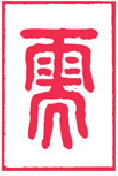
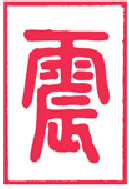
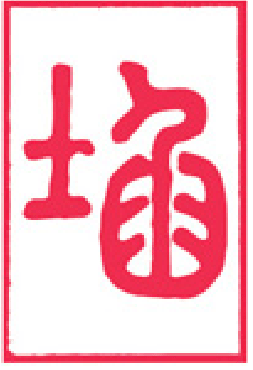

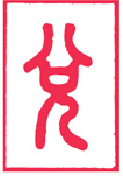





 baronbrasdor.art