In upcoming weeks will be commenting on a text written a couple of years back designed to help the author through a difficult bout with the chronic disease known as Lyme believed to be caused by pathogens received from tick bites of which the author has had several over the years including a rather nasty one last March in Mexico.
As far as is known, this is the only such text composed specifically for Lyme Disease or Chronic Illness by a westerner using classic Buddhist view and techniques albeit in a more or less secular presentation. In other words, you don’t have to be a Buddhist or even all that ‘spiritual’ to give it a try, and it shouldn’t conflict with those of any other face. There are a couple of Buddhist-specific terms (like Buddha and Bodhisattva and samsara) but these can be replaced or just tolerated without the text and meditations being negatively impacted.
The texts will be kept on a new page which has a menu link in the top right, but commentaries about the text will appear regularly here on the blog. Some of you will find this of interest and no doubt some won’t so each one will have Lyme Liturgy in the title.
Note that although it is entitled ‘Lyme Liturgy’ the practice can be used for all sorts of chronic illnesses, acute illnesses, periods of intense struggle, crises and so forth. The purpose behind the text is to encourage the practitioner to take the blow, so to speak, and then find a way to be generous in mind and spirit no matter how bad one feels. That’s it in a nutshell. I have found it surprisingly helpful including this week when, after about two months of not quite recovering from an ever-morphing ‘cold or flu or whatever this is,’ it occurred to me to give it another go with the text.
Have toyed with the idea of publishing these two texts (a Long and Short form of the same thing) along with commentary as a book but have never quite settled on how best to present it all. This blog will be a somewhat bumbling attempt, perhaps, to muddle through that process after which perhaps it will indeed be published. Comments or questions are warmly invited either in the comment section or via direct email at baronash@fastmail.com. The new page is up with both Long and Short form texts, but no commentary as yet has been presented. One step at a time!
Going through the text will overlap with the Buddhism 101 series idea in which case there will simply be a Buddhism 101 in the Tag list so that those interested in that series can pick up related material that will be published in this Learning from Lyme series.
The following is an email (now lightly edited) sent this morning to a friend who had sent me a link to an article entitled ‘Reflections: Beside Still Waters’ by James Harpur. The article describes, among many other things, how a daoist rainmaker caused snow to fall in a drought-stricken area by simply remaining for three days in a hut until he felt his inner harmony restored at which point Nature in turn restored the outer harmony of the situation which had been thrown off kilter by the human activities in that region. My response:
What a good article, thank you (though given current events, his ‘no longer … fearing influenza’ doesn’t exactly hold up!).
Though limited by being a prose novel essentially telling a mythic tale, the older I get the more depth I find in Tolkein’s Lord of the Rings which I suspect will remain as part of the Western Canon of Classic Literature for as long as such a thing exists, up there with the Great Bard himself. Of late especially I’ve found the fundamental notion of hobbits and hobbitry increasingly apropos in that it is in ordinary folk that true goodness is found, the sort of goodness not easily corrupted by the machinations of the Great. Moreover, this bedrock decency has the power to topple the Mighty. Sauron was psychologically unable to even imagine that anyone coming in contact with his One Ring power would elect to cast it away for the benefit of others. Smart as he was, he could not figure that one out so Aragorn was able to deceive Him into believing that he was an upstart challenger for the Dark Lord role.
From this perhaps have come to believe in what I tend to call ‘the invisible power of goodness.’ Increasingly, I find the world today mirrors the world in LOTR in that there are – very broadly speaking of course – forces of Evil arrayed against forces of Good, albeit Evil is the one that tends to organize its forces and Good tends not to organize as such at all. Like the Elves, perhaps, such force as Good might have tends to remain invisible, unseen by Evil. Further, it often seems like ‘we the ordinary people’ are arrayed against Mighty Behemoths, the great machinery of the Modern World whose gears never cease churning, whose capitalist spells of perpetual growth, progress and consumerism are a Saruman-like manifestation trapping us all in some sort of primordially existential dead end akin to being strung up in Shelob’s lair, or to being pod people in the Matrix’s machine-run dystopia. But we the ordinary people are represented in LOTR by two little hobbits who don’t give up despite being entirely overwhelmed and outmatched and not even really understanding the vast scope of power, influence and malevolence which they are standing up to, tottering in despair, wounded, starving and without hope of survival, inching their way to the cracks of Doom where Frodo’s final capitulation to Evil ends up magically ensuring that his mission is fulfilled as he pushes Gollum – the last Ringbearer – into the Fiery Abyss in whose Hell the Ring was forged and with its dissolution therein the long international nightmare is finally over.
Well, that is all very dramatic and externalized, but my notion of the ‘invisible power of goodness’ is that each and every one of us has an effect on the larger world, including all those various Great Powers now seemingly arrayed against us as Intelligence, the World Bank, Big Tech, Big Pharma, Big Ag, the Military-Industrial complex, the World Economic Forum, the Great Game’s Eurasia and Atlantia, the Banksters of The City and BIS in Zurich and so on ad infinitum. If you pay attention and view it all very quietly, you can actually feel this presence of ordinary goodness in that it is precisely against this invisible field that the Evil Matrix continuously exerts pressure. They are pushing, pushing, pushing. Why do they need to push? What is it that they need to overcome in order to create their New World Order? They need to persuade the ordinary and good, the hobbits if you will, to buy into their Bullshit and willingly submit to becoming slaves of their Brave New World Order.
This too happened in LOTR in ways that were not depicted in the latest films (the first of which was pretty good, the last two of which were awful in terms of revealing the depth of the story and most of the key players therein such as Saruman, the Nazgul, Sauron, Aragorn, the Elves to name but a few). After the great victory, the four hobbits returned home to a Shire being ruined by a diminished but still harmful Saruman, ever casting nasty little spells creating hierarchical slum cultures of those closer or further away from his corrupt Authority similar in structure to the GroupThink friends and followers created in Facebook favoring those addicted to ‘Likes’ and banishing those who read or write WrongThink.
But the point is that if we the little people don’t buy into any given spell then its power is instantly diminished for ultimately such power resides in mind and speech, not body, realms. This starts, as the article rightly intimates, within ourselves; and then perhaps it extends to what we express directly to friends and family and later with various already established public figures mirroring similar perspectives – though perhaps no such extension is necessary and the rest is confirmation, the resultant snow as it were.
So I have come to believe that we ordinary people have greater influence on world affairs than we might think. The main front is not organized resistance, forming ourselves into outer world armies either as actual soldiers or swarms of twitter-likers or even voters for that matter but simply on our own level as ordinary individuals on our particular journey from cradle to grave. Although each of us is born and dies alone, the journey always always involves others; starting with the initial passage through our mother’s birth canal our entire life involves constant interaction with others every step of the way. So how we relate to ourselves in turn affects all others in our sphere of influence or mandala no matter how seemingly inconsequential or hobbit like that sphere might seem. Indeed, as the rainmaker story tells, a wise man sitting alone for three days can influence an entire area albeit in ways that cannot be externally seen or measured except by the fact that at some point it snowed. In our case, we may not be able to make it snow but a societal equivalent might be more laughter, both from simple enjoyment of life and also from occasionally ridiculing the Pompous High and Mighty bent on world dominance as if they are not mere mortal hobbits such as ourselves.
Sorry, I didn’t mean for this to turn into an essay! But it did!
Rainbow bands charging headlong into solid stripes of curving streets taking the bend and folding back like curling candy on Brighton Rock Plymouth ploughshares tilling the earthbound lyming loam, crumbling comfort redolent goodness, rocky road regalia shining in the mind living angels of imagination-shaped presence one sets out in front so they marvelously reflect back the universal luminosity found within mirroring outer realm’s Sun and outer realm’s Moon.
Majesty for all and for all a good night!
The above is a spontaneously composed riff from the arising thought that shrines, like deities, are expressions of inner luminosity and as such can be described as angels. Everyday life can appear humdrum. Or it’s essential brilliance can be appreciated. A shrine encourages us towards the latter. Either way, this living dream we call ‘life’ is a “wonderful world,” as Louis Armstrong so beautifully sang in farewell to a world he had graced with his irrepressibly joyful presence.
The song itself can also be regarded as a shrine, as can any uplifted work of art which every true work of art should be for otherwise, why bother? In certain spiritual traditions the art of living simply involves experiencing sacredness all the time which, like any shrine, means seeing the inherent brilliance and luminosity in each and every outer and inner experience.
Note from the Secretary: we will now probably do a little less labelling of poetry offering such as ‘haibun’ or ‘haiku’ or ‘poem’ or whatever as the author settles back down into his customary modality of spontaneous verse. During times of strong meditation probably haiku will be favoured for they are the quintessential expression of that sort of awareness state. But since most of the time the Baron is blundering around through the under-brushes like everyone else dealing with everyday life so haiku won’t always be the form of choice. For example, this post could be described as a haibun but so what? It is what it is, namely a poem with a little bit of commentary or accompanying prose, and as such needs no label other than its title.
Playing around with the notion. Again, it’s an arcane spiritual term often used by specialists of Tibetan Buddhist tantric deity visualisation practices but the underlying concept – rarely explained in plain language – is that every mandala has a core, essential character which is what makes it unique. This is just like how the kitchen mandala is different from the bedroom mandala, or Fred is different from Mary. This core particularity permeates the entire mandala which includes no end of different interdependent elements. For example, kitchens all have stoves, garbage cans, cupboard, shelves, foodstuffs, ornaments, pots and pans and so forth; and yet each kitchen is unique. Every mandala is like this, sharing much in common will all mandalas of that ilk (like kitchens or persons) and yet also being unique. Catching the essence of that uniqueness is the art of glimpsing the seed syllable, penetrating to the heart of whatever. If you can name it you can use it to cast a spell.
Here follow some playful riffs taking a subject from the conventional world and writing out a quick ‘seed syllable’ paragraph. We’ll start with the last photograph from the previous post ‘Where are we all headed?’
Tuxed up old bard
.
General impressions, the cluster: tussled hair in touch with the gods, rams horns, tacky Las Vegas shades with cheap frames, loose-fit collar, slightly cynical turn to the lips which are still full-blooded, double frown lines indicating frustrations – cloud cover obstructing full illumination, downcast gaze, tux looking cheap like a leather jacket and jeans outfit in a formal board meeting, reserved, inscrutable.
Seed syllable: Wrinkled goat god wearing shades.
7 time Superbowl Champion
The Team: Buccaneers are pirates so they raid, surprise, break rules, cut through expectations and convention, are a little bad, daring, aggressive, deadly with ruthless captain.
Brady: successful but clean-cut. In the photo we see someone seemingly joyful but it looks phony somehow. The trophy is no more impressive than his pewter-coloured sport shirt outfit – a gap between myth and reality. Brady can be admired for many things but he isn’t much of a bad boy pirate; that said, his fierce competitive drive can be regarded as a little piratical though his predilection for hard core practice, study and discipline is not all that swash-buckling.
Seed syllables:
Bucs: dangerous and bold in attack and defense; a little crazy.
Brady: disciplined team leader, fierce competitor who is driven to and knows how to win.
Prognostication: Brady doesn’t seem to be in sync with the ideal TB Bucs gestalt. Similarly, the team doesn’t seem to fit it’s own seed syllable which has, obviously, pirate nature at the fore. A pirate ship is held together by its ruthless and super-skillful captain. Brady is going to have turn this team into a fierce band of pirate raiders in order to win again this year but based on his phony-looking smile last year at the crowning achievement of his career, I suspect his heart is not really in it though perhaps he doesn’t realize this yet because for so many years it has been. And now it’s doubly tricky because both the team is not true to its core pirate nature and because although he is arguably one of the best team leaders in the history of team sports, he is not a pirate captain type leader. This does not bode well.
Pirates don’t rest on past glories and are bent on plundering whatever treasure presents itself now. They have to take it from someone else rather than hold one to what they have got which in this case is last year’s title. Perhaps if they now begin to falter for a few games and have to come from behind to plunder the trophy from another prematurely crowned pretender that will suit their spoiler nature. Tom is going to have to get more nasty and desperate; and interestingly there were hints of that in their terrible loss to division rival Saints last week wherein Tom started smashing tablets and shouting at the opposing team’s coaches.
In sum: unless both their captain and the team can invoke a convincingly dangerous pirate mandala in the playoffs they will not be in sync with their team seed syllable principle and will fail to seize the crown for a second time in a row.
Listening to Dylan’s latest ‘Rough and Rowdy Ways’ released last year as a virus swept across the world throughout the West from the East, he seems to have developed a uniquely individual voice that is also fully in touch with his country and his times – the inner experience of which he helped shape as much as anyone. And because of his love of Biblical and literary symbology, it is also a transcendent voice expressing the cultural soul of the the past two millennia placing it far beyond the narrow preoccupations of today’s vicissitudes. So he’s in the thick of it as well as viewing the whole mess from the mountaintop. This appreciation for the importance of view is what separates him from most contemporary artists who tend to emphasize individual expression above all else or who are mere technicians who have developed a particular style which they become identifided with. Some songs seem to be a summation or last farewell but Dylan has never bought into sentimentality and is clearly neither clinging to life nor avoiding death. The consummate bard, he dwells wisely and joyfully in between, equally at home in the dark and the light. The opening song “Murder most Foul” about JFK’s assassination released on March 27th 2020 is extraordinary and seemed an elder’s clear and present warning of dark days coming which indeed turned out to be the case as we are now witnessing the possible passing of the Western civilization.
From the song whose title is the last line:
I traveled from the mountains to the sea
I hope that the gods go easy with me
I knew you’d say yes, I’m saying it too
I’ve made up my mind to give myself to you.
And from ‘I crossed the Rubicon:’
I stood between Heaven and Earth
And crossed the Rubicon.…
It’s always darkest before the dawn.
I turned a key and broke it off
And crossed the Rubicon…
The killing frost is on the ground
And all the leaves are gone
I lit the torch and I looked to the East
And I crossed the Rubicon…
.
Throughout the album there is a sense that the world we were born into is tinged with darkness and already now fading in the rear view mirror leaving a bitter-sweet taste along with the lingering perfume of an old man’s hard-won wisdom.
.
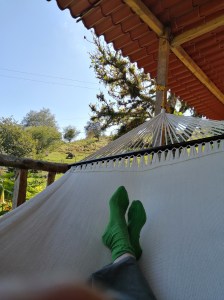
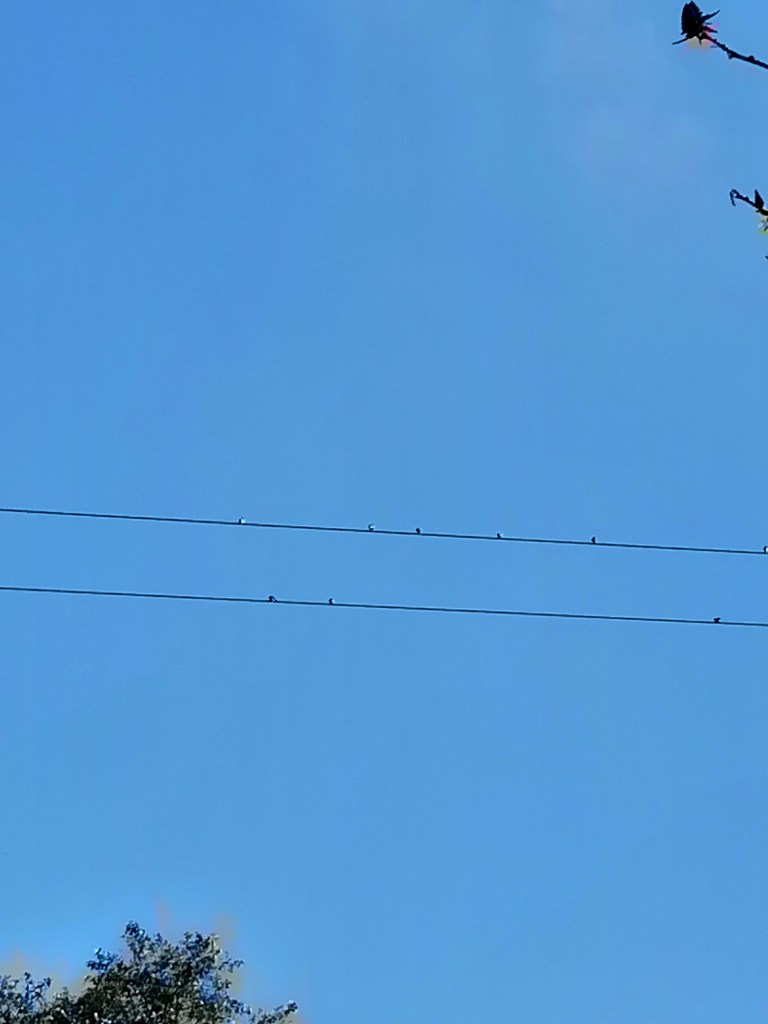
A couple of haiku mentally composed whilst taking in the welcome Mexican December sun and listening to the first few songs….
birds grasping the power lines here today gone tomorrow
#62 17/12/2021
breath by breathpassion ever yearns for the impossible purchase of unending permanence: such poignancy!
Preface: In a note it was mentioned that an Article on the notion of samsara would be upcoming but I’m waiting for an angle, a way to present it in an interesting fashion. Generally, am interested in presenting these Buddhism-related topics not to provide a course on or proselytize Buddhism rather share things I’ve found interesting which are rarely found elsewhere. I was involved in a prominent Buddhist community for two decades before moving on but along the way picked up many things which stuck. Plus it’s interesting to see how well or poorly I can articulate them. Often the official explanations and commentaries of such key topics end up being overly abstract in ways which distance a reader or practitioner from understanding the material in any ordinary, everyday context.
In any case, something came up in conversation which seems worth a short piece especially since it includes a short story from real life, so here goes:
Buddhism 101 Series #3: Karma, one aspect of
First, as is now the tradition with these Buddhism 101 Articles, let us examine a classic definition. Rather than go to Wikipedia or a Western dictionary, this time let’s visit https://encyclopediaofbuddhism.org/wiki/Karma. Indeed, this entry is so much better than the ones cited previously that I paste it in at length even though these Articles are supposed to be quite short. That said, this one too leaves a little to be desired in terms of linking to ordinary life examples which hopefully this Article will – albeit only slightly – remedy.
“Karma [alt. karman] (P. kamma; T. las; C. ye; J. gō 業) is a Sanskrit term that literally means “action” or “doing”. The term is used within the Buddhist tradition in two senses: On the specific level, karma refers to those actions which spring from the volition (cetanā; also “urge” or “intention”) of a sentient being. Karmic actions are compared to a seed that will inevitably ripen into a fruition (referred to as vipāka or phala in Sanskrit and Pali). On the general level, contemporary Buddhist teachers frequently use the term karma when referring to the entire process of karmic action and fruition. In the Buddhist view, developing a genuine, experiential understanding of karmic action and fruition—how all of one’s actions are like planting seeds that will eventually bear fruit—is an essential aspect of the Buddhist path. Karmic actions are considered to be the engine which drives the cycle of uncontrolled rebirth (samsara); correspondingly, a complete understanding of karmic action and fruition enables beings to free themselves from samsara and attain liberation. Within Buddhism, the theory of karmic action and fruition (karmaphala) is identified as part of the broader doctrine of dependent origination (pratityasamutpada), which states that all phenomena arise in dependence upon multiple causes and conditions. The theory of karmic action and fruition is a specific instance of this broader doctrine that applies specifically to sentient beings–when there is a volition (cetanā) behind an action, then the action is karmic action (or seed) that will eventually bear fruition. Every action of body, speech, or mind is considered to be karmic action, and the determining factor in the quality of one’s actions is our intention or motivation. In the Buddhist view, karmic fruition is not considered to be a “judgment” imposed by a God or other all-powerful being; rather, this fruition is considered to be the outcome of a natural process. Contemporary Buddhist teacher Khandro Rinpoche explains: Buddhism is a nontheistic philosophy. We do not believe in a creator but in the causes and conditions that create certain circumstances that then come to fruition. This is called karma. It has nothing to do with judgment; there is no one keeping track of our karma and sending us up above or down below. Karma is simply the wholeness of a cause, or first action, and its effect, or fruition, which then becomes another cause. In fact, one karmic cause can have many fruitions, all of which can cause thousands more creations. Just as a handful of seed can ripen into a full field of grain, a small amount of karma can generate limitless effects.[1]
In the Buddhist view, the relationship between a single action and its karmic fruition is dependent upon a nearly infinite number of subsidiary causes and conditions; thus, the ability to precisely predict the results for any single action is considered to be beyond the comprehension of ordinary beings. According to the Buddhist tradition, it was only at the time of his Enlightenment that the Buddha gained a complete understanding of the workings of karma. Thus, it is taught that only one who has achieved the mental range of the Buddha (referred to as omniscience) would be able to precisely predict the outcome specific actions. Indeed, the Buddha indicated that worrying over the precise results of specific actions is a counterproductive exercise that will only increase one’s suffering or anxiety. He identified this type of worrying as one of the four imponderables. Nevertheless, the Buddha emphasized the importance of understanding the nature of karma on a general level. He taught that wholesome actions (free from attachment, aversion, and ignorance) lead to happiness and eventually to liberation; and unwholesome actions (based in attachment, aversion and ignorance) lead to suffering. Developing a genuine, experiential understanding of karma on this level is considered to be an essential aspect of the Buddhist path. The Buddha also described the karmic process in more detail in his teachings on the twelve links of dependent origination—a series of conditional factors that illustrate how the karmic process unfolds within an individual life. The Buddhist tradition emphasizes contemplating the twelve links and related teachings on the karmic process in order to gain greater insight into the process of karmic action and fruition. It is believed that this insight enables a practitioner to unravel their habitual ways of thinking and reacting.”
Note how this definition mentions the ‘interdependencies galore’ principle in the second article of this series…. (just sayin’…)
Back when I was majoring in Theatre at University, the head of that department had an affair with Chrissie, the prettiest girl in the class, a natural platinum blond with snow white skin and large blue eyes. Although a little (and hopelessly) besotted with her mainly she and I and one other lady hung out together as first year student buddies. Towards the end of the second term shortly before spring, Chrissie told us, in tears, that she had had a brief, secret fling with the head teacher and was now pregnant and he wanted nothing further to do with her and wanted her to get an abortion and keep the whole thing secret. She was extremely upset and taking it badly. We were all around eighteen years old and not nearly as mature and sophisticated as we thought: babes in the woods suddenly confronting an adult situation requiring an adult response. What we later did, though not without flair, failed to meet that challenge, though as I slowly came to realize decades later, it changed my life forever.
Lemon Meringe Pie – a true life-changing agent!
We bought a lemon meringue pie and when the next day we were performing an already scheduled improvised skit, I went up to the teacher perched on his high stool at the side of the proscenium stage and pushed that pie firmly into his face whilst excoriating him in public for his dishonorable treatment of our fellow student Chrissie. He said nothing to any of us but at the end of the term only a few weeks later I found I had been given an ‘F’ and because it was the main class in my Major, it basically meant my entire year and the entire Major were shot. So I took the advice of a faculty member who ran a once a week class in Transcendental Meditation to check out an ashram a couple of hours drive away rather than remain in a University system for which I was so clearly unsuited. He was quite right that I wouldn’t fare well in that university in that place at that time but the irony is that I personally loved study and if I had chosen a different field in a different school and a different place I probably would have done quite well and laid the foundations for a more conventional career, quite likely ending up as a professor teaching at university or some such.
Be that as it may, this event which lasted for only a few seconds, namely thrusting a lemon meringue pie into the face of the teacher and calling him out in public, changed my life forever.
This is a very simple, direct example of karma as described in the opening blurb. “Just as a handful of seed can ripen into a full field of grain, a small amount of karma can generate limitless effects.” Actually, there are many different types and descriptions of karma. Sometimes it is fairly obvious: if you point the gun at someone and pull the trigger, you can kill them; if you drive off the road at high speed you will crash; if you shout at your boss every day (let alone throw a pie in his face!) you will get fired; if you and your spouse spend all day every day shouting at each other you will be unhappy and emotionally unstable and probably be alcoholics.
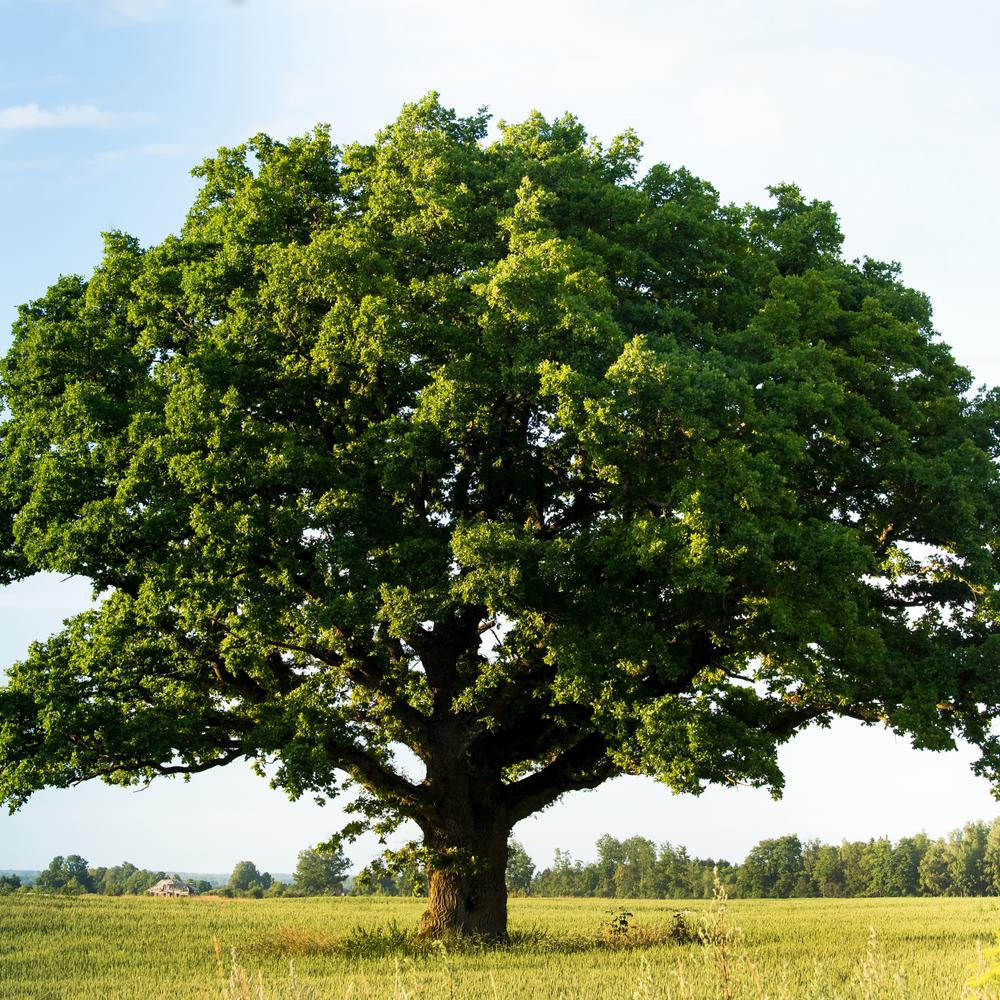
However, sometimes large effects can happen from small causes. Take the classic example of a seed: when you look at a small acorn in the palm of your hand it looks nothing like the mighty oak it will later become, with its huge root networks below and thousands of leaves, small branches, main branches and majestic trunk above, not to mention all the scenes it weathers and witnesses, endless cloud formations, sunny and overcast days, thunderstorms, the passing of generations under its benevolent shade and presence, battles or wedding parties.
Interdependencies coemergently unfolding
Another example is that of using a lever. If you place a simple crowbar under a large round rock on top of a hill you can easily dislodge that rock which then rolls down the hill and kills many sheep, a dog and several children playing in their back yard before smashing into a small home and causing one side to collapse. All this disaster and death from simply using both hands to push a relatively small iron bar about six inches down.
Now in the initial description from the Encyclopedia the emphasis is on the spiritual dimension of karma, specifically the intent involved and the types of emotional and spiritual after-effects of any given action, aka karma. (Note how the word karma refers to both the cause and the result, not just the result.) My last two examples are somewhat literal but these straightforward physical examples accurately represent how psychological, emotional, social, spiritual and other karmic repercussions play out as well, though they are perhaps less easy to spot or describe.
So that’s enough for this short Article. Thousands of books have been written about it, though few in English. I just wanted to share a story from everyday life namely how a relatively small seed or action can engender long-term karmic consequences. ..
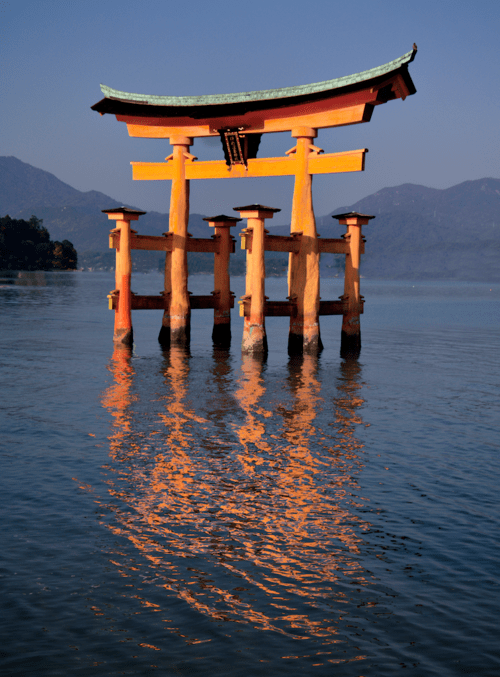
The first post on this contained much explanation of various features and principles involving Toriis. This one takes all that for granted and is more of an actual Haibun which is a combination of prose piece and accompanying haiku. I place the haiku immediately beneath the image so the two can be contemplated together after the prose piece has been digested.
forever facing East mirroring golden sun from heaven rippling flaming lake
From a Diary fragment written in the early 1900’s recovered recently by the author’s granddaughter who lives today near this area:
“In Great Grandfather’s time before the Restoration, when topknots still commanded respect and samurai walked with samurai swagger, our collective sense of Dharma was strong, as strong as the presence of Death which every warrior embraces every moment of every day. Our great Daimyo observed both Shinto and Buddhist protocols not out of mere duty but from his profound realization of sacred perception. The area around the bay featured several monasteries and lovely gardens where both nobles and common people could contemplate Nature and practice zazen. Any small vessel entering this area by sea had to pass through this Torii. (Larger vessels used port facilities further down the coast.) The Torii thus served as a portal through which those from outside attuned themselves to enter this particular domain where our Daimyo and his people were practicing the Dharma of seeing all phenomena as a self-existing display within a collective mandala of sacred wakefulness. Some call this Enlightened Society. This Torii, seemingly floating free in the middle of a body of water, immediately communicates such sacred perception. Locals jokingly called it the Samsara-Nirvana* Gate, the idea being that those coming from outside were samsaric but once they passed through its portal they were sufficiently purified to appreciate the sacred mandala on the other side.”
The seed syllable notice on the Torii contains five main characters: Man journeying – samsara – letting go/renunciation – liberation/rebirth – fresh zen mind. Translated into poetic form they can read:
weary traveler journeying through endless samsara abandon your collected burden to the deep and be here reborn: fresh, awake and naked!
Ekphrastic Afterthought:
.
.
the journey is the goal endless journeying one portal into another
.
* Note: there will soon be another Buddhism 101 Article about Samsara and Nirvana – more great notions like mandala for which there are no obvious western equivalents.
Hexagram Note: The first photograph, amongst many other things, presents an image of Fire within a Lake which is Hexagram 49 Molting as in a snake molting its skin which is some sense of renewal, revolution. A fitting condition with which to enter a situation ‘fresh, awake and naked!’
Torii are portals from one zone into another which can also represent shifts in awareness or mandala. Traditionally the ends on top are angled upwards, as with most roof structures in Asia, to summon the kami of sacred presence which are sensed as blessings descending from above. Japan’s imperial founding kami is Amaterasu-omi-kami, a female deity seen in primordial dawn in a cosmic mirror represented on many shinto shrines as a small round mirror standing vertically on a shrine. This entire world is like a reflection meaning there are two sides to every manifestion each as valid as the other, the same yet different. Shamans can see the future by peering into such mirrors for the future is a reflection of the present – the same yet different – because of course mirrors are portals too…
amaterasu mirror on shinto shrine
The shape of the Torii resembles Hexagram #20 Contemplation/View. The old visual symbols for this hexagram involve an eye. The two solid lines sitting above four broken lines indicate a high tower from which a king can survey his domain; but whilst he is above surveying those below, those below can also view him above, so there is both seeing and being seen. Contemplation into the nature of reality always cuts both ways: looking into one’s own self-nature reveals other-nature at the same time since ultimately there is no self or other for we are all part of the same Nature.
The Torii in this picture is clearly symbolic in form and function. Practically speaking it does not serve as a gate into or out of anything. Except it does: it creates a perceptual shift indicating that the mandala on one side of the gate is different from the mandala on the other side. Although it is all one reality, it is also two. The lower gates face the side directions making four. Then also Heaven and Earth above and below naturally in place – with Earth here lake water as well as hills and mountains.
This is a portal from nowhere into nowhere or if you prefer: from somewhere into somewhere else. It demonstrates the admirable marriage of imagination, discipline and sacred perception that characterizes this great people some of whom were inspired to build this lovely Torii in the middle of a lake.
The angle of shadow shows us this Torii is facing East. Each moment of awareness is a fresh new dawn so dawning awareness always faces East. Finally, note the panel between the two upper beams with writing: the seed syllable principle in action.
.
forever facing East mirroring golden sun from heaven into rippling flames in lake
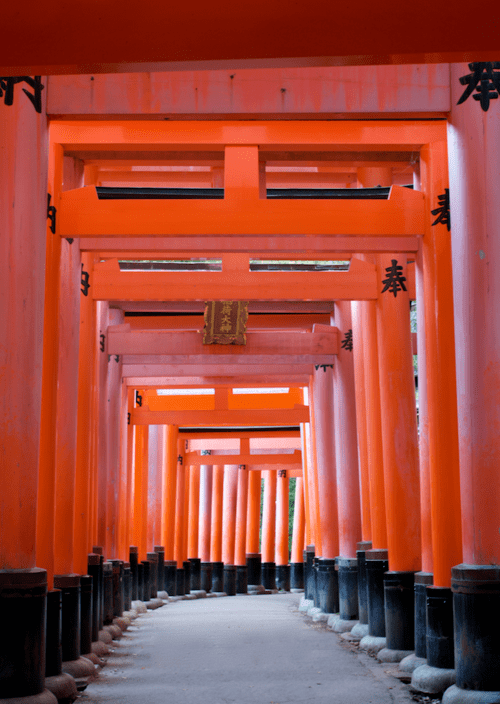
Portals into portals into portals…unique steps all on the same journey…
.
the journey is the goal endless journeying one portal into another
.
Lastly, a Torii functioning as a bona fide entryway into a particular mandala, in this case that of a Temple.
Torii portal into Temple grounds…
Hexagram quibble: some might argue that the superstructure shows a top solid line, a broken line and then a lower solid line beneath which are no solid lines just two vertical legs making all broken lines. That would be Fire above, Earth below which depicts the Sun (Fire) rising above the Earth below (Hexagram #35). So this is called Great Progress though it could also be called Sunrise or Great Eastern Sun.
Editor’s Quibble: this piece was supposed to be a Haibun but ended up being an Article about Torii and related matters. Oh well. An actual Haibun follows in the next post.
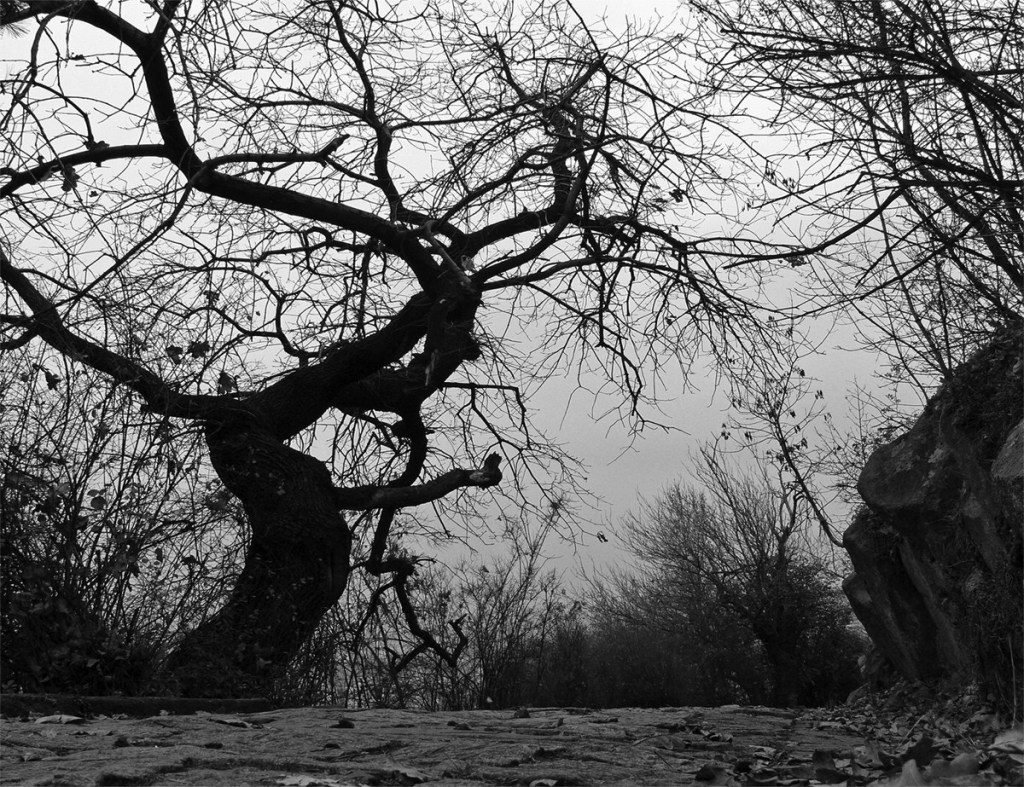
Walked to the edge of the world staring into the Great Beyond how have we come to this? How do the world’s minion many march in lockstep in goose-step over the hills and far away far beyond our hopes and fears far beyond our imagined utopias or dystopias or myopias?
French furniture polish may very well smell very nice reassure us with olfactory recollections of civilized normalcy from the days when eggs packed powerful nutritive punch when pigs squealed as they were slaughtered somewhere hidden in the village where crows mutter in their murders plotting dark deeds in foulsome labyrinths in ways which ordinary decent folk find shuddering, for Evil is their middle name and making us all slaves is their central aim.
Politics are paralysing. Sickness endemic to such harsh task masters governing our every move such that all are stillness and with stillness comes death given that resistance is futile as Star Trek has so well taught us
though two little humble hobbits stumbling around in the wild might beg to differ.
I remember English country gardens I remember large, dense and crisply juicy potatoes. I remember Irish bacon and sausages and Irish butter and Scottish steel cut oats fermenting in humble peasant kitchen drawers slightly sour so ever fresh good British real ale beer the stars and stripes battle-weary, waving in storm-crossed winds defiant and somehow chipper though streaked with the blood of friends and enemies gripped in the same embrace of glorious struggle.
A far cry from today’s collectively abject surrender. Where did our people go? Have we all marched down to oblivion following the Pied Piper of MegaTech Trillionaires now hell bent on injecting us all with their poisons gone viral?
Nostalgia is for those who long for their past to return in glory. We have forgotten our past and cannot even muster simple nostalgia. We are the forgotten ones, the hesitant ones, the aimless ones, the heartless ones, the obedient ones, the frightened ones, the reasonable ones, the subservient ones, the confident ones, the well-meaning ones, the far-flung ones, the exhausted ones, the bankrupted ones, the betrayed ones, the puzzled ones, the school-age ones the retired ones the gifted ones the stupid ones the loyal ones the disloyal ones the complacent ones the compliant ones the consenting ones the questioning ones the questioning ones the questioning ones.
Note: Hexagram #52 is Keeping Still, Inner Mountain, Outer Mountain. Mountain can be a state of stillness but can also present as an obstacle which cannot easily be circumvented or climbed over so often requires a complete re-think.
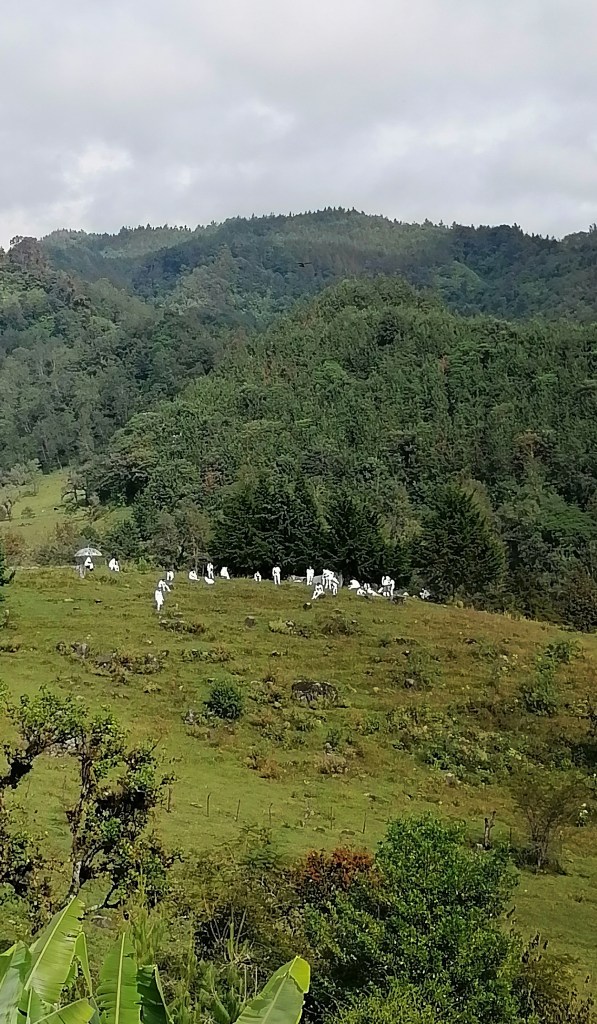
Sunday congregants chanting in line on a neighboring hill
On arriving at our new property the first time alone after purchase, after parking the car we look up to see on the hillside across from ours in the narrow valley are two lines of congregants all dressed in white and chanting. Apparently this ritual takes place every Sunday. At first we were disappointed; later we accepted there is no geographical place of refuge from humanity’s insatiable need to be always adding layers of complexity, the spinning wheel of samsara.
.
chanting congregants in white
walking in single file
on ancient hill
who has heard it all before
and remains unmoved.
#1 1/12/2021
.
This photo gives a better view of the hill from our parking area but before they got into two columns, chanting. Later they played music which sounded a little like Sunday school for adults because of so many well-known childrens’ songs in the mix.
Many articles ago, the incredibly ingenious notion of ‘mandala’ was introduced. Here follows a supplemental. The picture above shows a traditional ‘seed syllable’ but don’t let it scare you off: this article goes into a mundane understanding of the notion which not only helps those familiar with esoteric symbols like this but also is quite interesting in contemplating daily life dynamics or as a general insight of use to practicing artists.
Our universe comprises no end of interdependent mutually intertwining mandalas. The house mandala includes the kitchen, bathroom, bedroom, living room, basement, attic and garden mandalas – not to mention the various mandalas of past present and future individuals living therein; and the house mandala is within larger containing street, neighbourhood, town, region, nation, continental and planetary mandalas. And so ad infinitum.
But each mandala has something defining about it that distinguishes it from the smaller and larger mandalas with which it is interdependently intertwined. In esoteric yogic language the essence of this something is called a ‘seed syllable.’ It is said that everything has its own seed syllable. What is that? This is similar to Plato’s Logos which is Idea behind Form. Before a horse can be born into this visible world, the idea of a horse has to be there. In scientific terms we might say that the DNA code must first be figured out before the DNA molecule can be formed.
That is why the Bible starts with ‘in the beginning was the Word.’ Word, idea, speech. Speech is some sort of message coming forth into the world of form from the formless realms, a first utterance, a primordial burp albeit in this case already intelligent and containing within it, as with a seed, all the preconditions needed for a fruitional outcome to unfold.
We can hear speech or read speech but we cannot locate a word in time or space. It just is. This is similar to other intangible but real phenomena like our experiences of love, courage, honour, cowardice, inspiration, patriotism, disgust, greed and so forth. They are real, but you cannot measure them or locate them. However, they too have seed syllables for every such intangible, even if formless, nevertheless has particular qualities.
The kitchen is a place made of physical forms such as floors, ceilings, stoves, sinks, counter tops, shelves, cupboards, utensils and so forth. But the experience of any given kitchen is something existing on the formless speech realm too as each kitchen feels different and therefore has a different unique and particular ‘seed syllable.’
classic country kitchen mandala
Sometimes they are referred to as ‘spirits’ or ‘gods.’ This is because there is a wakeful, sentient aspect. A kitchen mandala is not a purely objective experience. At the same time, it is not a living person per se either. Rather it is a living something in between, much like any good painting or work of art or special moment in time. And of course because mandala, like a work of art, is something experienced – versus being an objective separate entity out there somewhere – there is always an awareness quotient involving presence or atmosphere.
So the seed syllable is the quintessential character of any given mandala, or presence field. Any time we take in a particular atmosphere involving a person, place, thing or situation we are instantly tuning into the seed syllable principle. And if you can begin to catch them on the spot whilst being aware that you doing so you might find that every mandala is a live tiger filled with vigor, bristling with presence – and a powerfully intimate teacher to boot.
The world is always speaking to us. Do we hear its many voices coming to us through the alphabet of innumerable seed syllables?
As with prior Buddhism 101 Articles, just for contrast let us look at a classical explanation of the term ‘seed syllable:’ (from wikipedia)
“In Vajrayana Buddhism and Hinduism, the term bīja is used for mystical “seed syllables” contained within mantras. These seeds do not have precise meanings, but are thought to carry connections to spiritual principles. The best-known bīja syllable is Om, first found in the Hindu scriptures the Upanishads. Khanna (2003: p. 21) links mantras and yantras to thoughtforms: “Mantras, the Sanskrit syllables inscribed on yantras, are essentially ‘thought forms’ representing divinities or cosmic powers, which exert their influence by means of sound-vibrations.”
There is nothing wrong with the above explanation except that it is arcane and targeted towards a limited audience of those doing esoteric tantric visualisation practices. As such it fails to really describe how all this relates to ordinary experience. Hopefully, the above article gives you a better idea of the ‘spiritual principles’ to which seed syllables ‘carries connections.’
If you are interested in artistic expressions you might find tuning into seed syllables extremely helpful. Anything you are witnessing, such as even clothes draped over a chair in the bedroom, has its cluster of particularities which together create some sort of something, moment or presence. And that ‘something’ is a mandala whose particular quality or atmosphere is its ‘seed syllable.’ If you try to paint or write about any essential something you will find that tuning into this seed syllable principle helps reveal its core character helping to bring it alive; indeed it may start telling you things you would never think of unless you first opened up to saying hello in the first place.
Traditional Still Life – a presence study
Recently, have been tuning into the various seed syllables (or essential character if your prefer) of various NFL teams. Some of them are clear, others are muddied. More on that later. Maybe we’ll have a prediction of outcomes based on strength of seed syllable manifestation, i.e. the degree to which the team not only has a clear seed syllable to start with but is also manifesting in line with it, i.e. being true to its essential character. One example to get us going whilst ending this short article:
Buffalo Bills. A seed syllable sketch.
Buffalo Bills logo
Buffalo is the NY State city with most amount of snow in US. The buffalo is a powerful old breed animal with thick coat keeping it warm in winter. It has legs which are a tad short and stumpy for so powerful a body. They are firerce when cornered and almost unstoppable when charging as a herd.
How the Buffalo Bills team should be when aligned with it’s core character or ‘seed syllable:’ They should have the best Offensive and Defensive lines in the league able to mass together and charge their opponents and trample them down. That should be the core. They should be a running team on offense with powerful backs, some of whom are short. They should not be overly fancy with complicated schemes rather simply running down the other side.
How close do they have it? It seems they are over-emphasizing the passing game because of their dynamic, well-built quarterback Josh Allen. He suits an ideal Buffalo Bills team but is not running one because of the emphasis on the pass. Their defense is ranked #18 out of 32. So they don’t have strong offense and defense lines and thus are not playing true to seed syllable character. They are a very good team but will not go all the way this year until they get that right.
Less posts of late as we fight off a surprisingly nasty cold-like flu (or flu-like cold) whilst also purchasing property and tussling with a recalcitrant officicial in the power company who is refusing to connect us for lack of a document which they are responsible for providing but insist we must procure!
This morning in my inbox comes a poem from illustrious Irish haiku master:
Gabriel Rosenstock
Dehradun Military Academy
(Motto: Valour & Wisdom).
Papaji takes off his British Army uniform –
he is acquiring military skills
in order to turf the British out –
and dons the robes of a Krishna gopi.
He has spent all his salary
on saris and jewellery.
All night long
he dances with Krishna.
Morning.
Papaji is glowing.
His commanding officer asks:
‘Has that man been drinking?’
-Gabriel Rosenstock
Nuair a dhamhsaigh Krishna i mBeairic Bhriotanach
Acadamh Míleata Dehradun
(Manna: Calmacht & Gaois).
Baineann Papaji a éide airm Bhriotanach de –
scileanna míleata á sealbhú aige
d’fhonn na Briotanaigh a chaitheamh amach –
agus cuireann uime róbaí gopi Krishna.
A thuarastal go léir caite aige
ar shárithe is ar sheodra.
É ag damhsa le Krishna
an oíche ar fad.
Maidin.
Luisne ina ghrua.
Arsa an t-oifigeach i gceannas:
‘An ag ól a bhí an fear sin?’
To which I offer this spontaneously composed response:
The British Raj The Taj Mahal Who is ruling whom?
I met a Raj In Himalchal Pradesh whose blood has ruled unruly elephants for centuries beyond number far beyond the imagination of any Johnny-come-lately European Imperialist lapdog commander.
Women at the village well dressed as devis bracelets anklets jingling like Vajrayogini the primordial red lady beggars with dusty toes and impish importunism dragging distorted bones and twisted karmic shards through unending millenia beseeching all of us still trapped in time clinging to illusion’s sticky amber fixations to spare a care for fellow time travellers mired in the suffering of taking our dreams too seriously and interfering with others’ spontaneously arising bliss.
Let Kali dance! Let her stamp out samsara on the down thrust and let loose the lotuses of unquenchable passion on the up thrust let her many arms and legs entwine us all in rapture as the sun screams across the entire sky days in instants, years in seconds, kalpas in a few moments.
What care we for the British Raj we who have danced for kalpas in this way? Throw Hindus and Muslims into the fire and dance, siddhas, dance the true dance of the only true Ganges as smoke from the funeral pires blends into dappled overhanging pipal tree leaves and all our desires lie wasted as mud in the sacred river through which contemporary debris is barely an afterthought.














 baronbrasdor.art