Article 66: Tethered to Form


Article 66: Tethered to Form

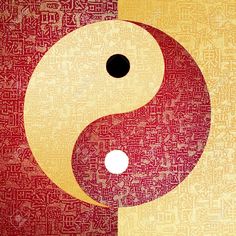
Long ago, the Chinese noticed yin and yang, two aspects of one overall process, moreover that this dynamic plays out in all observable, experienced processes. That’s a bit of a leap so let’s go step by step.

Yin and Yang: the classic example is the sunny and shaded side of a mountain. In the morning the East-facing side is warm and sunny and the West-facing side is cool and shaded; this reverses in the afternoon as the sun passages from East to West. So there is no such ‘thing’ as yin or yang even though they are perceivable. Yes, temperatures can be taken and degrees of light or shade gauged, but those measurements don’t measure ‘yang’ or ‘yin’ which are mutually relative terms. Perhaps it is more helpful to regard yin and yang as two mutually relative aspects of one overall dynamic process. It’s because the process is an ever-changing dynamic that the terms were developed, noting something that is a constant (a sunny and shady side, or two sides) but never exactly the same yet in one overall dynamic.

Now – and more importantly – look at what happens to our minds when using terms like yin and yang. Our minds immediately want to make them into something definite, tangible, measurable even though in our mountain example they are changing from moment to moment and in any case aren’t really measurable things at all, rather relationships.

Let’s take another pairing which is similar but different: form and space or form and formless. In order for something with a clear shape to be distinguished and perceived there must be space around it. Traditionally this is described as the ‘six directions’ namely the four directions plus above and below. Unless there is space around an object it cannot be perceived as an independent object with measurable dimensions. The way our minds work, though, we can grock an object with measurable dimensions – height, width, weight etc. – but we cannot grock the space around it, which is seemingly non-existent, a blank.

Space is a strange thing. It has no shape, dimension or substance and yet it is limited somehow. If you have two trees two feet apart, you cannot fit in a building that is ten feet by ten feet. But if you think further it’s not the space that creates the limitation but the relative position of the two forms between which there is only two feet distance. That limitation in distance is created by the forms, not the space accommodating them – indeed we could say that the space accommodates the limitation. So we cannot measure space any more than we can ‘puncture it with an arrow’ as an old dzogchen analogy likes to put it, only note that there is such a thing even though it isn’t a thing. This is similar to yin and yang not being forms even though they are observable phenomena. Materialists who like to claim that only the physical, only that with form, is real, essentially insist that our experience of things like colours, textures and qualities are not; for them experience is an illusion, or as one person I was discussing this with recently on a forum put it: ‘the experience of redness is phantom’ because redness is a cognitively generated illusion from beams of light or some such. This is like arguing that the story told on a TV screen isn’t ‘real’ because it is only made of light pixels on a screen and vibrations in a speaker. The story isn’t physical, true, but it is experienced. (Whether it is ‘real’ or not perhaps ‘really’ doesn’t matter?)

Czeck Republic Ron Rosenstock

The way our minds work, we see the form but not the space, which is invisible – literally ‘out of sight out of mind.’ Not only that, but it seems that our minds are habituated to seeking out the forms, hunting for them, grabbing them, consuming them, manipulating them, coveting them, desiring them, combating them, denying them and so forth. We live in a world of jostling forms, no end of forms which our minds are continuously involved in perceiving, evaluating and dealing with, and all this time we do not see the space in which all forms manifest.

Now an additional little twist: there are both physical and mental forms. In the above example we used trees as an example of forms but they represent any perceivable physical objects – chairs, tables, glasses, baseball bats, bodies, cars, buildings and so forth. But in the realm of our personally experienced minds, the realm of ‘me’ we carry around in our bodies everywhere we go (even in dreams!), there is the mental equivalent of form and space. There are the mental forms which arise and which we perceive, usually called ‘thoughts.’ Each individual thought, usually a word or image, has a specific form and a defined set of meanings, just like objects. (A tree, for example, can be viewed from different angles and also has different associations – it is stable, or beautiful, or provides shade etc.) And just as with physical objects, there is the form itself – say a thought of a tree either in verbal or image form – and the space around that form which, just as with seeming external space, is ‘out of sight, out of mind.’

But is it? Is the space of mind in which mental forms arise entirely invisible? Is an element with which we perceive itself outside the ken of perception? In Buddhist meditation parlance, we talk about first becoming aware of the movement of mind and taming it until it is more or less still, but within that stillness thoughts – or experiences is perhaps a better word – arise; they come and go much like yin and yang is continuously changing. So what is tamed and still is not the thoughts and perceptions themselves, rather the background comes more into the foreground, for the background is what remains unmoved and unmoving just like the space doesn’t change however objects move around in a garden: if the wind blows and the leaves move or the wind doesn’t blow and the leaves don’t move the space in which they all take place does not change in the slightest. Similarly in the mind no matter what thoughts, emotions, perceptions or whatever arise, the background container, the space of mind, the nature of mind, does not change in the slightest.

Iain McGilchrest has written two huge books coming out of extensive study about the left and right brains. I have not read all his materials on this but my ‘down and dirty’ understanding is that the left brain tackles problems in the world we have to navigate through by creating a representation, essentially a map. A map is not the terrain but a re-presentation of it so that one can find one’s way through the actual terrain. The problem is that if one relies too much on the left brain, one begins to mistake the representation for the reality. Meanwhile the right brain likes to see the whole picture, the entire context, and is more open, vast and intuitive, less constrained by the mapping functions of the left brain. So with our form and space contemplation it seems like the perception of forms is principally like left brain processes whereas the awareness of the space accommodating such forms is the right brain processes. Something like that.

So: back to the title: Tethered to Form. It seems that when we lose track of space awareness that we become glommed onto form and this becomes habitual given that we keep going from one form to the next without any seeming gap. We might ask: who is doing the tethering here, and we could answer, like good little Buddhist students, ‘the ego, the ego is tethering our mind to forms, the ego is creating these habits.’ But that is only halfway. Why not phrase it as: ‘the ego is what we call the process by which mind tethers itself to only perceiving forms.’ In other words, the process of glomming onto forms and only forms, not seeing the space in which they arise, is what can be called ‘ego.’ In other words, a bit like yin and yang, ego is not a thing but an observable process. A Welsh teacher (Nagchang Rinpoche) insists that ego is not a thing but a process – like walking. Whilst we are walking there is a phenomenon called ‘walking’ but when we stop walking there is no more ‘walking.’ Similarly, whilst we tether the mind to form without awareness there is ‘egoing’ but when we let go of that tether and become aware of both form and spacious awareness together, there is no more ‘egoing.’

In some schools of Buddhism there are the terms ‘egolessness of self’ and ‘egolessness of other.’ The latter doesn’t make much sense in English, frankly, but the former means the tethering of the mind to form regarding one’s own experience and the latter means the tethering of the mind to form regarding seemingly external experience. So the ‘ego’ quotient is the tethering, the glomming.

It happens in an instant. As we perceive form it consumes our entire experiential space and we tune out the background, the context, the atmosphere. Those who have developed ‘egolessness’ never lose awareness, which means awareness of the space around objects which perhaps we can better describe as ‘particulars in the experiential field.’

There is another term: ‘mindfulness of mind.’ This is gradually becoming as aware of the background as the objects within it. Mind, as it turns out, is not dead, empty and lifeless. It is empty of form, yes, but it is the essence of life, it is awake, aware. (This wakefulness is what the word Buddha refers to.) We live in an ocean of awareness. And this is as true of external as internal space.

Modern materialist mentality has a very hard time understanding, let alone accepting this. If we wanted to be mean we could call them ‘awareness deniers’ or even ‘life deniers.’ Of course we won’t do that even though on some level it is true. By insisting that everything can only be regarded in left-brain representational mode we ignore the living, wakeful space in which it all takes place.

So let us cast off habitual tethering and roam free….

Food for thought…

Yi: Will Trump’s trial lead to riots? 32-3 > 40 < 43


Background musing: today during an MoA discussion about the recent legal development viz ex-President and current Presidential Candidate Donald J Trump, I wrote out a possible scenario:

Well, that’s interesting… the comment has been removed. I guess the host really didn’t like it! What I wrote was a counterargument to the host’s opening post wherein he concluded that things are looking bad for Biden. My response went something like:

  1. Trump will be found guilty at the lower court trial immediately after which the GOP will take him off their ticket, which as a Private Association they have the power to do. Result: the GOP melts down and Biden wins.
  2. At some point it will go up to SCOTUS on appeal at which point either they will overturn the guilty verdict or they will not. Interestingly, it won’t make any difference because either way mass riots will be organized (as happened with the BLM riots during election year 2020) except these will be worse, plus perhaps another pandemic. In other words, this indictment will lead to mass chaos sometime next year. No matter which way the Supreme Court decides, the Trump side will be demonized by the Establishment and blamed for any riots, whilst the Democrat side will be portrayed as the saviors of Democracy. Either way, Biden wins.

This was just a casual, cynical thought in response to the news. But after writing it out I thought to consult the Yi. The way I am reading the result, it entirely disagrees with the above scenario. So I hope the Yi is right! Time, as always, will tell.

Disclaimer: I am not a voting US citizen and neither a supporter nor detractor of DJT. I have felt since before 2020, however, that Biden is an exceptionally corrupt politician so am not surprised to learn for sure of late that he is unquestionably guilty of criminal influence peddling whilst Vice President and afterwards. Of course, lots of other politicians are just as crooked so it doesn’t mean that anything will change regarding his status nor his treatment in the corrupt US Press.

Article 65: Materialism as Gatekeeper

Preamble: Scientific materialism, which has spawned ‘scientism,’ is accurate in many respects but has limits; more importantly, by attributing to it a scope of understanding it does not actually possess, it is unwittingly used to prevent other modes of analysis and perception outside its purview which it therefore regards as invalid. When examined carefully, reductionist materialism ultimately takes refuge in concept for the notion of any self-existing ‘objective reality’ is unverifiable since all scientific enquiry is observed by and via subjective consciousness. This trust in abstraction bleeds over into many other areas including societal governance in generally unnoticed ways. For example, this led to the belief that one could replace living, breathing monarchs with a document whose words could replace dynamic human leadership and become the highest authority and Law of the Realm.

Materialism as an unverifiable belief:

The reality which most modern people, East and West, believe in is probably the default view of most people throughout post stone-age history, namely that the only things which are ‘real’ are those which are physical. They have clearly measurable existence and dimension in space and time. They have shape, size, location, duration. A book on the night table beside us; a tree in the garden; the mountain peak we can see in the distance through the window: when we go to sleep, we know that when we awake the next morning that all will still be there. Objects of the mind such as dreams, stories, emotions or other feelings, all come and go – from whence and to where we know not – and thus cannot be said to have any ‘real’ existence. They are fleeting, without shape, without definable location, so they are subjective experience, yes, but not ‘real’ in the sense that the book, the side-table, the tree and the mountain are real. I think nearly all of us would generally agree with this proposition.

Moreover, scientific methods developed world wide have afforded us the ability to make many nifty tools and machines, construct extraordinary buildings, build modern urban-based civilizations with eight billion and counting and so on. Recent mechanical advances, such as the microscope and radiography, have allowed us to see things which our senses cannot. From advances in chemistry and engineering we have learned to make new substances and machines thus transforming our world considerably in the past couple of centuries with extraordinary population growth still underway in as yet not fully developed parts of the world. Again, none of this is controversial and I think nearly everybody reading this today would accept it as basic common sense.

But.

There’s a little twist in there we slid over, probably without noticing, namely that ‘subjective experiences are not ‘real’ in the same way that physical objects like tables, trees and mountains are real. There is an assumption that the trees and mountains exist in their own right without our experience of them. This is an entirely reasonable assumption, of course, but it is important to recognize that an assumption is all it is for we are unable to verify the existence of a mountain without experiencing it via our ‘not real’ subjective consciousness. Yes, a camera can take a picture of it, or a sonar can map out its outlines based on feedback provided by echoing sound waves, but these can only be evaluated, again, by our minds. None of us can prove that anything exists outside the realm of Mind because none of us can experience anything without a mind. So the notion of a self-existing external ‘objective’ reality absent experiencing, though entirely reasonable, cannot be scientifically verified as being anything other than an abstract idea or theory.

So what? The theory works, you might say, because the mountain will be there in the morning when you awake day after day and will be there long after you die.

Because of this next twist: the problem is that the scientism/materialism view doesn’t know its own limitations. It has Empire tendencies, it colonizes where it does not belong and, more importantly, tries to prevent exploration into areas outside its command and control effectively incarcerating its adherents. That’s quite a far-ranging progression in so short a sentence so we have to consider this a little more; to do so, let me backtrack just a little.

If you were to ask a scientist to describe the movie you are watching on a screen, the scientist could talk about radio waves or internet EMF signals and various different pixels of light with different frequencies on a screen and soundwaves emanating from a speaker diaphragm and suchlike but that same scientist would also have to admit that his science cannot perceive the story being told on that screen. Science doesn’t understand stories, nor can it hear symphonies or any music as such. That means that science doesn’t see feelings, emotions or meaningful experience. Science cannot see love or hate, disappointment or triumph. Science, in other words, doesn’t perceive most of what matters to us as living beings leading what we call ‘our lives.’ So science can see and do many great things, but not everything, including many of the most important experiences involving that which is most important in our human life journeys. Put another way: science has no regard for many things which we regard as most meaningful because science doesn’t ‘do’ experience and since we inhabit what on this blog is often called an ‘experiential continuum,’ science only perceives a narrow band within a far larger spectrum moreover often in ways, as per the example above about watching a movie, that are somewhat outside, or alien, to that experiential continuum.

Moreover, when we discuss ‘science’ we are also really discussing the mindset it comes out of and which most of us share, namely that the realm of the experientially meaningful is not, scientifically speaking, ‘real.’ This attitude pervades modern life in many ways, too many to recount in a short article. But, briefly, this materialist mindset has created many aspects of our modern world we take for granted without noticing. For example, how we look at societies these days is mainly through the lens of ‘social science’ so we measure things like economic output, life expectancy, relative income levels, none of which is harmful but all of which is somewhat limited in scope and not all that human or humane sounding. It projects an objectivity which distances the observer from the observed and attempts to separate the experiential textures and flavours of what we generally call ‘culture’ from the subject matter called ‘society’ even though clearly what we call society is comprised of living, breathing, entirely subjective human beings. Our text books and public discourse tend to be more and more geared to this sort of mindset de-emphasizing imagination and majesty and emphasizing social programming so that students will fit into the job market and modern materialist society. In a way, we could say that objectifying and then categorizing the subject matter takes the life out of it similar to how a biologist dissects a corpse to study the workings of a living organism. Yes, you can learn much that way, but there is much that you cannot learn as well.

Our cities reflect a largely utilitarian approach dominated by roads (for moving around quickly in automobiles), telephone and electrical poles and cables, cell phone towers, cement-made high-rise apartment buildings, advertising signs to boost income and so on. It’s more practical and utilitarian than stylistic. Architecture from our pre-industrial past tended to have more emphasis on style which moreover changed steadily from generation to generation with occasional big shifts. Many of these styles, like Baroque, or Georgian, or Gothic or Imperial Chinese, theocratic Tibetan, transcendentally ancient Indian, Shinto-Buddhist Japanese etc. are beautiful, uplifting and elegant requiring considerable time and skill over many generations to bring into being, moreover deliberately reflecting philosophical and spiritual principals which permeated the societies of those times. But just as ‘science doesn’t do stories,’ that sort of emphasis on style and beauty is not meaningful to the materialist mindset and so modern architecture in most places tends to be comparatively drab unless attempting to broadcast a sense of wealth and power. Let’s face it: most schools, hospitals and government buildings in most modern countries are decidedly ugly.

So the problem is that we have let the limitation inherent in the scientific or materialistic approach overly determine what matters in how we construct and evaluate our modern world, including governance, financial systems and overall cultures and values, and thus also sense perceptions – how we feel, how we see, how we live. So this materialism-scientism issue is a fairly big deal though rarely acknowledged as such except by philosophers like Iain McGilchrist whose magisterial ‘The Matter with Things’ might just be the most important intellectual contribution in the last century or more. Perhaps the most unfortunate element in the mix is simply that, just as with left brain dominance as McGilchrest has elucidated brilliantly, materialism doesn’t see its own limitations. The thrust of this Article is now done, so what now follows is simply further embellishment, a little fleshing-out as it were.

For a while I studied traditional daoist-Chinese medicine. I didn’t go all the way to becoming a licensed practitioner because where I lived at the time health insurance wouldn’t cover such treatments so I would never have been able to earn enough to pay back the exorbitant US tuition fees, but I did get a solid introduction to the overall theory behind it – which is fascinating and I believe comprises one of the world’s most sophisticated wisdom traditions. Importantly, it does not start from the scientism perspective which presupposes an external objective reality and discounts subjective reality as unreal and therefore both unreliable and irrelevant. Chinese medicine is based on subjective sense perceptions which can be consistently observed and catalogued – things like skin tone, tongue texture and colour, pulses, voice, movements and so forth. More importantly for the purposes of this article, they use a type of differential diagnosis, though in a different way from typical medical usage.

One of the definitions of differential is “Dependent on or making use of a specific difference or distinction.” That is the sense I am using here for their diagnostic method features using several different uncorrelated systems to reach an overall diagnosis. I can’t go into depth here but let me give a brief example with just two or three systems. Most doctors use more.

The most popular, almost universal, system is taking the pulse. The Chinese pulse method is surprisingly sophisticated: using the index, middle and fourth finger on the patient’s wrist in particular spots yields three separate readings on each wrist. Each point has three levels, surface, middle and bottom. So that makes twenty seven pulses being read by the three fingers on each wrist, so fifty four in all. A good doctor can learn a huge amount about a patient by feeling the pulse for only a minute. Of course it takes many years to master, but this is a sophisticated, precise method which can reveal pretty much any medical condition, moreover using subjective perception.

The second most popular diagnostic method, and entirely uncorrelated with the pulse reading method, involves inspecting the tongue about which volumes have been written over the millenia. Here’s a three hour Youtube; and here’s a search result. The zone of the tongue – front, middle, sides, back, surface, underneath – yields particular signals; the colours also – pink, pale, yellowish, black (yes, some people present with black tongues, I have seen this myself). All these many different things yield precise information regarding various core organs – lung, liver, spleen, heart, kidney, condition of the blood and more.

So if the pulse shows a weak heart and the tongue also, you are on the way to focusing on the heart and giving heart-related treatments with needles, massage or herbs. If the pulse shows something very different from the tongue, then either you are reading them wrong and need to reexamine more carefully, or you need another system or two’s input to determine a diagnosis.

Another system involves getting a verbal history whilst listening to the patient’s voice, examining their overall demeanor and body movements etc. and finding out various symptoms involving specific organs, syndromes or meridians based on the theory. For example, if you wake up regularly between 1 and 3 AM, this indicates a problem with the liver and gallbladder which are known to effect various other systems and organs.

Another system is to examine signs of excess and deficiency. This is harder to explain and quite intuitive but we all have both physical and mental-emotional areas where we are excessive or deficient. This could be the tone of voice, or zones in the tongue or pulse, or parts of the body that are hyper or hypo sensitive. The pattern revealed by what is excessive and what deficient provides more clues, for every area that exhibits excess will be linked with a corresponding area that is deficient just like a wave has a trough as well as a peak. For example, if the heart pulse is weak, the doctor looks for what is correspondingly excessive and depending upon what it is – the small intestine, the liver, the stomach – he gets an idea of what type of imbalance and dynamic is in play since the heart has a different relationship with each other organ system and the doctor, through his training and on his bookshelf, has access to over two thousand years of clinical observation of whatever pulse and other combination of symptoms the patient is presenting. And there are many other systems including nine zones of the body going from bottom to top, yin and yang, inside and outside, outer, in-between or deep levels of dis-ease and so forth.

The above systems can be used to determine a good differential diagnosis in a few minutes, though getting a life history and verbal report of symptoms takes a little longer though is usually only done once if at all. Barring that longer initial evaluation, most good doctors can get a fairly in-depth read in less than five minutes. If two or three of these uncorrelated systems point to the same type of problem, you can be confident that you are zeroing in on what needs helping.

The point here being that by not being limited to materialist science approach alone, one can broaden the spectrum of data used to come up with an overall diagnosis even if that data is derived from methods which most ‘scientists’ would reject as being too unreliably subjective. By not having a single objective reality limitation, the method comfortably includes multiple ways of viewing the same thing – tongue, pulse, history, excess-deficiency, body zones etc. This inherent flexibility is more in accord with how we experience things in our lives, but is also a result of not limiting our definition of what is or is not real and relevant from the get-go.

Put another way: this sort of approach is much easier to come up with if you have a more open view which values all sorts of experience modalities rather than trying to limit everything to objective physical measurement alone. It’s not that the latter is unhelpful or wrong, it’s just that it is a fairly narrow spectrum of what can be used to effect thorough diagnosis; it is incomplete, overly narrow.

Similarly, in the societal realm, we should be using far more than the scientific mindset to analyse how our societies are doing and how we might improve them. Better and more imaginative story telling as a way to explain societal dynamics for example, for as we have reflected above, science doesn’t do stories even though each of us leads our lives day by day within the context of individual and collective narrative cognition – perhaps the topic of a later Article. Put another way: ‘objective’ materialist political analysis blocks too much of the rich and vital overall spectrum of human experience and so often ends up doing more harm than good.

This goes back to something mentioned in the preamble: the notion of an objective reality which trumps subjective experience is an unverifiable abstraction. Physical materialism which posits a ‘scientific’ objective reality, is an idea, a concept, indeed a belief – even though they themselves believe and insist that it is everything but even though on some level, it’s no more real than fairy tale. More importantly, it provides only a limited spectrum because our experiential world has so many more experienced and important dimensions all of which come into play in our daily lives as individuals in families and societies in the overall dynamics of society at large, which in many ways is a complex living organism with heart, mind, body, feelings, neurosis, wisdom, sense of meaningful narrative and so much more.

For example, considering all this and about the thinking behind the US Constitution yesterday when reading The Political Theory of the American Founding; Natural Rights, Public Policy, and the Moral Conditions of Freedom by Thomas G. West, I noted that one of the over-arching principles behind it was to create a ‘more perfect Union’ by which they meant not only a Union of different States, but also a union of people with each other and their government, a sense of being one realm, a vibrant ‘We.’ And one of the main ways they proposed to do it was to eliminate tyranny in all forms including monarchy by establishing a republic, which is a state run by its citizens who by definition are sovereign themselves, not subjects of a monarch. I don’t have an axe to grind about this aspiration necessarily though suspect it has yet to be thought through sufficiently, but it did occur to me that it’s a little ironic that what they established as an alternative to Monarchy, which features a living, breathing human individual as Head of State, was a Document containing only lifeless abstractions, aka words. They put the Document and those conceptual abstractions as the highest Authority, and therefore Law, of the Land. The materialist mindset finds this normal because the whole notion of objective reality which they subscribe to is itself a conceptualized abstraction, moreover a belief sincerely held as being quintessentially ‘real.’ The irony is that they made Concept into a new King instead of a living, breathing human. I can’t help but wonder if this is really the step forward they intended ….

Article 64: Toltec I Ching #25 ䷡ Radiating Intent

Toltec I Ching #25 Radiating Intent

In an unusual dream experience, in which I heard a disembodied voice without anything visual accompanying say loudly: ‘enslaved heart’ followed a little whilst later by ’embattled soul’ and wanting to learn more about how to create a hexagram based on an event or experience, and searching for a book on the Plum Flower method which I already have read a few short chapters on in Jou Tsung Wa’s I Ching Divination book, I stumbled on the works of William Douglas Horden, one of whose many volumes is entitled ‘The Mind Flower I Ching,’ I then finally encountered is seminal contribution to I Ching YiJing literature and wisdom called ‘The Toltec I Ching.’

One of his many I Ching techniques involves selecting a Hexagram and Commentary whose qualities or process you wish to develop over the coming year. Then each month one line of that hexagram changes. The second month the bottom line changes, the third month the second line changes and so forth. Once all six lines have changed you do it again until by the thirteenth month, after twelve changes, you end up back where you started. The idea is to contemplate each successive hexagram quality month by month.

I started three months ago (with King Wen #62 Preponderance of the Small which in Toltec is #13 Concentrating Attention because at the time I was focusing on going back to square one with meditation and working on basic mindfulness again and this Hexagram in the Toltec presentation seemed to relate. Plus the image if that of a spirit with a human face and the heart of the sun in a mountain with lightning come down from heaven onto the top of his head and one hand at the base of the mountain. I liked the picture.

Now three months later, I’m contemplating #25 Radiating Intent.

This I Ching is original in that it is designed with each Hexagram commentary and Image fashioned around a picture. They were designed with the author and painted by the author’s sister-in-law who designed and co-founded the Nahuatl University pyramid campus in Ocotepec, Morelos and is a fully trained muralist. So next I shall paste in the text, which the author has given all permission to share.

The picture above is a cell phone snapshot; it is copyrighted but hopefully it is alright to show this way. (I shall check later and if it isn’t will remove!):

HEXAGRAM 25


RADIATING INTENT

IMAGE:
A male warrior inscribes symbols onto a stone for the pyramid upon which the whole community is working. On his shoulder is perched a sacred bird, whose outstretched wing directs all this activity.

INTERPRETATION: This hexagram depicts the way purposefulness moves outward from the center, manifesting itself in ever-widening spheres of activity. The male warrior symbolizes the way of testing and training human nature that increases its versatility and fortitude. Inscribing symbols onto a stone means that you find your voice and perform acts of lasting meaning and value. That the stone fits into the pyramid means that your actions are part of a greater design of harmony, symmetry, and balance. The whole community working together on the same project symbolizes people united by a common vision. The sacred bird perched on the shoulder means that your spirit guide accompanies you everywhere and is always nearby. The wing directing all this activity symbolizes the guiding spirit’s creative intent, which inspires both individuals and groups to devote their energy to something greater than themselves. Taken together, these symbols mean that far-reaching accomplishments can be achieved by conscientiously attuning yourself to your spirit guide’s intent.


ACTION: The masculine half of the spirit warrior joins with others in order to advance as far as possible during a time of progress. The difficulty here is deciding which group to ally yourself with, since there are many competing for members. In a time when cooperation and collaboration produce great benefit for many, there still remain groups committed to authoritarianism and the control of resources: it is essential that you avoid groups serving only their own narrow interests and consider only those serving the widest possible good. In particular, avoid those repeating familiar catchwords and phrases in an attempt to hold their members to outworn ideologies and practices. You can recognize constructive and progressive groups by the startling aspects of their speech and action, which reflect your own emerging way of looking at the new and untried alternatives to failed solutions. Work with egalitarian groups whose wider vision is demonstrated by what they accomplish locally. Incorporate everyone into the work, include everyone who wishes to contribute: together, you can make changes that bring benefit to others far beyond your sphere of activity. Above all, follow the spirit of intent: do not hesitate to change groups if yours betrays its original and fundamental principles.

INTENT: Times of progress emerge from times of stagnation, times of advance follow times of hardship: a common vision emerges from shared adversity. When people no longer seek guidance from those with all the trappings of power and authority, then they create projects that are supported by their peers because they provide a meaningful outlet for people’s pent-up energies. Because such projects are conceived from the ground up, they are the collective work of the community, made up of all the lives and talents and efforts and contributions of its members. It is a time when greatness is defined by community spirit, the totality of individual expressions bound together by a common purpose and shared lives. In an atmosphere of equality and creativity, people undertake altruistic projects voluntarily because they feel responsible to contribute to the whole of which they are a part.

SUMMARY: Your influence is growing, take care what you think. Act as though your every thought was being inscribed in stone. Live as though every moment is a stone upon which you are inscribing a wish. Dedicate each of these spirit-stones of your intent to the living pyramid of creation. Cultivate good will toward all. Collaborate with those of like mind. Help organize community endeavors.

THE LINE CHANGES
1 The instincts are part of the animal nature—they are powerful allies but they must follow and not lead. Study what motivates your body to do what it does—reflect on the direction this is taking you. Decide on the direction you want to go in and train your animal nature to help you get there.
2 This is a strong, well-balanced partnership—both of you are leaders but you work together rather than competing for recognition. Continue to go your own ways together—the destination you share benefits all. Your hard work will be rewarded—push forward.

3 The instinct to dominate others creates inferior superiors who make the lives of those under them miserable. Such people will always overstep their bounds. Give ground, pretend to be cowed, and the wrong-doer rushes into the trap—then appeal to a higher authority to enforce ethical standards.
4 The window of opportunity opens—both the inner and outer obstacles to success dissolve. All your experience gives both others and yourself confidence in your ability to take on a higher level of responsibility. Study the details of your duties—this proves key to reestablishing the balance.
5 When those who lead are good-hearted but without strong will, then people will lose focus, dissension will arise, and direction will drift aimlessly. You may hold on by not doing anything wrong, but this is not yet leadership. Move to a position more suited to your temperament.
6 Pushing ahead stubbornly brings you to a worrisome impasse. Stop here and look inside instead of outside—recognize that the real opponent is the one within and you can regain your momentum. Accept fault for going too far and work to make up for it—the conscience tames the animal nature.


The intent behind this post is to highlight the Summary at the End, albeit without seeing the entire context I think it would make far less sense. Here it is again:

SUMMARY: Your influence is growing, take care what you think. Act as though your every thought was being inscribed in stone. Live as though every moment is a stone upon which you are inscribing a wish. Dedicate each of these spirit-stones of your intent to the living pyramid of creation. Cultivate good will toward all. Collaborate with those of like mind. Help organize community endeavors.

As I have remarked elsewhere, am still somewhat uncomfortable with the flowery, New Agey feel of the language at the same time finding that it resonates deeply. I am the sort of person who has little problem holding contradictory thoughts or feelings so this is not a problem, but it does take some getting used to. That said:

Have often wondered: ‘how does one form intent without it being a merely conceptual exercise?’ I have found this description, not coincidentally in a Hexagram entitled ‘Radiating Intent,’ quite helpful. ‘Act as though your every thought was being inscribed in stone…. Dedicate each of these spirit-stones of your intent to the living pyramid of creation. Cultivate good will toward all.’ I find this a clear, admirable expression with which I can immediately connect.

But it has also brought up challenges which have been wrestling with in the past few Articles, namely that the cultivation or awareness of good immediately involves being aware of and managing bad. (I don’t really like terms like good, bad, evil, etc. because they can too easily become judgmental but anyway.) If once considers each thought as being inscribed in stone as the text recommends, it makes inner experience more substantive, meaningful, and it inspires one to avoid the banal trivialization of time, of life, that most of us tend to indulge in too much, usually without realizing. Much of our modern culture is steeped in triviality, though a good work ethic and sane family life can help counteract of course. Still, one doesn’t often consider each thought as being something that ‘echoes in eternity,’ even though of course it does.

That said, it is not the conceptual meaning of the thought which echoes, but the intent behind it, the felt meaning. And so ideally we mean what we think rather than thinking mindlessly, that is also what this suggestion implies. And if one begins to take one’s thoughts and actions more seriously, as vehicles for helping one to ‘cultivate good will toward all,’ then not only does one begin to encounter the enemy-within (both in oneself and others) resisting such a call but also one begins to sense how forming an intention can be something both tangible, doable and not overly dependent on abstraction or over-thinking. Because, funnily enough, taking one’s thoughts more seriously as lasting ‘spirit-stones’ which go into the construction of a ‘living pyramid of creation’ helps skim away trivializing froth and chatter, revealing the nourishing bone broth beneath and within.

Food for thought!

Some wise person said: ‘Time is all we have.’ I am not sure if we even have that, but I get the point: we don’t have our bodies or the external world, they are always changing and we don’t get to either fully control or keep them. But we do have time, one moment after the next, one day after another, one year after another, until it is no more. So for a time, we have time, time in which to experience. How well do we spend or use this time? That is the question.

Article 63: the binding principle in religiosity


Escher: Angels and Devils From Iain McGilchrist Beshara Lecture: the Coincidence of Opposites

Article 63: the binding principle in religiosity

Thoughts prompted by: The religious cult of climate catastrophism by Andrew Montford, July 13 2023 published in the Conservative Woman, a website which offers up good quality right-leaning political opinion pieces based in U.K.

First, the review – the whole of it since it is rather short. Trying to find one paragraph didn’t cut the mustard:

“I HAVE been working in climate and energy for nearly 15 years, and it’s fair to say that it’s not often I find something that makes me radically change the way I look at the domain. But a new book, by Andy A West, has done just that.

The Grip of Culture makes the case that climate catastrophism is cultural – akin to religion or one of the extreme political movements that have assailed the world from time to time. This is not an entirely new idea; lots of people have alluded to the possibility that a religion has formed around the belief that we are facing a weather wipeout. You can certainly see lots of behaviour among climate zealots that is identical to that of zealots from other, older religious systems. So opponents are demonised, and waverers are threatened with expulsion to keep them on the straight and narrow. They have a hallowed text that few have tried to read, and fewer can understand. There are prophets and prophetesses, and a dizzying and ever-changing narrative of fear and redemption which is impossible to escape.

Circumstantially then, climate catastrophism looks exactly like a religion. Intriguingly though, West argues that he can prove the point, and at the heart of the book is a set of measurements of public attitudes to global warming from around the world. At first these seem very strange – inexplicable even – with national publics apparently simultaneously greatly concerned by climate change and not at all keen to do anything about it. Bizarrely, the more religious a country is, the more worried the populace is about the issue, and the less inclined to prioritise addressing it.

West shows that these apparently schizophrenic attitudes can be explained as the interaction between traditional religion and a new faith of climate catastrophism. The measurement chapters are really rather remarkable, with extraordinarily strong statistical relationships emerging between national religiosity and climate change attitudes: correlations where questions invite virtue signalling responses (‘How worried are you about climate change’) and equally strong anti-correlations when hard reality gets involved (‘How much are you willing to spend each week to reduce climate change’). Opinion polling on the subject will never be the same again.

It’s deliciously counterintuitive, and very powerful. For example, West shows that you can use the results to predict real-world phenomena such as the spread of renewables across different nations. Remarkably, he gets a better result from using religiosity as a predictor than, say, GDP, political inclination. And if you think sunshine hours should be a great predictor of solar power usage, think again; not only is religiosity far better, but absurdly there turns out to be a much stronger commitment to solar in cloudy (European) nations than in sunny ones!

This is a lot of fun, but there is an extremely serious message to the book. Religions – cultures, that is – are powerful influences on humanity. They bind societies together, and enable us to work towards a common goal. In this way they have been central to the rise of every great civilisation. But they also function subconsciously, and therefore without any reference to rational thought. It’s as though the culture has a mind of its own. So the common goals that end up being pursued are as often self-destructive as they are beneficial. The book outlines appalling stories of societies which have been torn apart and even ruined themselves in this way.

We are therefore warned. If we are truly in the grip of a new culture, then we need to be very worried about where it is taking us, because it could be to the brink of disaster and beyond.”

=======================================================

Now first, I want to stress that although I do have an opinion about the climate change issue that is not the subject of this piece. What interests me about the above and prompted this Article are the remarks about religiosity which have been emboldened. I suppose I could have just included that paragraph but have included it all so as to illustrate how many of the somewhat esoteric ideas contemplated on this blog relate to real-world dynamics even if this is not always readily apparent.

The word ‘religion’ comes from ‘ligare’ which means ‘to bind.’ That which binds people together. Usually, we put the cart before the horse; we tend to describe religions as deriving from their doctrine, that first there is a doctrine and then there are people who gradually coalesce around that doctrine which in turn gradually creates what can later be called a religion. This is probably true as far as the institutional chronology is concerned, but there is a step missed in this description, namely the fundamental tendency, or need, that we humans have to bind together. It has been said that humans are social animals; many animals are socially bound – packs of wolves, flocks of birds, hives of insects, schools of fishes whose ability to move or coordinate together as one borders on the miraculous. (And which bona fide life scientists should study in more depth as a way of unravelling the mind-body problems which plague modern materialist science – but that’s an issue for another day.)

This innate tendency to bind together precludes any particular religious organization or doctrine. So the doctrine per se doesn’t bind us though it provides a welcome means to fulfilling our desire to share a sense of belonging, of being bound together. Organized religions take that inclination and then manipulate it skillfully and deliberately. This is not necessarily a bad thing, though no doubt as with everything else there are degrees of quality, from outright terrible to gloriously sublime. This is true of cooking; of clothing; of cultures; of religions. Yin and Yang as always. ‘Nuff said.

In Chinese Medical Qigong theory there are many different Chis (or Qis). Chi is perhaps equivalent to prana in Sanskrit and is some sort of energetic quality comprising both physical and mental properties. It flows through twelve major meridians; it is exhibited in the way trees shape and manifest; it is in the breezes moving their leaves; there is the chi of sun, of moon, of the garden, of earth, of the heart, of the liver, of blood, of the eyes, of speech, of mountains, of rivers, of cities, of traffic circulation. You name it, there is a chi aspect to it as long as it is part of our shared experiential continuum. One of the chis is called ‘Dzong Chi,’ or ‘Group Chi.’ If you have ever been to a large stadium filled with over fifty thousand people then you feel the powerful ‘electric’ atmosphere it generates. That is Dzong Chi. Scientists may not be able to measure it but all humans can feel it. And at some point, since it is focused on the same object, be it a ball or a player or a cheer that goes up, a sense of group solidarity quickly develops and builds – and also can be steered, manipulated.

This group dynamic is also found in any religion. One doesn’t necessarily have to be in the same stadium since we have other ways in urban societies, especially since the advent of long-distance communication, to feel connected. People commenting anonymously on the same internet forum can develop a sense of being bound together. It may not be as consistent and compelling as members of a church feel who get together every Sunday and learn to speak in tongues or tame snakes or simply contemplate various scriptures soberly and sincerely, but it’s the same binding dynamic.

So that is the point of this Article, simply to point out that as humans we have an innate need or tendency to bind together. This is both a strength and a weakness, so here too – as with everything – there is a yin-yang dynamic. The binding can help us act together in ways which enlighten and uplift us all or it can precipitate our falling into worse states. The group energy creates heightened power and momentum but where it leads is a function of leadership principle within that group.

For that is another element. There is always some sort of leadership principle in any group and again, like anything, there are degrees of quality from very good to very bad. The cheer that goes up in a football stadium serves as a temporary leadership principle as our ears pick up on its arising, our voices join in, and then we get to the end of what is usually a familiar refrain (like Oy Yay, oy yay oy yay oy yay…..) and it’s over, and with it the short-term leadership principle of that particular chant disappears back into the void from whence it came.

But let us say that same crowd gets outraged by a bad call; and then one group of fans starts bad-mouthing another; and then blows are exchanged; and then a small riot ensues; then the police step in; and some attack the police; and then the police shoot someone or bludgeon them apparently to death; and then there is a far larger riot and the whole stadium gets trashed and the army called in and many more die on all sides. In all these phases the group energy acts like a wind or wave picking up strength, purpose and collective emotion – usually a sense of wildness combined with fury-fuelled violence – and all within the group are swept up in this and find themselves impelled to participate seemingly having no choice but to be carried along by this disastrous tsunami of Group Chi.

That would be an example of poor leadership principle in action in the Group Chi context. It is not articulated, not planned, not well managed, rather spontaneous, emotional, driven by events, haphazard, dangerous, fuelled by raw emotion laced with aggression and, ultimately, harmful. The binding factor so enjoyable at first has become, absent good leadership, a one-way ticket to Hell. I guess from this we could also say that the purpose of a bona fide religion is to harness Group Chi into good and virtuous outcomes for all involved.

The piece above reviews a book which purports to demonstrate, with polls and other analysis which have not read, that they can predict much better how a society will vote to adopt certain (in this case climate-related) policies based on its religiosity quotient. If a society evidences what can be called a religious style of binding (i.e. they think more or less together which means they share the same or similar beliefs) then accurate predictions about which policies they favor can be made. One common sense deduction from this phenomenon – and which the author was emphasizing and the reviewer finds fascinating – is that the climate issue comes down to belief much more than it does to science. Any one who has spent any time delving into the topic quickly learns that far from being a ‘97% consensus settled’ affair, in fact there are many different opinions out there well supported by science, such as it is, because the topic is so vast and with so many ever-changing variables from micro to macro cosmic, that there is not nor can there ever be any such thing as a settled scientific conclusion about it. Yes, some people are claiming that and if they have the loudest megaphone many are inclined to believe them, but that involves megaphonics not science. The fact is that most of us are left just picking what we think is the most reasonable opinion mainly based on where we get our information. But this is where the twist comes in: in a religiosity-rich group, we will tend to think with the herd more than societies who are less religiosity-prone.

Those whose work it is to manipulate public opinion are presumably well versed in this dynamic and moreover skilled in manipulating outcomes. But in order to be best able to do so, presumably they also develop ways of presenting issues such that they elicit group-binding behaviors. Once such group mentality or group identity has been established, it then becomes easy to lead people in any desired group direction. And the larger and more well-bound together the group is, the more susceptible it is to leadership – and again, some good, some bad.

A bit of a pickle…..

One last thought: again, the binding quotient in religion is not caused by the religion itself, rather our tendency to want to be bound together in some sort of societal solidarity. On the inner level, this binding principle comes from the fact that we all come from the same mother source and we all yearn to return to that same source, which though it may not be apparent to us as such is nevertheless ever-present. This creates kinship from shared primordial, existential resonance. Of course the notion of a One God in theistic religions relates directly with this principle in the sense that each and every one of us individuals is equally a part of the same overall One, the same continuum, the same God-ness. So we can join together in that faith, in that solidarity. There is nothing necessarily bogus about this; however, again depending upon leadership, where it will all end up in politico-social manifestation over time is anybody’s guess. There are no guarantees. Perhaps we could say that the art and science of creating good societies and civilization depends upon our collective ability to manage Group Chi well.

Again, just to be clear: this article is not for or against any climate change or religious opinion or tradition. Rather, it’s about the underlying binding tendency which, like all things it seems, has yin-yang aspects, meaning it can go either way.

Now with that in mind, enjoy this very short Youtube about the ASCH experiment:

The ASCH Experiment

Yi: Kissinger to China 59-3 > 57 < 27

49 Molting > 59 Transmission > 10 Treading > 57 Gentle Penetration< 27 Cultivating Virtue


Hexagram #59 Dispersing, Transmission

The ideograph of Huan expresses its original meaning. The image on the left represents water. It resembles the primary gua for Water , turned vertically. On the top right is a knife, and on the bottom are two hands with fingers and arms. In the middle are two pieces of ice. Taken as a whole, this ideograph pictures a knife used to break up the ice, with two hands separating the pieces of ice. The ice melts and becomes water, at last dispersing and vanishing. The structure of the gua is Wind above, Water below. The wind blows over the water and disperses the waves. The inner gua is Water; its attribute is danger. It symbolizes one’s vital energy blocked within. The outer gua is Wind; its attribute is penetration. Penetrating and breaking the blockage leads to dispersion.

A quick geopolitical Yi. Kissinger is a very important person, though exactly whom he works for is hard to say – no doubt those who really pull the strings in the West and world wide, not the lower level secretaries we see serving as Presidents and CEO’s and petty billionaires and such.

The Yi indicates that a geopolitical softening may be in the offing; also that Kissinger’s posture was one of self-effacement, indicating a possible capitulation or climbing down on the part of the West.

As always, time will tell.

Article 62: Meeting the Devil

Article 62: Meeting the Devil Within

Who or what is the Devil? It would be interesting, no doubt, to study the history and origins of this Luciferian presence in Western culture, but that will not be done here. Suffice to say that it represents a demonic principle and in this Article that demon is the Enemy-Within. Even were one to meet a fully incarnated Devil tempting one at the mountaintop, as Jesus did after fasting in the desert for forty days, the temptation so summoned manifested in Jesus as temptation on his part and thus as an Enemy-Within. The night of the Buddha’s full and complete enlightenment, he encountered this same principle, first in the form of endless types of enemies threatening to hurt him with various weapons, then in the form of endless lovely maidens inviting him to enjoy every type of sumptuous sensual pleasure, then in the form of remembering all his past lives. In this way the tempting distractions of Selfhood in the form of Aggression, Passion and Ignorance paraded in his mind’s display, much like the seeming outer landscapes and situations we journey through in life, but he was unmoved by all, unswayed, not tempted; he let them go openly and willingly and thus full, complete, no longer hindered Enlightenment dawned and remained, shining, the rest of his life in this body and world, wandering and teaching for about fifty years thereafter.

If the devil-demon is fixation on Selfhood, how does it manifest in daily life? Well, I don’t want to treat this in a ‘let me count the ways’ fashion because that would take volumes, not a page or two. Let’s put it this way: there is always a choice between looking at the world through the eyes of the Self, the soul of I-Me-Mine, or looking at the Self through the eyes of the World Soul. The Self is like a yo-yo which, although it flies free and spins for a while gloriously, must always return to the hand of its master. It is attached. And indeed such attachment is the prime temptation principle. It manifests in no end of ways as some sort of sticky, self-referential and turgid quality connected with appetite and its imagined satisfaction. It’s not that appetite is bad – who doesn’t enjoy a good meal or great sex? – rather the stickiness, the fixation, the attachment. In the Four Dharmas of Noble Persons (usually translated as The Four Noble Truths) the second Dharma is the Cause of Suffering which is this same attachment, stickiness, fixation. We don’t just look at and appreciate a flower, we want to possess it, capture it, consume it.

One classic way this happens in the human realm is the attraction between the sexes, for example in the way a man perceives a woman. The other day I was driving home in my small town proceeding up the hill towards our home and spied a young, pretty girl walking down in the opposite direction. I only glimpsed her for a few fleeting seconds between other cars in traffic but it was enough time to notice two distinct aspects of the experience: the first being instant pleasure in witnessing her beauty. The human female is proof that there is a God. (Buddhists usually don’t talk this way, but maybe Celtic Buddhists do!). So first there is the raw, naked appreciation of her beauty; then came a tug, a little fixation, a little desire to have more than just the vision of beauty shining in mind, a yearning for contact. That tug, that attraction towards having more, that is the Devil, that is the hand to which the yo-yo of experience is continuously attached. No matter what experience arises, it always has to report back to the personal Central Intelligence Agency of Me that wants to know all, see all, feel all, keep track of all and, ultimately, control all. That is the Demon.

So that’s it, basically, on this example. No need to stretch it out further. There is a flash of appreciation, of awareness, of direct experience and then the impulse to possess, interpret, catalogue, freeze or control it and that secondary, supplementary fixation principle is the Demon, the Devil, the Enemy-Within. Now of course there are other aspects to the Enemy-Within principle, especially cowardice and laziness, but passion, being such a core drive in us humans, is the most easy to grok viz this twin-arising aspect. It is not the basic appreciation which is the problem but the fixation which segues into lust. I imagine all attractive young ladies quickly learn the difference between being appreciated and being treated as a prized, exclusive possession.

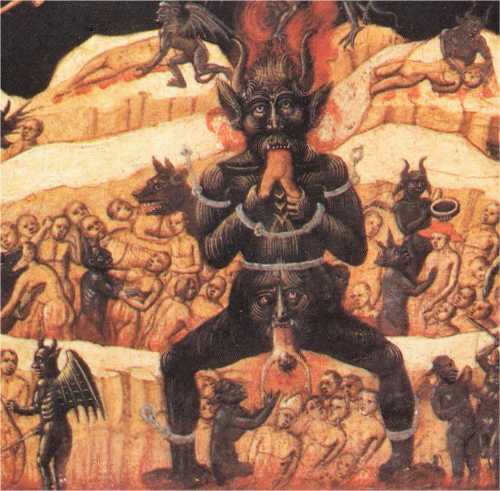
Consider the good-evil up-down higher-lower light-dark contrast in this depiction of Jesus meeting his Devil. They mutually both define and complement each other – a classic yin-yang dynamic.

One of the more esoteric translations of Yi (as in the Yi Jing / I Ching) is Coemergence or Coemergent Wisdom [see Daniel Hessey’s: Enlightened Society Yijing]. In this context we are noting the coemergence of both open perception and attachment-fixation, usually referred to as ‘wisdom and confusion.’ I described them above as first one then the other, because it is hard to describe both at the same time, but really the two aspects co-arise. And the interesting twist is that the open side, so to speak, can witness the sticky side and in so doing pop its bubble. Stickiness is the yin to openness’s yang; temptation is the yin to letting go’s yang. If you lurch to the left onto your left foot putting all your weight into your left leg, then the next step ends up with all the weight going into the right foot and leg. If your mind is filled with sticky lust at the mere sight of an attractive member of the opposite sex, the next step can be letting go of the stickiness to go back to fresh openness. This happens naturally when we enjoy a decent sense of humour for indeed most of what we find funny is some sort of stickiness-fixation principle being exposed, called out. Our pompous self-importance parading down the street all high and mighty Oliver is called-out by the humble banana peel causing him to land ignominiously on his arse with Hardy unable to stop snickering and then breaking out in laughter. The moment of coemergence – pomposity and its popping – happens not when he slips on the banana peel but precisely when his arse hits the pavement and his face registers surprise and embarrassment! (That’s coemergence for ya!)

The difference between a Buddha and a confused sentient being is simply that the Buddha sees clearly and completely the nature of confusion. [unattributed]

There is a similar dynamic perhaps with the awareness or state of goodness versus evil in that goodness can kindly look upon the confusion and suffering involved with those victims or perpetrators of evil understanding its nature and effects whereas generally evil cannot understand the nature and effects of goodness, they have closed themselves off to it. That grip of temptation, of fixation, is a type of closing down in that it rejects any state of openness having decided on what it wants and then fixating upon it. Obviously, this is the process involved in any sort of obsession. So spaciousness can see its opposite but claustrophobic intensity cannot see spaciousness, indeed letting go of holding on and merging into spaciousness might feel threatening making one hold on tighter. (Which is how one can end up trapped forever in hell with no way out.)

Sebastiao Salgado, one of this age’s most dedicated artists, spent years travelling all over the world photographing people and nature. At some point in the 1990’s he went on two separate trips to Rwanda and witnessed the enormous human tragedy unfolding there, the extraordinary loss of life with appalling suffering. He was deeply affected and in the movie about him I watched recently by Wim Wenders called ‘The Salt of the Earth’ he states that after witnessing so much horror for so long he lost faith in human nature and became profoundly dispirited. Later, as happened so often in his life, his beloved wife helped him find a way forward. He returned to Brazil, their homeland, where his wife came up with the notion of planting trees on his 600 hectare family estate which had completely dried up and become barren after too many years of farming too many cattle, presumably following standard procedures advocated by governments and experts. Over the next few years they planted millions of trees; after the first year, most of them died but each year a higher percentage survived so that after twenty years not only were there over twenty million flourishing trees, but also the land’s vitality had been restored with both rivers and wildlife having fully returned. In many ways a veritable miracle though of course we see such miracles nearly every where we go in this our marvelous world with its miraculous skies, terrains, living organisms, plants and creatures, including ourselves. His next book, Genesis, ranged all over the world to find unspoiled lands and peoples reflecting the virgin state of nature. I am eagerly expecting delivery in the next few days despite the cost of these large format photographic volumes,

What the Salgados did with their family property is admirably noble and generous. And, interestingly, it was prompted by having witnessed extreme suffering which arose principally out of extremely evil leadership which forcibly moved millions from one zone to another without any care for their survival – and of course most didn’t. Not to mention outright massacres of millions chopped into pieces by machetes and machine guns. Salgado’s spirit was almost broken, but thanks to his loving wife and connection with land, with plants, with people, with living creatures, he turned that extreme low arising from an encounter with extreme evil into something both glorious and natural. He restored his family’s part of the world back into wholeness. This is a grand, noble example of the left foot right food dynamic of the continuous interrelationship of so-called ‘good’ and so-called ‘evil.’

Sebastiao Salgado is a World Living Treasure, a true Noble One, a Bodhisattva in manifestation if not creed. No doubt somewhere the Buddha is very proud of him, of his demonstrated wisdom and compassion born from truly feeling suffering and the depths to which the Demon within us all can bring us if left unchecked, but also how that same Demon, when seen clearly, can bring out the best in us. Yin and yang, yin and yang…

Let not any one pacify his conscience by the delusion that he can do no harm if he takes no part, and forms no opinion. Bad men need nothing more to compass their ends, than that good men should look on and do nothing.

John Stuart Mill during an inaugural address at the University of St. Andrews

Or as my Irish-American Grandmother used to love saying, wagging finger and all:

TELL THE TRUTH AND SHAME THAT DEVIL!!

Shapeshifters Almanac: July 19

A virgin forest blossoming

Virgin forest symbolizes the original untamed, undifferentiated nature of reality and awareness: the lushness of diversity within the omnipresent act of creation; the womb of life, overflowing with opportunity for all. Blossoming signifies the spontaneous, uncontrived, self-generated bursting forth of creation: the thriving of beings when left to their natural course of development; the creative activity of noninterference. This aspect is a sign of the beauty, elegance and charisma of the spirit in its natural glory and ecstatic being as expressed in untouched living sites of nature—also, the corresponding refuges of pure intention within the imaginal realm of objective psyche.

EXOTERIC. Certainty is the tip of the iceberg of living truth: savants avoid the pit of enlightenment. When interpretation becomes dogmatic belief and the search for truth becomes certainty, then conflict and confrontation with others follows close behind. When glimpses of The Beyond are taken for direct experience of the whole of Creation, then misinterpretation has pulled the ego-identity into the trap of conceptualization—ideas about awakening are barriers to awakening; mistaking conceptualization for enlightenment is mistaking a mirage for the oasis. Savants dwell in the Great Mystery, allowing the natural course of the Void to renew the creative activity of the living universe.

ESOTERIC. The lineage of teachers and students spans a single generation: the forest of trees is no different than the alliance of souls—the single generation of seed-souls is everywhere the same. Existing in cyclic time, the seed-tree-seed cycle of birth-growth-birth, is no different than the birth-death-rebirth cycle of reincarnation: trying to conceive of the underlying reality is like the drop of the ocean trying to swallow the ocean. Yet, the drop of the ocean is in the state of at-one-ment with the whole of the ocean; it is just that there is an unpassable abyss between belonging together with reality and forming concepts of reality. Savants gauge every understanding within the context of an eternity of ongoing revelations.

William Douglas Horden: Shapeshifter’s Almanac


From time to time will include excerpts from William Horden’s Toltec I Ching and related writings. This excerpt is from his ‘Shapeshifter’s Almanac’ which provides a one-page text to contemplate for each day of the year. This particular one resonates with Buddhist doctrine in that it elegantly elucidates the difference between the concept of emptiness, realization or enlightenment versus actual experience and/or underlying reality.

When glimpses of The Beyond are taken for direct experience of the whole of Creation, then misinterpretation has pulled the ego-identity into the trap of conceptualization—ideas about awakening are barriers to awakening; mistaking conceptualization for enlightenment is mistaking a mirage for the oasis.

Yet, the drop of the ocean is in the state of at-one-ment with the whole of the ocean; it is just that there is an unpassable abyss between belonging together with reality and forming concepts of reality. Savants gauge every understanding within the context of an eternity of ongoing revelations.

I especially sat up with the opening sentence of the Exoteric section: Certainty is the tip of the iceberg of living truth: savants avoid the pit of enlightenment. This is basically the same as the famous ‘Kill the Buddha!’ admonition from the Zen tradition. When I was an active eager student during the days when my guru-teacher was alive, there was hardly ever a mention of ‘enlightenment’ or ‘realization.’ It must have come up from time to time but I cannot recall a single time. No doubt this was the case because the more one talks about such things, the more one tends to get trapped in various types of conceptual hell from which one cannot easily extricate.

‘Nuff said!

Eight Haiku – Van Gogh

Spontaneously composed whilst listening to Arvo Part Tabula Rasa…..

Olive trees with yellow skies and sun. Vincent van Gogh.

Such sparkling unity of sky and earth
breaks
the pattern of our hearts!

2023-07-19 van gogh haiku #8

Enjoy!

(You can zoom into the embedded pdf or download and view in a Document Viewer.)

Article 61: On the Nature of Good and Evil

(and the need for warriorship)

Article 61: On the Nature of Good and Evil (and the need for warriorship)

Some aspects of what can be called ‘good’ can easily be put into words, but many cannot. And the more one tries to spell such things out, the more indigestible the salad often becomes. (And all salads end up as manure anyway!) For the purposes of this and subsequent Articles, let’s just say that good is that which promotes and is virtuous and bad or evil is that which promotes or is vice; also that good in terms of feeling has something to do with being kind, gentle, generous, careful, disciplined, uplifted whereas bad, or unvirtuous, has to do with being unkind, harsh, selfish, careless, undisciplined, degraded. There are problems with using words like ‘good’ and ‘bad’ because of how they bring about judgmentalism; but the intention here is to examine what it means experientially to be using life as a vehicle for ‘promoting good’ as discussed in the previous Article #60.

The subject for this Article arises because promoting good immediately involves either not promoting evil or encountering evil as it arises in both inner or outer mandalas.

When I first started studying and training in Buddhadharma, the way I and many of my companions in the Sangha processed the teachings, along with the way they were viewed generally as ‘noetic science’ versus faith-based religion, there was a detached, impersonal quality to the whole affair. We were working with ‘the mind,’ ‘ego,’ ‘habitual patterns’ or ‘thoughts.’ ‘Me’ or ‘I’ were regarded as abstract conceptual constructs to be seen through or transcended somehow. Just as scientists dissect frogs to study the workings of bone, musculature and fascia, so we Buddhists dissected elements of mental and physical experience to reveal their inner workings dispassionately, by somehow putting ‘I’ and ‘me’ under the microscope.

In this context, notions of ‘good’ and ‘evil’ seemed somewhat quaint, moralistic and lowbrow. Of course, when you get into the later Mahayana teachings, the notion of the Bodhisattva as a generous soul working tirelessly to save all sentient beings clearly manifests goodness and noble-heartedness par excellence but then the whole thing is so magnificent and transcendental that it becomes akin to a deity principle, somehow beyond one’s own everyday kitchen sink level, meaning that again the personal aspect is detached from the subject matter. In a way, as a student I regarded personal experience as somewhat apart from the teachings, my own journey as an individual in limbo pending the completion of the more important work being done ‘on the Path.’ Of course the teacher and the teachings never recommended such a view, indeed quite the opposite, but that is what unfolded, at least to me. (Of course, the reason it is called a ‘path’ is precisely because one goes through all sorts of passages and iterations like this over time as one perpective falls away and a new one arises and so on ad infinitum.)

The point being that notions of good and evil didn’t seem apropos, and therefore neither did the notion of developing virtue, presumably because of the sense that if one developed discipline and insight – which of course are virtuous in themselves – all that other stuff would naturally fall into place. I guess I still think that way, truth be told, but I also think that considering good and evil in both oneself and society is both unavoidable and valuable as long as one doesn’t get hung up too much on the terms.

With this blog, for example, I have gone back and forth with whether or not to write about current news topics or just keep it strictly internal-focused, or maybe only about Buddhism or the Yi or whatever. The past three years have been very eventful so have often just avoided writing anything for fear of ‘polluting the blog’ with ‘samsaric’ politics. Perhaps this is why there were so many ‘geopolitical Yi Readings’ of late: they were a kosher way of relating to The News in a manner which felt ‘clean’ or ‘spiritual’ enough to put on this blog.

Not being a pundit or specialist, I have little to offer in terms of news commentary that hundreds of others don’t already do with far more depth, detail and understanding (not to mention confusion!). No doubt I can offer a different perspective coming from the ‘contemplative’ POV, but since generally such types eschew The News as a lowbrow distraction or some such maybe it’s a false piste. That said, am not all that wise or accomplished a practitioner, despite being officially empowered as the ‘Dharma Heir of the Celtic Buddhist Lineage,’ so it is somewhat pretentious to believe one has all that much to offer. However, of late have begun to feel like attempting to interweave, much like we do spontaneously in daily life, the inner and outer aspects of the journey especially as regards this notion of promoting goodness, or developing virtue as a guiding principle of sorts. I don’t want to attempt any sort of exhaustive study of this multi-faceted, somewhat endless topic, rather to continue the tradition of this blog by taking a particular idea or aspect and then writing something simple about it usually in no more than one to two thousand words. And leave it at that to resonate with the reader in whatever way. And then onto the next topic. This particular one is a little on the long side because of all this preambling as part of introducing a new phase. So, let’s start again with the title, shall we?

Article 61: On the Nature of Good and Evil (and the need for Warriorship). Take 2:

The good is both natural and innate and also that which can be cultivated. As is its absence or opposite, so-called bad or evil. The word vice tends to involve bad habits or tendencies versus good habits. Evil tends to involve actively harming others versus helping or uplifting them. The good lead or serve whereas the bad dominate and subvert. If, say, you form the intention to generally ‘be good’ today, then immediately arise related aspects such as that this will entail not criticizing your spouse, child or colleague, or keeping your cool in the busy traffic with all the crazy drivers who don’t use their ***ing turn signals and whose truck exhausts belch black, toxic fumes into your face; or when you go into the government office to get a license, or into a bank to do a simple transaction, you know you will have to wait in line for hours sometimes only to get slow, incompetent service once you finally have someone to work with at which point you must not lose your temper, be patient and kind and reasonable and understanding and calm and alert and so on. All of which is fine and dandy, but the point is that ‘being good’ immediately involves one in the practice of not being bad. The two go together like peas in a pod – or rather like yin and yang.

And it also puts one into a trap, and probably why in my Buddhist salad days we avoided dealing with this whole good-bad business: they are concepts, ideas, abstractions and by emphasizing them we end up overthinking everything, which is where judgmentalism, moralizing and finger-pointing come in, basic stuff we liked to think we had already outgrown being already oh-so wise and superior. So this is a quibble, and an important one since it keeps coming up, once again let us go further into the topic anyway. So now we can start the Article again!

Article 61: On the Nature of Good and Evil (and the need for warriorship). Take 3:

One of the principal ways we cultivate virtue is by avoiding self or other-generated vice. Self-generated vices are bad habits or things we do which harm self or others in both subtle and gross ways; other-generated vice is influences from others trying to get us into bad habits or things which harm self or others. For example, as soon as we walk out of the door we know we will encounter no end of enticements to buy into vice of all sorts, whether it’s simply losing our minds to the crass banality of billboard images, being dispirited by the amount of litter swirling around the streets in a slum area, being frightened by scowling thugs you have to pass close by to get into the station entrance you need to walk through to catch your train, being tempted by the crappy commercially produced chocolate bars in the little shop there where also are displayed rows of half naked males and females on glossy magazine covers, or the mind’s prompted journey to savour the imagined pleasures with nubile bodies, or not being disgusted by the noxious odor of the homeless person slumped next to you on the seat you found free on the subway complemented by the acrid tang of urine wafting into your olfactory mandala….. so many things popping up to make you lose your cool and begin to recoil from rather than open to and love, your surroundings and those whom you encounter. It’s immediate, inevitable and endless.

So during the journey we call life, goodness must become not a project, goal or idea so much as an ongoing attitude or disposition, a default openness and kindness without agenda, unaffected by specifics or particulars, and so also not beholden to concept or moral code. If we keep trying to do the ‘right thing’ or judging ourselves or others from failing to do so all that cumbersome approach just ends up tripping us over. Rather, goodness or virtue happens before any sense of right or wrong, good or bad. It’s not a head trip but a heart trip; it’s feelings, posture, orientation, a basic way of being – or like my teacher used to say, ‘facing East.’ It’s a way of being no matter what we encounter or how we are treated by others.

Of course in a good culture, we are all encouraging each other to do this by how we dress, how the buildings look, how we speak to each other, the quality of the pastries or foods we eat, and so forth. And in a bad culture, the opposite happens, we encourage each other to be dirty, dark, dangerous, hostile, ungrateful, ill-mannered and so forth.

Rather than fuss about the pitfalls of good-versus-bad finger-pointing, we can relax by more rightly regarding good and bad as a classic ying-yang dynamic which exists in all sorts of ways on all sorts of levels in this our multi-dimensional experiential continuum.

In any case, this leads us to the subtitle: ‘and the need for warriorship.’ In William Horton’s work about the I Ching and related spiritual path from his initial training to become lineage holder of the Buddhist-Daoist Sudden Enlightenment School and subsequent spiritual adoption by a Tarahumara shaman in Northern Mexico, he states that ‘spirit-warriors’ are those who confront the ‘enemy within’ which I find the best simple definition out there. For in all our encounters – and of course there are many greater evils than the petty everyday ones described above – what matters is not what others are doing around or to you but how you handle yourself relative to whatever comes your way. One cannot control what others do or what the world does, but one is responsible for how one steers the ship of one’s own behaviour; so that is what a ‘spirit-warrior’ does and why William Horton has chosen to emphasize this inner aspect of the journey during these times in which we are now eight billion and counting.

So what this all means is that the path of cultivating goodness involves facing its absence or opposite all the time, especially within oneself, and which again is essentially a yin-yang affair.

The traditional, perhaps even original, description of yin and yang is that of the sunny and shaded sides of a mountain. In the morning, the Eastern side of the mountain is warmed by the sun (yang) whereas the Western side is cool being still in shade (yin). As the sun moves through the sky during the daytime, the disposition of yin and yang gradually and continuously changes until by day’s end the Western side is warm and bathed in sunlight whereas the Eastern side is now cooler and in the shade. This is the change or process aspect in the title ‘I Ching’ (Yi = Change/process; Ching = Classic Text), because yin and yang are not things in and of themselves although they clearly are experiential qualities. And these qualities are continuously changing even as they remain in continuous relationship with each other for there is no such thing as a yin without a concurrent yang and vice versa. Perhaps we can explore this yin-yang dynamic further in another Article, but for the purposes of this one, it is helpful to regard good and evil as a yin-yang complementary dynamic not as solid, definite things in themselves. (This too may be explored later since it involves the difference between materialist and non-materialist science.)

And that always dynamic quality goes for warriorship as well. A spirit-warrior is one who overcomes the ‘enemy within’ by choosing to actively manifest the yang of virtuous upliftedness rather than the yin of unvirtuous dispiritedness day by day as circumstances continually arise. The choice is always there, moment by moment and a spirit warrior is one who makes the right choice, the warrior’s choice rather than the wrong choice, the coward’s choice.

So here endeth the lesson. When we consider ‘promoting goodness’ as per Article #60, we are immediately also dealing with badness, each being a yin to the other’s yang.

In a subsequent Article, we are going to look a little more into the nature of badness, where it comes from, why it’s there, and why, along with its being inevitable and unavoidable, it might not always be so very bad – even though in many cases, as described in Article 60, it most definitely is…

Article 60: Promoting Goodness as over-arching Intention.

Promoting Goodness

2023-07-13

Stories of Hope from ourrescue.org

Thoughts after viewing the Sound of Freedom movie and related discussions.

Recently the movie Sound of Freedom came out which dramatically re-enacts a true story involving a Drug Enforcement Agent’s journey into Colombia where he rescued children stolen from their parents and then used as sex slaves; after their youth appeal is expended, many of them get chopped up and sold for body parts. The film gives us a glimpse into a veritable Realm of Hell existing parallel to our collectively perceived everyday societies. Reportedly there are millions of such children being so used in our world today but the movie doesn’t do a deep dive into that, mainly sticking to its one particular story. The agent’s website and foundational work can be found here: https://ourrescue.org/.

After viewing the movie, I had a discussion with my Mexican wife who told me about a Mexican journalist called Lydia Cacho who has heroically exposed similar activities in her home country. She has written a book published in English called “Infamy: How one woman brought an International Sex Trafficking Ring to Justice.” During a Youtube interview in response to a query about how she copes with knowing all these horrible, evil things some do to others she replied that in fact she is optimistic, because even though there are indeed many bad people there are still more good people, and moreover good people have more of an effect than we tend to think. All it takes is for simple people in their own immediate situation to do simple kindnesses for others. Such kindnesses can take many forms, be it a simple word or gesture, teaching a dance class in the local neighbourhood helping middle aged ladies trim off some of their bulges, being a volunteer at the local church or whatever. The ways in which we can make positive contributions within our own families and communities are endless and have a far greater effect than most of us think. Perhaps some sort of interconnected force field of ordinary goodness.

For example, last week we were invited to the birthday party of our house builder’s four-year old son. My wife shopped around for a gift and found a set of coloring pencils – the best brand in Mexico and one she coveted as a little girl herself – along with some coloring books. The gift was a huge hit and the little boy sent her a message via his father’s cell phone about how it was one of the nicest presents he had ever received in his life. So that simple act of kindness communicated something valuable to the little boy that changed, in however simple a way, his perception about the nature of people outside his immediate family and thus about the world in general, about feelings that respond to such a gift and which hopefully open the door to his being similarly kind to others in turn. A simple act of kindness is no little thing. It reverberates. As General Maximus said: ‘Brothers, what we do in life echoes in eternity!’ This is true even if not self-evident; indeed, such effects can never be measured, nor can goodness even be seen by those – nearly all of us these days – viewing the world through the lens of materialist science which presents as a High Priest of Global Reality these days.

In any case, have long felt, and indeed have earlier written about on this blog, that there is a vast, invisible power of goodness, depicted charmingly, for example, by Tolkein as hobbits. Although invisible, this power of goodness prevents the evil-doers in our midst from simply taking all, conquering all – though they do plunder much and do great damage, as this movie’s real-life background, involving literally millions of children being prostituted and murdered, demonstrates in spades. This is because most of their power and pleasure in having it comes from tricking and/or exploiting good people. Indeed, perhaps we could go so far as to say that without such exploitation they would derive no satisfaction from the evil they perpetrate so they need the good in order to have a purpose in life. In other words eliminating us would eliminate them; so rather than brute force and mass murder usually they favour persuasion, preferring to trick and cajole us into consenting to their various perversions, enticing us away from the simple and good.

Interestingly, it seems that goodness does not depend upon evil in the same way that evil depends upon goodness. Goodness simply depends upon our being open to listening to and following the better angels of our nature and doing what we know in our hearts is right and uplifting, whereas evil exists by undermining that same instinct towards being good. It can only imitate, never truly create, which is perhaps why modern art and architecture are generally so ugly compared to that of previous ages.

In any case, after listening to my wife’s recounting of what Lydia Cacho had to say about the power of doing good deeds in one’s immediate family and community, it occurred to me that, even though retired and not doing all that much of anything any more, I could dedicate most of my time and efforts to writing good things which help uplift the spirit of those reading (rather than dwelling on all the disturbing things happening in our world of late), and also to performing simple service in my local community, be it teaching English, or building basic furniture in a workshop building now being constructed.

To which end, partly as a way of familiarizing myself more with it, I did a Toltec I Ching cast since this new sequence and commentary by William Horden emphasizes the inner journey perspective and so this sort of question should fit well with such an approach.

The result of that cast might be published shortly; for now though, here is the Summary of the Divinatory Hexagram #56 Recapturing Vision (#22 Elegance in the more familiar King Wen sequence). The query was: “Writing and Living to Promote Goodness as an over-arching Intent.”

SUMMARY: You are procrastinating. Your conscience demands things be acted on and the hour is growing late. Don’t find excuses to keep you from speaking and acting as you should. Now is the time to channel your righteous indignation into creative acts that touch others’ hearts. Rage not against injustices done to you, but against the injustices done to others. The momentum is with you.

Given this query was prompted by the story of a brave woman who took on dangerous pedophile networks in Mexico involving interlocking layers of criminal and official government organizations, the response seems remarkably apropos.

In any case, it seems that the notion of Promoting Goodness is as good an organizing principle, or general intention, as any other I could come up with, so intend to start offering future articles on this blog with that intention in mind. Presumably this will mean a lessening of geopolitical King Wen Yi Readings, which in any case seem to have run their course for now, and a resumption of original, short pieces exploring various themes emanating from this over-arching Intent, which is extremely basic but from which we often both individually and collectively stray, sometimes only for brief periods but sometimes for far longer, lasting entire lifetimes or permeating entire societies even for centuries….

And this brings up another assumption, which indeed was behind the Yi Query: rather than dwelling on evil and its many manifestations in society today, rather we should do good deeds, write good words, cultivating what is already in the garden and improving it, honoring it, cherishing it, much as how we raise our children. The best way to overcome evil is for good people to do good things as much as possible, each and every day. It’s extremely simple – corny even – but perhaps worth contemplating and acting on in everyday life.

Transitioning…

I feel a transition coming on. After a few months of regular, ‘intense’ study of the Yi am feeling the tug of something else. The Yi and I will live the rest of my life together, no question about that, but in terms of writing I want to move on a little.

Meanwhile, two little snippets from my peripatetic readings today. One a youtube, one an old article.

The article: Toynbee and Buddhism. It’s about civilizations rising and falling in the context of a scholar in Japan comparing Toynbee’s magisterial contributions to Western scholarship and wisdom with the Buddha’s approach. A neat article.

And the second is a youtube which is an obscure documentary I know of because I used to live above the studio on W 46th St off Times Square where it was made. It’s called The Secret Life of Plants. I used to sleep above many of those plants so according to the film maker, I helped make it!!

But as I recall, somewhere in that film is a sequence that involves how the mustard plant attunes to one particular star in a faraway galaxy that has been discovered by modern instruments and just so happens to be the densest celestial body known. Why the mustard seed attunes to this particular planet’s emanations is not known.

However: in a small prehistoric cave somewhere in Africa is a painting on the ceiling much like the one you describe. Except it depicts a cluster of stars. And in one such cluster a small red mark which correctly identifies the location of this tiny, super-dense star which we can only see with electronic radar instruments, not visually. And yet those prehistoric people ‘saw’ it. (The film does not mention if mustard plants grow or grew in the areas near the cave!) (Around 1:07:00)

All of which to say that things are interconnected (in our continuum) in ways which materialist outlooks cannot even begin to explain and so usually deny as tosh, with scorn thrown in for good measure. The same thing on some level might be in play with Leibnitz and Newton. I gather something similar may have happened with the first nuclear bombs. It also might have happened with covid for that matter.

I shared both of these during a philosophical sidebar discussion on the Moon of Alabama website.

Yi: Coup or Maskirovka? 47 >48 < 37

19 Approach > 47 Tiresome Restriction > 9 Modesty > 48 The Well < 37 Tribe, Wagner


There has been much speculation about the events of a few days ago which have baffled people watching geopolitical turnings all over the world. So I have consulted the Yi which indicates that Wagner was in genuine distress (#47). Interestingly, there are no changing lines but using my new rule, #47 progresses to #48. Exhaustion, the water running out from below, turns into The Well, which involves man’s ingenuity drawing water up from below using Wood energy. Also water below indicates turbulent, hidden, dark emotions in play but they were brought out into the open (above) in #48. Line 5 is stable. Lines 3 and 4 are unstable. In this mix, I deem that line 3 is Wagner command, Line 4 is Russian Ministry of Defense (MoD) high command which was in an open struggle with Wagner, up until now a Private Military Company (PMC), and Line 5 is the Supreme Commander, President Putin. In the change from 47 to 48 Lines 3 and 4 exchanged places indicating that line 3 took the initiative or the lead over line 4. Somewhere on the way between 47 and 48 is/was #9 whose ruling line is 4, the line of public service. So most likely an officer in both Wagner and the Russian Military linking them in a way that was mutually beneficial.

[Addition 6.30: because #9 features Heaven below, this means that the Officer in question might have been reporting directly to the President since the Heaven trigram is the one which most represents the leadership principle and Hexagram #9 would be #1 if it weren’t for the ruling yin line in Line 4, which is someone assisting or serving Line 5, which is the President in the scenario I laid out above. So Line 4 in #48 represents MoD High Command, but Line 4 Officer in #9 reports to Line 5, the President. This indicates that the shake-up by Prigozhin might have been done with Presidential knowledge and tacit consent in order to influence MoD high command and/or the general Russian public. How so? The High Command, and to a lesser extent perhaps the President of Russia, were put under pressure by the heroes of the SMO who are expressing frustration that they were not given enough support and moreover that the SMO needs to be conducted in a more aggressive and less defensive manner. The Russian people, seeing this heroic gesture on the part of a popular war leader (though he doesn’t have anything to do with actual combat and is a media troll farm operator by trade) will now be prepared for a more aggressive advance into Ukrainian territory and even cheer it on. Putin masterfully put down the potential rebellion, but then showed mercy to the rebel and, later on, possibly quite soon, will acknowledge the pressures which gave rise to this unfortunate event and give the green light to a more aggressive prosecution in Ukraine, possibly changing it from an SMO to a CTO.]

Because the overall result seems positive. Underneath it all is one happy family (#37). Prigozhin-Wagner demonstrated to the entire nation that he was serious about there being issues. He could not have staged this without his senior combat officer’s approval. He also demonstrated that if you really want to, you can quickly advance into hostile territory, which the SMO markedly hasn’t done in almost 18 months, though of course he did so with almost no resistance and as soon as an altercation happened involving loss of life he stood down, indicating that this was never a coup, rather a chutzpah-laden protest with tanks. Whoever tried to agitate that morning in Moscow, possibly with foreign coordination, lost out; but it seems everyone else gained except probably those in Line 4 in #48, the High Command in Russian MoD.

Also gaining are the US neocons who can now argue that Russia is evidencing dissension within and is ready to fall. That’s been their narrative all along but now they can claim to have evidence. So despite the obvious failure of the spring offensive, they can keep this going for another year at least. Perhaps the Russians too want this. Because as long as the West is exhausting itself in this fruitless endeavor, the weaker they become and the stronger the rising Eurasia becomes, both relatively and absolutely, and the more time they have to build their alliance in the face of Western hegemonic aggression. Indeed, this Cast could be looked at in this broader context: this is a strategy of exhausting one side whilst another side is using that turmoil to their own benefit. In any case, most players in this strange little drama seemed to have benefited. Except for the poor saps in Moscow, and of course those on the ground in war-torn Ukraine.

Yi: Russia’s relationship with Ukraine after SMO 42-2,3,4,6 > 43 < 23 (Take Two)

3 Hard Ground > 42 Increasing > 51 Shock > 43 Breakthrough < 23 Deconstructing


Gua #42 Increasing

The ideograph of Yi is simple and clear. The lower part is the image of a household container. Above the container is an ancient ideograph for water, shui. It looks exactly like the symbol of the original gua Kan, Water . Water above a container symbolizes that water is pouring into the container, an act of increasing. The structure of the gua is Wind above, Thunder below. When Wind and Thunder support each other, their energy is doubled. It is also an image of increase. The inner gua, Thunder, indicates that there is firm resolution within. The outer gua, Wind, indicates that there is penetrating outward action. Confucius’s Commentary on the Symbol says, “The superior person follows the good when he sees it, and corrects his fault when he finds it.” This tells us that a superior person follows the good as quickly as the wind and corrects his faults as firmly as thunder.

The theme of the previous gua is to decrease what is lower in order to increase what is higher. This gua discusses how to decrease what is above in order to increase what is below.

When Heaven loses a yang element, it becomes Wind. And when earth gains a yang element, it becomes Thunder. This is precisely an image of diminishing the lower to increase the upper. Increasing comes from Pi, Hindrance (12) ䷋. In Hindrance, there are three solid lines in the upper gua and three yielding lines in the lower gua. When the topmost solid line of Hindrance moves to the bottom, Hindrance alternates to Increasing. The Commentary on the Decision says, “To decrease what is above is to increase what is lower.” The upper gua is Wood as well as Wind. Here it symbolizes that a wooden boat is moving forward, driven by the wind. The lower gua is Thunder, symbolizing action. Thus King Wen’s Decision says, “Favorable to have somewhere to go. Favorable to cross great rivers.” [Huang Complete I Ching]


This is a Take Two on a Cast published a few days ago. We have had a wicked heat wave in Central Mexico (though not as bad as in Texas apparently) during which I’ve found it hard to read as much as usual. Fried brain syndrome or some such. But now it is tapering off – though some forecasts are predicting a return in early July unfortunately – and I am reading again, including William Horden’s materials, specifically his Volume II Image and Number which provides basics on how to approach the Yi, including hexagram, trigram and line interpretation. Wherein at one point he suggests that when there is no changing line then the Derived Hexagram is simply the next in the sequence, in this case #43. This addition means that one can then calculate the past and future influence which am very much enjoying since it creates instant narrative arc to any Reading (though that sometimes makes one miss other possibilities). In any case, here is Take Two.

The narrative arc begins with Difficult Beginnings, which can be regarded here perhaps as the configuration of the Ukrainian state being problematic from the get-go. Ukraine means ‘borderlands’ in Russian, I believe. It’s an in-between zone separating Western Europe from Russia which is also Europe but also partly Asia. It has a complex history – like all old zones in Europe – including the Rus invasion displacing the Khazars, whose descendants are most Eastern European Jews. Then it was a huge battleground during WW II and of course is one again now. So Difficult Beginnings: problematic background and foundations.

Then we move to the Divinatory/Primary #42 Increasing. But one idea within it is that the 4th line from #12 Stagnation – indicating a bad society wherein the wrong people are above and suppressing the people below (Heaven above, Earth below moving in separate directions) – moves down to the bottom line creating a different dynamic now with Thunder below, indicating change and forward momentum, and gentle influence-spreading above. So there is a sense of positive movement out of prior stagnation, hence the notion of Increase. So morally it is interpreted as generosity from above to below (the 4th line being donated to the lowest line) increasing virtue on the part of those below thanks to the self-sacrifice of those above. (Interestingly, Toltec #6 following #5 Restoring Wholeness is called ‘Fostering Self-Sacrifice.’) In this regard one could interpret Russia’s contribution to Donbass as a form of protective sacrifice.

The Future Influence is interesting (and #1 in Toltec Sequence). #51 Shock and Change, or maybe also Shock and Awe (awe-reverence is specifically mentioned in the classic King Wen version texts). Of course the current SMO conflict is a form of #51, with missiles, bombs, artillery rounds exploding and zooming around etc. Such quaking leaves a situation different from before, i.e. involves Change. So change through shaking things up significantly.

Which leads to the Derived #43 Breakthrough, which involves making things known. #43 has Heaven below/within and Lake above/without. Lake involves the pleasure principle but also speech, communication, the soft yin line at the top being likened to speech issuing forth into the world, or being an opening like a mouth. Lake is one way in which Heaven communicates with the world and in an upbeat, pleasurable, rising fashion. Lakes are beautiful, settled, peaceful, delightful – and also reflecting the Sky of Heaven on their surface. In this case the Lake in #43 can be regarded as balanced as opposed to the unbalanced Wind in #42 with two changing lines to segue into Lake. So this Joy principle is quite different from bloody military conflict. In a way, the story here is suggesting that with sufficient shaking up things can break through to some sort of joyful, easy connection with Heaven and thus strong leadership with all pointing in the same direction (five rising yang lines below).

In any case, the addition of the Derived with Past and Future Influence provides for a much more dynamic, interesting Reading and I am grateful to William Holden for creating this method. If you go to the Liturgies page on this blog you can download the Image and Number book for free. He doesn’t make money on his books and is happy to see them shared. It is great material. Remember he was trained at a young age by a Daoist Master of the Sudden Enlightenment School, told not to teach for thirty years, a commitment he kept, and since then has been putting out highly original and very wise materials including his flagship Toltec I Ching with beautiful illustrations by Martha Ramirez-Oropezza, his sister-in-law and someone involved in preserving and promoting traditional native Mexican culture including the Nawat language.