Imagining that this Series is now at the point of crossing out of the innermost ring and about to form the intermediate ring which curves down and then creates the outermost ring (see Punto 3), I thought it a good time to review the materialist perspective on reality because in a way it is the background of this whole exercise even though the main thrust thus far is presenting examples of non-materialist thinking. Or put another way: materialism is what the material is crossing over, just as when the logo transitions from the inner to the intermediate ring this is a place where the line crosses over itself.
Materialism is a big topic and, as is so often the case, a term which means different things to different people at different times in different contexts so I will not here attempt to survey all of them. The main point here is that it is a worldview with a certain notion of ‘reality’.
First lets look at a standard definition, this from Britannica.
Materialism, in philosophy, the view that all facts (including facts about the human mind and will and the course of human history) are causally dependent upon physical processes, or even reducible to them.
That’s what I mean by the term though I would substitute the word ‘facts’ for ‘reality’. Interestingly, Britannica quickly goes into some of the problems with this view, including that which is called ‘the hard problem’ of consciousness, a phrase coined by Terrence McKenna decades ago and there is an interesting wrinkle with something called ‘dialectic materialism’, adopted in Marxist thought last century and purporting to be a higher order of view compared to ‘vulgar materialism’, but which IMO ultimately boils down to the same sort of thing.
Materialism depends upon the generally unacknowledged assumption that self and other, or observer and observed, are separate. This separation is axiomatic to the notion that only the physical is real because each physical object is similarly separate from every other such. If you break them down, complex forms comprise a multitude of individual (separate) particles making Reality something put together like a giant Lego construction of bits and pieces in space, which latter is regarded as some sort of void conveniently there to accommodate all apparent forms. Moreover, just as space is somehow there but non-existent because without form, so also with mind or consciousness.
We could take words like space, mind or consciousness and bundle them all into the word ‘experience’. If we look at our actual life every moment involves some sort of experiencing; but according to the materialist assumption, such experiencing is a non-existent fantasy which doesn’t ‘really’ happen. Maybe this doesn’t sound like a big deal until we consider that this assumption devalues so many valuable aspects of living such as:
Thoughts, feelings, memories, relationships, cultural traditions, beliefs, spirituality, artistry, loyalty, courage, nobility, sacrifice and so on ad infinitum. Because when you boil materialism down, essentially it posits that reality is comprised of lifeless, mindless physical particles. As such, it is a world without principles or values, only fit for robots. Which is why materialism is one of the most important issues out there.
I first started contemplating this when following the debates about Darwinian evolution versus ‘intelligent design’. I grew up assuming that Darwin’s theory was essentially correct and never gave it a second thought; but on reading a few articles about the debate, I learned that the whole theory depended upon ‘random genesis’ wherein genes just jostle around chaotically spitting out random variations, some of which survive whilst others don’t. But first: where do we see all these random variations? If we look around we see that creatures are remarkable stable in both the plant and animal kingdoms; only rarely do anomalies arise – people born with three legs or two heads and such – but these are clearly defects not passed down to their offspring as Darwin’s theory suggests. So though many of the comparisons between species – how so many animals have five fingers and toes for example – make the theory sound plausible, if you go down to its underlying assumptions it doesn’t add up. Clearly living organisms have some sort of intention and motivation, the ability to solve problems – like how ivy manages to climb up a wall by feeling out tiny cracks and protuberances, like how ants build sophisticated underground cities, like how wolves hunt in packs and so on. Clearly responsive intelligence is part of living reality and to posit it as some sort imagined irrelevance or mindless, random happenstance is simply wrong.
But more importantly, and again, it devalues so much of our experiential life as unimportant, irrelevant. Put another way, we are reduced to being mindless machines in a mindless mechanical world. Political systems based on this assumption are bound to end up de-humanizing us whilst damaging the inter-related webs of life which are living, interdependent dynamics wherein none of the participants, if you look at it carefully, is actually a fully independent, autonomous thing, or mere agglomerations of mindless, mechanical particles.
Speaking of the latter, is that not what the Five Skandhas description posits, namely that our experience comprises five layers or level of bundled-together elements? Well, yes, but not really because the constituent elements involved are experiential, not merely physical. The first Skandha of form, for example, involves experiencing three-dimensional space in which various different forms arise. We experience this dimension, similarly with feeling, categorization, intention and a resultant stream of individuated consciousness, aka ‘me’.
This Chapter is not about solving the ‘hard problem of consciousness’ rather pointing out that the underlying materialist assumption and mentality most of us live with posits the world as no more than some sort of lifeless machine making us all no more than biological machines, including plants and animals of course, living in a larger machine comprising rocks, air, water, planets, solar systems and so forth. And this mechanical view has gradually taken over most modern societies and resulted in an overly mechanistic view of reality, which includes both ourselves and our lives, and which devalues too many aspects of human experience, in so doing engendering increasingly dehumanizing civilizations.
But if you don’t start with this assumption, you can develop many other ways of thinking, feeling and living and since many traditions in the world have indeed started from different assumptions, there is a reservoir of perspective describing reality from a non-materialist point of view, which is what this Series has been introducing in somewhat simple fashion.
I’ll end this Chapter with an excerpt from an Article I wrote last year which I like:
If you were to ask a scientist to describe the movie you are watching on a screen, the scientist could talk about radio waves or internet EMF signals and various different pixels of light with different frequencies on a screen and sound waves emanating from a speaker diaphragm and suchlike but that same scientist would also have to admit that his science cannot perceive the story being told on that screen. Science doesn’t understand stories, nor can it hear symphonies or any music as such. That means that science doesn’t see feelings, emotions or meaningful experience. Science cannot see love or hate, disappointment or triumph. Science, in other words, doesn’t perceive most of what matters to us as living beings leading what we call ‘our lives.’ So science can see and do many great things, but not everything, including many of the most important experiences involving that which is most important in our human life journeys. Put another way: science has no regard for many things which we regard as most meaningful because science doesn’t ‘do’ experience and since we inhabit what on this blog is often called an ‘experiential continuum,’ science only perceives a narrow band within a far larger spectrum moreover often in ways, as per the example above about watching a movie, that are somewhat outside, or alien, to that experiential continuum.
The vortex logo above is made with a Japanese calligraphy brush and ink. If you look at the center area you can see a little depression at the top of the inner ring. The stroke starts at the right of that depression then dips down and circles back up and around and then down again to the outer ring, draws that outer ring and then loops back into the center to the starting point where the little depression is formed by the brushstrokes not quite matching up perfectly.
This little Puntito is just an observation: there is one line, continuously drawn which starts off going forward, keeps going forward but forming a continuous curve and then returns to the starting point. In so doing, several things happen: it creates a new form as it proceeds; then it doubles back over its old form; then makes a new form all the way around the outer ring and then doubles back over that outer ring and an earlier inner ring. Also, sometimes it is ascending and other times descending; and sometimes it is outside and sometimes it is inside. Also, it creates three separate white space zones, each with a very different shape albeit all formed by the same one, curving line.
The point being there are lots of different layers and levels even on this one-dimensional plane of a continuous, curved line on paper. There’s a lot going on in this one simple thing; as is true of all things.
Huang Jun Bi Heaven Earth & Man tradition in landscape painting
Venerating the past in itself will not solve the world’s problems. We need to find the link between our traditions and our present experience of life. Nowness, or the magic of the present moment, is what joins the wisdom of the past with the present. When you appreciate a painting or a piece of music or a work of literature, no matter when it was created, you appreciate it now. You experience the same now in which it was created. It is always now.
[CHÖGYAM TRUNGPA Shambhala: The Sacred Path of the Warrior]
Preamble:
At some point an Appendix will be put together providing more in-depth source materials for those interested, but for now we will continue with the author’s rudimentary babblings based on his training decades ago in such rather rare, pre-modern esoterica transported, most improbably, by a young Tibetan lama who escaped the communist invasion of his decidedly medieval Tibet by walking on foot for about a year, almost to the point of starvation, into India and from thence into the wider world of the twentieth century.
Like the Torii Gate shown in Introduction Part Two, the origins of the Heaven, Earth and Man formulation are shrouded in the mists of Time. The Swiss Alps mountain man, Otzi, discovered a while back frozen in a glacier for approximately five thousand years, carried not only a few ancient stone acupuncture needles but also several small, circular tattoos on various points in his legs where, to this day, practitioners needle to alleviate arthritis, which he clearly had. The fact that this man had both acupuncture needles and marked points in Europe around 2,500 BC demonstrates how little we know of our own relatively recent history; in any case, where there was acupuncture there was almost certainly some sort of yin-yang theory and therefore also some notion of Heaven Earth and Man, given that Heaven and Earth are in many ways the primordial Yang and Yin formulations. So this is a very ancient trinitarian formulation, quite possibly the oldest of all, especially given how it needs no religious dogma or belief system to appreciate.
‘Ok’, you might say, ‘it’s old; so what?’ Well, let us explore. First I shall provide a traditional academic definition, then something from a contemporary teacher, and finally will unpack it a little further myself. Part of the reason I like to offer the first type of excerpt is that it’s a personal mission, of sorts, to show that many things seemingly frozen in time within formulaic academic language are still very much alive and kicking, though not readily apparent in today’s society. They echo the wittily portrayed god Pan in Tom Robbins’ Jitterbug Perfume: because no-one believes in him, nor any of the old Gods, any more he has faded from view, so all that remains is a horribly pungent odour wafting by in the wake of his invisible passage causing people to twicht or spasm in disgust, though they know not why!
The term represents a world outlook and a way of thinking which hold that heaven and earth and man are interconnected. This world outlook emphasizes the integration and inherent relationship between heaven, earth, and man. It highlights the fundamental significance of nature to man or human affairs, and describes the endeavour made by man to pursue life, order, and values through interaction with nature. The term has different ways of expression in history, such as heaven and man are of the same category, sharing the same vital energy, or sharing the same principles. Mencius(372?-289 BC), for one, believed that through mental reflection one could gain understanding of human nature and heaven, emphasizing the unity of mind, human nature, and heaven. Confucian scholars of the Song Dynasty sought to connect the principles of heaven, human nature, and the human mind. Laozi maintained that “man’s law is earthly, earth’s law is natural, and heaven’s law is Dao.” Depending on a different understanding of heaven and man, the term may have different meanings.
CITATION 1
In terms of integration of categories, heaven and man are one. (Dong Zhongshu: Luxuriant Gems of The Spring and Autumn Annals)
CITATION 2
A Confucian scholar is sincere because of his understanding, and he achieves understanding because of his sincerity. That is why heaven and man are united as one. One can become a sage through studies, and master heaven’s law without losing understanding of man’s law. (Zhang Zai: Enlightenment Through Confucian Teachings)
Now the more contemporary excerpt by my teacher Chögyam Trungpa Rinpoché from a lecture given in 1979 introducing this triad in the context of a Dharma Arts Seminar wherein the Arts are viewed as a vehicle for spreading wakefulness in society, enlightened culture as it were. [Emphasis mine]
2. CREATION
“Being an artist is not an occupation; it is your life, your whole being.”
The principle of heaven, earth, and man seems to be basic to a work of art. Although this principle has the ring of visual art, it also could be applied to auditory art such as poetry or music, as well as to physical or three-dimensional art. The principle of heaven, earth, and man applies to calligraphy, painting, interior decoration, building a city, creating heaven and earth, designing an airplane or an ocean liner, organizing the dish washing by choosing which dish to wash first, or vacuuming the floor. All of those works of art are included completely in the principle of heaven, earth, and man.
The heaven, earth, and man principle comes from the Chinese tradition, and it was developed further in Japan. Currently the phrase “heaven, earth, and man” is very much connected with the tradition of ikebana, or Japanese flower arranging, but we should not restrict it to that. If you study the architectural vision of a place such as Nalanda University in India, or if you visit Bodhgaya, with its stupa and its compound, or the Buddhist and Hindu temple structures of Indonesia, you see that they are all founded on the heaven, earth, and man principle. This principle is also seen in the interior decor of temples built in medieval times and occupied by a group of practitioners: monks, deities, lay students, and their teacher. The principle of heaven, earth, and man is also reflected in the makeup of the imperial courts of China, Japan, and Korea, and in their official hierarchy, which included an emperor, empress, ministers, subjects, and so forth. In horseback riding, the rider, the horse, and his performance are connected with the heaven, earth, and man principle, which also applies to archery and swordsmanship.
Anything we do, traditionally speaking, whether it is Occidental or Oriental, contains the basic principle of heaven, earth, and man. At this point we are talking about the heaven, earth, and man principle from the artist’s point of view rather than the audience’s.
In the concept of heaven, earth, and man, the first aspect is heaven. The heaven principle is connected with non thought, or vision. The idea of heaven is like being provided with a big canvas, with all the oil paints, and a good brush. You have an easel in front of you, and you have your smock on, ready to paint. At that point you become frightened, you want to chicken out, and you do not know what to do. You might think, “Maybe I should skip the whole thing, have a few more coffees or something.” You might have blank sheets of paper and a pen sitting on your desk, and you are about to write poetry. You begin to pick up your pen with a deep sigh—you have nothing to say. You pick up your instrument and do not know what note to play. That first space is heaven, and it is the best one. It is not regarded as regression, particularly; it is just basic space in which you have no idea what it is going to do or what you are going to do about it or put into it. This initial fear of inadequacy may be regarded as heaven, basic space, complete space. Such fear of knowledge is not all that big a fear, but a gap in space that allows you to step back. It is one’s first insight, a kind of positive bewilderment.
Then, as you look at your canvas or your notepad, you come up with a first thought of some kind, which you timidly try out. You begin to mix your paints with your brush, or to scribble timidly on your notepad. The slogan “First thought is best thought!” is an expression of that second principle, which is earth.
The third principle is called man. The man principle confirms the original panic of the heaven principle and the “first thought best thought” of the earth principle put together. You begin to realize that you have something concrete to present. At that point there is a sense of joy and a slight smile at the corners of your mouth, a slight sense of humour. You can actually say something about what you are trying to create. That is the third principle, man.
So we have heaven, earth, and man. To have all three principles, first you have to have the sky; then you have to have earth to complement the sky; and having sky and earth already, you have to have somebody to occupy that space, which is man. It is like creation, or genesis. This principle of heaven, earth, and man is connected with the ideal form of a work of art, although it includes much more than that. And, to review, all of what we have discussed so far is based on the ground of health, on the idea of complete coolness, and a general sense of sanity. [Chögyam Trungpa, Collected Works, Volume 7]
First, notice the difference between the two excerpts. Here we see how seemingly distant abstract concepts can be brought to life by someone actually living the principles in the here and now. Trungpa Rinpoché explains the terms from the point of view of an artist and spiritual teacher practicing them in everyday life.
But let us start at the beginning, which is especially appropriate because in a way the Heaven Earth & Man triad, as per the above excerpt’s title, in a way describe Creation, which of course is a continuously ongoing process taking place in the present moment. Again:
“To have all three principles, first you have to have the sky; then you have to have earth to complement the sky; and having sky and earth already, you have to have somebody to occupy that space, which is man. It is like creation, or genesis.”
If we look out the window or walk outside, immediately we are struck with the over-arching presence of the sky above; this is nothing mystical, per se, rather immediate and direct. Then we can also observe the earth below and around with its endless variegations and multiplicities – all forms appearing under the essentially formless sky. Each tree has no end of leaves, each animal no end of hairs, each garden path no end of little pebbles, flowers, blades of grass and so forth. And here we are walking in between such Heaven and Earth as indeed we do throughout our lives, always. Now the artist’s perspective Trungpa Rinpoché provides adds a layer which helps us understand the experiential nature of this triad, but our concern again, at this stage, is not so much trying to slot this into any spiritual journey or practice, rather just to grasp the basic concept as part of our initial layers & levels skandha-gathering process.
That said, it is very helpful to take the above descriptions, especially Trungpa’s, and observe them at play in everyday life. This can be in small or large situations, for example how objects are arranged on the dining table, or how everything is put together in the kitchen, living room or bedrooms; or in public spaces how streets are laid out, which churches have a strong sense of sacred presence and which do not, which buildings express civilizational dignity and which are ‘off’ somehow.
Or one could analyze corporate or national governance along those lines as well, not to mention movies, sports events, political gatherings or military campaigns. Some organizations have a great sense of Heaven but lack connection with Earth, others the reverse; in the former those involved (Man) will tend to be overly ideological, perhaps unable to implement what they envisage, whereas in the latter they may overly fixate on the best manufacturing methods whilst avoiding discussions of overall vision, design and organizational viability.
Literally speaking, every house, for example, has a roof, without which it would not be one. The roof clearly connects with the sky above but also from within is the sky of the house inside. Roofs have qualities determined by quality of materials, dimensions, shape, whether or not they provide shade below with covered porches or not, whether they provide a sense of space inside or are oppressive, and so on. Then the Earth aspect is not only how the house sits on the ground and is positioned relative to the terrain and neighbouring houses, but again the materials, the quality of workmanship of the floor, walls, furniture – the gestalt of the physical structure including its plumbing, electrical and heating systems. The Man principle may have more to do with the overall feel and flow, for example where the kitchen is placed relative to the entrance, how the view for the person washing the dishes looks out onto a lovely flower garden or ugly brick wall. Also what sort of family lives there: are they social, talking and laughing a lot, or is it the house of a recluse, or a murderer, or political conspirators, or a family of quarrelling alcoholics.
A key aspect of this triad is the notion of Heaven itself. In Chinese philosophical circles there are long-standing arguments about absolute higher pristine Heaven versus relative lower mundane heaven – both Citations in the first excerpt were about this, for example. But what really matters is for these principles to come to life, to which end what is absolutely (pun intended) required is some sort of sacred outlook. Both Iain McGilchrist and Alexander Dugin have rightly stressed this as a sine qua non of good lives and society; moreover it is an experiential value increasingly alien to modernist, secular materialists – nearly everyone these days. In a way, this sense of sacredness IS the Heaven principle, atmospherically speaking, and of course as with everything there are different layers and levels of experiencing it, so no need for extended academic arguments. Also, although the Christian West’s notion of Heaven has certain overlap with this older, less faith-based formulation, this triad concerns here-and-now perception and experience, not anything other-worldly or afterlife related.
The sky presides over everything, is always there no matter what takes place. This ever-present nowness contains aspects of sacredness already; just as the profound majesty and limitlessness of Nature, the Earth principle, is another sacred aspect as well along with Nature’s inherent beauty, which all naturally appreciate.
Sacred art displays and engenders this, moreover all sacred perception comes from the experiencer being between the uplifting embrace of timeless, all-encompassing, absolute level Heaven and limitlessly variegated relative level Earth, both of which are fundamentally and primordially sacred, the experience of which quality is Man. In the West, cathedrals were a sacred art form dedicated to exploring these principles and making them part of both national and community cultural life.
Nowness is an inner, experiential aspect of the ever-present, all-pervasive Heaven principle. Another major aspect of this triad is that it both assumes and frames some sort of natural Order, or hierarchy. Things have their place just as with Heaven above and Earth below. The Man principle can be well or poorly executed thus societies can be well or poorly attuned to Heaven resulting in a discombobulated Man who cannot manage the practicalities of Earth and ends up creating a mess, either at the individual, family, community or national level. As you can see, this triad has broad implications and though not often mentioned in today’s post-industrial revolution Asia, it pervades much of their thinking and to this day deeply influences their view. Indeed, we can say It has likely been absorbed into their genetic makeup, as with all great civilizational ideas. Again:
Venerating the past in itself will not solve the world’s problems. We need to find the link between our traditions and our present experience of life. Nowness, or the magic of the present moment, is what joins the wisdom of the past with the present. When you appreciate a painting or a piece of music or a work of literature, no matter when it was created, you appreciate it now. You experience the same now in which it was created. It is always now.
Here follow two more paintings by the same artist. Notice how in all three there is, however small and dwarfed by the majesty of Heaven and Earth, a Man principle. Note also how in the first Man is placed where he traditionally belongs, in the Middle, whereas in the second he is at the bottom and in the third he is at the top.
and last but not least:
In the last two, the artist is playing around with where to put the Man principle; in the first it is very small and low down in the river valley, barely noticeable; in the second it is also quite small but on top of a dramatic mountain formation. Notice also how in the last one the orange colour in the house on top is echoed on the top of each lower mountain formation with the same orange splotches on one or two of the trees – a sort of mini-Man principle echoing the main Man principle expression of the two houses on top with windows placed overlooking the terrain below giving the sense of a witnessing mind, which is the animating Man principle. Note also how three paintings feature so many different layers and levels and in the last one there are three main levels, each with its own Heaven and Earth composition, again making those orange splotches on top the Man principle.
There are schools of art, especially flower arranging schools in Japan, which train students for years in how to perceive and then artistically heighten awareness of this triad. It is deeply woven into the fabric of all major Asian civilizations and of course exists also in the West, though not formulated as such.
Let us end with a haiku based on the last painting using a haiku technique from Trungpa’s Shambhala tradition which considers the first line a type of Heaven, then the second line a type of Earth complementing that first line, then the last line is Man, animating or tying the whole thing together somehow, usually with some sort of human feeling.
gazing down from on high at swirling mist and mountains below such quietly breathing splendour!
[Editor’s Note: at over 3,100 words, this is longer than desired, but since it includes over 1200 words from excerpts, the author’s contribution is around 2,000 words which is within the intended parameters.]
As the Inner Ring of the Vortex is drawn, this Layers and Levels Series is gradually acquiring some sort of shape, like a looming Torii Gate on a mist-covered lake at dawn.
The book – for that is clearly what this series of Articles is now becoming – will probably comprise three main sections, or Levels, modelled on the Vortex Logo, namely:
1. DRAWING THE INNER RINGS – collecting skeins, or skandhas, of various foundational layers and levels, building vocabulary and perspective from non-materialist, generally premodern, sources. (The current phase.)
2. THE OUTER RING: these principles and notions in a variety of philosophical, social, artistic, historical, spiritual and narrative contexts, perhaps principally showcasing the Buddhist Mahayana (‘Great Vehicle’), whose main thrust is the expansive generosity unleashed once individuals and/or society break free from the shackles of materialist self-imprisonment.
3. RETURN TO ORIGIN, SACRED RITUAL: examples and suggestions about how individuals and collectives can manifest sacred principles, with an emphasis on formal, or contained, simplicity, thus returning to the Inner Ring starting point of the Vortex Logo.
Moreover, it seems this book, should it indeed become one, is in part a response to the work of two contemporary philosophers, Alexander Dugin from Russia and Iain McGilchrist from the Isle of Skye, both of whom have gone to great lengths to deconstruct many of the underlying flaws of the modernist mindset, and who advocate valuing sacredness as key to remedying most modernist social ills. Seeing as the entire world is mired in the ‘thick, black fog of materialism’ 1 it is hardly surprising that much of their work remains similarly ensconced in explaining the nature and characteristics of that pervasive miasma. So what I am hoping to offer is some explanatory and performative examples from classic, non-materialist traditions, of what might help constitute Dugin’s Fourth Political Way 2.
As is well said: ‘Manners maketh Man’ in that they are a proactive, creative expression, not merely some sort of stuffy, pseudo-Victorian straight jacket. (Ask any happily married couple whether or not manners matter.) It is also an offering and response to my beloved teacher, Chögyam Trungpa, Rinpoche, who tirelessly transmitted virtually all the esoteric content, and his close student and companion John A Perks, aka ‘Johnny’, his personal attendant and Chief Trickster for many years who founded, in accordance with his teacher’s suggestion, the lineage of Celtic Buddhism. Indeed, albeit decades after our teacher’s early death in 1987, they both still live and play together in Johnny’s mindstream, by the merrily flowing waters of Saxton’s River in Vermont, albeit now decades after my teacher’s death in 1987.
Editorial Note: at some point this Intro Part Two, and any other subsequent additions, will merge into a final Introduction but for now it features as a sequential entry in the emerging Series. Indeed, all the Blog and Substack entries will constitute some sort of first draft after which a book will be fashioned with no doubt many not making the final cut, or getting merged with various others. Editors love such shenanigans!
1 Chögyam Trungpa, Rinpoche The Sadhana of Mahamudra, 1968
2 The word ‘Way’ is substituted for ‘Theory’ for a Way is something actually lived and practiced, not merely hypothesized.
As we drove to walk the dog yesterday, my Mexican wife told me a story she had heard from an Argentinian podcaster who makes up stories. Though this one, interestingly, despite being told in Spanish, is about King Arthur. 1 Stories, of course, are the world’s oldest ways of communicating the various layers and levels of experience, so they fit right into to whatever it is this Series is cooking up! She told it from memory, altering it a little, and I have done the same as apparently did the podcaster Jorge Bucay (linked below). And so it goes with stories….
One day long ago, King Arthur was in his castle in Camelot languishing from an illness which had kept him bedridden for months. The Royal Physicians said that he did not have long to live. Sir Galahad, his most trusted Knight, was beside himself with worry. Then one of the serving girls, who lived in a village in near the Dark Forest, whispered in his ear: ‘the King has been bewitched. My mother says that there are only two sorcerers who can cure him; the first is Merlin but it will take more than two weeks for him to arrive and that will be too late; the second is Brunhilde, whom the King banished years ago, but who lives only two days ride away past the Dark Forest in a high mountain cave just outside borders of our Kingdom. You should go ask Brunhilde if she will help.’
So Sir Galahad passed through the dangers, which this tale does not tell, of the Dark Forest, and found Brunhilde in her high mountain cave just outside the borders of the Kingdom. She was a fearsome old hag, incredibly ugly to gaze upon – indeed on those few occasions when she went out and about she was often cursed and spat upon. Despite this unappealing appearance, Sir Galahad approached and told her of King Arthur’s dire predicament.
Said the Witch: “I am aware that he has been put under a deadly spell that only I or Merlin can lift; but he banished me years ago, so even were I inclined to heal him, which I am not, what’s in it for me?’
‘I am sure we can arrange fair payment in gold and treasure’ replied the Knight.
‘But gold and this old lady do not agree’, said the Witch.
‘Or the King could lift your banishment,’ suggested the Knight.
‘But I am quite happy where I am, thank you very much; and in any case you are in no position to guarantee that the King, once awakened from the spell, will wish to end my exile. He is, after all, a King, and you know how they can be. You must offer me something you can honor yourself!”
Neither spoke, considering. And then she suggested: ‘if you agree to marry me once I have cured the King, then I will go with you back to the Kingdom, lift the spell and save his life.’
The Knight, reluctant as he was to spend even another minute in the company of this evil-smelling, unsightly hag, nevertheless agreed, and off they went together back to Camelot where the Witch proceeded to boil up an evil-smelling magic potion in the King’s large bedroom fireplace, chanting strange spells and performing strange dances. Finally, exhausted, she told Sir Galahad that she must now sleep on the floor alongside the King’s bed, but that when next he awoke, the King would be fully cured.
Sure enough, when next morning the King awoke, he sat up fully alert and immediately commanded Sir Galahad, who had kept watch in a chair by the foot of the King’s bed all night long, to bring him a breakfast. ‘I feel like I haven’t eaten in a month!’ exclaimed the King, lustily.
‘You haven’t taken solid food in almost two months, Sire’, said the good Knight, ‘and indeed we thought we were about to lose you, so deep had you sunk under a wicked spell.’
At that last word, the King suddenly espied the horrible hag lying on the floor on one side of his bed, an unkempt bundle of stinking rags, and demanded to know ‘who or what is this ghastly evil-smelling mess lying alongside me in the Royal Bedchamber?’
The Witch, as if summoned, awoke and sat up exclaiming: ‘Well, Sire, you know very well who I am; I am Brunhilde the Witch whom you banished years ago into lifetime exile.’
‘I do recall, very well, and the reasons I banished you; but I ask again: what are you doing in my bedchamber. Answer quick or I shall have your head, witch or no witch!’
‘Sire,’ said Sir Galahad, ‘she is here on my invitation and guarantee of safe passage. Once we realized that you were under a spell and not suffering from a common illness, we determined that by the time Merlin would have arrived, it would be too late; so I journeyed past the Dark Forest and its many monsters to reach Brunhilde’s cave where I beseached her to intervene on your behalf to lift the deadly spell threatening your life and the life of our Realm, which she now has done. In return I gave her my word as a Knight of the Round Table that I would take her as my wife until death do us part.’
The King, though taken aback, perceived that Sir Galahad, as well as behaving honorably, had put in motion events that had saved his life; so rather than punish him for violating the Witch’s exile, he generously rewarded him with many lands including the area of the Dark Forest at the border of his Kingdom immediately adjacent to Brunhilde’s cave, though he could not refrain from expressing grave reservations about the choice of bride, given that Sir Galahad was such a handsome, well-regarded Knight of the Round Table who so many of the fairest and noblest ladies of the land desired to claim as their own.
The next day they held a private wedding ceremony witnessed only by His Majesty, after which Sir Galahad and his hideous, stinking bride left for her home. On the first evening back at her cave, Brunhilde made to enter and prepare the it for their first conjugal night but Sir Galahad, still struck by her intense ugliness, demurred, preferring to make camp outside. However, whilst mulling things over alone at his camp fire, he reflected that he wasn’t living up to his end of the sacred bargain and so begged permission of Brunhilde to enter her cave, to which request she, in a surprisingly sweet voice, assented.
On turning the corner after entering the mouth of the cave, Sir Galahad breathlessly beheld the most beautiful maid he had e’er set his gaze upon, rendering him speechless in wonder. Gently she approached him and, softly placing her hand on his forearm, made the following offer:
‘You have treated me kindly, Good and Gentle Knight, and kept your word though I know it must have been hard; in return I appear this way for you as reward for your kindness and honour. Though now you must decide: do you wish me to appear this way during the nights, or during the days.’
Sir Galahad hesitated, considering. If she appeared like this during the night, he knew he would be the happiest man in the kingdom for the rest of his days, albeit with none to witness; but if she appeared like this during the day, then the King and all the Realm would know how fortunate he was, how wise his choice had been and his power and influence would surely grow.
‘Choose now, Sir!’ insisted the Witch.
Spontaneously he replied: ‘Lady, you can appear as you wish whenever you wish as it pleases you.’ At which point the lovely Lady laughed, her voice like fresh spring waters bubbling gently in a highland stream, saying ‘Verily, dear Knight, you have chosen well; for you have treated me with a kindness and generosity I ne’er yet encountered from any other person, man or woman, in return for which I can now manifest, for your pleasure, in a way that is pleasing and resplendent, and thus shall I choose.’
And thus she did.
And so for the rest of their days she was the most beautiful Lady in all the Realm, and Sir Galahad the most contented, prosperous and honorable, of Knights much beloved by his King and all other subjects of the Realm.
MORAL:
No matter how we strive to banish the Dark and Ugly sides of our Nature, we must value them for all have a place under Heaven in this our Sacred Realm; moreover, once we have made a vow we should keep it no matter the consequences trusting that a just reward will be ours in this life or the next.
Lord of Death holding Six Realms of Samsara (and more)
“As we go along from moment to moment, day to day, life to life, awareness and our thoughts keep shaping the life we lead. Cumulatively, the effect is tremendous. We can create for ourselves a tunnel lined with rags and deprivation or an open world of wealth and genuine communication – dark worlds, bright worlds, moderate worlds – so many different worlds can be created based on karma 1 we keep creating through our thoughts and projections.” 2
From non-materialist philosophy, and as part of continuing to draw the inner swirl of a Vortex Logo wherein we muster initial vocabulary and perspective, in this Chapter we now explore a little non-material cosmology.
Below is something written thirty years ago for an almost published book entitled ‘When the Iron Bird Flies’ 4, intended as an introduction to Buddhism for younger readers. The entire section, wherein each of the Six Realms gets its own chapter and is treated in a somewhat imaginative way, is linked here. (If I say so myself, it’s worth reading!) The following excerpt introduces the topic.
The Buddha noticed that everything arises, lasts for a while, and then goes away. Everything. Whether you believe in a solid, permanent ego or not, it still works that way from birth, to living and through to death. Each thought or feeling is that way too. It arises, it goes along for a while and then something else comes up – perhaps you suddenly fall off your bicycle – or a pterodactyl lands in your lap! The key word here is ‘everything’: people, flowers, buildings, bees, love affairs, football games, breakfasts, lunches, picnics, moods, moments, conversations, dinosaurs, planets, stars and solar systems. Everything. This is a simple but also profound point. The very last statement that the Buddha uttered before dying was: “whatever comes together falls apart.”
Egos also seemingly arise, dwell and then cease. According to the Buddha, sentient beings – those beings who are alive, who feel things, who are born, live and then die – dwell for a while in the following worlds, or realms, known as the Six Realms, one of which is the Human Realm. These realms too arise, dwell and then cease no matter how real and permanent they might feel. They are the living dreams in which we play out our lives. We mentioned passion, aggression and ignorance as being perhaps the driving force behind evolution. From the point of view of the teachings which follow, the realms are the many dramas they direct and produce, the creative force which results in the endlessly ongoing cycle of birth, dwelling and dying.
These Six Realms of Existence are a description of where we find ourselves now as human beings. They can be regarded as a scientific definition of the external world, 5 but it is not necessary to do so. If you find the following descriptions of the hell or god realms unbelievable, that is fine. In fact – and this is definitely the most helpful way to look at them – they also describe the six main emotional states that we go through as humans, day after day, mood after mood, moment after moment.
The Buddha’s teachings help us to understand and really appreciate our human-ness rather than encourage us to ‘transcend’ it. As you will see, the main saving grace about being human is that we have such a broad range of experience. The palette with which each of us paints our lives offers a complete range of emotional states leading from hell to heaven and back again. Indeed, it is said that humans are the only beings who taste all six; that is what is so special about them, since only in a realm where you are not completely stuck do you have a chance to wake up out of the dream.
However, all is not rosy. It is said that all of these realms are part of the ‘Realm of Desire’. The problem with desire is that it creates an endless cycle, or self-perpetuating loop, of satisfaction and dissatisfaction. Before you get what you want you have a sense of need, which is also a form of insecurity. After it is over, you again feel insecure and want something else. So there is constant need and alternation between satisfaction and dissatisfaction.
Simply put, these six realms are descriptions of various levels of intensity from the most subtle, mental, exquisite and pleasurable to the most intense, solid, excruciating and painful. Although somewhat a factual description of our world, their main service is to point out the endlessly cyclic nature of our minds and experience. For example, your household may be somewhat stuck in one type of realm or atmosphere, and then you go off to school which is another; then you have a jolly meeting with a group of friends and that is yet another. They can be described and experienced separately, but, like primary colours, they can mix themselves one with the other to create endless combinations.
In the title to this chapter, you might have noticed the word samsaric, which comes from samsara. Samsara literally means ‘journeying’, but in this context it also means ‘cycle of existences’. It is as if we are on a spinning wheel. Sometimes we are on top and everything is fine and heavenly, but then, gradually or suddenly, we are going deeper and deeper down and everything is negative or hellish. It is constant. It never stops. The Hindu beliefs were that if one did good deeds, one could end up on top of the heap and stay there forever, which is similar to beliefs about heaven in so many other traditions. What the Buddha discovered was that because all states of mind are impermanent you cannot find a permanent resting place even in a trance or god realm; sooner or later you have to come down again, which is why it is described as a spinning wheel rather than a one-way ladder going up to heaven.
By cutting through the chains of desire that bind us to the constant craving for experience, we get off this wheel altogether. But that is later on. First, we need to examine our spinning journey on the wheel. Just for fun, let’s start at the bottom…
We will doubtless encounter this Six Realms later on, but at this point in the Series they serve simply as another initial example of Layers and Levels, in this case at more psychological and emotional levels. The picture above is linked to a public domain article with a traditional explanation. Here follows my own brief description of each realm:
Hell Realm: one of extreme pain, as intense as can be imagined and then some. There are two types of hell: hot and cold, burning or freezing. Traditionally depicted as one of unending torture with Hell Realm Guards whipping, slicing, burning, boiling, severing limbs, poking out eyeballs, ramming hot metal rods up various orifices and so forth. Every day you wake up it starts all over again, except of course in Hell you never get a minute off: each hour feels like a decade and each year an eternity. No rest for the wicked!
Hungry Ghost Realm:pretas have huge bellies but mouths only the size of pin holes; even if they do find water, they cannot slake such intense thirst through such tiny mouths! No matter how much they have of anything desirable they want more, though most of the time they desperately crave what they don’t or cannot have feeling its lack. So they are always thirsting, questing, yearning, craving, complaining, moaning, depressed, addicted. They live in a constant state of restless dissatisfaction, yearning for better experiences which never come but even if they do either they are soon disappointing or, if satisfying, they are immediately desperate to hold onto the experiences lest they slip away, which means they miss out on any fleeting pleasure for fear of losing it and are thus dissatisfied and disappointed all over again – and again – forever ghosts of the person they really want to be.
Animal Realm: Animals perform according to the specifications of their genetic design, making for a cornucopia of extraordinary productions – butterflies, tigers, peacocks and so on. Birds can navigate thousands of miles across oceans with nary a landmark; insects construct entire cities. Some creatures deep under the ocean live for centuries, others, like certain moths, for only twenty four hours, all following their genetic programming. So even though they can do so many incredible things in so many incredible bodies, it all ends up being somewhat mechanical, habit-driven and humourless; they come in all sorts of imaginative shapes and sizes, but lack any true imagination of their own – including that required to crack and laugh at jokes.
Human Realm: humans, on the other hand, are highly imaginative, perhaps too much so. No two humans are the same: some are rich, others poor, some honest, others lie all the time. Emotionally we go up and down like yo-yos changing from minute to minute, hour to hour and day to day. Although born into a relatively basic body, outside of ourselves and usually working with others in complex social dynamics, we are so skillful and creative that we can build houses, machines, entire cities and indeed civilizations. We can be extremely kind or unbelievably cruel making this world a paradise or living hell. In the Buddhist tradition it is said that only in the Human Realm can one attain enlightenment because here we can become aware of change, and thus of the insubstantiality of all creation, including both inner confusion and seeming external solidity, which seeming obstacles trap beings in the other Realms.
Jealous God Realm:asuras, or titans, are very powerful and proud of it. They are constantly on the lookout for anyone around who might be more powerful, or about to climb higher, than themselves, so they are also highly paranoid. Traditionally depicted as warrior types shooting arrows at the gods in towers above them, they strive to reach up and pull those gods down, trampling on those lesser than themselves in their zeal to ascend higher and take what they claim is rightfully theirs. They laugh at others’ misfortune; if they see someone slip on a banana peel, they find it amusing to imagine that they placed it there themselves – and even more funny if the victim is badly hurt.
God Realm: devas live in a realm of ethereally exquisite tastes, smells, touches, sounds, colours and ideas. They are seemingly in paradise, living on pastel-toned clouds sipping delicious ambrosia, every sensation perfect pleasure. But as soon as even the teeniest tiniest thing goes wrong the perfectionist spell is broken and either they instantly plunge down into the phantasmagorical freak-out of Hell or they find themselves fighting alongside the asuras struggling to get back where they belong; but the more they struggle the further they are from being gods anymore which triggers intense anguish which, again, projects them all the way down into the agonizing Pits of hot or cold Hell. They may well enjoy dwelling in the God Realm for what feels like an eternity, like a young couple in the ecstasy of first love, but that seeming eternity actually lasts only a few minutes in Hell Realm time where each moment lasts an eternity of excruciating, unrelenting painful agony.
This fundamental pain of the endlessly spinning wheel of samsaric alternating pain-or-pleasure existence is why the Buddha developed a system for getting out of its clutches; but that’s Buddhadharma, which is not the topic here. In terms of Layers and Levels, one fascinating thing about the Six Realms is that, like colours, they mix and blend with each other. You can have a more or less human realm personality – intelligent, playful and with sense of humour etc. – but suddenly find yourself consumed by a hellish temper tantrum hating the spouse who only a few hours ago you dearly loved. Or: you step out of your god realm mansion into your super fancy luxury car only to take the wrong highway exit by mistake (because some joker replaced the sign) and find yourself off-ramping into a dangerous neighbourhood known for its violent street gangs and then as you wait white knuckling it, doors locked, at the first red light, increasingly frightened that you won’t make it alive for another five minutes, you realize that you’ve totally lost that God Realm feeling and are now in an entirely different emotional realm. Such rapid changes happen all the time along with combinations of realms happening at once. You ARE a god realm like millionaire sitting in a super-comfy luxury car and you ARE in danger of being attacked any second whilst the comic on the radio really IS very funny and on top of it all you are suddenly VERY hungry and want to get to the nearest hamburger joint! Or you go into a truly destitute third world neighbourhood, garbage, disease and poverty all around, to meet a young violin playing prodigy who looks as lovely as any Princess ever painted, but whilst you are still catching your breath from marveling at her beauty you whiff the repugnant stench of dog shit which somehow got stuck to your shoe.
Also, you can have, say, an animal with god realm tendencies (a peacock, an eagle) or a god realm with hungry ghost – someone who has it all but is never satisfied, always questing for the next fascinating experience. Especially in the Human Realm, where most of us reading dwell, there are no end of layers and levels like this continuously unfolding.
So here we have a more fluid type dynamic which, like paints or emotions, blend into each other in no end of different combinations creating no end of ever-changing colours and landscapes, like civilizations which come and go across the historical landscape. Our mental and emotional states effect our surroundings, both their actual nature and how they appear to ourselves and others in this our mutually co-created experiential continuum. Moreover there is variance, depth, texture, morality, alternating joy and suffering, levels of intensity, layers of subtlety and crudeness. Just as no two places are the same in terms of physical terrain, so no two moments in time are the same nor any two experiences, individual or collective.
In this collectively shared Dream, we are all passaging through a world of experience shaped and coloured by varying manifestations of pain and pleasure. As the quote at the beginning reads:
“As we go along from moment to moment, day to day, life to life, awareness and our thoughts keep shaping the life we lead. Cumulatively, the effect is tremendous. We can create for ourselves a tunnel lined with rags and deprivation or an open world of wealth and genuine communication – dark worlds, bright worlds, moderate worlds – so many different worlds can be created based on karma we keep creating through our thoughts and projections.”
4A prophecy by 8th century teacher Padmasambhava: “When the Iron Bird flies and horses run on wheels, the Teachings will come to the land of the Red Man.”
5 For those who like cosmology : according to Buddhist cosmology, we are in Jambudvipa, the Realm of Desire. Desire is that we want things, we want to live. See Prologue, The Birth of the World..
Years ago in a friend’s book about Japan, I read how in Tokyo before the war there were about one thousand storytelling theatres. People on the way home from work would pay a quarter to sit in a theater for about thirty minutes listening to a wide variety of traditional and comic tales. This of course was in the era before television.
For some reason this little snippet of information confirmed my sense that the Japanese people and their civilization make exceptionally human human beings. I would love to spend a year in a Japanese village one day, drinking sake and writing haiku.
Elsewhere in the same book was a chapter on the snowiest village in the world. There is so much snow, about ten meters or so, that in the dead of winter you can see only the rooftops of each house. The villagers fashion tunnels between each others houses, basically living underground several months a year. They probably regale each other with stories around the fire, night after night, during the long, dark winter.
Trudging home in the snow
Each crunch under foot
Telling the tale of our heartbreak
The Shinjuku Suehirotei theater, decorated with the names of performers.
Whilst Lord Gautama, the Buddha, was busy deconstructing traditional Hindu civilization and causing political havoc in North India because so many Royal Heirs were ditching palace life in favor of wandering around as penniless mendicants preaching renunciation, mindfulness and the Four Aryan Truths, meanwhile in China a civilization of a very different sort had been steadily evolving based on similar insights but with different ‘Chinese characteristics’. Here the fleeting nature of things and experiences had been duly noted – as any intelligent person or culture inevitably does – but a special type of process theory had gradually emerged. Objects, for example, are not complete stand-alone entities, rather ongoing processes; indeed, everything is like a river which is recognizably there as such, but a closer look soon reveals that its constituent parts continuously change from moment to moment.
First there is a ‘river’ then there is no ‘river’ then there is….
To explain this eternal processing nature of reality a binary symbol emerged featuring a solid or broken line indicating that everything has two poles or main aspects such as beginning-growing vs ending-declining. We experience many such polarities, such as inner and outer experience – the thoughts and feelings ‘I’ feel inside versus the apparent world perceived by the senses outside. Or a mountain on a sunny day: the sunny side is warmer than the shady side but this continuously changes moment by moment as the sun moves across the sky. Similarly: up-down, front-back, inside-outside, fast-slow, warming–cooling, microcosm-macrocosm, center-fringe, growing-shrinking, virtue-vice, wise-foolish, loving-hating and so on ad infinitum.
In Figure 2 below we see this drawn at first as two lines making a teepee shape or then secondly as a circle, with two rising phases on the left being early and later phases of yang and two descending phases on the right being early and later phases of yin.
This is not an earth-shattering observation, of course, but building upon that as the foundation for philosophical, spiritual and even civilizational theory is deeply insightful as evidenced, for example, by how it engendered a remarkably precise medical science which in turn developed the world’s most sophisticated herbal medical tradition as well as, by applying these principles yogically, both acupuncture and medical qigong 1.
So this initial binary insight ends up producing another skandha, or bundle, of five called the Five Elemental Phases, Processes or Energies. Below in Figure 2 are two diagrams by Hua Ching Ni 2.
Note in the first Figure below how from starting with two principles, drawn as either a solid or broken line, you have four combinations of those lines and then, as shown in the lowest drawing on the page, by adding a third line to the Bigram to create a Trigram, there are eight possible combinations to which can now be attributed more complex phase values. Then by combining two Trigrams together into a six-line Hexagram there are eight times eight possible combinations making the sixty four Hexagrams of the I Ching. From simplicity comes complexity.
In a later chapter we will look at these eight Trigrams as part of analysing various different ‘layers & levels’ trinitarian formulations such as Mind-Body-Spirit and Heaven-Earth-Man, both to further explore Layers & Levels and also to build vocabulary with which to analyze a variety of natural and societal phenomena.
Figure 2 Hua Ching Ni Bigrams & Trigrams
But before we get to eight we have five, which again is the four early and late phases mentioned above plus the zero line, or central, value.
Figure 3 Hua Ching Ni Five Phases and Elements, simple
To these phases are attributed various elemental properties relating to some found in nature, namely Wood, Fire, Earth, Metal and Water. And from those five are derived two dynamics, supporting and controlling. [See Figure 1 above]
Supporting:
Wood feeds Fire, Fire’s ash creates Earth, Earth’s minerals create Metal, Metal’s concentration and condensation produce Water, and Water nourishes Wood. This is often called the Mother-Child dynamic.
Controlling:
Water controls Fire, Wood pushes down on Earth, Fire melts Metal, Earth channels Water, and Metal cuts Wood. This is often called the Husband-Wife dynamic.
Each of the five major organs in the body is principally associated with each of these Elementary Phases namely:
Fire with Heart
Earth with Spleen
Metal with Lungs
Water with Kidneys
Wood with Liver
And each major female (Yin) organ above has a male (Yang) brother organ namely:
Heart with Small Intestine
Spleen with Stomach
Lungs with Large Intestine
Kidneys with Urinary Bladder
Liver with Gall Bladder
Each of these main and accompanying organs has a meridian line in the body with various points each with no end of inter-relationships creating a nexus of several hundred points each with major and minor correspondences with all other meridians and points, very much like a big city subway map, giving Chinese medical practitioners an extraordinarily precise yet infinitely variegated matrix of particulars to treat with needles, massage and herbal medicine.
So here we have gone from noticing four phases of an oscillating wave or circle to creating a dynamic map of inter-related energies, some supportive, some restrictive, just as happens in our muscular systems, or electrical circuits or dynamic climate ecospheres, not to mention family and social dynamics involving both small and large groups.
If we look at a tree we can see that there are various fundamentals in play: the root systems spreading hither and thither in the earth intimately connected via rhizomes with the roots of other plants in its orbit; then the trunk growing majestically heavenward spreading into various major and minor branches which in turn support a multifarious canopy of countless multitudes of leaves dancing together in gentle breezes, absorbing sunlight, being cleaned and refreshed by rain, serving as shelter to birds and other small animals whilst also providing shade for various plants and creatures below. Root action varies greatly from trunk and branch action which varies greatly from leaf action; some support and others provide stress, yet all together comprise the living, ever-changing but always identifiable dynamic process we nominally call ‘a tree’.
This chapter’s mission is not to explain all the mysteries and methods of Yin and Yang and related Five Element theory but rather to showcase another example of non-materialist View revealing how reality comprises no end of inter-related Layers and Levels. It is non-materialist because, like Buddhism, its starting point is direct experience. Any conclusions therefrom may entail endless debates 4, but despite any such niggles we all share certain bedrock experiences, though perhaps it takes special insight to identify and describe them well.
Importantly, yin and yang are not external ‘objective’ measurables, or quanta, even though they are clearly recognizable experiential qualities, or qualia, manifesting no end of specific, detailed characteristics. We all know the difference between top and bottom, front and back, warm and cold, inner and outer, near and far, rising and falling, beginning and ending, connecting and alienating, harmony and discord, light and dark, smooth and rough and so on ad infinitum. Building a matrix of inter-related ways of examining such things in the light of the insight that such phenomena arise continuously in some sort of polar, or binary, dynamic is the initial insight; then compiling that insight into a symbolic language of solid and broken lines was another leap forward from which no end of further layers and levels of meaningful relationships can be explored. Indeed:
The language of symbol is a portal into insight about natural experience with thus observed nature displaying further layers and levels of insight into how to read such experience; indeed reality reveals itself as a living process of continuously self-expressing symbolic language.
In another chapters we might peer into a six line hexagram, exploring how to extrapolate from a visual symbol drawn of only six lines no end of layers and levels of meaning, much like how a large tree with only one trunk can produce a seemingly limitless number of individual leaves. This is the sort of internally consistent symbolic language that can be systematically formulated from non-materialist starting points and which, not coincidentally, always manifests no end of layers and levels, because that is the nature of the experiential continuum in which we all dwell as both passive and active participants. This non-materialist starting point, the norm in most cultures until modern times, being personal experience itself which comprises both inner and outer mandalas 5 , stands in stark contrast to the materialist worldview that believes in a separate outer observable reality independent from the inner experiential observing mandalas wherein consciousness is somehow believed to also separately and independently dwell.
This different starting premise opens the gaping divide between premodern and postmodern mentalities and which now supersedes earlier such divisions between civilizational worldviews like Christian or Jew, primitive versus civilized, East versus West; indeed, with increasingly few exceptions it can be said:
We are all modernist materialists now!
[Diagrams scanned from Hua Chin Yi’s ‘Book of Changes and the Unchanging Truth’ whose introduction is excellent.]
1 Medical Qigong: now generally outlawed in communist China
2 A Daoist teacher who lived for years in Los Angeles and was a descendant of the Duke of Zhou credited with having helped his elder brother King Wen of Zhou formulate the sequence of the Hexagrams in the I Ching used for the past twenty five hundred years or so, along with the now established commentary about the hexagrams and the changing lines.
3 Brains and sexual organs don’t make it into the Primary Five, both being regarded as additional special organs mainly associated with the generative force of Water-Kidneys.
4 As in the physical sciences which theoretically should be able to settle such differences with unequivocal facts if it were not for those pesky, virtually limitless, layers and levels of known & unknown ‘variables’.
5 Mandala: any identifiable phenomenon comprising a cluster of particular characteristics such as a person, place, zone such as: inner, outer, palace, national, bedroom, kitchen, personal, open and hidden mandalas. To be explained in more depth later.
Sometimes little points that reflect the Layers and Levels theme will pop up. They won’t require a full chapter, just a brief description. For example this first one:
Punto 1
Languedoc Cooking Pots
I read years ago that in the South of France each peasant family has a large fireplace over whose fire hangs suspended a large cast iron pot into which pretty much everything gets thrown – vegetables, herbs, meats, spices and leftovers. The pot is never cleaned since it is always over the fire off to one side such that the ingredients are pretty much always simmering.
Over time, each family’s stew ends up having a similar but also very distinct flavour. Even though most families contribute more or less the same ingredients, some favor one spice over another, some family’s meat is more pungent or plentiful than another due to the terrain or other such particularity, some favour carrots over onions and so forth. (Accumulated layers and levels, manifesting as family stew!)
Some of these pots, I was told by a Frenchwoman – albeit one who lived in the Loir et Cher near Paris, not in her friend Marcel Pagnol’s Languedoc region in the South where this culinary tradition is reportedly practiced – have been continuously simmering for centuries. And nearly all the stews which came out of such pots were, and hopefully still are, seriously delicious.
Peasant gourmet: one of many things at which the French excel!
[Note: Have re-named the first two offerings from Chapter 1 and Chapter 2 to Introduction and Chapter 1. Author-Editor.]
Layers & Levels Chapter 1 Some Basics: The Five Skandhas
This Series begins by gathering together, over the next few chapters, some basic notions with which to accumulate various terms of reference. To that end it seems appropriate to introduce a bedrock descriptor from the Buddhist Tradition, known as the Five Skandhas, which themselves comprise a similar process of accumulation or gathering together of various experiential elements. As is always the case with terms from different eras and civilizations we must spend a little time on the language, so as usual first I will first present an official definition and then unpack it into more user-friendly language, a process traditionally known as ‘commentary’.
Five skandhas (S. pañca skandha; P. pañca khandha; T. phung po lnga, ཕུང་པོ་ལྔ་), or five heaps or five aggregates, are five psycho-physical aggregates, which according to Buddhist philosophy are the basis for self-grasping. They are:
rupa-skandha – aggregate of form vedana-skandha – aggregate of sensations saṃjñā-skandha – aggregate of recognition, labels or ideas saṃskāra-skandha – aggregate of volitional formations (desires, wishes and tendencies) vijñāna-skandha – aggregate of consciousness
The five skandhas are essentially a method for understanding that every aspect of our lives is a collection of constantly changing experiences. There is no one aspect that is truly solid, permanent or unique. Everything is in flux. Everything is dependent upon multiple causes and conditions.
For example, rupa-skandha refers to everything in our material world – our body and our physical surroundings. All these things are constantly changing. Vedana-skandha refers to our sensations that are positive, negative or indifferent – all our sensations are fleeting, changing from moment to moment. Samjna-skandha refers to all of our recognition or labeling of everything that we see, hear, smell, touch, or think; these labels are also constantly in flux. Samskara-skanda (all of our mental habits, thoughts, ideas, opinions, prejudices, compulsions, etc.) are dependent on many causes and conditions and always changing. Our consciousness itself is not one single thing, but a collection of consciousness (vijnana-skandha) that are also constantly changing.
In the Buddhist view, by contemplating on the characteristics of the skandhas, we can overcome self-grasping. Self-grasping is attachment to the concept of a self that is unique, independent and permanent. In the Buddhist view, it is this attachment to this distorted view of the self that is the root cause of suffering. Therefore, by letting go of this attachment, we can liberate ourselves from suffering.
Generally, the Buddhist Encyclopedia is excellent. You will note that the final paragraph above mentions the path, or process, aspect of this notion. I am not going to be delving into that overmuch because this Series is more about View, not training or implementation. All Buddhist teachings contain elements worked on in the light of practice and daily life without which they would be without purpose; but this Series is not about the Buddhist Path per se although much from that tradition may wander in. With that caveat out of the way – for the rest of the Series – let us proceed to the definitions:
Skandhas: the translations above are fairly standard, namely ‘heaps’ or ‘aggregates’. The idea is that they are things bundled together. We could also say: collections, agglomerations, clusters, bunches, constellations, mandalas. Again from the Encyclopedia:
Prior to the Buddha, the Pali word khandha had very ordinary meanings: A khandha could be a pile, a bundle, a heap, a mass. It could also be the trunk of a tree. In his first sermon, though, the Buddha gave it a new, psychological meaning, introducing the term clinging-khandhas to summarize his analysis of the truth of stress and suffering. Throughout the remainder of his teaching career, he referred to these psychological khandhas time and again.
So the word ‘skandha’ comes from everyday usage but the Buddha added a qualifier to indicate psychological clinging, or ‘self-grasping’. What this means is that all experience – and all terms from this tradition describe experience, not an imagined ‘objective world out there’ – is funneled through compulsive self-referencing, this sense that everything we experience has to do with ‘me’. (We are all narcissists, baby!) There are five described layers and levels to this experience which is why they are the ideal choice to kick off this Series.
The first level of experiencing, rupa-skandha, has to do with form, the literal translation of rupa. In the text above this is described as ‘everything in our material world – our body and physical surroundings’. This features the appearance of shapes, of course, but really if you think about it this involves experiencing the seeming dimension of space wherein there is a difference between here and there, one tree and the next, sky and earth, eyeball and finger, self and other. Even before we open our eyes, we are aware of this spatial dimension, but as soon as we do so it comes rushing in, full-blown, instantly grocked. Infants spend their first few months gradually putting it together whilst we do so in an instantaneous flash. Even though everything at this level is constantly changing with no end of forms coming and going, our sense of this spatial dimension seems constant and indeed it seems like there is some sort of solid reliable world out there. This experiencing of ‘the world out there’ is the first skandha of form.
The second level or layer of experiencing, has to do with feeling: ‘Vedana-skandha refers to sensations that are positive, negative or indifferent’. Some things feel good and we like them, others feel bad and we dislike them, and others we don’t care about one way or another. So with the first skandha we experience a world through which we navigate, much like a fish through water, but here it is a tad more involved: there are other fish and phenomena, some of whom want to eat us, which we don’t like and so avoid, others of whom we do like to eat and so find attractive, whilst yet other features in the landscape, like various rocks and seaweeds, we just pass on by with little feeling either way. As with the first skandha, though the range of feelings experienced is limitless and constantly changing, the dimension in which feeling arises seems continuously there in that we are always feeling some sort of passion, aggression or ignorance.
The third level or layer of experiencing has to do with recognition: ‘Samjna-skandha refers to all of our recognition or labeling of everything that we see, hear, smell, touch, or think; these labels are also constantly in flux.’ We are becoming familiar with the terrain, we can distinguish sharks from seaweed and learn how to use the latter to hide from the former. Everything we experience is immediately processed as friend, foe or neutral. This of course is based on the first and second skandhas, so these layers or levels are somewhat progressive even though experientially they happen all at once.
The fourth level or layer has to do with motivation and intention: ‘saṃskāra-skandha – aggregate of volitional formations (desires, wishes and tendencies)’. We develop ways of surrounding ourselves with friendlies to ward off unfriendlies and so forth. Or maybe we group together with our friends and family to proactively seek out and banish the predators from our little corner of paradise. As you can see, this follows naturally from the first three skandhas.
The fifth level or layer has do to with consciousness: ‘Our consciousness itself is not one single thing, but a collection of consciousnesses (vijnana-skandha) that are also constantly changing.’ Consciousness is once we have the four previous skandhas we have a sense of being a ‘me’ managing experience through this rich, ever-changing terrain, with friends, enemies and neutrals, with likes and dislikes, with needs and schemes to end up with more positive than negative experiences and the ability, via consciousness, over time to fashion our own best version of how to manage all this and how to fashion a life for ourselves, be it in a favela or palace, a jungle or garden, as a philosopher or bandit. In other words, at this level of consciousness we can both hear and tell stories with which we weave together a world of the self that makes sense over time, with beginning, middle and end.
These five skandhas can be examined in great depth and indeed long books have been written about them for more than two millennia. Probably they will pop up again but for now this chapter’s work is done by showcasing them as a great example from classic philosophical and metaphysical teachings about how experiential reality comprises various layers and levels. What we think of as one simple thing is always a conglomeration multi-faceted, ever-changing multiplicities.
So in terms of our experience of being solid, continuous and independent human beings, there are these five basic levels or layers:
form, in which things are experienced within apparent three-dimensional space – which quantum science has shown is created by our cognitive-perceptual faculties able to experience space that way;
feeling – basic pain, pleasure and neither;
recognition – recognizing that which is hostile, friendly or neutral;
motivation – managing the terrain to get the best possible outcome;
consciousness – the self-experienced person who seemingly remains a constant throughout all this moment to moment production of drama after drama.
They all happen at once and yet are distinct. And although they are recognizably different mandalas, they comprise ever-changing elements or particulars moment by moment. So something is definitely there, seemingly tangible, but at the same time it’s not really a definite something. That said, the main point here is that our experience, whole and unitary as it seems with its seemingly solid, continuously unfolding ‘me-ness’, comprises flowing, kaleidoscopic accumulations (skandhas) of various inter-related layers and levels. You can see how the fifth skandha depended upon the other four, which demonstrates a clear progression or hierarchy of properties, and yet they all happen at once; just as within our bodies the blood, nervous, digestive, emotional and mental systems all operate separately but together. They can be distinguished and categorized as different but they operate within a single, interdependent whole comprising many layers and levels.
Form – Feeling – Recognition – Motivation – Consciousness
For those who like this sort of thing, I recommend reading the entire article on the Five Skandhas linked above. The language is traditionally formal but the subject matter is quite rich when plumbed, especially if one explores the several links to related topics like The Eight Consciousnesses and Co-dependent Origination (Pratityasamutpada in the Prajnaparamita) which are also fascinating.
We will be revisiting these Five Skandhas in an upcoming chapter about the Five Buddha Families; this is the same subject matter albeit viewed from the experientially different perspective of Vajrayana, or Tantra.
The following series will gradually explore an idea which has been steadily emerging of late namely that experience, aka ‘reality’, is never really just one thing, rather many things at once. This is not an especially original or earth-shaking notion, but it keeps coming up because so often people express opinions or make plans as if it were not the case, that reality all happens on one level, that there is one single, definable, perceivable, understandable reality without different layers and levels.
The two terms are essentially interchangeable, BTW, but having two different words in the phrase seems to express the idea better than just saying ‘layers’ or ‘levels’ alone. Perhaps ‘dimensions’ would be a better term, as in ‘reality is multi-dimensional’. But ‘layers and levels’ is how the thought arose, so ‘layers and levels’ it is. Also, they could more accurately be called ‘mandalas’, about which have written earlier on the blog, and indeed as the series progresses I might choose to use that word often because it combines both material and non-material aspects of a thing or situation in a way which English words generally don’t pull off. That said, since mandala is not a familiar term, it may not suit. Time will tell.
As to the underlying notion: for example, let us say we want to climb over a wall. To do so we might use a ladder, in which case first we find or build a ladder, then place it, and then scale up from the bottom to the top step, then pull it up to the top behind us to place it on the other side and then descend from the top to the bottom step. This operation which is all one thing involves various distinct stages each with its own parameters and logistics which have little to do with the others. Harvesting the wood to build the ladder is different from shaping the wood into the requisite pieces is different from assembly is different from use. Then climbing up, though similar to climbing down, is also quite different, not to mention hauling the ladder up to the top each time to switch sides is an entirely different type of operation from climbing or descending.
So that is a very literal example of how a simple task like climbing over a wall comprises many different layers and levels. Just about anything ever done by anybody is like this. And of course it goes for any thing or organism as well like the human body which has so many inter-relating but separate systems or components such as blood, lymph, nervous systems, various organs, body, emotions, mental processes etc. Everything is like this.
But there’s a little more: all those steps above are in some sense just one layer or level involving the accomplishment of a relatively simple task. Another level might involve WHY you are climbing that wall. Did you get locked out of your house by mistake and need a ladder to get back in? Or are you a burglar trying to gain entrance and steal all the absent owner’s stuff. Or are you in a gang and about to wipe out your enemy’s sleeping family whilst he is engaged in a street fight with other members of your gang on the other side of town? So that’s another layer or level. And then there could be further such: perhaps this gang war is part of a series of important political changes which have caused small town economies to crater and so petty crime has sky-rocketed, mayors are being gunned down in the streets and gangs increasingly rule local communities. Layers and levels.
What I find interesting about this notion is that when people discuss socio-political issues, whether politicians advocating certain policies to attract votes or, once elected, to solve problems, or political philosophers addressing systemic issues recommending how to solve current imbalances by adopting Approach A or Ideology B, too often they tend to oversimplify, perhaps by explaining the ladder procedures without understanding the broader context or vice versa: making grand promises about how to get rid of the gangs and bring back the mayors without explaining how, either tactically or viz the macro context which caused the problem in the first place.
The idea is to make each article bite-sized albeit probably a little longer than this one which is about 1,000 words. And the hope is that the overall structure of the articles will end up comprising chapters in a book whose progression more or less follows the structure of the following symbol:
Dream Vortex
Years ago in a dream I saw a hand holding a Japanese calligraphy brush creating the above symbol, which have never seen elsewhere. You can’t tell in its two-dimensional form, but it starts in the center and then spirals out to the periphery, completes the full circle and then returns back to the starting point, the whole thing creating a vortex that first goes out and then comes back, the whole dynamic a continuous out-and-in flow. I intend to make three-dimensional sphere-shaped sculptures once we have finished building my wife’s ceramics studio later this year, but also would love to see it made of glass tubes through which water can be pumped. Incidentally, I suspect this shape will make an excellent Schauberger water revitalizer partly because the dream arose after reading one of his books about the many marvelous properties of water. Also, the three white (space) parts comprise three different levels giving a classic three-in-one aspect to this construction echoing deep archetypal philosophical constructs like the Christian Trinity and the Oriental Three Treasures of Heaven, Earth and Man, or the yogic Mind, Speech and Body – some of which will no doubt soon feature as chapters. In any case, I like it very much; and so it will serve as the visual logo of this series at the top of every page of the pdf documents and on the top of each of the blog posts.
NAME AND STRUCTURE Heng means persistence, perseverance, long lasting. Sequence of the Gua: The union of husband and wife should not be short-lived. Thus, after Mutual Influence (#31), Long Lasting follows. Heng is translated by Wilhelm as Duration; by Blofeld as The Long Enduring. In this book, it is translated as Long Lasting. The structure of the gua is Thunder above, Wind below. It is the inverse of the preceding gua, Xian , or Mutual Influence. The preceding gua symbolizes a new marriage. In the I Ching, Thunder represents an eldest son, and Wind an eldest daughter. Thus, this gua symbolizes the long-term union of an old married couple. In the preceding gua the youngest son, Mountain, constitutes the lower gua, which is a subordinate position. In courtship, usually the young man tends to subordinate himself to the young woman. Here the lower gua is replaced by Wind, which symbolizes an older woman at a subordinate place. The attribute of Wind is gentleness. The lower gua also represents an inner situation. It suggests that the woman takes more responsibility at home. The attribute of the man, Thunder, is strength and activity. The upper gua is also known as the outer gua, which represents an outer situation. Here it indicates that the man takes more responsibility in the outside world. There are two horizontal lines in the ideograph of this gua, one at the top and the other at the bottom. These two lines represent the two shores of a river. Between the shores there are two images—a boat on the right, and a heart on the left. Three people are sailing across the river in the boat. In ancient China, crossing a river was not an easy task. An old Chinese saying describes the situation: “People in the same boat share weal and woe.” Sharing weal and woe means working together in full cooperation with a united purpose—with one heart. For this reason, the ancient sage placed a heart beside the boat. Originally, the boat between two shores indicated the distance from this shore to that shore. Later on, the meaning was extended to suggest simply from here to there and, finally, from beginning to end. When the ancient sage drew a heart beside the boat, the meaning was further extended to include everlasting. The main theme of Zhou I is twofold: Follow the Tao of Heaven to establish the Tao of Humanity. To follow the Tao of Heaven, the ancient sage employed Qian and Kun, characterizing the function of Heaven and earth, to open the Upper Canon. To establish the Tao of Humanity, the ancient sage selected Xian and Heng, the prerequisite of a husband and wife, to commence the Lower Canon. The relationship of Heaven and earth is interactive and everlasting. In the same way, the relationship of a husband and wife should have the quality of long-lasting mutual influence. The union of a man and woman, to the Chinese, is a sacred event. In the ancient ceremony of a wedding, the man and woman made a sacred vow before Heaven and Earth and to the person in chargeof the marriage. Qian represented the bridegroom’s side, and Kun stood for the bride’s side. In this way, the union of a man and woman was akin to the union of Heaven and Earth.
The message of this gua is that sincerity, purity, and unselfishness are the essential elements of a long-lasting relationship. [Huang: Complete I Ching]
Another in a series of New Year Yi’s, this one again based on the time of the new moon in Moscow. This one seems to give a very clear picture. First, what it shares in common with her ally China (see the previous Beijing Reading) is that both the Primary and Derived hexagrams have the same upper trigram Thunder (also Lightning): ☳. One association with this trigram is that it denotes upward movement from below to above similar to an earthquake. But it is also associated with Lightning which flashes in the dark. There is a sense of change, suddenness, shock, forward momentum, initiative. It is associated with the Liver, with yang rising and therefore with Wood-Wind element which spreads and grows.
Hexagram #32 features Wood-Wind below and Lightning-Thunder (also Wood-Wind) above. 2024 is a Wood Dragon Year. Lightning flashes in the sky above where dwell Dragons. So there are Dragons of Change happening this year both in China and Russia.
The Derived #40 depicts Water below and Thunder (Wood-Wind) above so there is a slight sense of sailing over waters, albeit this would be stronger if it was the actual trigram Wood-Wind above Water rather than lightning-thunder above water. Here there is more sense of change, movement, possibly storms. One traditional storyline of #40 Liberation/Relief is that after a storm comes calm and a sense of having been cleansed.
This reading suggests a very clear storyline as laid out in the brief Judgment:
After suffering many setbacks and depredations Russia’s spirit has endured and will continue to sacrifice and hold fast Peace develops from steadily devolving authority to municipal leadership Releasing a flood of freedom ‘neath lightning flashes of joy ascendant All involving the fearless proclamation of truth aligned with God in Heaven.
In a way, any particular quirk in this configuration has to do with Changing Line in the third place. If we are looking at a Hexagram as a map of society, traditionally it goes like this: Line 1 = the individual; Line 2 = Family / village; Line 3 = local community leadership; Line 4 = Ministerial level of national governance; Line 5 = National Ruler; Line 6 = Sage, who is above politics and management. Of course this is not cast in stone (like all such associative guidelines). If the dynamic being studied is a particular family, then Line 5 might be the husband, Line 4 the wife and Line 6 the grandparents, Line 3 the eldest child and Line 1 the youngest. But here we are looking at the outlook for Russia for the Year 2024 so a country-level interpretation seems apropos wherein Line 3 is local community leadership, or also regional leadership, such as the Mayor of a large city or Governor of an Oblast.
This 3rd line is emphasized greatly in the Reading because of both the Primary’s Changing Line in the third place and also how the Past Hexagram #41 exchanges its top line of the upper trigram with the top line of the lower trigram (Line 3) to create Future’s #11, which evidences a nice synchronicity. That said, it’s message is cautionary: officials must maintain integrity lest they incur disgrace. This could go for the entire nation including Putin given this is a national reading.
Further synchronicity is how, similarly, #32’s 4th line switches with #11’s first line. Lines 3 & 4 are the Level of Man, which in this Reading is embodied by the Nuclear Hexagram #43 which involves fearlessly proclaiming the truth. Why? Because the top line has a Binary value of 1 with Heaven (all six yang lines in The Creative’s #1) being the primordial coemergent origination. So this first broken line on top initiates manifest reality and in a way is the first thought, or first cry and this cry comes directly out of Heaven, so is pure, honest, impactful. And since the upper trigram is Thunder in both Primary and Derived, this could be VERY impactful.
Russia’s spreading influence (Wood-Wind involves spreading, both of roots in the earth and wind in the air respectively) comes from her long-suffering nature, a core part of her history and cultural character, giving her speech weight. This is why the recent interview between Tucker Carlson and Putin was instantly viewed by approximately a billion people world wide. No other world leader at this time would attract anywhere near such interest.
Many elements of this Reading fit nicely together. For example the textual description of #40 beautifully fits into the SMO dynamic. They should wrap it up ASAP rather than dragging it out, albeit it seems that for geopolitical reasons Russia is quite happy to do the latter. In any case, this ancient text’s language is very easily to relate to the current SMO dynamic.
Also, Russia chairs the BRICS+ alliance this year; it seems this will be a momentous year for Russia to take a leading role in world affairs propelling change, a thunderous Wood Dragon indeed.
NAME AND STRUCTURE Wilhelm translates Sui as Following. Blofeld translates it as Following, According With. In this book I adopt Following, which also carries the meaning of accompanying amiably.
Sequence of the Gu: When one is humble and full of delight, surely people will come to follow. Thus, after Delight comes Following.
The ideograph of the name of this gua is a beautiful picture consisting of three parts. On the left, there is an ancient ideograph of walking. At the top of it there are three strokes curling upward, representing three footprints. Underneath the footprints is an ideograph of the word stop, zhi. In the middle of the ideograph are three pennants with a tassel at the top of a pole, representing the standard of a king. On the right, a guard holds a weapon above his head, with one foot touching the ground and the other foot about to land—he is following the pennants. This is a picture of the procession of a commander-in-chief with guards accompanying and following. The structure of the gua is Lake above, Thunder below. The attribute of Lake is joy and of Thunder is movement. Thus, Following is moving forward with joy, or following. How can one influence people to follow?
The structure of the gua is Lake over Thunder. Two yang elements underneath a yin element form the image of Lake. One yang element underneath two yin elements forms the image of Thunder. In both cases the yang are underneath the yin elements. Moreover, Lake represents the youngest daughter, and Thunder represents the eldest son. Lake over Thunder symbolizes that the elder complies with the younger. It demonstrates that the strong allows himself to follow the weak. Only by behaving humbly can one attract others to follow. If one wants to lead, one must first learn to be led. In this way, there will be progress and success. When the solid line at the second place of exhausting (47) descends to the lowest place, and when the solid line at the uppermost place of eradicating (21) descends to the fifth place, they each become Following. In other words, when the firm element descends to a place underneath the yielding, it represents Following.
This gua is very special, for it possesses the four virtues, as do the first and the second gua: yuan, heng, li, zhen. In ancient times, there was a noble woman who was offered marriage by a lord. She called in an augur to consult the I Ching. After manipulating the yarrow stalks, she obtained this gua. The augur said, “Congratulations. Sui is following. It possesses the four great virtues of yuan, heng, li, and zhen, as do Initiating (#1) and Responding (#2). It is extremely auspicious for you to follow your husband and be married.” Nevertheless, the woman said, “I have none of those four virtues. My situation is not compatible with the gua.” She preferred to wait for another opportunity. The lady’s decision exemplifies the way one should use the I Ching. It is not simply a matter of blindly following the oracle, but rather of understanding one’s place within the situation.
This is my Lunar New Year’s Cast using coins. It is both for my own personal year and the year in general, so make of it what you will. It is very positive. Interestingly, #17 is the inverse, trigram-wise, of the one just published based on the time of the New Moon in Beijing earlier today, which is the official New Year for that city. Here we have Thunder Below, Lake Above which is regarded as highly favorable whereas with #54 it is the reverse, Thunder Above, Lake Below which is traditionally very unfavorable, indicating inappropriate relationships, or usurpers on the throne.
There are no changing lines in this cast, meaning there are no major complications or conflicts. The next hexagram in the sequence, #18, is put in as the Derived Hexagram in order to calculate the Past and Future Influence using the binary mathematical values, but it also gives a little more context to the Primary. This is not the case with every pairing, but here #18 comes from every single line in #17 changing. So one could say that by going along with the favorable dynamic in #17 it will cure all ills naturally.
Interestingly, the Past Influence is #1 The Creative, Double Heaven which is associated with the Dragon. So this means that the fact it is a Dragon Year will loom large for us all. Following is unusual in that in the traditional texts it is one of only a very few Hexagrams which involve all four major virtues (which don’t translate well).
Heaven is Double Joy and Earth is Double Thunder echoing #17’s Lake-Joy above and Thunder-Shock below. Double Lake Heaven makes it a good time to enjoy the company of friends and family, or spiritual conferences. It is a happy, easy time generally. Future Influence indicates that Discipline is needed to prevent over-indulgence.
Now maybe this Cast is just for me personally. I have kept the commentary minimal so that those with experience of the Yi can reference the Hexagrams and make their own interpretation, though of course you might well prefer to simply do your own!
I am planning a visit with family and friends this summer, something I only rarely do, so with the Joyful Heaven and generally positive #17 I’ll take that as a positive augury.
A reading based on Time, in this case 2024-02-10 06:59 which is the published time of the New Moon in Beijing. To be honest, I don’t like the time because the method would yield different results one minute later when the hour changes from 6:59 AM to 7:00 AM.
It is hard to give a positive interpretation to #54 leading to #51. #54 is about inappropriate relations between male and female with the male Thunder above floating away, or wasting seed, and the woman below initiating the dynamic. Lake is associated with imagination, pleasure, passion, fantasies, beauty. Thunder is associated with change, shock, momentum, dynamism, new beginnings. When Thunder is below and Lake above, this makes #17 Following regarded as one of the most positive ones possible, and which will be published next since that is the Cast I made – using coins – for the upcoming year. This Cast is based purely on time using the ‘Plum Flower Mind I Ching’ method.
Symbol: Rampant Lion. Colour: Blue – water, cool, cold; Lion: powerful; clawing; attacking, offensive; also on the back foot, somewhat defensive. Also ready to spring forward and maul the opponent with powerful claws and teeth. This team should balance offense and defense. The black and white zones surrounding the Lions are a little hum-drum. Well, Detroit is a utilitarian manufacturing town, not artsy. Water is the element associated with Kidney which provide basic Will, Drive, determination to the Heart (fire). The Lion exemplifies Heart, Spirit so this team depends upon guts, fearlessness, spirit drive. Detroit is a working class town under duress. Lions are proud and splendid and the home atmosphere given this is their first home playoff game in something like 70 years, is going to be tremendous. That puts huge pressure on the team but if they can ride it they will be very powerful. Especially the leadership in the upper trigram wherein all three lines are changing. This is also perhaps where the opponents defense lies.
Goff is a brilliant but not well respected QB after the way he was fired following a Superbowl loss and his successor, Stafford, went and won it. He is thin and lanky and thus no match for the huge monsters swarming him. Quite possibly the Bucs Defense is going to give Jared Goff the Lions QB a very challenging game. He is known to have difficulty with pressure like all Qbs but he is known to be vulnerable that way. So alot comes down the Offensive Line protecting him. The rampant lion claws indicate alot of attack straight in front, either from running or passing over the middle. Also a lot of fighting at the Line.
Since the Lions logo is mixed offense-defense it’s tricky to assign one or the other to lower-upper trigrams. In any case, in this Cast the upper trigram with 3 changing lines perhaps indicates instability at the QB level (L4), the Coach Level (L5) and the Team Spirit Level (L6). This looks stable on the Defensive side (lower trigram, 3rd line) but might be unstable on the Offensive side (upper trigrams, 4th line)
The Lions are #3 on Offense, very high, whereas the Bucs are way down the list. Their line is ‘one of the best’ according to the commentator.
On Defense they are #19 but the Bucs are #23.
For the Lions to win they are going to have to dig deep.
TAMPA BAY BUCCANEERS
Red: warm, crossed swords: violent; Skull: deadly, also a little silly; flag: strong spirit; flag on sword: also a little silly. Crossed swords over a football: playful.
It is hard to take this team seriously, though Tom Brady took them to the Superbowl. However, whoever said sports is a serious business? Men break bones, win and lose millions, yes, but it is not fundamentally serious. At least this team has a strong, bold, hot-blooded, swashbuckling logo.
To win, they must play with passion and do the unexpected, repel borders or swarm their opponent with fierce, surpise attacks. They are the underdogs against a team with huge home support. They are going to have to be true pirate to take the prize!
NOTE:
Will publish this AFTER the game and add in post-game analysis to see what in the Hexagrams conforms to what actually happened (and which I missed).
Now, a quick, ‘down and dirty’ YiJing analysis of the upcoming game which starts in less than an hour from the time of the Cast.
THE CAST 64-3,4,5 > 29 < 63
PRIMARY: #64 BEFORE FINISHING, NOT OVER Changing Lines: 3,4,5
䷿
Does this mean: this game won’t be the last? Or: they won’t make it to the End/SB?
DERIVED: #29 THE ABYSMAL
䷜
NUCLEAR: #63 AFTER FINISHING, COMPLETION
䷾
The entire top hexagram changes from Fire to Water. The Derived is ‘The Abysmal’ Water doubled. This is about digging deep, warriorship, going with the flow, a supreme challenge. If they hold to their spirit, they will prevail. If they don’t they will be broken. #64 indicates that for them it is not over, close to the end, but not over. Looks like the Lions will win a hard fought game. And the main battle is against the Bucs star-studded Defense (top three lines). Their offense is Water below, which is turbulent and dangerous but also fluid and dynamic. This is going to be a heckuva game!
The lower trigram water indicates this will be a fluid game, perhaps with many changing leads, ups and downs, good and bad periods. It will be emotionally draining. The changing upper trigram means it will be volatile.
Lions blue = water; Bucs red = Fire. #64 and #63 feature both fire and water. This will be a close-fought battle between the two.
Top trigram changing from Fire (Bucs) to Water (Lions) indicates the Lions prevail over the Bucs. Perhaps by first overwhelming their Line (4), then the quarterback (5), then the team spirit (6). Also, could indicate that the Quarterback in Line 5 consolidates the offense becoming the central line and leader in #29 Double Water, indicating also that both Offense and Defense remain strong. Basically they have to find a way to hold strong and be true to their core character – Lion Rampant! – and then get the upper hand and roll over and through them like a wave (Double Water #29).
Nuclear #63 After Completion: the context for this whole business is winning a Superbowl, which is the End Goal here. They have a chance. If they make it through Before Finishing #64 to Warriorship, Digging Deep, Overcoming Fear #29 they have a bona fide shot at the ultimate prize.
AFTER THE GAME:
The Lions won handily though it was a well fought game and both sides and quarterbacks played well. Indeed, it was an excellent playoff game. And emotionally fantastic for the home crowd witnessing such a victory for the first time in living memory.
As the Hexagrams I am not sure how to interpret them after the event. I’ll paste in what was written above:
“The entire top hexagram changes from Fire to Water. The Derived is ‘The Abysmal’ Water doubled. This is about digging deep, warriorship, going with the flow, a supreme challenge. If they hold to their spirit, they will prevail. If they don’t they will be broken. #64 indicates that for them it is not over, close to the end, but not over. Looks like the Lions will win a hard fought game. And the main battle is against the Bucs star-studded Defense (top three lines). Offense here is Water below, which is turbulent and dangerous but also fluid and dynamic. This is going to be a heckuva game!
The lower trigram water indicates this will be a fluid game, perhaps with many changing leads, ups and downs, good and bad periods. It will be emotionally draining. The changing upper trigram means it will be volatile.”
Pretty good call!
POSTSCRIPT: These are just playful entries showing how one can use esoteric principles to analyze ordinary everyday cultural phenomena, and the same goes for the Yi Reading. The point was not to try to nail a prediction necessarily but see if I could look into a Hexagram and see patterns that may or may not relate to an NFL football game. And it really wasn’t that hard, though I have been peering into Hexagrams for several decades now. Somehow the juxtaposition of old textual guidelines for interpreting the thrust of each hexagram, the chance element of whatever one gets from casting coins which cannot be controlled, one’s own growing collection of associations with the lines, trigrams and hexagrams, applying some sort of intuitive pattern analysis just looking at various aspects of how the lines relate with each other, singly or in combination, one’s own attitude about the subject matter, and finding a way to relate it all together somehow.
This is a different way of looking at things from the modernist materialist approach, put it that way.



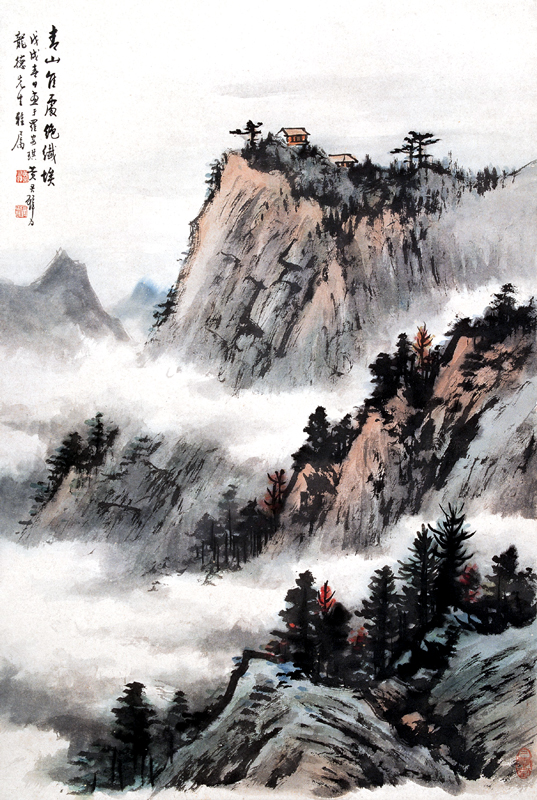

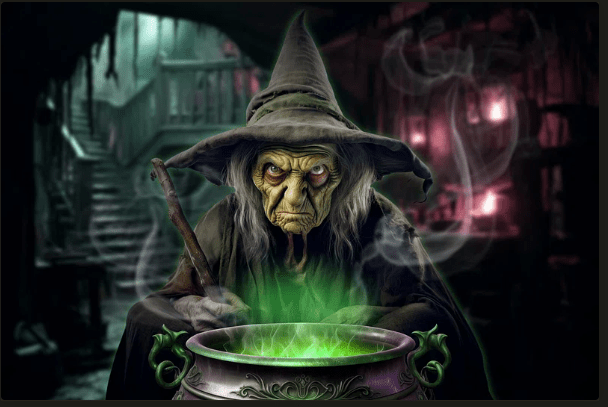


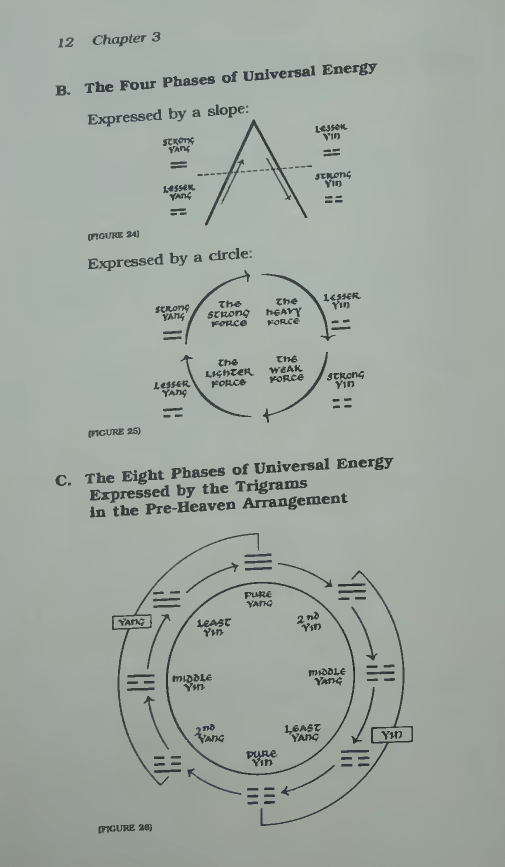


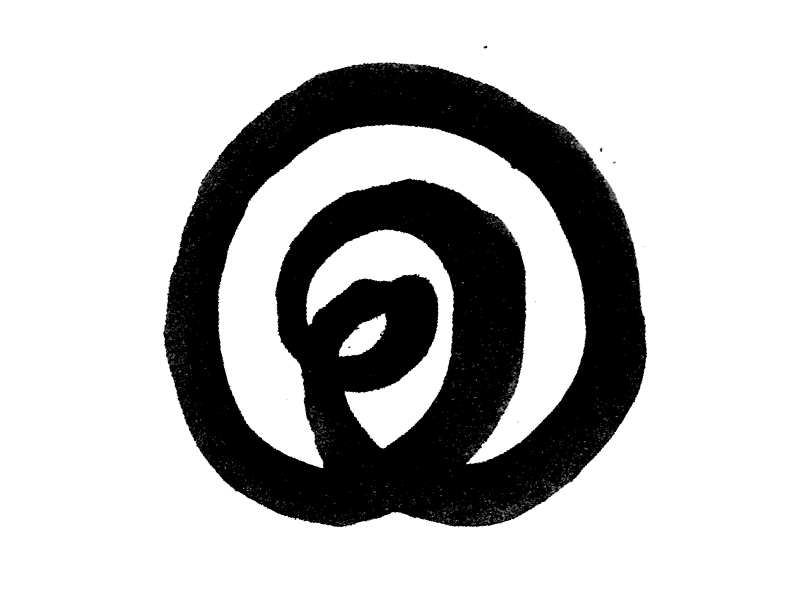




 baronbrasdor.art