We looked at the five elemental phases via a yin-yang formulation, now we shall look at them from the point of view of Buddhist Tantra. Tantra means thread or continuity, the idea being that one thread can go through several layers of fabric, or turn back on itself when being woven. Continuity in that the seeming gap between the wisdom of a fully realized Buddha and the ignorance of an ordinary sentient being mired in emotion-laden samsara is actually non-existent, much as the top and bottom sides of the same hand are mutually co-existent. In the jargon: wisdom and confusion co-emerge, or are ‘not-two’.
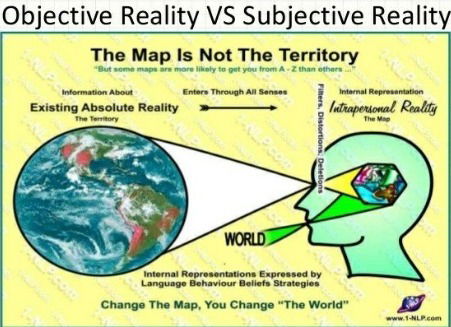
So these Five Buddha Families are not materialist descriptions of objective reality rather non-materialist ways of contemplating the inseparability of wisdom and confusion in the five main styles of approach which ultimately are based on the same underlying dynamics as the Five Skandhas.
First, why five? Well, in the case of directions, it is most natural to divide them into four main directions with an additional zone, or dynamic, in the centre. Second, the older texts posit three main drives which later contributors expanded into five to better fit other models like the Skandhas. But we shan’t worry about such arcana; let’s just dive into the Five Buddha Families by describing each one, hopefully during which process the reader will start to pick up on the whole thing.
Buddha Family:
Buddha means wakefulness or also the space which accommodates all experience. The colour is white, because it includes all others and is somewhat not a colour at all. It is spacious, like an abandoned campsite, or looking across a desert, or endless plains. If a tree, it is probably without leaves in winter. It is decidedly neutral, open, uncurious, bland, flat, featureless, accommodating, unopinionated, simple. A quality of nothing happening and nothing needing to happen. Not restless. When ignorant, it is a bit like animals, somewhat dull and accepting whatever is presented. It can be stubborn too, refusing to allow in new input or different modalities, preferring the familiar; could also be overly attached to basic routines or habits even if they are a little too limited or ignorant. Also Head. Five Skandhas: the fifth, consciousness in which the other four are experienced all together as one. Sense: Hearing.
Vajra Family:
Vajra is an indestructible material, ‘meteoric iron’. Fresh blue, but also white, like bright snow. Precision. Detail. Focus. Clarity. Also Heart. Vajra picks up on the details of form and shape. A leafless tree in winter framed by bright blue sky, or the particularities of white daisies in a green background. It also cuts, like a blade, separating one thing from another and so has a sense of intellect, concept, definition. Neurotic vajra can be angry, even cruel, poking someone in the heart as it were, or the desire for precision turning into obsessive perfectionism or inability to connect on a heart level. Element is Water. Skandha of Form. Sense: Sight.
Ratna Family:
Ratna means jewel, so it connotes richness. The colour is golden yellow. Texture, smell, presence, radiance, manifestation and spreading. Variegation, splotches, moss growing on rocks, profusion of flowers, colours, patterns, complexity. A beautiful woman wearing makeup, with lipstick, earrings, necklaces, rings, bangles, fancy clothing which moves lusciously in swirling curves. A sweet voice, a mothering presence, food on the table, probably a little too much of it, wine, cheese, fruits, abundance. When neurotic it gets overly greedy, sticky, prideful, bloated, with a mind or dwelling filled with collected junk. Element is Earth. Skandha of Feeling (the second). Sense: Smell.
Padma Family:
Padma is a lotus flower, denoting beauty along with a level of radiance that pulls you in. The colour is red. So whereas Ratna’s radiance is that of presence, or glowing, Padma’s radiance is that of a large city with all its lights on at night, glowing in the dark, or in the day displaying its tall, elegant buildings proudly, beckoning to all to come in and display themselves, to spend their money, to break their hearts. Paris is the quintessential Padma city, whereas Florence, no less elegant, is far more Ratna. When neurotic is over-emphasizes passion, sexual or otherwise, seduction, fantasy, grandeur, self-importance. Element is Fire. Skandha is Recognition/Discrimination which has to do with getting into the subtle differences between the forms and textured patterning in Vajra and Ratna, along with the atmospheric context provided by Buddha. Sense: Taste.
Karma Family:
Karma means action, or happening. So the law of Karma is the law of how things happen. The element is all-pervasive Wind which blows everywhere in all directions. Wind can be gentle or destructive, a soft touch or a powerful – though invisible – force. The colour is green symbolizing the profusion of the plant kingdom, of Life in all its endless forms. Karma can be generative or destructive. There are five karmas associated with all five families: Buddha is spaciousness; Vajra is pacifying; Ratna is enriching; Padma is Magnetizing; Karma is Destroying. But it could also be building, getting things done, overcoming obstacles, successfully winning a battle, planning and executing. If Vajra is the outline of a finely honed spear, Karma is the act of plunging it into the enemy. When neurotic it becomes frantic, misdirected, dictatorial, over-controlling, results-obsessed, restless. When sane it is extremely efficient and effective, thorough, complete, masterful. Sense: Touch.
In terms of directions: Vajra is East, Ratna is South, Padma is West, Karma is North, Buddha is Centre. They have been described, not unlike the Skandhas, as somewhat sequential but this is mainly to help describe their comparative differences. In life they are all happening at once all the time. Some people are predominantly one family more than another, but all of us have all five. All material objects and all experiential non-material phenomena have all five just as all living creatures have all five skandhas. Some say that plants don’t have the fifth skandha and possibly not the fourth; there is something to that. But some plant medicine people say that plants dwell in a conscousness state similar to our deep, dreamless sleep which partly explains why in cultures where they are used as sacred medicine they enter peoples’ dreams and give them messages or resolve long-standing health or psychological issues. In any case, plants for sure manifest the five families.
Now: one could no doubt invent five more families putting them in between the current ones, (four main directions, four intermediates, one in the center, and one for the fringe). But then the differences start to become too subtle so each one becomes less distinct. These are both a form of noetic science, a way to highlight certain aspects of experience, and fictive, in that they are a made-up layer of categorization without any material substance. True, but who cannot appreciate the difference between these five core thrusts, styles, insights, ways of being?
Each Family could be described in long chapters, even books, so the above description is about as minimalist as it gets. But if you get a good sense of them, it can be a lot of fun to watch them in action, see their qualities in phenomena.
They are part of the contemplative tradition’s perspective derived from combining a non-materialist view of reality with years of direct, contemplative discipline, which in the Buddhist tradition mainly involves sitting around doing nothing other than to simply witness what is already there without trying to exploit, manipulate or ignore (aggression, passion or ignorance, i.e. Vajra, Padma or Buddha). Like the Six Realms, they provide a different perspective with which to observe and experience phenomena and the life journey. As such, they are part of our non-materialist world view, the sort of thing which reductionist materialism has insisted is of no interest because not ‘real’.
Maybe so. But then Science cannot appreciate the beauty of a flower in bloom, let alone the loveliness of a woman, so clearly there are some areas where Science cannot tread but where non-materialist philosophy and spiritual formulations are at home. What we see with this Five Family model is the merging of physical and mental qualities, for of course the perception of the qualities of the physical is an experiential process, so in the non-material realm qualia (qualities) are the quanta being evaluated.
Indeed, we could go so far as to say that the qualities perceived in any given person, place, thing or subjective experience, are truly what matter, even though such qualities themselves per se are formless, insubstantial aspects we experience when encountering any solid-seeming phenomenon and with these Five Families we also start to merge qualities of objects and phenomenon with emotional and psychological styles, tendencies and manifestation. The whole world becomes like a living, breathing, dynamic Shakespeare production.
Which of course is what it is!
Note: the picture at the top links to an article in a popular American Buddhist magazine so you can get another take. The author is an old friend…
Buddha, Vajra and Padma = Ignorance, Aggression & Passion, the latter evolving from the former which includes all. These are the three basic approaches of individuated experience, aka ‘ego’.
For an excellent description I highly recommend the book entitled Spectrum of Ecstasy, written by Ngakpa Chögyam, a Welshman early on recognized as an incarnate lama.








 baronbrasdor.art