The posts having been published here including a Guidelines section, they have all been consolidated into one file and placed for download on the Lyme Liturgy page linked on the menu top right. Later, once a little more editing and formatting has been done the texts will be added in and the whole thing published as a single file.
Haikus #73-78 White Noise
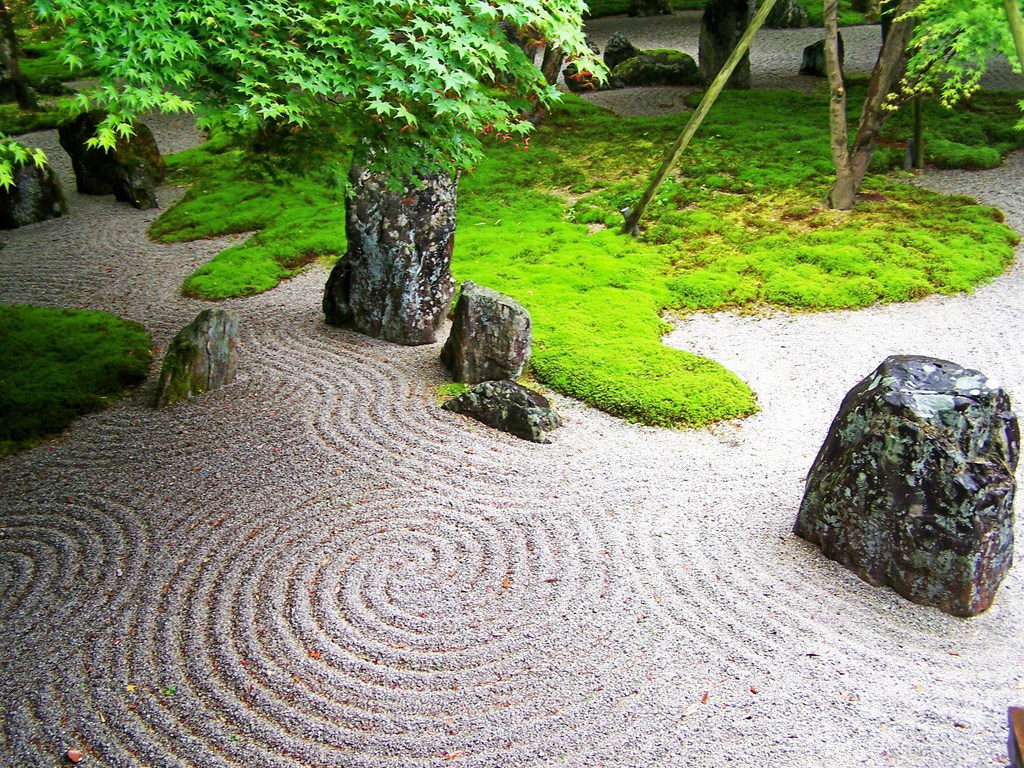
white noise of silence
eternal soundscape
inner and outer
not two!
#73 23/01/2022
body so still
like Vulture Peak
mountain.
#74 24/01/2022
nobody breathing
nobody witnessing
empty fullness
#75 24/01/2022
my love sends tendrils
through all-pervasive ether
we are one!
#76 24/01/2022
glory be to poverty
let us ban excess
renouncing gain and fame.
#77 24/01/2022
when I was wandering
lonely as a cloud
cloud wondered back
#78 24/01/2022
Haikus #66-72 Awareness
awareness now
awareness now
awareness now
aha!
#66 19/01/2022
buttock on pillow
hand on lap
mosquito on cheek
#67 19/01/2022
I have forgotten
more thoughts
than the river knows
#68 19/01/2022
chairs and tables
watching our every move…
primordially patient
#69 19/01/2022
trucks rumbling by
cocks crowing
magpies quarrelling…
and I’m trying to write haiku!
#70 19/01/2022
meditator’s desire
to meditate
blows the fuse!
#70 19/01/2022
pay attention
to attention
paying attention
and wife in kitchen making breakfast
#71 19/01/2020
Composing and practicing new meditation text
Walking the dog with my wife
Another lovely morning in Coatepec!
#72 20/01/2022
Haikus #64-65 Irish Seascape
.
keen and hard
riding the rock runes
of celtic shape shifters
#64 10/1/2022

swirling soaring heavens above
swirling gnarly rocks below
rushing into horizon’s vanishing point
#65 undated – response to G.R.
Lyme Liturgy Extras #2: Nine Rasas / Emotions

When we pay close attention and relax into any unfolding inner feeling like
Joy, love, wonder, anger, courage, peace, sadness, grief, disgust, fear
– fetid cesspool, putrid sewer, whispered moan of pain or pleasure
– chronic fatigue, exhaustion, ache or anguish, a simple touch, taste, sound or smell
– blue jungle butterfly fluttering aslant golden sunbeam
– white daisies of detail in willowing green meadow of awareness
Through the portal of any such particular we plunge into an ocean of experiential infinity…
Highlighted in bold are what is known as the nine rasas – with grief added in because of a family tragedy which occurred during the composition of this text.
The key dynamic in this passage is the last line, namely: ‘through the portal of any such particular we plunge into an ocean of experiential infinity.’ The ‘experiential infinity’ came up in the beginning of the Preamble in that since time is infinitely subdivisible and thus lacks duration it has no beginning or end. Similarly space is essentially non-divisible and therefore one cannot find any such thing as a definable or permanent place. Reality being without time or place it is thus an ‘experiential infinity’ because we definitely experience being alive even though on examination we cannot find a permanent or solidly definable basis for the ‘reality’ in which it happens.
Which leaves us with: ‘through the portal of any such particular we plunge into an ocean…’ Note the obvious contrast between the vastness of the ocean being plunged into and any given particular to which attention is being paid. The particulars in this passage are the nine rasas which are emotional states, though any occurrence can be a particular which is why the text offers various examples after listing the official nine + grief.
The idea is simple: when any sort of turbulence, difficulty or intensity comes up rather than distance ourselves from or try to manipulate it we turn into it by paying attention which means simply feeling it. That paying attention makes it ‘particular’ for any time we pay attention to anything there is a moment of immediate perception involving some type of detail, something specific; and in that moment of paying attention to detail, of feeling, there is awareness, clarity. So when anger comes up, feel the anger rather than acting it out or rejecting it and that feeling is paying attention rather than viewing it from afar as if separate and judging, reacting or trying to control. That simple experience of paying attention becomes a portal to vastness which is the basic awareness-field that is always there just like the sun always behind the clouds.
This is one of the essential mechanisms of tantra which means union or continuity. The union is that fundamentally both confusion and wisdom are equally in the same continuum and thus are ‘not two;’ continuity is a different way of saying the same thing, namely that we don’t go first from confusion and then into wisdom, rather they are always and continuously together, part of the same thread or weave.
This passage is intimating that even negative feelings and situations – including those involving the vicissitudes of chronic illness – are opportunities for waking up, for connecting with awareness and therefore also for healing.
It’s that simple. In the Dzogchen, or Maha Ati, tradition of Buddhism which deals with direct wakefulness from the point of view that it’s always there and always has been and always will be, this sort of process is described as like that of a knotted snake uncoiling itself. Here is a description found from an internet search posted on a Reddit forum called r/Dzogchen:
“The most advanced capacity of self-liberation is called Rangdrol, which means ‘of itself it liberates itself’, and the example used is that of the speed and ease of a snake unwinding a knot made its own body. This is completely non-dual and all-at-once, instantaneous self-liberation. Here the illusory separation of subject and object collapses of itself, and one’s habitual vision, the limited cage, the trap of ego, opens out into the spacious vision of what is. The bird is free, and can finally fly without hindrance. One can enter and enjoy the dance and play of energies, without limit.”
They don’t explain the snake all that well in the subsequent discussion but the point is simple: the snake has one body from head to tail and even though it is entangled in a knot (representing confusion-ignorance) actually this is an illusion because it’s still just one body and ultimately you cannot really entangle yourself any more than you can split your own self-nature into two so all you have to do is relax instead of gripping and the knot untangles itself naturally. This is another example of continuity or union if you will in that the snake’s body is continuous and the knot doesn’t change that even if it appears to do so from a confused point of view; and union because it’s all one body all the time.
In this Liturgy, the suggestion is simply to turn into any sort of emotion and ‘pay close attention and relax into’ it. This is sometimes referred to as ‘transforming confusion into wisdom.’
And it’s that simple.
Notes from Secretary re: New Past Posts page
Because this is not a business account, WordPress does not supply a basic plugin that showcases previous posts by calendar date. (Or maybe the Baron and I simply can’t find it!) In any case, we have added a new menu item on the top of the blog pages called ‘Past Posts’ where you can find all previous posts on one page with the latest on top. Because otherwise the default display only shows three or four posts at a time and it takes forever to access older posts.
The Lyme Liturgy series is essentially complete and soon will be consolidated into one master file to be found for downloading on the Lyme Liturgy page which you can also see linked above. The blog will continue with more peripatetic offerings but now that the Liturgy has been published there will doubtless be several articles expanding on particular lines, sections, themes or techniques featured therein.
Lyme Liturgy Series 8: Guidelines for Practice
(Note: first draft featuring all section in the Table of Contents below completed morning of Jan 18th; previous sections published Jan 17th.)
Table of Contents:
General Issues
Who this Liturgy is For?
How to conduct a Practice Session – timing etc.
Meditation Practice – various types, what this one is.
Main Practice – understanding the view
a) embracing the negative
b) radiating the positive = generosity = medicine
c) feelings
d) various stages or variations of the technique
        i) mindfulness with breathing
        ii) feeling – Coleridge – leading to alternation of breath
        iii) deliberation and the positive are the keys to expansive spaciousness
        iv) family, business, particular situation vs location-based alone
e) putting it all together – changing emphasis as needed
Mantra
Extending in a more relaxed fashion
Open eyes
In daily life
Effortless Resting
Technicians can look up sampannakrama
Neither doing it nor not doing it – just do it
Observation: notice how much the emphasis has shifted from being sick to just being.
+++++++++++++++++++++
General Issues
Who this Liturgy is For?
This liturgy was composed by an individual suffering from an extreme case of Lyme Disease which at the time – after about ten or more years of general malaise – had climaxed in a period of almost three months with never more than four hours sleep a night and no more than two hours at once. The author was spiritually, psychologically, emotionally and physically exhausted. His outer life was going fine in all but one way perhaps, but the physical symptoms from this multi-syndrome tick-born chronic inflammatory disease had worn him down to breaking point. Having been trained not to use meditation for specific ends – like curing disease – he decided to go against such instructions and see if he could find a way to use it to at least ease the psychological symptoms if nothing else. First he looked up many different Buddhist texts including those he used to use for daily practice but also many others which could be found on the internet. Then he gradually realized that what he needed was something more personal, more written in Western language – in his case English – and something without lots of foreign-sounding deities or religious overtones from any particular tradition. So, even though he had been educated to believe that such a thing would be regarded as pretentious and possibly heretical, he decided to compose a text for himself and for his own use. Several who have since read the text have encouraged him to make it more widely available and since he found it so beneficial himself, he has decided to do so even though he suspects it unlikely that many will ever read it let alone use it as a daily practice.
At the same time, though he has no way as yet of knowing for sure, he is confident because it is based on solid principles and practices that anyone who uses it sincerely for more than a week or two will derive clear benefit; therefore he is willing to make it available to the public at large.
Further, although this text was initially developed for his own personal use in dealing with the vicissitudes of Lyme Disease, clearly it can be helpful for anyone dealing with any other type of chronic difficulty, be it involving a chronic disease condition or bad habits or challenging situations – no matter. The principle insight and technique of the text is simply that of embracing the ‘reversal meditation’ principle which is that of absorbing negativity and emanating positivity rather than our habitual tendency to do the opposite. So this text is for anyone interesting in using a meditation practice to reverse various habitual tendencies and also rapidly clean up the body-mind relationship with chanting and sitting practice which help to easily and naturally get them together in the same place and time, sometimes known as ‘synchronizing body and mind.’
How to conduct a Practice Session – timing etc.
The Long Daily takes about 40 minutes or so. The initial Preamble, Sacred Being and Confession sections take about three minutes or so each, say ten minutes in all. The Accommodating and Emanating session takes anywhere from 10 to 30 minutes, say twenty. Then the Mantra and Effortless resting take about 5 minutes each with the mantra possibly being longer. And the closing chants take a minute or two tops. When doing the Daily Brief text, the initial three pages are condensed into about three paragraphs so instead of ten minutes it takes about two, and then the rest is only slightly shorter in length, though if one is pressed for time one can shorten the Main Practice session lengths, about which more later.
Place: Generally, it is good to set up a quiet place without distractions and be prepared to not answer the phone if it rings (by turning it onto Airplane mode for example). Some people like to turn a spare bedroom into a meditation room but for most of us we can practice on a bed or a part of the living room or whatever, anywhere where we can chant and then sit quietly without either being disturbed or disturbing others. Most find it best to do meditation practices in the morning before anything else but if that isn’t possible try to carve out the same time or time period every day for the session; then it becomes a daily discipline and ongoing learning experience, with the effects on any chronic disease condition tending to be more rapid and obvious. This is in part because we are making a commitment every day to work on our state of being and just making that commitment at all is already extremely beneficial for it changes one’s mentality to being that of a more or less passive victim of a disease over which one has little or no control to taking advantage of what agency one can muster to do something positive despite any limitations we find ourselves laboring under.
Posture: those familiar with sitting types of meditation can just use the same posture, usually cross-legged in some fashion using a cushion and on the ground. But it is also fine to sit upright on a chair with feet flat on the floor and back upright, not leaning on the chair back. Being upright doesn’t mean being stiff. One traditional analogy is to sit up like a two-year old watching a movie show; maybe not that rapt, but the idea is to be alert and upright without being rigid. Don’t worry about keeping still, but generally it’s recommended to sit in such a way that you are both stable and relaxed and then settle into it, a bit like a sack of potatoes. Just sit and be comfortable so doing.
Meditation Practice – various types, what types this Liturgy features
Meditation is a generic term similar to one like the word ‘food.’ There are hundreds of different types and styles many of which are hard to define without getting overly technical or complicated. But let’s go over a few different types to provide a bit more context:
Some techniques – those usually called ‘mindfulness’ – are about developing focus and steadiness so the mind is trained to remain steadily placed on an object like be it something dynamic like breathing or the moving second hand of a watch, or something still like a rock, a stick or an image. In this Liturgy, the initial instruction to ride the alternating furrows of breathing in and breathing out is one such mindfulness technique.
Some techniques are designed to engender various positive qualities; these often involve picturing a colourful deity manifesting various psychological and spiritual qualities of experience or imagining oneself as such a deity to transform self image. In the Liturgy, positive and negative feelings in the Accommodating and Emanating practice involve such imagination with exploring feeling like a ‘gently smiling Monarch on Golden Throne’ being one such technique.
Some techniques involve mind training (“Lojong” in Tibetan) to develop various faculties or counteract various habitual tendencies. The Accommodating and Emanating technique is one such; sometimes known as ‘reversal meditation’ the idea is to train to reverse our habitual tendency to avoid negativity whilst encouraging positivity which tends to promote selfishness and pettiness of spirit and rather do the opposite which tends to promote generosity and largeness of spirit.
Some techniques combine focus and steadiness of attention with flow. Mantra is one such technique and of course is in this Liturgy’s Mantra section.
Some techniques are about learning to drop technique because as long as we are striving for something we cannot relax into what is already there, like our self-nature or ‘the nature of mind as it is’ for example. These techniques are both the most simple and the most advanced. The Effortless Resting in the Liturgy is one such advanced – but extremely simple – technique. Actually, it is not a technique at all, rather we have built up an opportunity by the preceding practice to just let go for a little while.
So you can see that the simple-seeming Main Practice section in the Liturgy actually contains several different types of meditation.
Why so? To encourage a journey from at first being very scattered, possibly feeling ill and dispirited (the initial long introductory chanting sections), to having a little focus (mindfulness), then enriching that sense of mindfulness to include also spaciousness, then using a mantra to help flowing with that spaciousness in a less structured fashion first with eyes closed and then with them open to integrate any inner feelings of spaciousness with everyday outer life and then finally dissolving the whole thing and resting without technique or agenda. It is a natural progression, moreover one that is featured in many tantric sadhanas aka practice texts or liturgies. ‡
Main Practice – understanding the view
a) Embracing the negative: the first insight suggested by the Liturgy is that because everything is interconnected and part of our primordially creative and essentially marvelous ‘universal continuum’ likened to a collective dream realm, anything that arises within that continuum is essentially good and workable including our disease and its many vicissitudes and including any negative feelings we have about self and others. In terms of the practice we don’t need to think about all that rather simply breath in bad, turn towards pain and negativity rather than turning away.
b) Radiating the positive = generosity = medicine: That act of turning towards the negative is generous, confident, unafraid, even cheerful. So we already have those positive ‘cool, white light’ qualities mentioned in the text.
c) Feelings are the main thing: The last two lines of the Brief Daily before the Main Practice say: ‘Embracing any chronic pain, symptom or vicissitude as Medicine to waken and open us further.’ Those experiences involve negative feelings so the first thing we do is turn towards them. This is why the first two lines of the Main Practice say: “Feeling the mother cervical soft spot of kindness, warmth and tender sadness; Touching the raw, naked heart of any feelings, moods or sensations, just as they are, right now… [Short pause to quickly touch into the feeling heart. Then slowly chant:]” Note that the first word is ‘feeling.’ Then there are words like warmth, kindness, tender sadness, touching, raw, naked, heart, feelings, moods, sensations, then the instruction to ‘touch into the feeling heart.’ This is all about tuning into feelings which are always there. The technique we are about to do in the next few minutes takes feelings and works with them, even increases them. So this ‘mind-training’ technique of Accommodating and Emanating has more to do with training ourselves to work with feelings rather than reprogramming cognitive head trips.
d) various stages or variations of the technique
i) mindfulness with breathing. The main sitting meditation practice I learned years ago involves identifying with the outbreath as it passes out through the mouth and nose and then dissolves into the surrounding atmosphere. Whilst we are dissolving the body is breathing in and then the mind picks up with the outbreath and dissolve process again which is part direct sense perception (the breath passing through the nose and mouth) and part imagination (the breath dissolving into space). This is an excellent technique which develops both mindfulness (paying attention to the outbreath) and spaciousness (not continuing to follow the inbreath but rather letting go into spaciousness before picking up on the outbreath again). This technique resembles rowing: the emphasis is on the main stroke which drives the boat forward; the backstroke – though it must be done well and precisely – is sort of a gap experience on the way to doing the main thing again: the down stroke, so it goes stroke, wait, stroke, wait, stroke, wait.
The technique in this liturgy, however, stays on both the in and outbreath and also mixes feelings into each. At first we are just doing the mindfulness part of the technique, namely paying attention to the breathing, and without too much feeling necessarily other than what we have just touched into in the passages just before. So we have a sense of feeling, of having a soft heart, and as someone with those feelings we are now gently breathing in and gently breathing out. Deliberately, but not in any exaggerated or prolonged way. For those unfamiliar with mindfulness meditation this may be very hard to do, the mind jumping all over the place, wild, skittish, scattered. That’s fine. Just do it for a little while as a training exercise then move on and ideally you have lots of juicy negative (painful) feelings to put into the next part of the technique. Over time, the mindfulness part will become easy and pleasurable. For those used to such practices, follow the breath mindfully until there is good synchronicity of mind, breathing and intention along with a nice quiver of feeling from the initial contemplation of touching into the ‘raw, naked heart of any feelings, moods or sensations, just as they are, right now.’
ii) Feeling. Appended to the lines about ‘riding the alternating furrows of breathing in and breathing out‘, we now chant: ‘softly, gently, barely there breezes glowing the embers of a midnight fire.’ This line is inspired by Samuel Taylor Coleridge’s ‘Frost at Midnight’ wherein he depicts the beautiful silence of a sleeping village – before going onto other spiritual ruminations. The idea here is that the feelings we have tuned into are like glowing embers in a now quiet fire. The fire is quiet because we have done some chanting to calm down and refresh the spirit (hopefully!) and now are tuning into our breath in a ‘calm, deliberate’ fashion. We should be feeling more calm and still ourselves at this point but the text is also encouraging us to feel the warm, tender feelings at the heart of any sentient being. Note that we might not be feeling so much warm as nervous, exhausted, confused, whatever: the point is to tune into the feeling quality of that; warm is just a universal example of feeling tone. So just as embers glow when we blow on them so also our paying attention to the breathing serves to ‘glow the embers’ of our feeling tone, whatever that might be. The poem can be found at: https://www.poetryfoundation.org/poems/43986/frost-at-midnight. So as we get into following both the in and out breaths we also are stoking any feeling quality we have as embers in our heart (and body and mind). So the initial mindfulness technique here involves both paying attention to the breathing into which some of our feelings have been blended.
iii) Deliberation and the positive are the keys to expansive spaciousness:
Many people find the emanating difficult. Feeling some sort of negativity – pain, suffering, anxiety, guilt, physical discomfort and so forth – is fairly straightforward because – especially if you are suffering from a chronic disease or existential challenge – it’s right there, in fact you are probably doing the Liturgy in order to alleviate it. (‘I’ll try anything,’ perhaps you are saying to yourself, ‘even sitting in a room on my own mumbling garbled mumbo-jumbo!’) The positive, though, seems amorphous somehow. But actually it’s quite simple to tune into. If you have some sense of deliberate in and out breathing which you are nicely ‘riding,’ and if you have some feeling tones already in the mix from what you bring to the table on any given session beginning, then it is quite easy to make those embers of feeling glow and if you have any sense of breathing in negativity then you can simply breath out a sense of letting that negativity go. Then in addition you can have the sense that the space outside can easily accommodate no matter what intensity or volume of negativity you contribute to it; but there is a twist here: you are not so much breathing the negativity out as instantly having changed it into something positive. The same negative intensity you at first absorbed in the in breath becomes positive ease and non-intensity as you breath out meaning that the same constriction and claustrophobia you experience on the in breath instantly becomes a sense of ease and spaciousness on the outbreath. And because there is deliberation from following the breathing in the initial mindfulness part the space around automatically becomes more expansively spacious and the more you keep following the breathing in a smooth, deliberate fashion the more negativity you can deliberately absorb on the inbreath and then the more corresponding spaciousness you can deliberately engender on the outbreath and in turn the more spaciousness you experience during the outbreath the more negativity you are then ready to absorb on the next inbreath. So then what happens is that you begin to feel both in and outbreath as both stable and expansive, which is why the text ends up describing the experience as that of ‘being seated as gently smiling Monarch on Golden Throne, Kind, luminous, wise, compassionate, noble.’ This latter does not need to be visualized iconographically – though by no means do so if (literally) inspired – but the text is describing how it feels once the Emanating experience has become naturally expansive and spacious.
iv) family, business, particular situation vs location-based alone
In the text a progression of expansive spaciousness is described starting with the self and ending up with the entire continent and beyond – indeed the entire solar system or galaxy if you like. This sense is partly a natural result of the expansiveness which the emanation part of the Accommodating and Emanating engenders and partly a deliberately encouraged visualization. But you don’t have to be focused on particular location. For example, you might want to contemplate the web of relationships you are a part of, starting with immediate living companions or family members, then those in other generations both ways (grandparents and their grandparents or your children and their children etc.) along with cousins, uncles, aunts, their relatives and so on, or blending family with friends – people you see regularly – and then extending it out to all they are connected with. Or you might focus on a disease like the currently ongoing covid19 and contemplate how it has touch yourself, then those you know, then those in the neighbourhood or maybe your business or town or country and so forth; and then absorb all the negativity involved with the virus and its spreading through society and the fear and sacrifice involved with going along with all the government responses to it – wise, foolish and harmful – and then spreading a sense of positivity to all involved along with a sense of ease, lack of fear, health, optimism and so forth.
So we don’t have to follow the location-based progression in the text. Often the nature of the negativity being initially absorbed guides where the expanded spacious terrain will end up.
And, yes, you can start with positive feelings rather than negative ones, but for most of us the ‘hot, black and heavy’ ones are easier to start with.
e) Putting it all together – changing emphasis as needed There are many techniques in this Liturgy albeit they flow naturally from one to another. But at various times or for particular individuals one or more aspects may prove difficult, even seemingly impossible.
First, a description of the designed flow: the initial chanting lassos a scattered mind and body into some sort of more ordered and relaxed state ready to undertake a deliberate meditation session. That session begins with riding the in and out breathing process whilst tuning into a sense of feeling. Then we increase the feelings whilst picking up on the alternating nature of the breathing by absorbing negativity on the inbreath and generating spacious ease on the outbreath. As we do so, a sense of expanding spaciousness naturally develops which we then sit with whilst continuing with the breathing practice and then later we can relax that process by substituting a simple mantra for the alternating breath which synchronizes body, speech and mind. The mantra is like a continuously flowing river rather than anything alternating from positive to negative. In other words, instead of negative and positive feelings the attention has segued into just going along with a sense of spacious awareness. This naturally leads to the final stage of Effortless Resting where there is no object of meditation, not even spacious openness.
What happens if you can’t tune into the initial alternating furrows of breathing in and breathing out? Or what happens if you just can’t get into negative feelings, or the positive ones? Or no spaciousness develops? Or the mantra feels foreign or ridiculous? In all cases, the idea is just to give it a try for a little while and if it’s still ‘no-go’ then move onto the next one without making a fuss.
If the entire thing is a miss, then simply chant the Main Practice several times over enjoying its rhythm and what is expressed by the words and wait for some sort of feeling tone to develop and see if you can pick up on the alternating breath – or not. Or just wait quietly, breathing, without trying to make anything happen and every time you notice your mind has wandered just gently bring it back to following the breath for as long and as naturally as you can. Just chanting the liturgy and then sitting quietly is beneficial because you are addressing your chronic vicissitudes (of whatever ilk) and that in itself is a good thing.
You also might go through phases when you want to stay with the breathing part and not really get into the rest of it; fine. It is recommended if you do that to at least read out the whole text before going onto the next section but it’s up to you. Or perhaps you get into the Accommodating and Emanating and the spaciousness doesn’t happen. Fine. Or perhaps the spaciousness happens fast and you like to just rest with that; in that case maybe spend less time on the Accommodating and Emanating breathing technique and more time on the mantra enjoying the expansive spaciousness. Or you don’t like the mantra so can spend more time effortlessly resting. Or sometimes you can deliberately train in one aspect in order to develop particular skills or qualities involved therein. All of these things are up to you. Once you understand how one leads to the other you can play around a little doing what works best.
Mantra Section
extending in a more relaxed fashion From establishing a relaxed expansive spaciousness in the last part of the Accommodating and Emanating we recite a few lines of verse to segue into a simple mantra recitation practice whose purpose is essentially to let go of the breathing technique and just rest simply in this general sense of spaciousness and warmth. The mantra gives us something continuous to relate with but it’s more like a walking stick on a hike or the steering wheel when driving: we are in constant touch with them but in a fairly light-handed, soft-touch sort of way. When we steer a car we don’t have to focus intensely on the process, rather it takes care of itself more or less automatically. Reciting the mantra tends to join body, mind and speech which makes maintaining some sort of general mindfulness more likely and natural.
Open eyes: Most of us will have practiced the Accommodating and Emanating with eyes closed even though there is no instruction to do so. And most of us will continue that as we begin to do the mantra. But at a certain point it is time to open the eyes and merge one’s own personally experienced sense of inner spaciousness with outer perceived ordinary reality. This is both a pleasure and a training for if we can learn to do this in daily life in changing circumstances both in terms of location, atmospheres and interfacing with different individuals and groups, then the development of warmth, wakefulness and compassion (aka ‘bodhichitta’) will be well under way. And just as with the practice, it can only be done with a light touch, not a lot of heavy lifting or deliberate mind training on the spot whilst dealing with taxi drivers, tax collectors or angry customers – or one’s mother-in-law for that matter!
In daily life: there may be periods where the obstacles are thick and fast, either from chronic illness or just what is called ‘the ripening of karma’ during which we may feel the need to carry the practice around with us a little more lest we regress into some sort of darkness. During such periods you might find it helpful – only if a regular daily practice has been established along with some familiarity with spaciousness and it related mantra practice – to quietly recite the mantra to yourself whilst walking out and about in the world, or perhaps at one’s desk at work, or on the bus or whatever. As with the formal practice, this can be done with or without mala beads. If using the latter, I find the small wrist-wrapping ones sold in all Catholic stores and countries best for that purpose. They don’t take up much room in a pocket or purse – or worn on a wrist all the time – and do the job fine. The purpose here is not to accumulate a certain number of recitations but again to synchronize body, speech and mind. The act of counting each recitation adds a more overtly physical element to the whole thing and can heighten a sense of deliberately engendering spacious awareness wherever one finds oneself. Of course it is not necessary to use mala beads. It also isn’t necessary to say the mantra more than a handful of times, perhaps, using the association one had developed with the words and practice to trigger a sense of bodhichitta for a few moments, then let any sense of technique go and continue on, hopefully now with a more open and awake state of being.
Effortless Resting
Technical term is sampannakrama In most Buddhist tantric sadhanas there is short period of formless meditation, or sampannakrama in the jargon, after the previous structured practices, some of which can be quite elaborate. Now you know the word you can look it up if you like. (Be prepared for some pretty dense language! The most common translation in English is ‘completion stage.’) Essentially this is similar to letting go after holding on. Imagine holding your fist very tight for a while and then simply letting it go. There is a contrast between both states and the prior holding on sets you up to better appreciate relaxation once you let go. This letting go, or letting be, or ‘effortless resting’ can be a sort of fruition akin to the Buddha finally attaining enlightenment after pretty much giving up after years of hard effort. He gave up the whole thing, stopped starving himself and accepted a bowl of warm milk from a friendly shepherd girl, and the proceeded that night to experience full and complete enlightenment. (As is often said, there’s always a woman behind every Great Man!)
Neither doing it nor not doing it – just do it The thing about Effortless Resting is that the more you try to do it the less you do it. So don’t try, just feel whatever after-effects there are from the preceding chanting and practices. Hopefully there is some tangible sense of openness, spaciousness, wakefulness and warmth. Essentially, one is simply resting in the nature of mind which is like an ocean whose presence is constant no matter what waves of inner and outer experiences occur on the surface. This Mind is always there, before during and after any occurrence – including illness for example – and before during and after birth or death for that matter. In terms of the practice, one doesn’t need to take inventory; one doesn’t need to do anything; one doesn’t need lengthy instructions or descriptions: just do it.
Observation suggestion: Once the practice is over and generally over time, check to see how much (or how little) one’s personal emphasis has shifted from dwelling on being sick all the time or mired in any sort of chronic obstacle to some level of appreciating simply being. Just a friendly suggestion.
Final Remarks
What with the Commentaries to the text – designed to help make it understandable and thus easier to read and enjoy – and now this series of Guidelines going through the various practice elements and usage suggestions, the whole thing might feel way too complicated to actually undertake, let alone be of any use. But if you have read this far, then presumably you are interested in – or have already been – giving it a go. Once you start doing it it quickly becomes very easy and straightforward. Furthermore, despite all the verbiage in the Commentaries and Guidelines, everything you need to know about any given practice is actually and precisely spelled out in the text, so all you have to do is pay attention to the words – especially during the Main Practice through the Effortless Resting sections – and all will be well. The initial Preamble, Sacred Being and Confession sections in the Long Daily help bring body, speech and mind together so that they are all ready to relax into a simple meditation session. The mindfulness, accomodating and emanating, expanding, mantra and resting practices should be done with a sense of relaxation, even pleasure. There is no point struggling, worrying or fussing about them. Breathing is breathing; feeling is feeling; resting is resting. It’s all basically very simple and once you have gone through the Long Daily two or three times it will quickly become straightforward.
That said, the Main Practice session with its three stages can be quite a job to master. But each step is simple. If one step is very hard then take it easy; try for a little while and then move on. If one step is by far your favourite then go for it: emphasize that one and de-emphasize the others. Or sometimes work on part that hasn’t clicked deliberately but without any sense of pressure or poverty mentality. The whole point of this practice is to gently address all the negative and difficult challenges presented by any sort of chronic obstacle by turning into any pain and suffering involved rather than turning away. Just doing this is extremely valuable, extremely kind, extremely wise and actually uplifting. Just developing the attitude of doing this is helpful. It is all good.
Lastly, as said at the beginning, this text was written to be chanted. I personally have never read it through without doing so out loud. If you just read it and think you have got it (and don’t like it) of course that is fine, but you won’t get a sense of the gentle power and efficacy of this Liturgy and practice unless you actually experience. Which of course is just as it should be. Practices like this are sometimes described as ‘self-secret.’ They cannot be understood by abstract analysis, only by direct personal experience. So with that in mind you are warmly invited to give it a shot.
‡ This text is neither explicitly tantric nor intrinsically not tantric but it is based on some of the view and techniques that are featured in that tradition as taught in Tibetan Buddhism. You don’t have to be a Buddhist do practice it and there is no attempt in the Liturgy to change your philosophical view or religious persuasion.
Lyme Liturgy Series 7: The Daily Brief Form
The Daily Brief form is only two pages long, much of it taken up with various Section Titles. The Preamble takes about two minutes to recite after which one goes straight into the Main Practice of which there are two versions, the same one from the Long Daily and an abbreviated one here which combines the texts from both tong len and mantra sections, and then all the remaining sections are similarly condensed.
There are two main reasons for having this Daily Brief version. First, it is the main one used most of the time once the practitioner is well-grounded in the Long Daily, something which takes a week to a month depending on the person and their familiarity with these sorts of practices. An experienced Buddhist practitioner, for example, might do the Daily Long for a week or so until the progression of the session is familiar and then use the Daily Brief to do essentially the same thing but with far less verbiage. Someone unfamiliar with such practices will probably enjoy the longer form verses which give one the time to contemplate what one is doing from several different angles and thus deepening the view with which one approaches the entire exercise, not to mention life in general. One could in theory just start with the Daily Brief and forego the longer version altogether but since I have never done this – having first composed the Long Daily of course – I cannot say how well this would work.
The second reason for the Daily Brief is to provide a faster means of doing the practice if you want to maintain a regular daily practice with this Liturgy which is recommended. (There will be more guidelines on all this one these initial introductory posts have been offered; first we are going over the texts themselves so we know generally what they are and what it done when chanting through them and then we can go over some guidelines as to how to do them, what to look for etc.)
The Daily Brief, being so shortened, gives a good overview of the Liturgy. You can see it all laid out in two pages side by side. There is a Preamble which is like a warm-up for a couple of minutes to get ready for the actual practice; then the tong len practice; then mantra; then formless sitting meditation; then closing; then a four-line dedication of merit. That’s it. If you chant through the whole thing it takes about three to five minutes. Obviously if you do the meditation sessions recommended it could take much longer. I find it takes about 40 minutes for a typical session with the tong len lasting about twenty minutes, the mantra about ten minutes, the free-form sitting about five minutes and about five minutes for the chanting. But if I am in a hurry and am using the Brief Daily just to stay in touch even though I don’t have much time that day, then I do it in about ten minutes. Sometimes I don’t do the text at all and just sit up straight and plunge right into the mantra, but again that’s the sort of thing we can go through in the upcoming Guidelines for Practicing.
What is the principle difference between the Long and Brief versions apart from the time they take to chant? The main difference is that the first few pages of the Long version are largely edited out such that the Preamble and the tong len part of the Main Practice all fit on the first page. Which leads to the question: what is the purpose or value of the first two pages in the Long Daily?
The Long Daily uses the activity of chanting in a regular rhythm as a way to bring body and mind together in a natural way. This is both helpful and needed for everyone all the time but especially for anyone strung out by the exhaustion and pain experienced during protracted episodes of chronic illness. Sometimes we are in great physical pain, sometimes it is mainly psychological – how many days can we go feel wretched physically without also feeling wretched emotionally? After a few weeks of feeling terrible it is very hard even for experienced meditators to go to their cushion and start quietly following their breath – or whatever. The mind is scattered, the body achy and dirty-feeling, the will is lacking.
That is where the first part of the Long Daily comes in: even though you feel completely wretched and have no desire to practice at all, you can just sit down and plunge into reading the text out loud. You don’t have to believe in anything or even want to do it. Just do it. Then the activity of simply chanting the words out loud will lead you into a slightly better feeling state. Hopefully the language is engaging enough to make this moderately interesting but at the same time not overly demanding; certainly there is no intention that the person chanting has to take notes and write a term paper about it afterwards, rather just regard the thoughts and images thrown up by the text in the same way a passenger might regard the landscape passing by a car or train window: it’s nice to look at it but one is not especially engaged by that activity.
That said, a lot of time and thought has gone into the composition of the text which, to the author’s point of view, seems to have written itself more than being a deliberate creation. The author had no idea what it was going to look like until it appeared, no idea of the beginning, middle and end until they manifested. His job was just to polish and refine over a period of two years after the basic text had appeared somehow. The text is an attempt to provide a passing landscape but a meaningful one, a deeply meaningful one, so even if one cannot really handle the meditation part of it, just reading the text regularly should be of some benefit because of the deep meaningfulness inherent throughout.
Once the Liturgy is familiar and if the heavy load of challenging symptoms is lifted such that one feels lighter and more awake at the beginning of a session, then the Brief Daily is fine. The initial three paragraphs help prepare body and mind for practice and then the Main Practice begins a couple of minutes later. Also, once the Daily Long has been practiced regularly, the shorter text in the Daily Brief will trigger associated meanings from the Long Daily immediately setting oneself up for the upcoming practice session. The rest of the Liturgy is pretty much the same as the Long Daily except shortened a little. And that’s that.
So the Daily Brief is envisaged as the principle text that will be used if one practices this Liturgy for an extended period of time. Personally, I started doing it when the symptoms were pretty terrible (after 2-3 months of never sleeping more than four hours a night and never more than two hours at a time – truly horrible) and kept doing it about five days a week for almost two years. During that period I also made small alterations to the text so it has been honed and polished over time until every line means what it intends to mean and flows well when being chanted. At a certain point I was much better and didn’t feel like doing it any more, though I always tell myself that I will. And if I come down with flu or another chronic illness episode – which is much rarer now than it used to be – I come back to this text and within a few days feel much better.
About feeling better: chronic disease symptoms are always coming and going and often changing too. Sometimes they are very intense sometimes minor. Some people are paralyzed or in agony, others are just like in a permanent state of having flu. I am one of those latter ones, so for me sometimes it is like having a very bad flu – which is no fun of course – other times more like a light flu or cold. However, when the bad flu times last several months in a row 24/7 they can be hard to deal with, both physically and psychologically. This is where the Liturgy comes in handy. It always serves to lift the psychological burden, the sense of depression that nearly always accompanies protracted periods of being under the weather and when the mind and spirit lift then the physical symptoms tend to lift as well. And even if they don’t, the way they are handled changes markedly: they become far less difficult a burden to carry, more transparent, more easy to live with. So whether the symptoms come or go, whether the disease is cured or continues, the daily practice the Liturgy leads us through is extremely helpful in teaching us how to take illness as the path, as medicine. It works. And the whole process can be quite delightful.
Instructions: The only part which might be confusing – assuming you are already familiar with the Daily Long version is the alternate, shortened “Main Practice, Brief.” Here is the text:
[or when desired:]
The Main Practice, Brief
Feeling the mother cervical soft spot of tender kindness,
Gently touching the barely-there breath,
Letting spaciousness naturally expand and establish,
Spontaneously we radiate blazing Bodhichitta to all sentient beings in the six directions
Seated as gently smiling Monarch on Golden Throne
In this living, radiant Palace of Sacred Presence.
The ‘or when desired’ is indicating that if you want to keep it much shorter – usually when doing a quick touch-in practice with the whole session taking ten minutes or less – you can forego The Main Practice, Full section and the next paragraph beginning “This transparently luminous and awake…” after which you would practice mantra. In this case, you just chant these six lines and then either do a little tong len or simply go straight to the mantra practice for a few minutes with an immediately generated sense of being awake, expansive, spacious and so forth as suggested in the text. (In later Guidelines some suggestions will be made for various options, all of which are entirely up to you of course.)
To be clear, if using this Main Practice, Brief section, you will go from the line ending the Preamble “Medicine to waken and open us further” straight to the line: “Feeling the mother cervical soft spot of tender kindness.” In this way, you will skip over the text following the title “The Main Practice, Full.”
Lyme Liturgy Extras: 1 “One”
You ask what the absolute is. It is the essence of your soul before everything.
Upanishads
If you like this sort of thing, I recommend reading the entire article. In any case, I find it interesting how well his subject matter dovetails nicely with passages in the Learning from Lyme Liturgy.
Excerpt:
Federico: Yes. But to understand the overall situation, we have imagine that everything is made of an undivided energy that has the desire and the capacity to experience and know itself. I call this unified field ‘One’. One exists ‘before’ the physical universe, though what physicists call the ‘physical universe’ is only
the informational aspect of reality. The semantic aspect of reality is the inner experience and knowing of One, which current physics does not recognize. Moreover, One exists in a vaster reality that contains the space-time reality we experience.
Out of One emerge conscious entities that, like One, have the desire and capacity to know themselves. Imagine each entity as a point of view or perspective that One has about itself. They are not separate from One, though
their conscious experience is private. To know each other, these entities need to communicate, and to communicate they need symbols, like the words we use. Each entity is like a quantum field and the symbols are like the states of the quantum field, what we call physical particles.
So, the entities are the conscious fields, and they shape symbols within their own fields to communicate with other fields – other entities. The crucial difference with contemporary physics is that these fields have an inner semantic and conscious experience, just like we do. The symbols have meaning that are understood by the conscious fields.
Commentary
The above insights from one of the inventors of the computer chip decades ago relates well with the Learning from Lyme Liturgy text such as the following passage:
All beings in this alive and awake self-dreaming universe present aspects of:
Body – some sort of shape or form manifest in location and terrain;
Mind – some sort of consciousness, awareness or intention;
Speech – some sort of communicative expression of meaningful information singing a
Living symphony of ever forming and reforming clouds and waves of Primordial Intelligence
A marvellous holographic self-mothering Song making itself up as it goes along
Saturated in interconnected living presence pervading all and everything
Manifesting no end of self-organizing life forms, living creatures imagined into sentient being
With all their co-emergent elemental and inanimate phenomena
Comprising luminous intelligence inseparably part of the universal background field continuum
Containing, including and pervading all and everything, micro and macro.
Flowers in their flowering communicate the lovely enlightened language of flowering being
With manifold qualities of form, texture, colour, temperature, scent, beauty, sensitivity;
As with flowers so with all, from microscopic universes to macrocosmic spiralling galaxies….
Another way of putting it more simply is that our universe comes from a field of consciousness which is unborn and undying – just like the present moment which is both of no duration and therefore also of infinite duration as expressed in the Liturgy text: “A present moment sandwiched between infinitely sub-divisible past and future moments We cannot find one or measure one: there is no such thing.” This is an absolute level existens out of which all relative phenomena arise (as per the Upanishads quote at the top of this page). And all relative phenomena are symbols of themselves, symbols expressing various emergent qualities of the One which is formless and thus without characteristics. However, in order to explore its own nature which is without overt characteristics, being beyond space-time or ‘infinite,’ the One creates many by creating relative points in space and time, varieties of shapes and forms which we have grown senses to perceive and explore. As Parmenides wrote: ‘the many cannot be conceived without one.’
It is like the One grew eyes in order to see things and then grew forms for those eyes to have something to see and the same with smell, taste, touch and mind. All are grown by the One for the One to have the ability to explore infinite space and time by creating relative places and times. And this fundamentally awake, open and playful nature is primordially good because it comes from the desire to explore experience.
Anyway, it’s nice to see such an obviously intelligent man of considerable experience in life dedicating so much time exploring such weighty matters whilst remaining grounded in everyday life experiences and trying to integrate his own hard-won personal insights into his chosen field of science which is so much a part of our modern social reality even though it is based erroneously, as he points out, on materialist superstitions such as “the primitive belief in a mechanical universe comprising only lifeless physical particles, the materialist superstition that mind is merely a quantifiable by-product of brain matter…” – or as Federico puts it: “Consciousness and free will are foundational and exist from the beginning rather than emerging with the physical brain.”
PS: the field theory relates very directly with the notion of mandala, also Federico’s description of sentient beings as being comprised fundamentally of consciousness seeking to experience its nature, that each being is grown out of that consciousness which is an expression of the One. This is why mandalas are both physical and awareness-based.
PS2: This material relates to the Three Kayas in Buddhism, something which might warrant a post later on. That said, they have already been implied in the text in the form of mentioning ‘Body, Mind and Speech.’ Federico mentions all three principles with his ‘One’ which is a type of consciousness-field at the base of all reality (Mind), various bodies and beings (Body) and symbol or semantic awareness of all such living entities from cells on up (Speech). So the Mind referred to in the text relates to a universal field continuum out of which all phenomena and experience arise, a ‘self-mothering Song’ of sorts in that this is an auto-poetic universe ‘making itself up as it goes along.‘
PS3: “Our experience is inviolate; we can express it with symbols, words, grimaces and so on, but we are the only ones who know the quality and depth of what we feel. Our feelings have a sort of infiniteness to them because they are bottomless; they have no boundaries.”
Or as poetically expressed in the Liturgy: “Through the portal of any such particular we plunge into an ocean of experiential infinity Where one is many, all are one..“
PS4: “Jane: So if we do not really exist in space time, but at the level of this vaster reality, physical death should not fundamentally disrupt our consciousness?
Federico: Yes, absolutely. We think that when the body dies, it is the end of our consciousness because we have been told that consciousness is produced by the brain. But as I said earlier, it is the other way around. It is the brain that is produced by consciousness. So consciousness uses the body as a tool to know itself.”
As echoed in the Liturgy text: “A marvellous holographic self-mothering Song making itself up as it goes along saturated in interconnected living presence pervading all and everything manifesting no end of self-organizing life forms, living creatures imagined into sentient being with all their co-emergent elemental and inanimate phenomena comprising luminous intelligence inseparably part of the universal background field continuum
containing, including and pervading all and everything, micro and macro.“
Lyme Liturgy Series 6: Main Practice Part II
[Practice these three phases of Accommodating and Emanating until expansively spacious.]
This transparently luminous and awake Bodhisattva Body-Mind, without blemish, sacred
Emanates wisdom, compassion and vitality to all beings, sentient and elemental:
All thoughts, feelings, emotions and situations
Are equally good, equally welcome, equally at home, equally at peace
In this living, radiant Palace of Sacred Presence.
“OM BODHI SATTVA AH”
[Hold the spaciously expansive presence of an enthroned Bodhisattva (“Awake Being”) from the taking and sending meditation. If you prefer, recite “PURE, SACRED AWAKE, BEING.” Experience either as spontaneous, self-echoing speech of this warm, expansive space. Recite first with eyes closed then with them open so that awareness and spaciousness naturally blend in ordinary, everyday reality.]
Commentary
After using tong len to establish a sense of spaciousness, we are now going to stay there for a little while but now not using the in and out breaths in so deliberate a fashion, rather just resting in that state of spaciousness. We are still using some props and tools to do so, in this case the use of a simple mantra which becomes the object of focus instead of the breath. Here follows an earlier version of the explanation section above:
Hold the spaciously expansive presence of an enthroned Bodhisattva (“Awake Being”) from the accommodating and emanating meditation. If you like, recite the mantra “OM Bodhisattva AH,” the echoing speech of this generous space of Bodhisattvahood, which all inherently possess as innately noble birthright. First with eyes closed then with them open during which latter merge inner and outer and the ‘enthroned’ expansive stillness-presence of the previous practice with any ongoing sights, smells and sounds of the immediate, ordinary situation, rural or urban, quiet or noisy, thereby joining space and form and thus literally embodying primordial spaciousness within the immediate surroundings which is the essence of healing.
Generally, whatever happens is fine, but as for the mantra, relax and let it flow, letting it say itself as it were, to naturally coral and merge discursive thought into the continuously flowing river of spacious heart-mind from the practice which accommodates and thereby self-liberates fixation and confusion, which is innate wisdom.
In daily life, touch into this relaxed spaciousness anytime anywhere,
so that when symptoms or challenges engender anxiety, isolation or loss of spirit
they can be used as medicine triggering relaxation and compassion.
This is called ‘transforming poison into medicine.’
Although easier said than done, the purpose of the Liturgy is to help train ourselves so that we can put this into actual practice in daily life situations where it really counts.
There will be a How To section following this initial run-through of the text in which further guidance will be offered. However just doing the practice itself is all that is really needed. Each practitioner has their own matrix of experience, their own style, their own journey, and each session is different so it is not helpful to try to spell out what should happen rather it is better just to do it on one’s own and become one’s own teacher in so doing. Saying mantra may be unfamiliar to some but once you’ve done it for more than a minute or two it quickly becomes old hat. The main thing is to use the flowing mantra sound as a way to maintain the spacious awareness feeling from the previous section without having to keep plowing along with the breath so this is a more free-flowing, less deliberate stage of the Main Practice after which we will drop technique altogether and just rest simply without any props or tools whatsoever. Keep it simple; above all, keep it ordinary.
Effortless Resting
The imagined situation dissolves like mist over a lake in the morning sun
Leaving body and surroundings free of any past or future, project or progress
Effort or ease, holding or letting go, sad or happy, sick or well
Not following any internal story lines, clean-hearted, playful, a carefree child of nature
At one with the birdsong: simple, present, fresh, ordinary, awake, naked.
[Rest in silence, at peace, awake, as long as it remains.]
Commentary
Here we drop any technique or agenda and just rest in whatever sense of wakeful presence remains from the preceding practices. The less said about this the better. Thoughts will come and go, which is natural and fine, but the idea here is to retain background awareness of the background awareness which is a blending of one’s own mind with space, the natural atmosphere around, be it that of a room, a garden, a city street – whatever. So as long as that background awareness, that sense of freshness and being in the present moment remains, just stay there with it. Once it starts to fade or you feel pulled to get going, move on to the final flourish.
Celebratory Flourish
This everyday body inherently manifests the loving radiant qualities of a Bodhisattva
Whose noble heart compassionately shares being open, aware and sentient
With all beings of higher, lower and equal status
Including the shimmering ocean of countless trillions of microbes
Every cell in the body welcoming each and every one to come and go as they please
Regarding all symptoms as challenges, all challenges as medicine, all medicine as teachings in
How to renounce dearly held habits of wallowing in banality, laziness and cowardice
How to reverse isolation, self-indulgence, hostility, remorse, rancour, regret
How to face into chronic pain and the ongoing anxieties of basic maintenance and survival
Shedding the armour of aggression, casting off the anchor of resentment
Sailing joyfully into the delightful breeze of our own and others’ health and happiness
Manifesting the three types of confidence – “be decisive, know what is, see clearly” –
Arousing fearlessness, generosity, humour and spontaneous laughter
Serving all beings in body speech and mind, holding the Bodhisattva lineage of those
Who renounce attaining enlightenment until all others have already done so
Continuously aware of spiralling constellations of infinitely mutual interdependence
Penetrating into whose local vortexes of swirling feminine energy
Opens ever-unfolding petals of auspicious co-incidence
Revealing the inherently sacred, gentle presence in all beings and situations
The Primordially Awake Buddha naturally blazing in each and every heart.
Commentary
The above is self-explanatory in the sense that you just chant it and take any meaning or pleasure from it that you like. This celebrates that the Main Practice is over and we are now concluding the session. The idea is that we have moved from our initial state of being somewhat down in the dumps with all our unending chronic disease vicissitudes and are now feeling quite a bit better having spent ‘quality time’ imagining how we can absorb negativity of self and others and radiate out positivity to self and others. In so doing hopefully we have found reservoirs of sanity, peacefulness, awareness, strength and cheerfulness that otherwise we might feel were eluding us.
This is a very basic, ordinary and direct form of healing. We don’t have to fuss about any particular medical label; we can just work with any perceived obstacle by engaging with the feelings involved, especially the negative ones which we habitually turn away from. By instead turning into them we become stronger and indeed, as the text intimates, learn to ‘regard all symptoms as challenges, all challenges as medicine and all medicine as teachings.’
Dedication of Merit
By this merit may all obtain omniscience
May it defeat the enemy, wrong-doing
From the stormy waves of Birth, Old Age, Sickness and Death
From the ocean of Samsara, may I free all Beings.
Commentary
This is a traditional way to close a Buddhist practice session and there will be a post about this later. The idea is that we dedicate any positive merit gained from the practice to all sentient beings so that the whole world benefits. This is a simple generosity practice. Of course if for any reason you feel uncomfortable saying it, simply exclude it from the session.
Samsara, about which there will later be a Buddhism 101 Series post, refers to the spinning wheel of existence we are all bound to, birth after birth, harnessed to unending karmic consequences caused by generally trying to accumulate positive experiences whilst avoiding negative ones, habitual tendencies regarding the same this Liturgy is designed to redress.
The final statement ‘may I free all beings‘ is the expression of someone who has taken the Bodhisattva vow to help free everyone from the bondage of samsaric confusion and pain. This expression of generosity and compassion embodies the sort of shift in emphasis from self to other this Liturgy has been encouraging and which hopefully this practice session has engendered.
Lyme Liturgy Series 5: Main Practice, Sending and Taking Part 1
The Main Practice, Taking and Sending
Feeling the mother cervical soft spot of kindness, warmth and tender sadness
Touching the raw, naked heart of any feelings, moods or sensations, just as they are, right now…
[Short pause to quickly touch into the feeling heart. Then slowly chant:]
First, with tender-hearted care and calm deliberation, gently and firmly guide the mind
Into riding the regular, alternating furrows of breathing in and breathing out
Softly, gently, barely-there breezes glowing the embers of a silent fire.
Second, on the inbreath absorb constriction, closing – “hot, black, heavy;”
On the outbreath emanate expansion, opening – “cool, white, light.”
Third, starting within the self, then gradually accommodating room, house, neighbourhood
Town, country, continent and beyond, with all numberless sentient beings therein;
This expansive spaciousness gradually establishes a living Cathedral of Sacred Presence
Emanating blazing Awakened Heart Bodhichitta to all sentient beings in the six directions
Seated as gently smiling Monarch on Golden Throne
Kind, luminous, wise, compassionate, noble.
[Practice these three phases of Accommodating and Emanating until expansively spacious.]
Commentary
This section could easily elicit a book-length commentary but we will keep it short. The text is carefully written and in fact gives all instructions needed although it might take a little while for the practitioner to pick up on it. This initial commentary provides a good start. What is involved is far simpler in practice than it is in explanation so this commentary, like the text, emphasizes just explaining what it is that needs to be done and then experience itself will be the teacher in terms of learning to unpack all the many lessons and benefits it may afford the practitioner.
The Title: The Main Practice, Sending and Taking
Main Practice means that this is a meditation practice, differentiating it from the previous sections which were all simple chanting just to get prepared. Note how this practice section is much shorter. This is because the text is really just a series of instructions rather than any flowery contemplation.
Sending and Taking is the translation of Tong-Len which is an old variation of meditation practice developed about a thousand years ago, part of a series of teachings known as Lojong or Mind Training, the idea being that, a little like gymnastics or weight-lifting for example, we can actually train our mind to go in certain directions and/or develop certain skills. Some texts call this technique ‘reversal meditation’ the idea being to reverse the habitual tendencies we have to turn all experience into building up self, or being self obsessed and rather train to make it more about other. The text recommends several phases starting with an initial touch-in:
Feeling the mother cervical soft spot of kindness, warmth and tender sadness
Touching the raw, naked heart of any feelings, moods or sensations, just as they are, right now…
[Short pause to quickly touch into the feeling heart. Then slowly chant:]
Commentary
This short initial section is just to help us switch gears from chanting to practising, in this case going from being rather verbal and a little intellectual to entering a feeling mode. Indeed, the entire sending-taking technique emphasizes feeling, so touchy-feely types tend to enjoy it a lot!
The idea is to stop for a second and feel. The language gives some hint as to how to do it, the notion of cervix being something tender, deep inside, vulnerable, feminine, mothering, personal.
Touching the raw, naked heart of any feelings, moods or sensations, just as they are, right now…
No matter what is going on if we just stop for a second or two there is some sort of feeling going on. It’s a bit like the hum of a refrigerator or the background chatter of birdsong or traffic except in this case it is inside. We are in some sort of a mood, or maybe there is a heavy feeling in the chest, or a headache, or a sense of weariness, or depression, or delight, or anxiety. The words don’t matter, just touching into whatever feeling tone there is. This need take no more than a second or two; don’t think, just do it!
First, with tender-hearted care and calm deliberation, gently and firmly guide the mind
Into riding the regular, alternating furrows of breathing in and breathing out
Softly, gently, barely-there breezes glowing the embers of a silent fire.
Now begins the actual practice except this is preliminary to the actual sending and taking technique. Before we do the latter we need to establish some sense of steady mindfulness, being able to place our mind somewhere and relax with that. So this is an initial mindfulness training session in this case using the breath as object. There are hundreds of different Buddhist and other lineage meditation techniques and the following is not being presented as the only or best. It just fits best with the sending and taking which it is preparing us for. So we follow or feel or pay attention to the inbreath and outbreath, simply tuning into a natural process that is ongoing as we sit quietly in our room or garden, preferably alone and with no distractions.
First, with tender-hearted care and calm deliberation, gently and firmly guide the mind
The tender-hearted care refers back to the naked heart touch-in done before chanting this line, so it is reminding us to bring our feelings into this not only our heads. At the same time we exercise calm deliberation meaning that we are now beginning this practice and deliberately so, moreover will gently and firmly guide the mind in so doing into riding the regular, alternating furrows of breathing in and breathing out.
So we are going to ride the regular alternating furrows of breathing in and breathing out. The breathing is ongoing naturally so all we have to do is pay attention to it and let our mind follow this natural in and out process, forward and backward, a naturally repeating phenomenon.
Volumes have and will continue to be written about meditation of which there are many types. This is a simple mindfulness or placing the mind exercise. Before we can see something clearly we have to focus. Before we can achieve a goal we must see it. Before we can play a musical instrument we have to learn certain basics and become familiar with them. Simply put, before we can do sending and taking meditation which need to gently and firmly guide the mind into riding the regular, alternating furrows of breathing in and breathing out.
There will be a later ‘How to’ section at the end of this commentary with a few tips and tricks but really all you need to know is in the lines themselves already.
Second, on the inbreath absorb constriction, closing – “hot, black, heavy;”
On the outbreath emanate expansion, opening – “cool, white, light.”
Now we come to the actual tong-len sending-taking practice. The “hot, black, heavy” and “cool, white, light” are the feeling tones involved. They are in inverted commas because these were the terms my teacher used the first time he gave instruction for this technique. Basically, on the inbreath we absorb negativity and on the outbreath we emanate positivity. Usually we like to repel negativity and absorb positivity, here we are reversing those habitual tendencies nearly all of us instinctively exercise moment to moment and day to day all life long.
It all starts with feeling. If you can feel a sense of negativity (hinted at by the words ‘hot, black, heavy’) then you can easily switch around to their opposites (hinted at by the words ‘cool, white, light’). Let us say you are feeling terribly tired and depressed on this particular day because once again you only got two hours sleep despite taking CBD oil and camomile tea and all the rest of it. Well, that is a feeling tone, so you just go with it; feel how tired you are, how sluggish the muscles, so many aches and pains, the headache, the emotional sense of despair tinged with looming insanity that insomnia always brings, there is your ‘hot, black heavy’ feeling. No need to analyze each different element just take the whole thing as some sort of hot, black fog and breath it in, take it in, feel it completely without holding back.
And then simply breath out the opposite which is a sense of lightness, relief, clarity. Not with the words, but the feeling. We have already established some sort of deliberate fashion to the breathing because we have been following the regularly alternating furrows of breathing in and breathing out. That regular alternation doesn’t change even as we allow more feelings to come into the process. So we breath in the negatives and breath out the positives in a slow, smooth, deliberate, calm, gentle fashion. That’s sending and taking or reversal meditation.
Third, starting within the self, then gradually accommodating room, house, neighbourhood
Town, country, continent and beyond, with all numberless sentient beings therein;
This expansive spaciousness gradually establishes a living Cathedral of Sacred Presence
Emanating blazing Awakened Heart Bodhichitta to all sentient beings in the six directions
Seated as gently smiling Monarch on Golden Throne
Kind, luminous, wise, compassionate, noble.
There are two aspects to this third section, namely a space awareness element and a self visualisation element. The first space awareness element goes as follows and once you understand the following the text will make better sense. As you are doing tong-len, at first you are self absorbed in that you are working with your own set of self-existing feelings. Now in the process of doing the practice it nearly always happens that the feelings go through changes, each breath involving slightly different ones from the one before. This is natural. No problem. But now we introduce another level, namely to include more than just ourselves in the practice. This involves a certain amount of imagination. So from yourself alone, now include the atmosphere in the whole room around you. Once you are used to including that immediate external atmosphere in your mandalic field of feelings, you then expand to gradually accommodate room, house, neighbourhood town, country, continent and beyond, with all numberless sentient beings therein pausing at each phase. It could be that lots is going on in our neighbourhood and there is so much to work with that you don’t feel inspired to include the town and country and all the rest of it. Fine, just stop there. But at some point you will feel that you have done enough of this – usually anywhere from 3 – 10 minutes or longer – and then even if you have paused at the house or neighbourhood level you still expand out to include something far larger and rest at that level, still following the regular alternating furrows of breathing in and breathing out with negative and positive feelings respectively but now including a large space in that process.
In the How-To section which follows there is a note about different ways of expanding the space as in dealing with particular situations such as family or place-related dynamics.
The second element in this section now kicks in naturally in that you have the feeling that this expanded space feels a bit like being in a cathedral or any other large sacred space. The rest of the text is self-explanatory except for one specific term. The language is a bit flowery here to give a sense of what is being described but the experience is quite ordinary, although often it is very pleasant, even surprising, to feel such spaciousness especially if one has been constricted to very painful, claustrophobic feelings and states because of various vicissitudes, especially those involving chronic disease which this text is specifically designed to address. This spaciousness may bring along feelings of heightened awareness, more vivid sense perceptions, the body feeling less bruised and achy but there is no excitement to any of it, rather spacious calm which is what happens when you absorb the negative and switch to the positive. There is no holding onto either side and the result is some sort of spaciousness that comes from letting go.
Bodhichitta: as with the words Buddha and Buddha Fields perhaps other terms could have been used. For example instead of Buddha we could say ‘enlightened being’ or ‘wise being.’ Instead of Buddha Fields we could say ‘enlightened mandala’ or ‘enlightened atmosphere.’ Instead of ‘Bodhichitta’ we could say ‘enlightened heart and mind’ or ‘awake heart-mind’ because that is what it means. Bodhi means awake and chitta means mind, heart and spirit all rolled into one. It’s not the intellectual mind, it’s not the emotional heart, and spirit is not a ghost but spiritual essence including life force presence. We don’t really have a word in English for all this, though perhaps ‘heart’ sums it up best so we could just drop the word Bodhichitta from the text and say simply Emanating blazing Awakened Heart to all sentient beings in the six directions so if you feel uncomfortable with Bodhichitta just drop it. However, since dropping Buddha and Buddha Fields and in the next line Bodhisattva loses some of the intended sense because English lacks equivalents, the text also here includes Bodhichitta because it is the technical term for the sort of heartfelt awareness and presence that this tong-len practice, especially this expanded aspect of it, engenders.
The text then gives the instruction to practice these three phases of Accommodating and Emanating until expansively spacious after which we will move onto a mantra practice section which involves both stabilizing and relaxing what has been developed by the formal tong-len breath-based practice.
This will be the subject of the next post in this series.
Lyme Liturgy Series 4: Confession, Remorse, Forgiveness and Resolve
Confession, Remorse, Forgiveness and Resolve
We now confess all evil deeds and obscurations wherein through deceit or ignorance
We stray from this pure view of natural basic goodness by creating a convincing Identity
Which actually believes itself somehow independent from the Universal Continuum:
First: stubbornly maintaining the prideful, self-centred territory of Me
That grandiose arrogance of putting first Myself
Seeing all experience always and only through the humourless lens of the ‘I’
Generating no end of external and internal obstacles such as bad habits and chronic illness
The ever-metastasizing cancer of Ego,
The root of all individual and collective ignorance, complacency, anxiety, suffering and disease
The primitive belief in a mechanical universe comprising only lifeless physical particles
The materialist superstition that mind is merely a quantifiable by-product of brain matter
All such engendering abiotic, artificial and overly commercialized cultures
Worshipping false gods of money, fame, science, medicine, material success and suchlike
Along with all failure to listen, to learn, to sacrifice, to give, to serve
To heal, to love, to rejoice, to celebrate, to sing, to dance.
Second, being seduced by no end of lust: lust for self, lust for others
Emotional lust, sexual lust, aggressive lust, ambitious lust, jealous lust, cruel lust
Lust for approval, status, certainty, control, safety, comfort, pleasure, distraction, oblivion
Aggression, slander, betrayal, greed, denial, oath-breaking, harsh habits of body, speech and mind
Siren songs insinuating irresistible temptations to instantly gratify known negative urges
All stirring up self-perpetuating cycles of compulsive conflicting emotion
All inflammatory, all driven, all stressful, all humourless, all degrading, all dishonourable:
We feel deep remorse for any harm from such selfish fixations, sins of omission and misdeeds.
[Say one or more out loud. Brief pause to let them sink in, then continue.]
Commentary
The text starts to encourage more proactive engagement on our part in preparation for the actual practice session which soon follows. That said, it is still written in the ‘passing scenery’ style so all one has to do is follow along with the various suggestions made without having to do too much more, although at a certain point one has to pause the chanting to reflect on some real-life examples of what is being contemplated. There are two initial sections, the first dealing with the issue of egocentricity as ‘the root of all individual and collective ignorance, complacency, anxiety, suffering and disease,’ the second having to do with being driven by ‘lust,’ which might also be called passion or emotion. In some schools of Buddhism they say that there are two main overarching obstacles, namely ‘primitive beliefs about reality’ and ‘conflicted emotions.’ Well, here they are. The text here emphasizes materialism as a concomitant adjunct to egocentricity because this is one of the core, defining elements of our modern age; in other times or cultures it might choose to emphasize superstition or addiction to blood sacrifice or some such.
The second section ends with a statement following these two main obstacles: we feel deep remorse for any harm from such selfish fixations, sins of omission and misdeeds and then the text in [brackets] instructs us to [Say one or more out loud. Brief pause to let them sink in, then continue.]
This is the first actual instruction in the text apart from the unwritten one to chant the entire thing (except for the titles) out loud. The point here is to prepare oneself for the upcoming practice by engaging one’s actual personal history and experience in the exercise.
Is the text implying that we get sick because we have done wrong? Possibly, but if you read through both sections involving primitive beliefs and conflicting emotion you can see that perhaps it’s hinting more at the variety of interconnected and related ways we create general atmospheres of malaise, each of us making, a unique mandala in so doing; some tinged more with passion, others with aggression and others by ignorance. It is that general shape, or atmosphere, which engenders sickness or health. As Pasteur discovered shortly before his death, the germ theory he is now famous for was overly simplistic and rather than the germs being an exogenous enemy it was the terrain we offered them: if we offer a terrain hospitable to their growth and reproduction they will gladly take advantage of it; if no such terrain is offered, then, pathogenic or not, they cannot take up residence. This text simply helps us attune to a more neutral and clean mind-body terrain and in so doing will help balance chronic illness syndromes without having to address them directly. The balancing begins the process of altering the terrain and as the terrain alters so also does the mix of helpful and harmful microbes in the immune system and wider body such that at some point we find the chronic disease beginning to lift, if not entirely than at least a little. And a little is a lot more than none which is a lot more than an ongoing worsening of the various conditions which is what most people suffering from chronic conditions end up enduring. So the text is suggesting that the trajectory can be changed from one of gradual daily worsening to gradual daily improving. It’s actually that simple.
Text Continues:
Having confessed and feeling remorse we can now contemplate the provocative truth
That each moment we are either opening or closing
That there is no safe zone of refuge in-between nor any sanctuary in isolation
Feeling the emotional shrapnel and scar tissue tracing the lifetime tales of who we are
Without flinching or denial facing illness, faults and failures honestly
Without even a trace of deceit wiping the karmic mirror clean
Now clearly reflecting the great secret that all such transgressions
Lack any lasting substance like letters written on water
Knowing the heart truly wishing others well invokes healing angels of blessings
Soft petals of peace settling from above like silent snowflakes.
[Pause…]
Commentary
The best way to understand the above section – as with all of them – is by chanting it regularly and letting it resonate over time. The last line is followed by the instruction: [Pause…]. The idea here is to have a feeling of something pure and kind and peaceful settling from above like silent snowflakes. If you have sat outside in the wood as snow falls gently down you know the feeling. In deity visualisation practices there is usually a section after you have imagined a deity – either yourself or one in front of you – when you then empower the deity with a sense of sacred presence by imagining little snowflake-sized deities coming down from above and imbuing it with sacred presence. We all share this innate sense that blessings come from heaven so here there is a sense of having confessed and felt remorse there is a sense of coming clean which invokes healing angels of blessing. The language is a little over the top flowery but the idea is just to let any feelings that resonate with this sort of imagery come up and work their magic.
Text Continues
So no matter how complacent, confused, bewildered or dispirited
We now resolve to clean up our act now and in the future
To let go of clinging to entertaining distractions, self-absorbed fixations and obsessions
Of lifetimes wasted masticating the mouldering cud of preoccupied dissatisfaction
Of navigating through endless shoals, backwaters and sewers of never-ending
Plots, schemes, anxiety-ridden dramas, self-serving beliefs and cultish secrets
Of dragging heavy karmic baggage from the past into the resplendent, ever-opening present
Choosing instead to arouse and relax into ever-present wakefulness
To head into the wind of any pain or challenge with
Openness, gratitude, grace, generosity, discipline, skilfulness, confidence and good humour
Truly gentle, truly kind, truly loving
Taking any chronic illness, pain or obstacle as medicine to open us further
Unreservedly forgiving self and others all and everything
Letting healing spontaneously blossom
Appreciating each moment as Lucid Dream wherein all beings in this very world are
Primordially Awake Buddhas dwelling in primordially Awake Buddha Fields.
Commentary
Again, the text speaks for itself and will yield different layers of meaning and association when repeated over time assuming it is regularly practiced, guidelines for which will be forthcoming. That said, a couple of points regarding the last two lines:
Lucid Dream: the text isn’t claiming that our reality is a lucid dream but it can be likened to a lucid dream in that everyone in our world is fundamentally awake whether or not they know it. A lucid dream is when you are dreaming and aware that you doing so in the dream. As it happens, in dream yoga this state can be used for healing or developing wisdom but the analogy here is that in everyday waking life we are often sleepwalking, essentially unaware that we are aware, just blundering from one thing to the next pretty much on automatic pilot. Being aware of what we are doing including possessing and using awareness to do so is what is meant by mindfulness. Mindfulness is not simply paying attention to an object but being aware that we are doing so. This is known as ‘placing the mind’ which is something done with deliberation. That said, the point being made in these two closing lines is that a refreshed, sacred-feeling world cleansed of guilt and reservations from the preceding confession and forgiveness section is like a Lucid Dream ‘wherein all beings in this very world are Primordially Awake Buddhas dwelling in primordially Awake Buddha Fields.’ Again, the language is flowery but the idea is that when we are awake we create a world of wakefulness in which all beings are also perceived as being awake which, fundamentally, they all always are. Behind the clouds of endless vicissitudes the Sun of our basic buddha nature is always shining whether we see it or not but now at this point in the text we are seeing it by seeing clearly those aspects we hold onto. It is said that the only difference between a Buddha and a confused sentient being is that the Buddha fully sees the nature of confusion. Once any sort of obfuscation is seen clearly for what it is it is self-liberated into wisdom. This is a very profound but also simple thing.
That said: neither is the text saying that our perceived collective reality is NOT a lucid dream!
Buddha and Buddha Fields could have been expressed differently to prevent any sense of this being a text for Buddhists only but the whole world is now familiar with the word Buddha, though admittedly it means different things to different people.
A Buddha creates a ‘buddha field’ just as a brave person creates a mandalic atmosphere of courage and a coward creates a mandala of cowardice. A Buddha creates a healthy mandalic atmosphere of wakefulness, wisdom, kindness and peace.
The text encourages us to feel that way now that we have just gone through an honest self-appraisal contemplating ‘the great secret that all such transgressions lack any lasting substance like letters written on water’ and thus that we are all primordially good from beginning to end, top to bottom, that we are all, each and every one of us, fundamentally Buddha and everywhere we find ourselves is fundamentally a Buddha Field. Anybody from any faith can contemplate this so these terms should not be a problem. At this point the person chanting is engaging with overtly positive emotion and commitment which itself is already stepping out of the dispiriting prison into which chronic disease so often seems to entrap us.
With this sort of mood, atmosphere and perspective, we are now ready to practice a basic meditation to help with any chronic illness, obstacle or challenge. If we have truly taken what is expressed in this section to heart then there will be no need for any subsequent practice; but in case there is more work to be done (!) and because after the ten minutes or so needed to chant our way through the Liturgy a little meditation practice might now be a pleasure whereas before we probably felt too down in the dumps to enjoy any such activity, we can cheerfully continue on to the next Main Practice section…
Lyme Liturgy Series: 3 Sacred Being, the Basis
Sacred Being, the Basis
All beings in this alive and awake self-dreaming universe present aspects of:
Body – some sort of shape or form manifest in location and terrain;
Mind – some sort of consciousness, awareness or intention;
Speech – some sort of communicative expression of meaningful information singing a
Living symphony of ever forming and reforming clouds and waves of Primordial Intelligence
A marvellous holographic self-mothering Song making itself up as it goes along
Saturated in interconnected living presence pervading all and everything
Manifesting no end of self-organizing life forms, living creatures imagined into sentient being
With all their co-emergent elemental and inanimate phenomena
Comprising luminous intelligence inseparably part of the universal background field continuum
Containing, including and pervading all and everything, micro and macro.
.
Flowers in their flowering communicate the lovely enlightened language of flowering being
With manifold qualities of form, texture, colour, temperature, scent, beauty, sensitivity;
As with flowers so with all, from microscopic universes to macrocosmic spiralling galaxies
Multifarious microbes permeating soil and all life forms, primordially awake plants
Majestic trees, incredible insects, fabulous fishes, beautiful birds, marvellous
Animals, minerals, metals, crystals, silver, gold, jewels
Rainbows, sky, stars, ocean, wind, clouds, rain, sunlight, moonlight, thunder, lightning
Mountains, valleys, jungles, deserts, farms, steppes, rural, urban, stormy, placid
Earth, water, fire, air, red, green, blue, yellow, purple, indigo
Visibles, touchables, smellables, tastables, audibles, edibles
Perfumes, spices, herbs, meats, fats, oils, vegetables, fruits, sweets, sours, fermented
Wools, cottons, furs, silks, costumes, uniforms, males, females, dressed, naked:
All such forms together weaving karmic spells of interdependent being
Living languages of meaningful qualities – which some call ‘gods’
Continuously broadcast and received throughout this dreamlike experiential continuum
All basically empty, basically luminous, basically workable, basically good.
Commentary
This next section after the Preamble is entitled: “Sacred Being, the Basis.” We started off in a desert reflecting how things that seem solid and permanent (like chronic illness for example) may not be if we take the time to drill down a little, so that was a contemplation of what things are not. Now we contemplate a little about what things are. They are part of a continuum, a field, moreover one in which everything is always speaking something and everything is sacred. The text – again meant to be chanted out loud offering up a passing landscape – is self-explanatory but a few points to clarify:
Flowers in their flowering communicate the lovely enlightened language of flowering being…
Mahamudra is a tantric term which is translated in a bewildering number of different ways. One of the earliest I learned was ‘Great Symbol.’ Great means that it spans everything, is the opposite of petty, is superior, special; Symbol means that in the Mahamudra state everything is ‘a symbol of itself.’ What does this mean? It means that a flower expresses the nature of ‘flowering being;’ a scorpion is scorpioning and its form and actions perfectly express the nature of scorpioning each and every second. A smiling woman perfectly expresses the nature of Woman Smiling. A cloud expresses clouding and cloudness. Everything is a perfect expression of its essential nature. All such expression is a type of speech. We have body, speech and mind. Body is the form. Mind is the awareness quotient without which no bodies would be perceived or come to being. Speech is the field of limitless different qualities expressed by such forms and experienced by such mind(s). These qualities express the combination of mind and body – which is why a flower is so lovely and flowery and a scorpion is so scorpion-ish and why both communicate qualities of our own and everybody else’s minds since such qualities exist within the same continuum in which we all exist.
So the purpose of this section is to playfully ruminate over how everything is continuously broadcasting and receiving qualities, indeed our entire universe is an unending multisensory symphony of qualities. And underneath all that there is a sense of sacredness in that all such forms and minds are knitting together a shared reality and the cooperative mutually interdependent nature of this is primordially good for creation – or poesis – of any sort is fundamentally creative, positive, glorious on some level. And any experience of primordialness involves a sense of sacredness, something we all instinctively know and reverence but too rarely acknowledge.
The text now continues looking at all this from an ‘inner’ point of view, the realm in which we feel things, experience things.
Text continues:
When we pay close attention and relax into any unfolding inner feeling like
Joy, love, wonder, anger, courage, peace, sadness, grief, disgust, fear
– fetid cesspool, putrid sewer, whispered moan of pain or pleasure
– chronic fatigue, exhaustion, ache or anguish, a simple touch, taste, sound or smell
– blue jungle butterfly fluttering aslant golden sunbeam
– white daisies of detail in willowing green meadow of awareness –
Through the portal of any such particular we plunge into an ocean of experiential infinity
Where one is many, all are one, where we are all each others’ undying and unborn ancestors
All we think, say and do echoing throughout eternity, an ever-present lineage of
Mothers, fathers, brothers, sisters, lovers, teachers, allies, enemies, leaders, followers
Friends, rivals, predator, prey, masters, slaves, warriors, cowards, saints and sinners
So many shapes and colours, large and small, coarse and fine, fangs, teeth, claws and fingernails
All inseparable from innate wisdom, all fellow poet dreamers.
Commentary:
The key sentence here perhaps is: “When we pay close attention and relax into any unfolding inner feeling … through the portal of any such particular we plunge into an ocean of experiential infinity.”
The very act of paying attention immediately creates some sort of vortex, or portal. When we tune into a flower petal it speaks directly to us and there is an interchange of qualitative awareness ‘which some call gods.’ So this section is about appreciating our limitless inner realm and rather than belabour the point, we can let the journey of chanting the text explain it all for us.
When casting an I-Ching the resultant hexagram is traditionally divided into lower and upper trigrams, the lower being the inner aspect of the subject of enquiry and the upper being the outer aspect. In our lives there is always inner and outer, literally what lies beneath the skin and what is outside it being two very different but co-existing realms. We don’t really know how we breath and digest, how we are conceived and grow, age and die; moreover we are in a continuous state of experiencing, reacting, feeling, imagining, emoting and so forth whilst the world outside with which we are bound has its own trajectories and imperatives, its seemingly solid forms, shapes, textures, sounds, bodies, beings and so on. In terms of consulting about a business venture, for example, the inner guidance may have something to do with playing it cool, being humble, not being too pushy or arrogant whereas the outer reading might indicate that this is going to be a very powerful venture influencing people far and wide. There is no conflict between these two approaches but they are different because they deal with different spheres of the same overall mandala. So this section is about inner.
The portal observation is important for it’s about how we use illness, specifically all its related and mainly unpleasant feelings as medicine. By simply paying attention we dive into them and in so doing find they become a portal into vastness or greatness which in turn helps put the illness and those feelings in a somehow uplifting context which helps us begin to passage out of the dark, dreary tunnel in which protracted illness often seems to imprison us.
All fellow poet dreamers: The word ‘poet’ here refers back to the root meaning of poesis which has to do with creation, so this links back to the initial marvellous holographic self-mothering Song making itself up as it goes along.
(From an online etymological dictionary: “from Greek poēsis “composition, poetry,” literally “a making, fabrication.””)
Dreamers is the notion that reality is like a dream, it is a collective dream of all beings sharing a space time dimension with various forms in common – like the planet – but which are woven together by our shared perceiving of them. This is in accord with various philosophical schools from long ago who rejected ‘atomist’ or other materialist explanations and rather posited that both the outer and inner worlds we experience derive essentially from some sort of mind, space or consciousness principle – which in the West we call ‘God.’ So the idea here is that our experience of reality, and indeed reality itself, is part of a collective dream, something all beings involved are making up together moment to moment which the text celebrates in the final part of this Sacred Being section.
Text continues:
Superior or inferior, accomplished or flawed, inner or outer, sick or healthy, us or them
All beings, thoughts, experiences and moments are
Equally and primordially lovely, equally and primordially sacred
As we ever keep learning to hold this view during all phases of life
Waking, dreaming, sleeping, growing, learning, loving, struggling, aging, ailing and dying
Dwelling in this Kingdom of Infinite Present whose razor knife symmetry
Reflects in the Cosmic Mirror of perpetually simultaneous Birth and Death
The ravishing, raw beauty of the ever-fertile fearlessly Naked Feminine
From whom we were, and are, and ever shall be, inseparable.
Commentary:
The text is letting loose a little, perhaps reflecting how the chanting is now enjoyable and free-flowing, the passing landscapes stimulating and raising our spirits despite ourselves.
The fearlessly naked feminine: naked means utterly real, utterly honest, utterly uncontrived, which is bedrock reality we all come from and dwell in together; feminine gives birth, is the self-mothering principle mentioned earlier; fearlessly is because there is no artifice, shame, hope or, therefore, fear. So we all come from and ultimately are ‘the fearlessly naked feminine.’
In Western art for a long time you would see paintings and sculptures of naked women everywhere. One can argue this is just eroticism masquerading as respectable ‘art,’ and indeed this is no doubt partly true, but the erotic is something more than mere libido-arousing. The naked female form stops the mind, instantly triggering some sort of awareness of a primordial Kingdom of Infinite Present. That heightened sense of presence blending various quotients of beauty, awareness, tenderness, creativity and so forth is called ‘sacredness.’ The female form immediately summons this and as such is one of the most powerful and immediate living symbols of Mahamudra we can ever witness.
Below is one of the oldest Asian tantric deities, Vajrayogini, who is said to have been practiced over 18,000 years ago in the Western Himalayan regions and also around Ur and Swat. She is the mother of wisdom awareness, the mother of all, the space which gives birth to all forms and that space is red, passionate, fertile, sacred.

Lyme Liturgy Series: 2 Preamble
Preamble
All of us unknown strangers known as ‘me’
We find ourselves in a desert, empty horizon stretched out in all directions;
Here there is no time or place…
Commentary
As mentioned in the first post, the text is initially verbose in order to lasso an exhausted or dispirited mind into the practice of chanting which gently helps synchronize body, speech and mind preparing one for the simple meditations which follow. When extremely exhausted or dispirited it is often too hard to just sit down and meditate.
Preamble: the idea here is that it is just easing into a meditation session and the act of chanting various words which throw up various ideas and scenarios help one to do that. In the background also grew during the composition process, which involved about one month at the beginning until the full text took shape from beginning to end and then about two years of little edits here and there as I used the text daily for its intended purpose, the notion of trying to include all of life’s many experiences in these first two pages, perhaps the idea being to include everything into the resultant practice session.
All of us unknown strangers known as ‘me’
The idea here is that any individual is part of everyone in the human race and we all think of ourselves as ‘me’ and at the same time each ‘me’ is an ‘unknown stranger’ in a way if we stop to think about it. None of us know how we are born nor when we are going to die or what happens afterwards. We think we know who we are but the deeper we look we realize the less we know. This is a way of setting things up for the meditation by clearing the air, sweeping the space clean, getting rid of any unnecessary bric a brac.
We find ourselves in a desert, empty horizon stretched out in all directions;
Not only is ‘me’ a bit of an ‘unknown stranger’ but also we find ourselves in the middle of an unknown somewhere likened to a desert which has very few distinguishing features. Again, clearing things away.
Here there is no time or place…
So we have a fresh situation in front of us, so fresh that we don’t even have to bring time or place along into it. And now we begin.
Next Section of Text:
A present moment sandwiched between infinitely sub-divisible past and future moments
We cannot find one or measure one: there is no such thing.
Any object or place exists only in relation to other objects and places
All spinning and swirling in space: there is no ‘where’ there.
Without place, no thing, without thing, no place;
A definable object in a definable location
We cannot find one or measure one: there is no such thing.
As with object and place, self and other are not two:
There is no time, no duration, no place, no thing, no self, no other, no ‘me,’ no ‘you’
Only eternity permeating non-existing past and future moments
Only infinity accommodating any and all non-existing places.
Commentaries:
We begin with a kind of deconstruction of habitually held conceptual frameworks. That’s a mouthful and ‘headful.’ Again, there is no suggestion that we need to think through all this deeply, just let it run its course. But to explain just a little so that it can run more effortlessly perhaps (!):
A present moment sandwiched between infinitely sub-divisible past and future moments
We cannot find one or measure one: there is no such thing.
Imagine a series of moments, say the one now then one exactly a minute later. You can divide the time interval into half making a 30-second instead of the initial one minute interval. Any interval between the first and the second moment has a duration which can be similarly divided and so on ad infinitum. So what? This simply means that no moment really exists because there isn’t really any duration because any duration can be divided and therefore there really isn’t any time per se, at least not in the sense we conceive of it as being one moment following another. You can’t find any such moment making time itself not a thing which can actually be weighed and measured even though our watches create the illusion that we are doing so. The same is about to be proposed with space or location, although the text does so in a slightly more complicated way.
Any object or place exists only in relation to other objects and places
All spinning and swirling in space: there is no ‘where’ there.
Without place, no thing, without thing, no place;
A definable object in a definable location
We cannot find one or measure one: there is no such thing.
To tell one object from another you have to distinguish it from other objects in other locations. But in terms of those locations, or ‘places,’ we know everything we see on this planet is spinning through space so though it might seem that we and our table and chair are still, in fact we are speeding faster than the fastest bullet. This means that all location is relative to other objects speeding alongside us, just like different cars and trucks on the highway whizzing along at 70 mph if they all do the same speed keep the same distance and seem to be unmoving relative to each another. Going further, since everything is whizzing along through space, the same actual place never happens just as one moment never happens. The chair is in one place now and the next microsecond it has moved even if it doesn’t appear so to us and that realtive configuration of objects in space will never again reoccur and nor will the seeming location either. So the chair might seem to be in the same place but it isn’t, meaning that the place the chair seems to be in doesn’t actually exist, hence: a definable object in a definable location We cannot find one or measure one: there is no such thing.
As with object and place, self and other are not two:
There is no time, no duration, no place, no thing, no self, no other, no ‘me,’ no ‘you’
Only eternity permeating non-existing past and future moments
Only infinity accommodating any and all non-existing places.
So object and place are relative reference points that seem to have definable locations and dimensions but don’t really if you stop to think about it; which also means any notions we have of a permanent self or permanent others we relate to – in other words ‘me’ or you’ – don’t really exist as such. In time there is just an endless non-moment moment which we call ‘the present’ and in terms of location really all we have is fathomless space, neither of which are divisible or measurable nor therefore even existent at all.
All of the above being a somewhat intellectually more elaborate way of saying ‘we find ourselves in a desert… here there is no time or place.’
Next Section of Text:
With everything changing moment to moment, nothing is permanent, nothing lasts:
Youth and wealth diminish, beauty fades, ardor cools, life forms end;
Human life is brief, a shooting star blazing across an eternal night sky with
Continuously ever-changing feelings: love to estrangement, hot to cold, pleasure to pain
Our lives leaving a trace no more lasting than the imprint of a bird in the sky.
Truly Impermanence, Insubstantiality and Suffering are
The perpetual and only partners in this great Dance of Life
This so-called Reality no more than Dream
This so-called ‘Me’ no more than an imagined projection within this
Magnificently alive, self-organizing jungle of intertangled self-dreaming life forms.
Commentary:
This is more self-explanatory but worth noting that there is more poignancy and less deconstruction of concept. This is a natural progression in that once we stop thinking so much we are more open to feeling. Then the text points out that what is being reviewed here is good old Suffering, Impermanence and Egolessnes (or Insubstantiality) and further if it is true that nothing is permanent or solid then in a way what we call Reality is close to being what we call Dream, and also as was pointed out in the interdependency post each event is a result of a virtually limitless number of causes and contributes to a similarly measureless number of events (aka the ‘net of Indra’). So this section is just a rhythmically pleasant way of rolling past those sort of contemplations as well – again without making any fuss.
Next Section of Text:
As dream-beings wandering through any seeming progress or obstacles such as
Success, failure, praise, blame, loss, gain, pain, pleasure
Habitual patterns, negative attitudes and conflicting emotions
Vicissitudes of chronic illness like pain, fatigue, physical and cognitive impairment and so forth – being suddenly sucked down into a nightmare quicksand of insomnia-induced despair –
Hell denizens tortured in self-imposed prisons plagued by endless hot and cold pains
Ghosts hungering for the person they long to or used to be, haunting regret-stained corridors of isolation
Animals bound by corporeal limitations no matter how intelligent, skilled and powerful
Humans struggling, striving and suffering, speeding from one hopium-contrived state to the next
Titan-Asuras consumed by fiercely ambitious undying envy striving self up or tearing others down
Gods indulging in seemingly unending perfection of exquisitely continuous bliss and ease:
All such endless journeying through painful hells and pleasurable heavens
All such appearances being impermanent, insubstantial: how can we be bound to them?
Commentary:
Continuing further in our experiential dream realm, we now contemplate the six realms of being according to ancient Hindu cosmology some of which Buddhists later kept using. But before we go into the Realms, first we rapidly survey what are known as the Eight Worldly Dharmas which you can read about here. (Unfortunately the excellent Buddhist Encyclopedia I used in a previous post has gone dark. Here’s another one, but not nearly as good: Tibetan Buddhist Encyclopedia.) Basically they are passion for and fear about the loss of four things: success-failure, pain-pleasure, loss-gain and praise-blame. These are the eight worldly concerns or obstacles which we can get hung up on whilst in this our existential Dream. They only take up one line here, but many volumes over the past two millenia have been written about them.
Now we come to the six realms which is a way of describing the virtually limitless permutations of pain and pleasure as they manifest in how beings take on various forms in various environments; their desire for experience fuels them along with an emerging dynamic which makes them favor that which makes such existence thrive and feels good but disfavor that which harms them and feels bad. This could be regarded as an (admittedly sketchy) alternative to Darwinian evolution theory but mainly serves as an interestingly helpful map of the many psychological, environmental and cultural states we go through over time, be that moment to moment, day to day or lifetime to lifetime.
Hell is, obviously, extreme pain. There are said to be many different ones but two main types: hot or cold, i.e. tortured by others or frozen in isolation. Hungry ghosts are said to have huge bellies and tiny mouths: they are eternally frustrated because they cannot satisfy their desires or they long to experience that which they no longer or never can. Animals are trapped in no end of extraordinary bodies, their natures and minds essentially determined by their physical and genetic programming. Humans are tricky and go both ways being able to experience everything emotionally from the deepest hells to the highest heavens and all states in between such that there are – in the realm you and I experience every day – no end of human gods, human asuras, human animals, human hungry ghosts and humans in hell. Animals have a range like this but far more limited. They suffer but not so extremely and they don’t go from agony to ecstasy as fast we humans. Asuras or titans are striving to be gods; they trample on those they perceive to be beneath them and fight to tear down those they perceive to be above them; they are highly gifted and intelligent and often end up running the world though if left unchecked their cruelty ensures it all ends badly; history is littered with examples of asuras left to run amok; we are going through such a time now, I suspect. Gods live in a state of mental and physical bliss which doesn’t change much until it finally ends and then – oh no! – usually it’s straight down to the agony of hell as the loss of such exquisite pleasure which lasted for so long hurts so intensely and of course hell is the realm of intensity.
The six realms are a lot of fun and worth serious contemplation – indeed have often considered writing a whole book about them. Meanwhile, the six lines in the text merely take you on a lightning tour just to remind you of the context of the situation we enjoy as living human beings. The text then concludes by pointing out that given this is all such a dreamlike phantasmagoria – including our current ills and travails – ‘why should we be bound to them?’
Food for thought, but now we chant on to the end of this Preamble section:
Next section of Text:
This seemingly solid outer realm, like the living inner dreamscapes we call ‘music’
Neither does nor does not exist, nor any disease with its pains, symptoms and pathogens;
No matter what seemingly happens, through sickness and health, living and dying
Our basic nature, like the Sun behind clouds, remains unchanged.
Commentary:
This short concluding paragraph sets us up for the next Section of the Liturgy, entitled ‘Sacred Being, the Basis,’ which has to do with appreciating some of the special qualities of this dreamlike continuum in which we journey through the six realms as living beings. It’s only been a page so far and thus only a minute or two of chanting but the landscape has been moving along rapidly displaying quite a few different terrains. And it ends with a point: things aren’t as real and solid as we often take them to be so that goes for any chronic disease vicissitudes as well, no matter how challenging and painful they might be.
How To Notes:
Again: just chant in a regular sort of rhythm more or less monotonally, no big deal but definitely out loud and preferably on your own in a place that is private and without distractions. The long form liturgy takes a little while to chant out, but once you have gotten used to it and can move to the Brief form the whole thing doesn’t take long at all so it’s worth investing the time to become familiar with the general landscape and meaning of the text which leads into a simple meditation practice that can be surprisingly helpful, even when confronting an end of life terminal disease. In any case, don’t stop to figure out what it all means or worry if you don’t, just let it all flow by, like sitting at its bank watching the river flow.
The Liturgy texts can be found on the Lyme Liturgy page in the top right menu above.
Lyme Liturgy Series: 1 The Title
The Title is:
LEARNING FROM LYME LITURGY
A Liturgy for taking Chronic Disease, Affliction or Obstacle as Medicine
The Daily Form
There will be three types of commentary, namely ‘How to’ and ‘Explanation’ and ‘Related Observations;’ sometimes these will be clearly separated, sometimes not.
Commentary
The Title is fairly self-explanatory though here follow some explanations of most of the particular terms used.
Liturgy: could also be called a ‘Chant’ or a ‘Sadhana.’ The ensuing work is a meditation text designed to be chanted out loud, something which immediately joins body, speech and mind in an easy, effective manner.
Learning from Lyme: This is the thrust of the text. Though meditations may later be involved the main way to get through illness is to learn from it so that illness itself becomes both teacher and medicine. Of course this is on the personal, spiritual level and has nothing to do with which sort of doctor you choose to work with or which sort of medicines. There is no implication here that doing this Liturgy is a substitute for doctor-patient care. But the fact remains that Lyme is a very effective teacher. Probably there will be a post soon on this point alone.
Chronic Disease, Afflictions and Obstacles: when beset by difficulties this meditation text will help you handle them. From the point of view of this text, there is nothing all that special about disease beyond that it is difficult to deal with. In the case of Lyme, for example, which is similar to a wide variety of chronic disease syndromes, you might find yourself beset by various combinations and intensities of chronic: insomnia, brain fog, digestive disorders, muscle pains or even paralysis, organ inflammation, emotional instability, depression and so forth, all of which end up with the same overall condition of ‘being sick sucks!’ For an idea of Lyme in particular, you can watch the youtube entitled ‘Under our skin’ which tells the story of a young woman tormented by it. There are many other videos and countless books and articles. This series will not delve into Lyme Disease except insofar as it represents a mild to severe chronic obstacle to be dealt with, one which often requires your full attention and resources to overcome. Marshaling the motivation and force to address it represents some form of life-altering learning process, hence the title ‘Learning from Lyme,’ though you could substitute ‘chronic disease’ for Lyme. I like the alliteration for one thing, and for another it was the original title since that was the specific condition I was dealing with.
But what about ‘chronic obstacles?’ The point here is that if you have any sort of chronic, i.e. long-term, difficulty then no doubt you have chronic issues to address, probably bad habits, an unfortunate situation or whatever, but in any case it has become a part of your life, moreover a problematic one most likely a source of ongoing suffering. Even if you don’t have a specific chronic disease diagnosis per se, if any sort of chronic malaise is allowed to continue year after year, say, most likely you will find yourself coming down with something that can be given a medical label in the near future. Ultimately, it makes little difference what the label is or what medicines you are (or are not) taking for it: the chronic difficulty can be helped with simple meditation practices which burn away the fog of confusion or raise the spirits above any sense of doom and gloom which chronic disease tends to engender in anyone so afflicted.
Medicine: Medicine is usually a physical substance our doctor tells us to take in order to cure whatever ails us. But going to the beach for a week can be a medicine too, or finding a new faith which provides an invigorated sense of purpose in heart, mind and body. Again, this is not to suggest that sick people don’t need to see doctors, just that there are other forms of medicines than those found in pharmacies. The medicine offered in this text is to use meditation as a way to enter into the suffering and confusion of chronic illness and use it as an object of meditation which in turn changes it into something workable, valuable even hence in the title it says to ‘take’ any difficulty as ‘medicine.’ We could also say as ‘teacher’ or ‘blessing’ but medicine works just fine since this Learning from Lyme Liturgy is specifically designed to help those struggling with chronic illness to find a way to raise their spirits and in so doing, hopefully, also help diminish the condition or if not at least diminish the suffering involved with enduring it.
The Daily Form: What follows is the full version of the text which was composed in a particular way in order to address the needs of the author who had been enduring over two months of very serious chronic insomnia such that he was no longer able to practice simple sitting meditation. The exhaustion, the scattered mind, the brain fog were all too much. So the initial part of the text is deliberately a little verbose, the intention being to lasso the mind just by the simple act of chanting something for about ten minutes before attempting any form of meditation whatsoever.
The idea was to present something a little like landscape passing by a train or car window, something interesting to watch passing by without requiring any intellectual heavy lifting so even when certain philosophical issues are raised, as the ensuing commentary will show, the idea is not to delve into them deeply, just let them pass by gently without applying the slightest effort.
How To:
The title is not chanted out loud. The text which is chanted begins after the next heading: “Preamble” which will start with the next Post on this blog.
 baronbrasdor.art