A casual conversation between two X users with hardly any followers:
https://twitter.com/AshleySCHowes/status/1884972251545481636
Big lemon @big_lemon_real
Yep, no one is denying that. I view it as the unfortunate price paid to modernize the Chinese society, one of the unintended consequences. It may sound cruel, I’m a believer of social Darwinism. We Chinese, at least elites, are smart enough to learn from the past
[Ash] I would go back to the notion of combining of good and bad. Modernization is seemingly inevitable in that very few (though some) argue it is undesirable. But not all ways of modernizing are equal nor all social arrangements involved.
I haven’t read this anywhere else but:
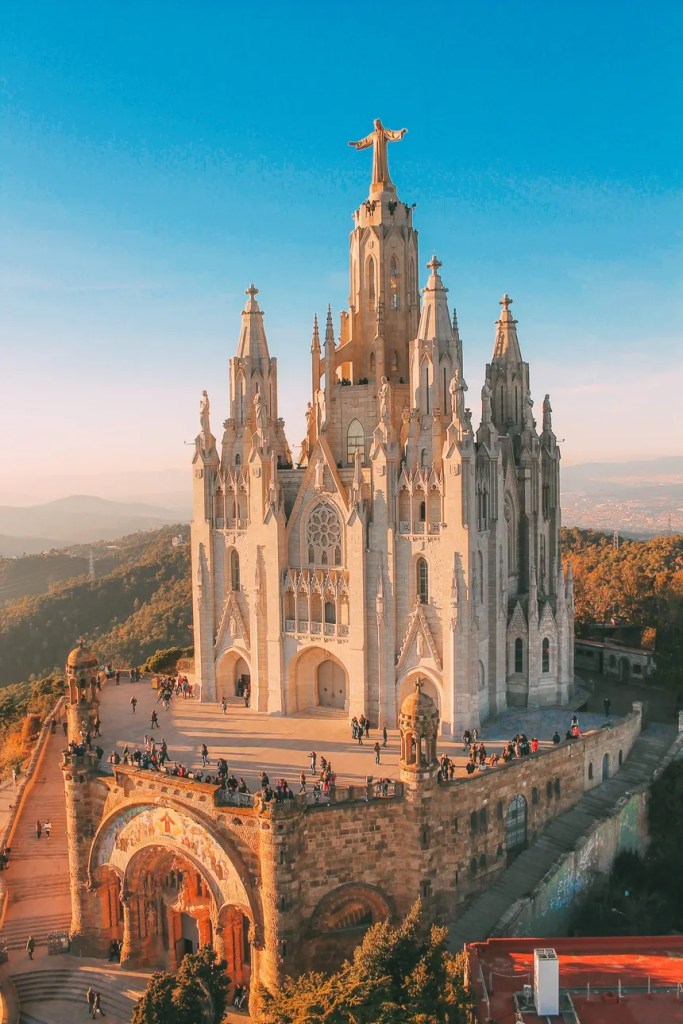
I believe the meaning of life for human beings is a combination of individual enlightenment, such as that explained by Lord Buddha with, as groups, creating enlightened societies, or civilizations. I don’t know enough of Asian history to have clear examples from literature or history but in Europe for a while there was a period wherein cathedrals were built. I always marvelled at the determination it must have taken to spend over a hundred years, which means several generations, on a single building project. Then one day I realized: that was the point.
The cathedral was a means for organizing a society over many generations along principles which harmonized the practical aspects of building such a large structure along with funding it, feeding people, providing the ideal societal infrastructure required, along with fostering the cultural-spiritual vision inspiring the whole thing. So the building itself wasn’t the goal so much as the societal gestalt, or process, it would take to both manage building it as well as value its meaning, which in the end is a large hall for the entire society to come together to praise Heaven, to worship eternal values. Put another way, it takes a whole lot of work (Man) on the quanta (Earth-matter) level, to create appreciation for qualia (Heaven-values) level.
From Three Treasures POV, building cathedrals is an ideal exercise in creating an enlightened society joining together Heaven, Earth and Man (which I wrote about: https://baronbrasdor.art/2024/02/21/layers-levels-chapter-five-heaven-earth-man/). Coming together to create civilizations, moreover uplifted, wise, sane, glorious civilization, is a core mission of human beings, just like trees like to create forests, and plants like to produce beautiful flowers. Again along with individual enlightenment which can permeate an entire civilizational culture as it did in Asia, for example, for more a couple of millennia and no doubt will again at some point.
Which is a long way of saying that not all civilizations, and therefore not all modernizations, are equal. On the technological front, China now leads; this is partly due to better social structures which China has both inherited from her ancestors and forged since the bloody 20th century, and partly due to cycles: America, after an extraordinary up period, is now on the overly corrupt downward slope run by greedy oligarchs who take ever more percentage of GDP as rent, so to speak; whereas China is still in the emerging growth phase, though I suspect the peak has already been reached which is why the population is rumoured to be declining now and there is a surplus of cars and housing etc.
Once the material growth phase is over, the quality or values of the civilization become more important. My guess is that China will do better than the West in this regard since it has better foundations; but how it looks to me now from far away is that China too has over-emphasized materialism, which is the hallmark of this post industrial revolution age, and at some point will have to make a spiritual course correction, hopefully sooner than later. Also, it seems to me from afar (so I may be wrong), that they are overly frightened of spiritual traditions which may undermine their power and control, and so marginalize, suppress or devalue them and in so doing harm their own civilization. (And again, the West is worse off in this regard.) Which is why you don’t see the CCP putting together multi-generational spirituality-enhancing projects like building cathedrals; rather they are building trains, ships, cities and such.
Something like that.
[Big Lemon response] A great read, thank you. I’m lucky enough to be in a position to observe China from arms length. There are so many underlying social issues in the current society that can’t be addressed. After the collapse of the communism ideals/dreams, the only (dangerous) course to follow is unfortunately nationalism, a cheap way to unite or quiet a restless populace. Religious route will never be chosen by CCP as this will cancel the very basic principle of their existence. I would love to see Chinese people start pursuing spirituality once again.
https://twitter.com/AshleySCHowes/status/1884983393009426784
[ASH] Like just about everything in the human realm, nationalism is a two-edged blade. A good society should enjoy some sense of togetherness and positive pride just as a bad society will feel the opposite, with everyone basically fighting everyone else, hurting everyone else.
Spirituality is tricky because demonic minds recognize its power and so work to infiltrate and undermine it using deceit. This is partly why civilizations have to keep reinventing themselves in order to have duration.
I suspect that much of daoism comes not only from individual adepts (again the Buddha principle) who pioneered breathing and moving yogas, saw the meridians through clear inner vision and such, but also from early experience with multiple small civilizations in the early (feudal) days long before Confucius; they understand that they have to balance strength (yang) with adaptability (yin) in order to have longevity. This is in part why the Zhou Yi is called the Classic of Change. We might call it Process. Everything is an ever-unfolding process, always moving, never static. So you have to learn how to flow, to breath, to move, to change.
Most people trying to create long-lived societies tend to try to freeze the leadership or command structures to maintain a grip on power. The CCP seems to have this approach which is why they dislike spirituality.
Because spirituality – any sort of genuine approach that is – values eternal principles over temporal exigencies. Values are not material, things like honour, honesty, courage, kindness, simplicity, clarity of mind, wisdom, obedience, loyalty. Also beauty, harmony, sophistication, elegance, hard work, good carpentry, saying ‘good morning’. The old Chinese sages and people understood this sort of value system well – as do all good civilizations throughout history – but again I think one of the great insights that the Chinese grocked a long time ago was the flow or change principle as it relates to engendering continuity, or longevity, or social stability. I don’t think I’ve seen that anywhere else. It’s fascinating also because on the yogic, or practitioner, level, the Chinese introduced the world to Chi in a quintessentially Chinese way. Although more or less the same as the Hindu prajna, in Chinese descriptions and practice is is often described as a type of energetic flow, albeit there are no end of different chis. Lung chi is different from kidney chi. Inner chi is different from outer chi. There is group chi (like watching sports in a stadium, or doing tai chi together in the park) different from individual chi (doing tai chi alone); endless. All flowing like streams and rivers. Societal organization manages societal chi flow so cannot be entirely static though perhaps is like a plumbing system sometimes: the tubes are somewhat static to accommodate that which flows through them. But that too is an art involving the management of that which flows alongside that which is still.
So it has always been; so it will always be.
https://twitter.com/AshleySCHowes/status/1884957229884785016

that which splits apart comes together
that which is agitated becomes tranquil
that which never moves has movement all around
 baronbrasdor.art