(and the need for warriorship)

Article 61: On the Nature of Good and Evil (and the need for warriorship)
Some aspects of what can be called ‘good’ can easily be put into words, but many cannot. And the more one tries to spell such things out, the more indigestible the salad often becomes. (And all salads end up as manure anyway!) For the purposes of this and subsequent Articles, let’s just say that good is that which promotes and is virtuous and bad or evil is that which promotes or is vice; also that good in terms of feeling has something to do with being kind, gentle, generous, careful, disciplined, uplifted whereas bad, or unvirtuous, has to do with being unkind, harsh, selfish, careless, undisciplined, degraded. There are problems with using words like ‘good’ and ‘bad’ because of how they bring about judgmentalism; but the intention here is to examine what it means experientially to be using life as a vehicle for ‘promoting good’ as discussed in the previous Article #60.
The subject for this Article arises because promoting good immediately involves either not promoting evil or encountering evil as it arises in both inner or outer mandalas.
When I first started studying and training in Buddhadharma, the way I and many of my companions in the Sangha processed the teachings, along with the way they were viewed generally as ‘noetic science’ versus faith-based religion, there was a detached, impersonal quality to the whole affair. We were working with ‘the mind,’ ‘ego,’ ‘habitual patterns’ or ‘thoughts.’ ‘Me’ or ‘I’ were regarded as abstract conceptual constructs to be seen through or transcended somehow. Just as scientists dissect frogs to study the workings of bone, musculature and fascia, so we Buddhists dissected elements of mental and physical experience to reveal their inner workings dispassionately, by somehow putting ‘I’ and ‘me’ under the microscope.
In this context, notions of ‘good’ and ‘evil’ seemed somewhat quaint, moralistic and lowbrow. Of course, when you get into the later Mahayana teachings, the notion of the Bodhisattva as a generous soul working tirelessly to save all sentient beings clearly manifests goodness and noble-heartedness par excellence but then the whole thing is so magnificent and transcendental that it becomes akin to a deity principle, somehow beyond one’s own everyday kitchen sink level, meaning that again the personal aspect is detached from the subject matter. In a way, as a student I regarded personal experience as somewhat apart from the teachings, my own journey as an individual in limbo pending the completion of the more important work being done ‘on the Path.’ Of course the teacher and the teachings never recommended such a view, indeed quite the opposite, but that is what unfolded, at least to me. (Of course, the reason it is called a ‘path’ is precisely because one goes through all sorts of passages and iterations like this over time as one perpective falls away and a new one arises and so on ad infinitum.)
The point being that notions of good and evil didn’t seem apropos, and therefore neither did the notion of developing virtue, presumably because of the sense that if one developed discipline and insight – which of course are virtuous in themselves – all that other stuff would naturally fall into place. I guess I still think that way, truth be told, but I also think that considering good and evil in both oneself and society is both unavoidable and valuable as long as one doesn’t get hung up too much on the terms.
With this blog, for example, I have gone back and forth with whether or not to write about current news topics or just keep it strictly internal-focused, or maybe only about Buddhism or the Yi or whatever. The past three years have been very eventful so have often just avoided writing anything for fear of ‘polluting the blog’ with ‘samsaric’ politics. Perhaps this is why there were so many ‘geopolitical Yi Readings’ of late: they were a kosher way of relating to The News in a manner which felt ‘clean’ or ‘spiritual’ enough to put on this blog.
Not being a pundit or specialist, I have little to offer in terms of news commentary that hundreds of others don’t already do with far more depth, detail and understanding (not to mention confusion!). No doubt I can offer a different perspective coming from the ‘contemplative’ POV, but since generally such types eschew The News as a lowbrow distraction or some such maybe it’s a false piste. That said, am not all that wise or accomplished a practitioner, despite being officially empowered as the ‘Dharma Heir of the Celtic Buddhist Lineage,’ so it is somewhat pretentious to believe one has all that much to offer. However, of late have begun to feel like attempting to interweave, much like we do spontaneously in daily life, the inner and outer aspects of the journey especially as regards this notion of promoting goodness, or developing virtue as a guiding principle of sorts. I don’t want to attempt any sort of exhaustive study of this multi-faceted, somewhat endless topic, rather to continue the tradition of this blog by taking a particular idea or aspect and then writing something simple about it usually in no more than one to two thousand words. And leave it at that to resonate with the reader in whatever way. And then onto the next topic. This particular one is a little on the long side because of all this preambling as part of introducing a new phase. So, let’s start again with the title, shall we?
Article 61: On the Nature of Good and Evil (and the need for Warriorship). Take 2:
The good is both natural and innate and also that which can be cultivated. As is its absence or opposite, so-called bad or evil. The word vice tends to involve bad habits or tendencies versus good habits. Evil tends to involve actively harming others versus helping or uplifting them. The good lead or serve whereas the bad dominate and subvert. If, say, you form the intention to generally ‘be good’ today, then immediately arise related aspects such as that this will entail not criticizing your spouse, child or colleague, or keeping your cool in the busy traffic with all the crazy drivers who don’t use their ***ing turn signals and whose truck exhausts belch black, toxic fumes into your face; or when you go into the government office to get a license, or into a bank to do a simple transaction, you know you will have to wait in line for hours sometimes only to get slow, incompetent service once you finally have someone to work with at which point you must not lose your temper, be patient and kind and reasonable and understanding and calm and alert and so on. All of which is fine and dandy, but the point is that ‘being good’ immediately involves one in the practice of not being bad. The two go together like peas in a pod – or rather like yin and yang.
And it also puts one into a trap, and probably why in my Buddhist salad days we avoided dealing with this whole good-bad business: they are concepts, ideas, abstractions and by emphasizing them we end up overthinking everything, which is where judgmentalism, moralizing and finger-pointing come in, basic stuff we liked to think we had already outgrown being already oh-so wise and superior. So this is a quibble, and an important one since it keeps coming up, once again let us go further into the topic anyway. So now we can start the Article again!
Article 61: On the Nature of Good and Evil (and the need for warriorship). Take 3:
One of the principal ways we cultivate virtue is by avoiding self or other-generated vice. Self-generated vices are bad habits or things we do which harm self or others in both subtle and gross ways; other-generated vice is influences from others trying to get us into bad habits or things which harm self or others. For example, as soon as we walk out of the door we know we will encounter no end of enticements to buy into vice of all sorts, whether it’s simply losing our minds to the crass banality of billboard images, being dispirited by the amount of litter swirling around the streets in a slum area, being frightened by scowling thugs you have to pass close by to get into the station entrance you need to walk through to catch your train, being tempted by the crappy commercially produced chocolate bars in the little shop there where also are displayed rows of half naked males and females on glossy magazine covers, or the mind’s prompted journey to savour the imagined pleasures with nubile bodies, or not being disgusted by the noxious odor of the homeless person slumped next to you on the seat you found free on the subway complemented by the acrid tang of urine wafting into your olfactory mandala….. so many things popping up to make you lose your cool and begin to recoil from rather than open to and love, your surroundings and those whom you encounter. It’s immediate, inevitable and endless.
So during the journey we call life, goodness must become not a project, goal or idea so much as an ongoing attitude or disposition, a default openness and kindness without agenda, unaffected by specifics or particulars, and so also not beholden to concept or moral code. If we keep trying to do the ‘right thing’ or judging ourselves or others from failing to do so all that cumbersome approach just ends up tripping us over. Rather, goodness or virtue happens before any sense of right or wrong, good or bad. It’s not a head trip but a heart trip; it’s feelings, posture, orientation, a basic way of being – or like my teacher used to say, ‘facing East.’ It’s a way of being no matter what we encounter or how we are treated by others.
Of course in a good culture, we are all encouraging each other to do this by how we dress, how the buildings look, how we speak to each other, the quality of the pastries or foods we eat, and so forth. And in a bad culture, the opposite happens, we encourage each other to be dirty, dark, dangerous, hostile, ungrateful, ill-mannered and so forth.
Rather than fuss about the pitfalls of good-versus-bad finger-pointing, we can relax by more rightly regarding good and bad as a classic ying-yang dynamic which exists in all sorts of ways on all sorts of levels in this our multi-dimensional experiential continuum.
In any case, this leads us to the subtitle: ‘and the need for warriorship.’ In William Horton’s work about the I Ching and related spiritual path from his initial training to become lineage holder of the Buddhist-Daoist Sudden Enlightenment School and subsequent spiritual adoption by a Tarahumara shaman in Northern Mexico, he states that ‘spirit-warriors’ are those who confront the ‘enemy within’ which I find the best simple definition out there. For in all our encounters – and of course there are many greater evils than the petty everyday ones described above – what matters is not what others are doing around or to you but how you handle yourself relative to whatever comes your way. One cannot control what others do or what the world does, but one is responsible for how one steers the ship of one’s own behaviour; so that is what a ‘spirit-warrior’ does and why William Horton has chosen to emphasize this inner aspect of the journey during these times in which we are now eight billion and counting.
So what this all means is that the path of cultivating goodness involves facing its absence or opposite all the time, especially within oneself, and which again is essentially a yin-yang affair.
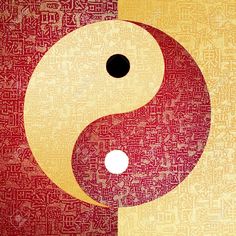
The traditional, perhaps even original, description of yin and yang is that of the sunny and shaded sides of a mountain. In the morning, the Eastern side of the mountain is warmed by the sun (yang) whereas the Western side is cool being still in shade (yin). As the sun moves through the sky during the daytime, the disposition of yin and yang gradually and continuously changes until by day’s end the Western side is warm and bathed in sunlight whereas the Eastern side is now cooler and in the shade. This is the change or process aspect in the title ‘I Ching’ (Yi = Change/process; Ching = Classic Text), because yin and yang are not things in and of themselves although they clearly are experiential qualities. And these qualities are continuously changing even as they remain in continuous relationship with each other for there is no such thing as a yin without a concurrent yang and vice versa. Perhaps we can explore this yin-yang dynamic further in another Article, but for the purposes of this one, it is helpful to regard good and evil as a yin-yang complementary dynamic not as solid, definite things in themselves. (This too may be explored later since it involves the difference between materialist and non-materialist science.)
And that always dynamic quality goes for warriorship as well. A spirit-warrior is one who overcomes the ‘enemy within’ by choosing to actively manifest the yang of virtuous upliftedness rather than the yin of unvirtuous dispiritedness day by day as circumstances continually arise. The choice is always there, moment by moment and a spirit warrior is one who makes the right choice, the warrior’s choice rather than the wrong choice, the coward’s choice.
So here endeth the lesson. When we consider ‘promoting goodness’ as per Article #60, we are immediately also dealing with badness, each being a yin to the other’s yang.
In a subsequent Article, we are going to look a little more into the nature of badness, where it comes from, why it’s there, and why, along with its being inevitable and unavoidable, it might not always be so very bad – even though in many cases, as described in Article 60, it most definitely is…
 baronbrasdor.art

One thought on “Article 61: On the Nature of Good and Evil”