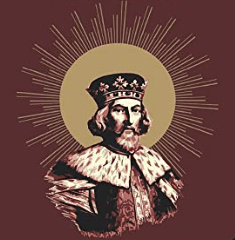
Recently in a discussion about democracy in America these days, a participant in an online Moon of Alabama discussion contributed a quote from an article about the messy US pull-out from Afghanistan. The article is entitled “Farewell to Bourgeois Kings“ and the quote goes like this:
In the age of monarchy, kings justified their right to rule through some form of the argument that they were simply born to do so. A king was not just an ordinary human, but in some sense a vessel for a divine principle of sorts. As such, there exists cases in medieval jurisprudence where the legal issue at stake was whether the king in his human form or his metaphysical form had signed a particular contract. If it was the former, the contract could very well be legally void by such circumstances as the king being a legal minor. But the situation would be different if it was the capital K King – the virtual, platonic essence of the realm who was located in, but not bound by, the king’s physical (and in this case, underage!) body – whose hand had signed the document, as the King in this sense was not a minor and in fact could neither age nor die (there is a good book on this subject by Ernst Kantorowicz, called The King’s Two Bodies, for those interested in reading further).
I found the above notion about The King’s Two Bodies fascinating, having never encountered it before. It both relates to Buddhist notions of the Trikaya, covered on this blog a year or so ago, and also to my pet peeve these days about the materialistic tendency to narrow our perceptual and intellectual spectrum in that to the materialist mindset the notion of a King (‘how silly!’) having two bodies (‘ridiculous!’) is beyond imagination. Nobody today could come up with such a notion and yet I found, having downloaded a digital copy of the The King’s Two Bodies and spending a few hours yesterday ploughing through its dense, arcane prose, that the topic had been seriously discussed for many hundreds of years going back to before the time of Christ, but especially between around 600 to 1670 AD (the historical span of the book) it was a hot topic. As a notion it contrasts materialist and non-materialist views. Now of course not all materialist thinking is the same, nor all non-materialist, but generally speaking all materialists stay within a relatively narrow band united by the belief in a continuous, extant, external ‘objective reality,’ aka ‘the real world,’ regarding scientists as the only ones in modern society qualified to tell us what ‘the truth’ or ‘reality’ is.
For example, there is a ‘real world’ on the one hand and then there is imagination, fantasy, delusion – our subjective notions about it – on the other hand; the ‘it’ is what is real and ‘my’ or ‘our’ feelings or thoughts about it are therefore not. The main problem is not so much that this is a wrong view (though it is) but that it tunes out too much experiential bandwidth. It’s as if we had an FM radio with a mechanism only letting us tune into two out of the twenty available local stations; the two stations it receives might be excellent, but generally it would be better if we could have access to them all since the two on offer only play rock and roll whilst the other eighteen have classical, country, folk, ethnic, Talk and so on.
But now I’ve made that point, let’s take a little time to examine this non-materialist notion of the ‘Twin-Body King.’
There is the normal person with a body, with passions, strengths and weaknesses who progresses through childhood to maturity and at some point dies – the ordinary mortal body-mind being like you and I. But then that same mortal individual’s body is consecrated and anointed with sacred oil and with Speech takes sacred vows and thereby becomes also a new being, a King or Queen. And this new ‘King’s Body’ is not born, does not age, cannot become infirm and never dies.
Interestingly, this is like present awareness in meditation, often refered to as ‘nowness.’ We often describe time as a sequence of moments involving past, present and future. And yet if we try to determine what exactly a moment is we find that no matter how short the duration we can always divide it in half. We can never come up with an indivisible moment. We find that nowness has no measurable duration and therefore cannot accommodate a past or future. But even though nowness is empty of duration or substance, the experience is vivid, brilliant, powerful making the experiential space of nowness luminous with intelligence and vital energy, just as a monarch’s majesty is brilliant and vivid, just as our garden is vividly present and alive.
[Sunday Aug 13th addition after receiving permission from the author:]
Here is a piece from a soon to be published book about the Yijing written by an old friend from Dharma salad days, Daniel Hessey.
“Firm lines represent Heaven’s nature, which is non-dual and unconditional. In this context, non-duality is the counterpart of duality, understood as the absence of dualistic entities. In that narrow sense, it functions as an entity. How should the characteristics of emptiness be understood? The absence of dualistic entities, the apprehended and apprehender, and the entity that is the absence of such entities—this is what characterizes emptiness.
An example of non-duality is nowness. Nowness does not depend on the past, which no longer exists, nor on the future, which has not yet come into being. Nowness itself has no duration and can thus be thought of as “empty.” It can be defined as “that which is not past or future,” which is another way of saying “that which is not duality.” Yet nowness, lacking any substance or characteristics in itself, is not void. The space of nowness is full of energy and intelligence. It accommodates the immediate Brilliance of what we perceive as relative experience, which can only take place in the present. Thus, nowness itself possesses tremendous power and potency and is genuine, not imagined. ….
Although duality does not exist, the false imagination is not something absolutely nonexistent either because the experience of duality exists.
Thus a yin line expresses the energy of dualistic perception and relationship and is, at its core, the Brilliance of emptiness. The emptiness of the yang line is the true nature of dualistic knowing:
Form is emptiness, emptiness itself is form;
Form is no other than emptiness,
emptiness is no other than form.
— The Heart Sutra ”
Now that is quite deep and complex but I emboldened the section most involved with the nowness aspect which dovetails so neatly with the experiential brilliance of Majesty, or Kingship. Generally, if we look directly at our own experience we can see that a two-sided yin-yang real-imagined aspect is always present. There is the individual with a body playing the part (say of a King), and there is the part being played which is neither alive nor not alive, both real and imaginary.
This sort of thing drives materialist nuts, but on the experiential level we deal with it every day, albeit usually without noticing. We have notions flying around in our everyday minds of who we were, who we are, who we might be, how others see us as we negotiate a price for a service or purchase, how our children see us versus how our parents see us and so on. In other words, we deal with multiple identities, realities, possibilities, actualities, aspirations, projections and so forth all the time, many of them simultaneously. Both individually and collectively we inhabit multi-faceted constantly changing realities each and every day whether or not we choose to recognize them as such. So actually it’s not such a stretch to understand that a King does indeed have two bodies: his ordinary mortal body and that of The King which is both real and imagined.
For that matter our notions of country, such as England or America, are both real and imagined; or perhaps we can say they encompass a reality not bounded by only the physical, so that although there are indeed physical, territorial parameters to what we call the United States, the polity also exists on an imaginary, and thus non-material, realm for it is an Idea, a vision, a multi-faceted cultural existens similar to a corporation, which is another type of fictive existing in Law, not only a physical territory. So we are all twin-bodied.
This of course has ramifications as to how we might view our life journeys and society in general. For example, here is an (edited) comment I wrote in response to the End of Bourgeois Kings quote above.
This notion of the metaphysical King only works in a realm (a shared societal experience) wherein the metaphysical is as valued as the physical, indeed the latter is seen as existing within a metaphysical context. In this sort of worldview, the belief in a physical universe existing separate from and even without the agency of mind-consciousness is unimaginable, indeed I suspect for most of human history there are many societies in which such a notion never arose. That said, given we live in a time when the metaphysical is relegated to dusty archives wherein we store relics of by-gone days, the notion of including anything non-physical in the pantheon of mechanical corpses we call reality these days is beyond the pale.
It’s all very silly. Democracy is an idea and an ideal, not an actual thing. The same for all the isms. They are all ideas and therefore all ‘metaphysical.’ The difference is that in the old days before we felt obliged to remain constrained within materialist straitjackets, there were also metaphysical beings captured and transmitted within cultural forms – such as living monarchs in the description above or fictional ones as in Shakespeare’s plays. Hamlet exists in the minds of every member of the audience and lives on within them long after the play is over, as do other Kings in other plays, making every subject in the Kingdom in which such plays were performed – often with the monarch of the actual Realm in attendance no doubt studying how best to be one (or not) – a living lineage holder of the tradition which belonged to each and every one of them, not the monarch’s person alone as we tend to project these days. The dismantling of Royalty depicted in the heart-breaking Richard II was so potent a display for contemporary onlookers that it was forbidden to be published in written form until after Queen Elizabeth’s death. (There is an entire chapter on this play in the Two Bodies book which is well worth reading.) It is an extraordinary play which examines, step by step, what it takes to dismantle a Monarch who has been anointed and consecrated, how such a thing is both unnatural and wretched and yet occurred. I cannot imagine what it must have been like to witness a performance of this play with her Majesty in attendance.
Indeed, in such a ‘metaphysics-first’ Realm, everyday life becomes a play within a play, something the monarch principle empowers more vividly than a concept-driven system like democracy or socialism, just like witnessing a King or Queen and her subjects watching a play about a King or Queen and their subjects, an experiential gestalt continuing long after the formal performance is over.
This play within a play dynamic echoes in daily life around the family dinner table with Father and Mother playing their parts, in school or work with Teachers and Bosses and so on. Our lives are unfolding performances lived out in public, as it were, making society the domain in which such performances are continuously unfolding. The word ‘person’ comes from persuonare meaning ‘(speech) sounding through a mask,’ making our person, our sense of ‘me,’ part of a performance for others to view and the society wherein we perform it a type of play, making the ‘reality’ within which this play unfolds a type of game, an ongoing ever-improvised Dance of Creation in which each and every one of us are co-creators.
It is from this type of metaphysics-first cultural space that high cultures arise, including attention to manners, for manners are the way we each consciously play our parts in the unfolding drama of life from cradle to grave within an overall cultural container, or Realm, which is more metaphysical than physical, more a product of collective imagination than objective reality per se as we are nowadays trained to perceive it. Indeed, this living sense of shared culture as an ongoing collective improvisatory Creation, is what we have lost thanks to the narrow bandwidth effect of the materialist mindset. And it is this sort of vivid, wakefully imagined mutually created Realm that Kings preside over quite naturally and inevitably but since we have lost those cultures we have erased Kings from our own today. Pity!
Monarchies of yore, whether as oppressive tyranny (as some no doubt were and as current democracy in the US now seemingly is becoming) or as Golden Age utopias (as some no doubt were though perhaps never spotlessly) were always a mutual creation generated by the population’s vivid sense of living, breathing – but also metaphysical – presence, thus always informed by the human faculty of Imagination, one of our most quintessentially human faculties.
Even today, notwithstanding our left-brain materialist bent, we can acknowledge that the idea of America is indeed such a metaphysical ‘realm’ notion. Of course one can argue about what it is as many do – ‘it was evil from the get-go, slaves, plunder, violence, deceit’ etc. – but whether objectively truthful or not, the Idea of America persists because fundamentally all human beings want to live in that type of State – and of course most people feel the same about their own countries in that there is the actual state as it is versus the ideal as it could or should be. Back to the twin bodies idea in other words. If we could cast off the shackles of worshipping the false Idol of Objective Scientific Truth, we would all have a better shot at realizing such states – if you imagine it, it can be so. More importantly perhaps than whether or not such utopian ideas can be realized is whether or not we can strive, individually and collectively, to live up to such ideals and in so doing find we are on a Path, a Dao, that leads to a lifetime of continuously learning how to be a better person, husband, wife, colleague – or King. What parts we play, though partly fictive, are vitally important both for ourselves and the world they help create as they are performed.
For example, the main concern which personally gives me pause about both Putin and Xi, who are clearly way better than average leaders and certainly any in the West these days, is that each in his own way bows down to objective reality. Putin often specifically references the latter in his speeches, especially when discussing historical matters even though nearly always this involves one side attempting to impose its version of reality over an other’s, making neither ‘objective’. Meanwhile Xi harps on about ‘modernization’ which clearly regards material improvement as the principal yardstick of social progress, and thus of the current Chinese Realm over which he presides.
This doesn’t make either wrong or bad, but it does make their cultural ceiling, or Heaven principle, somewhat low, engendering a tendency to cast the collective gaze more towards Earth than Heaven. Over time, this could be problematic because it will tend to stifle the imaginative (metaphysical, invisible and eternal) elements without which a good human society cannot flourish, let alone endure.
 baronbrasdor.art